 Birch Bay Siding
 What LP SmartSide Actually Is
LP SmartSide is an engineered wood siding product built from strand board — wood fibers bonded with resin under heat and pressure, then treated with a zinc borate preservative and finished with a primed or pre-finished surface. It's a legitimate product with real advantages: it's lighter than fiber cement, easier on saw blades, and it installs quickly for crews used to working with wood. A lot of siding contractors use it well, and plenty of homes wearing it look good for years. We're not here to tell you it's junk, because it isn't.
What we are here to explain is why, after years of installing and repairing siding around Birch Bay and the rest of Whatcom County, we made the decision to standardize on James Hardie fiber cement and stop installing engineered wood products, LP SmartSide included. That decision came down to how each product behaves over a 20-30 year window in this specific climate, not a knock on the product's manufacturing.
Birch Bay's Climate Is Harder on Wood-Based Siding Than It Looks
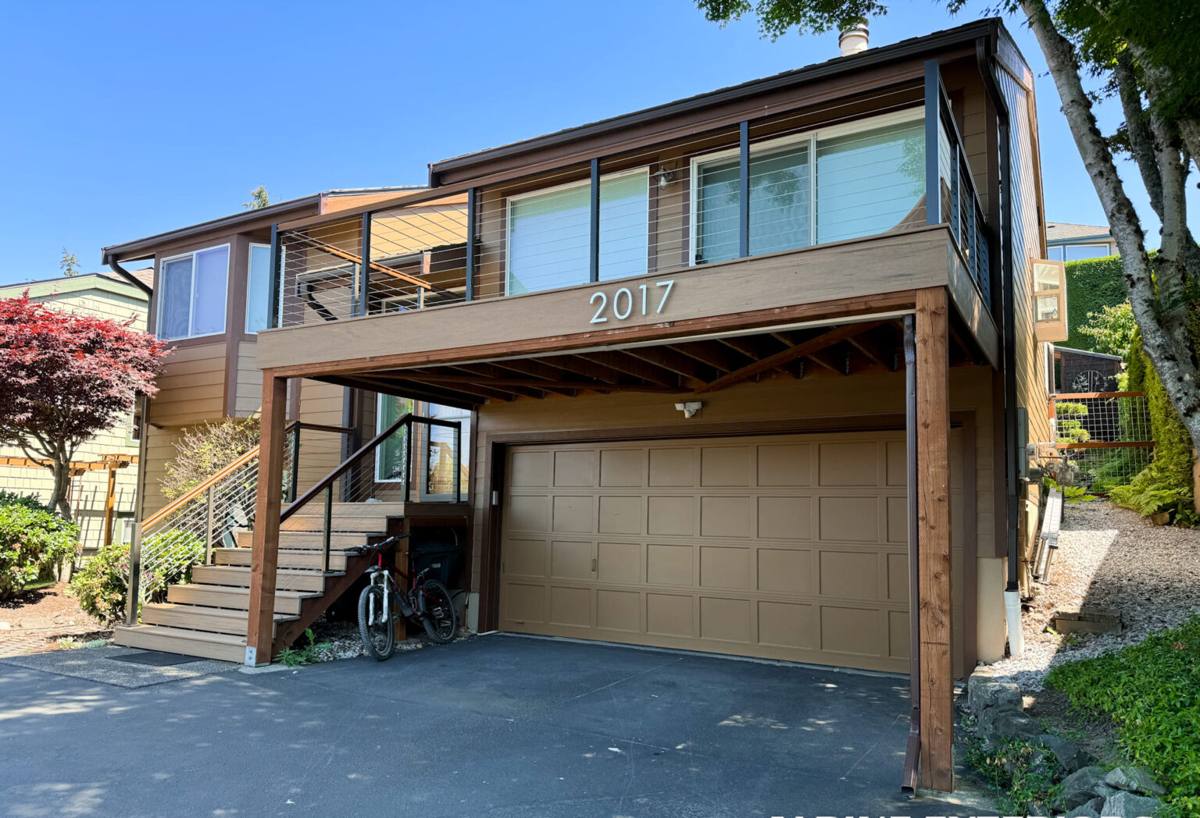
Birch Bay sits right on the water, which means every wall on the west and south sides of a house takes on salt-laden air moving off Semiahmoo Bay and the Strait of Georgia. Add Whatcom County's long, wet winters — driving rain that comes in sideways during a southwesterly blow — and a shaded lot that never fully dries out, and you've got the three ingredients that stress any wood-based product: chloride exposure, sustained moisture contact, and a moss season that can run from October through May.
None of that is a problem unique to LP SmartSide. It's a problem for any siding with a wood-derived substrate. The difference is how much ongoing homeowner maintenance is required to keep moisture out of that substrate once it's on the wall, and that's where our concerns start.
The Maintenance Obligations Behind the Warranty
Engineered wood siding relies on its factory finish and field-applied sealants to keep water out of the strand substrate. The manufacturer's installation and warranty documentation is specific about this: cut edges, joints, and butt seams must be primed or sealed at the time of installation, and the caulking at those seams needs to be inspected and maintained on a regular schedule for the life of the siding. Skip that maintenance, or let a bead of caulk fail without noticing, and water finds its way into an OSB-based product a lot faster than most homeowners expect.
The Recurring Caulk Check
In practice, that means a homeowner (or a contractor they hire) should be walking the exterior at least once a year — more often in a place like Birch Bay — checking every seam, corner, and trim joint for cracked or shrinking caulk, and touching up paint anywhere the factory coating has worn through. It's not a huge job any single year, but it's a permanent line item on the home maintenance calendar, and it's easy to let slide during a busy year or after a change in ownership.
- Cut ends and field cuts need sealant or primer applied the same day they're exposed
- Caulked joints should be inspected annually, ideally before the wet season sets in
- Paint or factory finish touch-ups are needed wherever the surface is scuffed, chalking, or worn
- Any gap where water can sit against a cut edge needs to be caught early, not after it swells
We install a lot of siding on homes owned by people who travel, rent the property out, or simply don't want a yearly inspection obligation tied to their exterior. For those homeowners especially, a product whose long-term performance depends on a consistent caulk-and-paint schedule is a real trade-off worth knowing about up front.
How Moisture Behaves Differently in Wood-Based vs. Fiber Cement Siding
This is the core of our decision. Fiber cement is made from cement, sand, and cellulose fiber — there's no wood strand core to swell, delaminate, or hold moisture once water gets past the surface. Engineered wood siding, even with its resin binders and borate treatment, is still fundamentally a wood product, and wood products swell when they take on sustained moisture. In a dry climate that's rarely an issue. In a marine climate with salt air and a genuine moss season, it's the exact condition that shortens a product's working life if maintenance lapses.
| Factor | LP SmartSide (engineered wood) | James Hardie (fiber cement) |
|---|---|---|
| Core material | Resin-bonded wood strand (OSB-type) | Cement, sand, cellulose fiber — non-organic |
| Response to trapped moisture | Can swell or soften at cut edges/seams if sealant fails | Does not swell or rot; moisture resistance is inherent to the material |
| Combustibility | Wood-based, combustible | Non-combustible |
| Maintenance for warranty | Scheduled caulk/paint inspection required | Factory ColorPlus finish reduces repainting cycle significantly |
| Moss/algae resistance in shaded, wet exposure | Depends on finish upkeep | Surface doesn't feed fungal growth the way organic substrates can |
| Typical expected service life | Solid when maintained; sensitive to deferred maintenance | Decades-long track record in wet marine climates when installed to spec |
None of this means LP SmartSide fails quickly or that it's a bad product on paper. It means the margin for error is smaller in a location like Birch Bay, where salt exposure and rain load are both above average for the region, and where a missed caulk cycle has more consequence than it would in a drier inland climate.
Installation Sensitivity Matters As Much As the Product
A lot of engineered wood siding problems we've seen on older Whatcom County homes trace back to installation details, not the product itself: insufficient ground clearance, missing kick-out flashing where a roofline meets a wall, butt joints without proper sealant, or nail patterns that don't match the manufacturer's spec for a high-exposure zone. Any siding product installed loosely to spec will underperform, but wood-based products have less tolerance for those mistakes near the coast because the consequence of a small gap is moisture intrusion into a material that reacts to it.
We'd rather not put a crew and a homeowner in a position where a small installation shortcut — ours or a previous contractor's — turns into a callback five years down the road because the substrate can't shrug off the mistake the way cement-based siding can.
Why We Standardized on James Hardie Instead
James Hardie fiber cement is what we install on every job now, and it's a deliberate standard, not a default. It's non-combustible, which matters more each year as wildfire smoke and ember exposure become a bigger part of Pacific Northwest summers even here on the water. It carries a factory-applied ColorPlus finish that's baked on and warrantied against fading and peeling, which cuts down the repainting cycle a homeowner would otherwise be managing. And Hardie's HZ10 product line is specifically engineered for the wetter, harsher climate zone that includes Western Washington's coastal areas — it's built with this kind of weather in mind, not adapted from a national spec.
What the Warranty Actually Covers
Hardie backs its siding with a transferable limited warranty that holds up through a change of ownership — useful if you plan to sell in the next decade, which is a real consideration in a resort and retirement community like Birch Bay where turnover is common. The warranty terms are also more forgiving of normal weathering because the base material isn't the thing that's vulnerable to moisture in the first place.
What This Costs You, Realistically
We won't quote fake numbers, but the honest framing is this: fiber cement siding typically carries a higher material and labor cost up front than engineered wood siding, because it's heavier, requires carbide blades and dust control, and takes a bit more install time per square foot. What you're buying with that premium is a lower long-term maintenance obligation and a material that doesn't depend on a caulking schedule to keep water out of its core. For a lot of Birch Bay homeowners — especially second homes, rentals, or anyone who doesn't want exterior maintenance on their annual to-do list — that trade tends to pencil out over a 15-20 year horizon.
| Cost factor | What to weigh |
|---|---|
| Upfront material + labor | Fiber cement generally costs more than engineered wood per square foot installed |
| Ongoing maintenance | Fiber cement needs less repainting/caulk monitoring over its life |
| Repaint cycle | ColorPlus finish is designed to outlast field-applied paint on engineered wood |
| Resale/insurance | Non-combustible, low-maintenance siding is often viewed favorably by buyers and insurers |
A Practical Checklist If You're Comparing Siding Options
- Ask any contractor exactly what maintenance schedule the product's warranty requires, in writing
- Ask how the product performs specifically in salt-air, high-rain exposures — not just its general spec sheet
- Check whether the warranty is transferable if you plan to sell within 10-15 years
- Ask what happens to the material if water does get behind it — does it swell, rot, or hold up?
- Get the installation details in writing: clearances, flashing, joint treatment — not just the brand name
If you're weighing siding options for a home in Birch Bay or anywhere else in Whatcom County, we're happy to walk your property, point out where the salt air and rain exposure are hardest on a wall, and give you a straight answer on what we'd recommend and why. Reach out for a free, no-pressure estimate — there's no obligation, and we'll tell you honestly what we see.