 Birch Bay Siding
 Two Fiber Cement Products, One Important Difference
If you've been pricing out siding replacement in Birch Bay, you've probably run into more than one brand of fiber cement. Cemplank is one of them, and it's worth taking seriously — it's not a knockoff or a bargain-bin product. It's manufactured fiber cement siding, sold through building supply channels across the country, and plenty of contractors install it without issue.
We don't. This page explains why, in plain terms, without pretending Cemplank is something it isn't. Our job is to put siding on homes in Whatcom County that holds up to salt air rolling in off the bay, driving rain in the winter, and a moss season that seems to stretch longer every year. That's the lens we use to evaluate every product, and it's why we settled on James Hardie as the only fiber cement system we install.
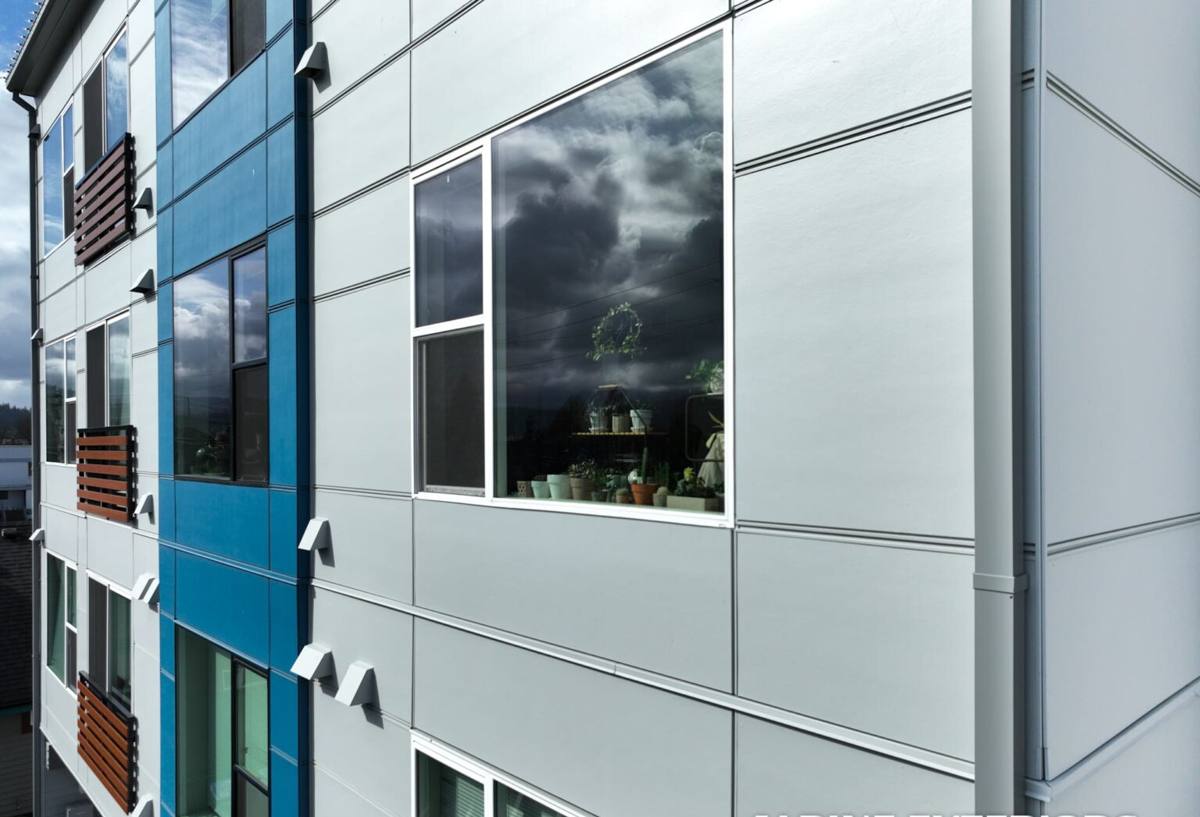
What Cemplank Gets Right
To be fair to the product, fiber cement as a category solves real problems that older siding materials don't. Cemplank shares the core advantages of any legitimate fiber cement siding:
- It's non-combustible, unlike wood or vinyl siding.
- It doesn't rot the way untreated wood or primed spruce can when moisture gets behind it.
- It resists insect damage — termites and carpenter ants have no interest in cement board.
- It holds paint or factory finish better than vinyl, which can fade and warp under UV exposure.
So this isn't a case of one product being "good" and another being "bad." Both are fiber cement. The differences that matter are in the details — manufacturing consistency, factory finish, engineering documentation, and how the warranty is actually structured. That's where we drew our line.
Why We Standardized on One Fiber Cement Brand
Running a siding crew that installs multiple fiber cement brands sounds flexible, but in practice it creates real problems: different fastening schedules, different factory finish systems, different caulk and touch-up chemistry, different manufacturer clearance requirements. Every brand switch means relearning a spec sheet and re-training a crew on details that matter for warranty compliance.
We chose to go deep on one system instead of shallow on several. James Hardie has the largest fiber cement manufacturing footprint in North America, the most developed regional engineering documentation (including product lines specifically formulated for wet, marine-influenced climates like ours), and a factory-applied finish system — ColorPlus — that we can back with a real product warranty instead of relying on job-site painting. Cemplank doesn't offer an equivalent factory-finish program in most markets; it's typically sold as a primed substrate that still needs field painting, which shifts the finish's long-term performance back onto site conditions and applicator skill, not a controlled factory process.
Cemplank vs. James Hardie: The Factors That Actually Matter Here
| Factor | Cemplank | James Hardie (HZ5 / ColorPlus) |
|---|---|---|
| Factory finish | Typically primed only; field paint required | ColorPlus baked-on finish available, factory-warranted |
| Climate-specific engineering | General-purpose formulation | HZ zone system engineered for wet/marine climates |
| Manufacturing footprint | Fewer regional plants | Multiple North American plants, deep supply chain |
| Warranty structure | Limited, product-specific terms vary by product line | Long-term limited warranty, transferable to one subsequent owner |
| Installer certification programs | Less developed | Elite Preferred contractor program with training standards |
| Color matching / touch-up availability | Dependent on field paint batch | Factory-matched touch-up kits by ColorPlus color |
None of this means Cemplank is unsafe or that homes with it are in trouble. It means that when we compared the two side by side against our own installation standards, one product gave us more documentation, more finish control, and more long-term support to stand behind — and we built our whole operation around that one.
The Warranty Fine Print
A siding warranty is only as good as what it actually covers, and this is where a lot of homeowners get surprised years later. Some fiber cement warranties cover the substrate (the board itself resisting cracking or rotting) but not the finish — meaning if the paint fades or peels in year six, that's on the homeowner, not the manufacturer. Others require documentation of the specific installer and installation method to stay valid. Before you sign anything, ask exactly what's covered, for how long, and whether it transfers if you sell the house. It's a fair question for any contractor, on any product.
The Birch Bay Climate Test
Whatcom County siding takes a different kind of beating than siding fifty miles inland. Birch Bay sits right on the water, which means salt-laden air is a constant low-grade stress on any exterior finish — it accelerates corrosion on fasteners and trim, and it's harder on paint film than dry inland air. Add in driving rain that comes in sideways during winter storms, plus a moss and algae season that runs long in our shaded, moisture-heavy microclimate, and you've got three separate stress tests running on your siding at once, year-round.
This is exactly the scenario Hardie's HZ5 product line was engineered around — a formulation and factory finish meant to hold color and resist moisture intrusion in wet, coastal-adjacent climates rather than a general-purpose national product. That's not marketing to us; it's the specific reason we don't stock or install anything else for exterior fiber cement work in this area.
Moss Season and Finish Durability
Moss and algae growth on siding isn't just cosmetic — organic growth holds moisture against the surface longer, which stresses any finish over time. A factory-baked finish with documented UV and moisture performance gives us a known quantity to plan maintenance around. A field-painted primed board depends heavily on the quality of that specific paint job, which varies from house to house and crew to crew.
Installation Sensitivity Is the Part Homeowners Rarely See
Fiber cement siding, regardless of brand, is unforgiving of shortcuts. Fastener placement, clearance from grade and roof lines, caulk joints, and butt-joint treatment all affect how the product performs over 20-plus years, not just how it looks on install day. When a crew works with one product system exclusively, they build muscle memory around that manufacturer's specific requirements. When a crew rotates between brands to match whatever's cheapest that week, small deviations creep in — the kind that don't show up as a problem until year eight or ten, when moisture has already found its way behind a panel.
We'd rather be excellent at installing one well-documented system than adequate at installing several.
What We Install Instead
Every exterior job we take on uses James Hardie fiber cement — HZ5 formulation for our zone, with ColorPlus factory finish as the standard recommendation for anyone who wants to avoid a repaint cycle down the road. Hardie's Statement Collection and standard lap, shingle, and panel profiles give us the design flexibility to match traditional Pacific Northwest homes as well as more modern builds, without stepping outside a single, well-understood product ecosystem.
This isn't brand loyalty for its own sake. It's the result of comparing what's actually documented, warrantied, and engineered for a house sitting a few hundred yards from saltwater, and choosing to build our entire operation — training, tools, fastening schedules, finish knowledge — around the option that gave us the most confidence in a 20-to-30-year outcome.
Questions Worth Asking Any Siding Contractor
- Is the finish factory-applied or will it need field painting after installation?
- Does the warranty cover the finish separately from the substrate, and for how long?
- Is the product formulated for wet/coastal climates, or is it a general-purpose national line?
- Is the warranty transferable if you sell the home?
- Is the installer certified or trained specifically on this product's fastening and clearance requirements?
- What does touch-up or color-matching look like five or ten years from now?
Any honest contractor, regardless of which brand they install, should be able to answer these clearly. If they can't, that's worth noting.
Get an Honest Look at Your Siding Options
We're not going to tell you Cemplank is a bad product — it's real fiber cement, and it has a place in the market. We just don't install it, for the reasons above, and we think you deserve to know why before you sign a contract with anyone. If you're weighing siding options for a home in Birch Bay or elsewhere in Whatcom County, we're happy to walk your property, talk through what our James Hardie system would look like for your house, and give you a straightforward, no-pressure estimate. Use the form below to get started.