 Birch Bay Siding
 Point Roberts: A Unique Exposure on the Whatcom County Coast
Point Roberts sits at the tip of a peninsula that dips south from the Canadian mainland into the Strait of Georgia and Boundary Bay, making it a geographic exclave of Whatcom County, Washington. That location means homes here take weather from nearly every direction — open water on three sides, prevailing marine winds, and very little inland buffer to slow down driving rain before it reaches a wall. If you've owned a home here for any length of time, you already know the exterior takes more abuse than a comparable house twenty miles inland.
We serve Point Roberts as part of our regular Birch Bay and Whatcom County coverage area, working on siding, roofing, windows, and decks for homeowners who need materials and installation methods matched to what this specific stretch of coastline actually does to a building envelope.
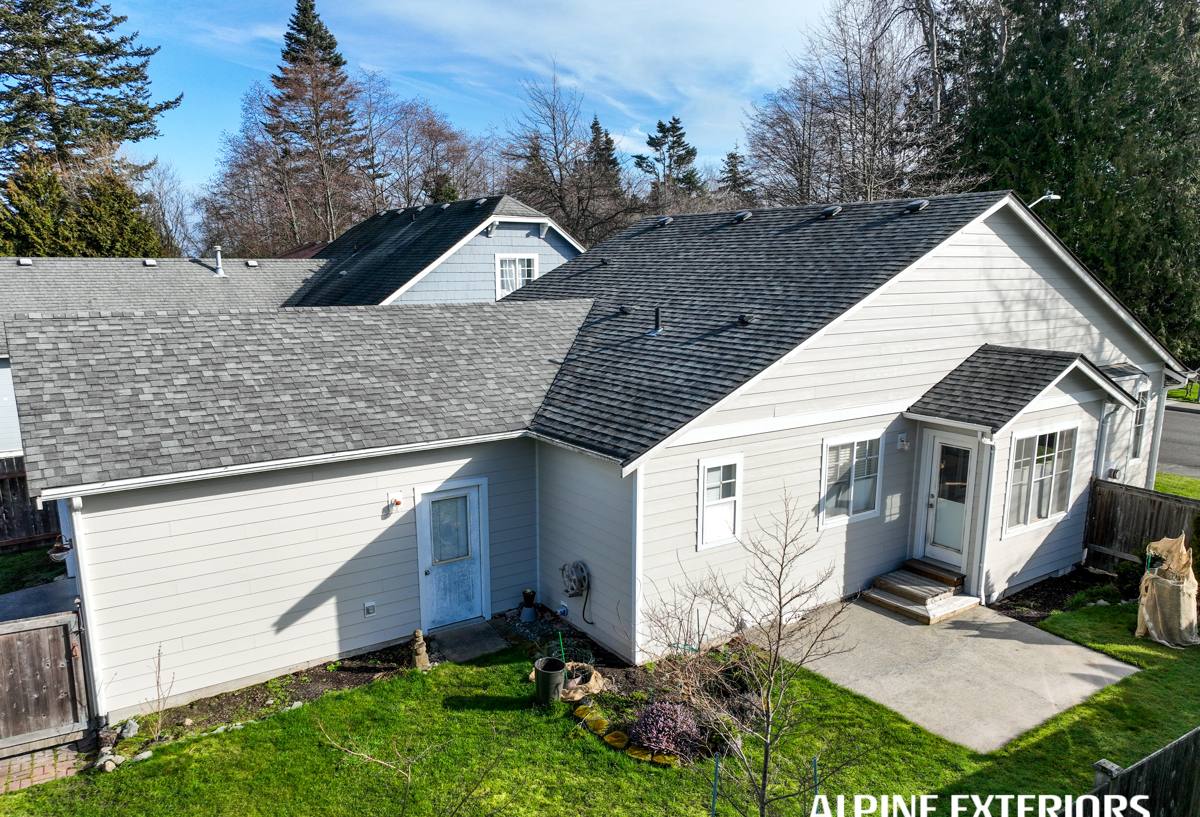
What Salt Air, Driving Rain, and Moss Season Do to a House
Salt Air and Metal Fatigue
Airborne salt doesn't just sit on the surface of siding — it works into fasteners, flashing, and any exposed metal trim. Over years, that accelerates corrosion in ways that inland homes never experience. Fastener corrosion is one of the most common causes of premature siding failure we see in coastal work: a rusted nail head loses its grip, a panel starts to loosen, and water finds a new way in.
Driving Rain and Wind-Driven Moisture
Rain that comes in sideways behaves differently than rain that falls straight down. It gets pushed up under laps, into seams, and around window and door trim that would stay dry in a calmer climate. Siding systems and installation details that work fine in a sheltered valley can underperform on an exposed peninsula lot unless the flashing, caulking, and lap sequencing are done with that wind-driven moisture specifically in mind.
Moss, Algae, and the Long Wet Season
Western Washington's extended damp season is long everywhere, but a marine-exposed property tends to stay wetter, longer, especially on north- and west-facing walls that don't get much direct sun. Moss and algae growth on siding isn't just cosmetic — sustained moisture and organic growth against a wall surface is exactly the condition that causes wood-based products to soften, delaminate, or rot from the inside out.
Signs Your Exterior Is Losing the Battle
Because Point Roberts homes take a heavier environmental load, it pays to catch problems early rather than after they've spread behind the wall. Walk your exterior periodically and look for:
- Soft or spongy spots when you press on siding, especially near the bottom courses and around window trim
- Paint that's bubbling, peeling, or wearing unevenly on one side of the house more than others
- Persistent moss or algae staining that comes back quickly after cleaning
- Streaking or discoloration below nail heads or seams, which often points to trapped moisture or corroding fasteners
- Gaps or separation at butt joints, corners, or where siding meets window and door trim
- Visible warping, cupping, or swelling along panel edges
- Roof flashing or shingles that look worn well before their expected service life
Any one of these on its own might be minor. Several together, especially on the windward side of the house, usually means it's worth having someone look at the whole envelope rather than patching the symptom.
Why We Install Only James Hardie Fiber Cement
We don't install vinyl, LP SmartSide, Cemplank, Allura, primed spruce, or cedar. That's a deliberate standard, not a lack of options, and it matters more in a place like Point Roberts than it would somewhere sheltered.
Vinyl siding expands and contracts significantly with temperature swings and can become brittle in cold, wind-driven conditions — it also isn't a fire-resistant material, which matters to some coastal homeowners who want a non-combustible exterior. Wood-based products, including engineered wood siding and traditional cedar, depend heavily on maintaining an intact paint or finish layer to keep moisture out; once that layer is compromised in a wet, salt-exposed climate, wood fiber and OSB-based cores are vulnerable to swelling and rot at a pace we're not willing to put our name behind. Cedar can look excellent, but it demands a maintenance commitment — recoating, caulking, and moisture monitoring — that most homeowners underestimate until they're several years in.
James Hardie fiber cement is engineered specifically to resist the combination Point Roberts throws at a house: it doesn't absorb water the way wood-fiber products do, it's non-combustible, and it holds its factory-applied ColorPlus finish far longer than field-applied paint on wood or engineered products. Hardie also builds climate-specific HZ product lines, so the material specified for a Pacific Northwest coastal install is engineered differently than what would go on a house in the desert Southwest. That's a level of climate-matching we can't get from the products we've chosen not to carry.
Product Comparison for a Coastal Whatcom County Home
| Material | Moisture Tolerance | Maintenance Burden | Fire Resistance | Typical Field Lifespan* |
|---|---|---|---|---|
| Vinyl siding | Doesn't absorb, but seams/laps can let water behind panel | Low, but limited repair options once damaged | Combustible | 20-30 years |
| Cedar / wood siding | Poor once finish is compromised | High — regular refinishing required | Combustible | 15-25 years with upkeep |
| LP SmartSide (engineered wood) | Moderate; core is wood-strand based | Moderate — finish maintenance matters | Combustible | 20-30 years |
| James Hardie fiber cement | High — cement-based core doesn't swell/rot like wood | Low — factory finish holds up over time | Non-combustible | 30-50+ years with proper install |
*Field lifespan varies with installation quality, exposure, and maintenance; figures are general industry ranges, not guarantees.
Roofing, Windows, and Decks: The Whole Envelope Matters
Siding doesn't work in isolation. On an exposed property, roofing, window flashing, and even deck construction all interact with how water moves around the building.
Roofing
A roof system exposed to the same salt air and wind-driven rain needs flashing details and material choices that hold up to the same conditions we account for on the walls. Roof and siding transitions — where a roof edge meets a wall, or where a chimney or dormer breaks the plane — are common leak points if not detailed correctly the first time.
Windows
Window flashing is one of the most common failure points we find behind older siding on coastal homes. Properly integrating new siding with window flashing, or replacing windows as part of a siding project, is often the difference between a wall assembly that sheds water correctly and one that traps it.
Decks
Outdoor living structures on a marine-exposed lot deal with the same moisture and salt load as the siding, plus direct weather exposure with no wall to shield them. Fastener selection, board spacing, and ledger flashing all need to account for that.
What Correct Installation Looks Like Here
Fiber cement siding performs the way it's supposed to only when it's installed to manufacturer specification — that's true anywhere, but the margin for error is smaller on an exposed coastal lot. Correct installation in this climate generally means:
- Proper clearance between siding and grade, decks, and roof lines to avoid wicking moisture
- Correctly lapped and sealed house wrap or weather-resistive barrier behind the siding
- Stainless or coated fasteners suited to a salt-air environment, driven to the manufacturer's specified pattern
- Caulking and flashing at every penetration, joint, and trim transition — not just the visible seams
- Panel and joint spacing that accounts for expansion without leaving gaps for wind-driven rain to exploit
Skipping any of these doesn't usually cause an immediate, visible problem — it shows up two, five, or ten years later as the kind of hidden moisture damage that's far more expensive to fix than it would have been to do right the first time.
Why a Local Crew Matters for an Exclave Community
Point Roberts' geography adds a logistics layer that a lot of contractors don't plan for. Materials, equipment, and crews generally need to route through the border crossing to reach the peninsula, which means scheduling and staging have to be planned with that in mind rather than treated as an afterthought. A crew that regularly works this area builds that into the project timeline from the start, instead of discovering it mid-job. It also means we're familiar with the specific way this stretch of coastline behaves — which walls take the worst of the wind-driven rain, where moss tends to build up fastest, and what kind of flashing details actually hold up here over time, as opposed to generic advice written for a different climate.
Maintaining a Hardie Exterior on the Peninsula
One of the practical advantages of fiber cement in this climate is how little ongoing maintenance it asks for compared to wood-based alternatives. A reasonable annual routine still helps:
- Rinse siding gently once or twice a year to keep salt residue and organic growth from building up, especially on shaded walls
- Check caulking at trim, window, and door joints for cracking or separation
- Keep gutters clear so water isn't overflowing down the face of the siding
- Trim back vegetation that keeps a wall section shaded and damp longer than necessary
- Have flashing and roof-to-wall transitions checked periodically, particularly after a hard winter storm season
If you're weighing a siding, roofing, window, or deck project on a Point Roberts property, we're happy to walk the exterior with you, point out what the marine exposure has already done, and put together a straightforward, no-pressure estimate for what it would take to get it right.