 Birch Bay Siding
 Why Siding Quotes Vary So Much
Ask three contractors to price the same Birch Bay house and you'll likely get three different numbers, sometimes with a wide gap between the lowest and highest bid. That's not necessarily a sign that someone is padding the estimate or someone else is lowballing it. Siding pricing depends on a long list of variables, and no two contractors weigh them the same way. Understanding what actually drives the number lets you compare bids on substance instead of just picking the cheapest sheet of paper.
This page walks through the real cost factors — material, labor, site conditions, and the local climate realities that show up on a Birch Bay or greater Whatcom County home whether you plan for them or not.
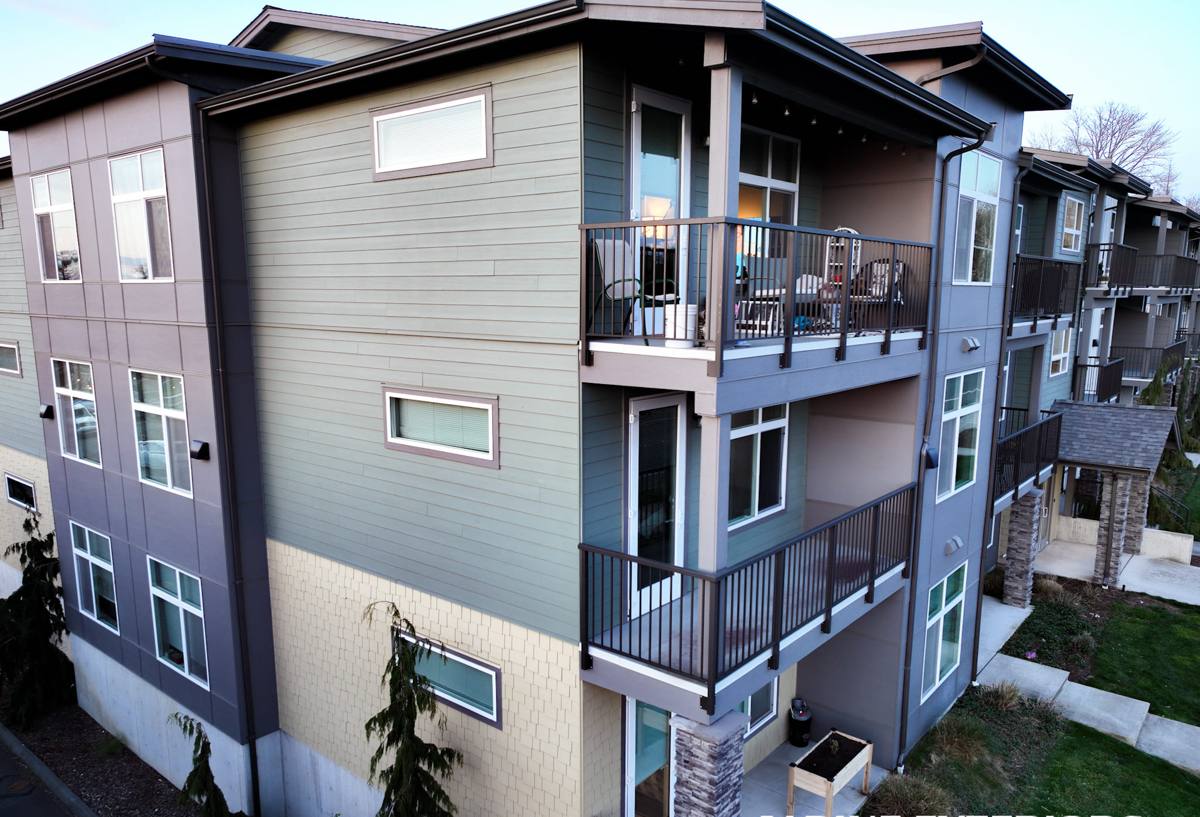
The Core Cost Factors
Every siding estimate is built from the same handful of ingredients. How much each one costs depends on your specific house, but the categories themselves are consistent across projects.
| Factor | What Drives the Cost |
|---|---|
| Material | Vinyl, engineered wood, fiber cement, and cedar all carry different material costs per square foot, before labor is even added |
| Tear-off and disposal | Removing old siding, hauling debris, and disposal fees — higher if the old material is layered or contains lead paint |
| Wall condition | Rotted sheathing, soft trim, or water-damaged framing found once the old siding comes off |
| House complexity | Stories, dormers, gables, bump-outs, and corners all add cutting time and waste |
| Weather barrier | Housewrap or rainscreen detailing, which matters more here than in drier climates |
| Trim and accessories | Corner boards, window and door trim, fascia, soffit work bundled into the job |
| Finish | Factory-applied color versus field painting, and how many coats a field-painted product needs |
| Permits and code | Whatcom County and local jurisdiction permit fees, plus any code-driven upgrades triggered by the scope of work |
Material Is Only Part of the Bill
Homeowners often shop by material price per square foot and assume that number predicts the total. It doesn't. Labor, tear-off, and repair work frequently add up to more than the siding itself, especially on an older home. A lower material cost with a harder installation can easily land at the same total price as a higher material cost with a straightforward one.
How Different Siding Materials Behave on the Cost Sheet
We install James Hardie fiber cement exclusively, so we'll be direct about where it sits on the spectrum and why, rather than pretending every material behaves the same.
- Vinyl — Generally the lowest material cost and fast to install, but it's a thin, flexible product that can warp in direct sun exposure and shows impact damage more easily. It also can't be painted a different color down the road without replacing it.
- LP SmartSide and other engineered wood — Mid-range material cost, but it's an OSB-based product. Its performance depends entirely on unbroken paint film and correctly sealed cut edges — a single missed edge in a wet climate is where trouble starts.
- Cedar — Often the highest material and labor cost once you factor in the finish schedule it needs. It looks excellent new but demands ongoing refinishing to hold up against moisture and requires vigilant gutter and drainage maintenance.
- James Hardie fiber cement — Mid-to-upper material cost, offset by a factory ColorPlus finish (no repainting cycle for years), a non-combustible composition, and product lines engineered for specific climate zones, including moisture-prone coastal ones like ours.
We don't install LP SmartSide, vinyl, Cemplank, Allura, primed spruce, or cedar. That's a standard we hold, not a knock on every homeowner who has one of those products on their house today — plenty perform fine when installed correctly and maintained on schedule. But we've made a professional call about what we're willing to warranty our labor on, and fiber cement engineered for wet coastal climates is where we've landed.
Labor: The Cost Factor Homeowners Underestimate
Labor is frequently the single largest line item on a siding job, and it's the one most affected by things a homeowner can't see from the curb.
What Adds Labor Hours
- Multiple stories or steep rooflines requiring scaffolding or lift equipment
- A high corner-to-wall-area ratio (lots of small walls versus a few big ones)
- Existing siding that has to be carefully removed rather than stripped fast
- Rot repair to sheathing, framing, or window/door openings discovered mid-tear-off
- Proper flashing and weather-resistive barrier detailing around every penetration
- Site access — narrow side yards, landscaping to protect, or limited staging space
A contractor who quotes low on labor is usually quoting for the best-case version of your wall — no rot, no surprises, no extra flashing detail. That's a fine bet on a newer home. On an older Birch Bay house that's weathered decades of coastal storms, it's a bet that often loses, and the "extra" charges show up as change orders mid-project.
What Standard Estimates Often Miss
The gap between an initial quote and the final invoice usually comes from a short list of items that don't get priced until the old siding is off the wall.
| Hidden Cost | Why It Gets Missed |
|---|---|
| Rotted sheathing replacement | Not visible until old siding is removed |
| Window and door flashing corrections | Prior installs often lacked proper flashing; only found on tear-off |
| Trim and fascia replacement | Sometimes bid separately or assumed "reusable" when it isn't |
| Housewrap or rainscreen upgrade | Older homes may have no weather barrier, or a failed one |
| Permit and inspection fees | Varies by jurisdiction and scope; sometimes left off a rough estimate |
A quote that accounts for these possibilities up front — even as an allowance or a contingency line — is more honest than one that looks lower on paper but doesn't mention them at all.
The Cost You Don't See on Day One: Long-Term Maintenance
The sticker price of a siding job is only half the financial picture. The other half is what the material costs you over the next 15-30 years in maintenance, repainting, and repair.
Lifecycle Cost, Not Just Install Cost
A field-painted or engineered-wood product might install for less today but need repainting or recaulking on a recurring cycle. Factor that maintenance labor and material cost over the life of the siding, and the lower up-front number can end up costing more by year 15 than a factory-finished product that doesn't need repainting at all. This is the math we walk homeowners through rather than just quoting a single number and moving on.
What Birch Bay's Climate Adds to the Equation
Whatcom County siding jobs carry cost factors that don't show up on a house in a drier inland climate.
- Salt air corrosion — Birch Bay's proximity to the water means fasteners, flashing, and trim hardware are exposed to salt-laden air. Cutting corners on corrosion-resistant fastener specs is a common way cheap bids stay cheap, and it's a false economy on this coastline.
- Driving rain exposure — Wind-driven rain off the Strait pushes water into wall assemblies that aren't detailed correctly. Correct weather-resistive barrier installation and flashing sequencing cost labor time, but they're what actually keeps water out of the wall long after the siding itself looks fine.
- Long moss season — Extended damp, shaded conditions common through much of the year encourage moss and algae growth on siding surfaces, especially on north-facing walls and under tree cover. Some materials shed this easily with a rinse; others hold moisture against the surface and need more attention.
None of these factors are exotic — they're just part of building on this coastline, and any contractor who's worked in Birch Bay, Blaine, or greater Whatcom County long enough builds them into how a job gets priced and installed.
How to Read and Compare Siding Quotes
The best way to compare bids isn't the bottom-line number — it's what's actually included in that number. Use this checklist when a quote comes in:
- Is the material and product line named specifically, not just "fiber cement" or "premium siding"?
- Does the quote include tear-off and disposal, or is that a separate line?
- Is there a stated allowance or process for sheathing/framing repair if rot is found?
- Does it specify the weather-resistive barrier and flashing details, or just "siding install"?
- Are trim, fascia, and soffit work included or excluded?
- Does it name the warranty — on the product, on the labor, or both?
- Are permit fees included or billed separately?
A contractor willing to answer every one of these in writing before you sign is telling you something about how the rest of the job will go.
Why We Standardized on James Hardie
We stopped installing the wider range of siding products years ago and narrowed to James Hardie fiber cement exclusively. It's not the cheapest material on the shelf, but for a Whatcom County coastal climate — salt air, driving rain, a long moss season — it holds up to conditions that are hard on a lot of alternatives. The factory ColorPlus finish removes the repainting cycle from the maintenance equation, the material is non-combustible, and Hardie's HZ product lines are engineered with regional climate exposure in mind. We'd rather quote a job once, install it to spec, and stand behind it with a real warranty than sell a cheaper product and see it back on our schedule for repairs in a few years.
If you're weighing a siding replacement on a Birch Bay home and want a straight answer on what your specific project will actually cost — not a ballpark pulled from a national average — we're happy to walk the house with you and put together a detailed, no-pressure estimate using the form below.