 Birch Bay Siding
 Siding in Lynden: A Different Kind of Wear and Tear
Lynden sits inland from Birch Bay and the Salish Sea, but it doesn't escape the marine-influenced weather that defines this corner of Washington. Moisture-laden air moves in off the Sound and settles into the Nooksack River lowlands, and it doesn't leave in a hurry. Homeowners here deal with long stretches of driving rain in the fall and winter, heavy dew and fog through the shoulder seasons, and a stretch of near-constant dampness that keeps north-facing walls, shaded soffits, and anything under a tree line perpetually wet. That combination is exactly what grows moss, and moss on siding isn't just an appearance problem — it holds water against the wall assembly and accelerates rot underneath materials that aren't built to handle it.
Add in Whatcom County's freeze-thaw cycles — not brutal by national standards, but frequent, with damp wood siding or trim swelling and contracting through repeated cold snaps — and you get a slow, cumulative kind of damage. It rarely shows up as a single dramatic failure. Instead it's soft trim boards, cupped or delaminating panels, chalky faded paint, and moss creeping up from grade line by year five or six. We see it on a lot of the homes we're called out to in Lynden, especially older properties with wood, vinyl, or engineered wood siding that was never really matched to this climate.
What We Actually Install — And What We Don't
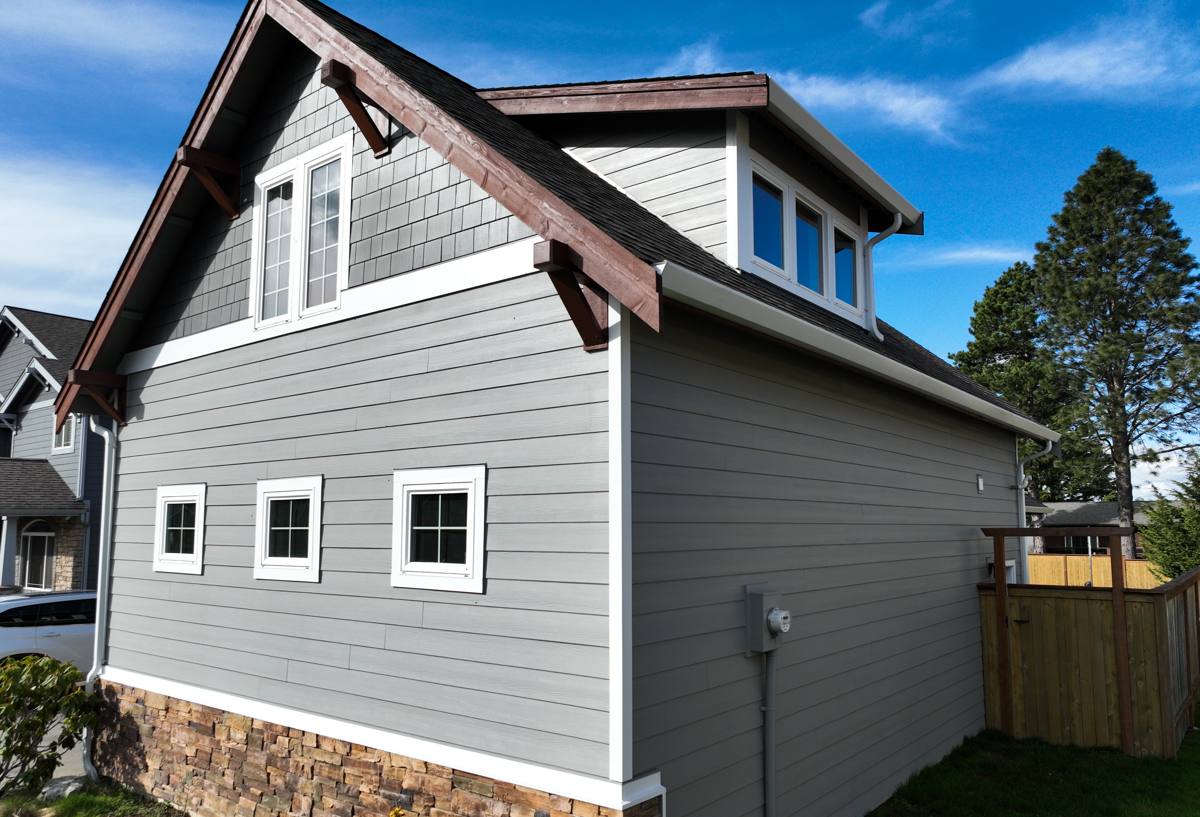
Birch Bay Siding Companies installs James Hardie fiber cement siding exclusively. We don't install LP SmartSide, vinyl, Cemplank, Allura, primed spruce, or cedar. That's not a marketing line — it's a standard we've held to because we've seen how each of those products performs over time in exactly the kind of damp, moss-prone conditions Lynden deals with, and we'd rather turn down work than install something we don't think will hold up.
Engineered wood products like LP SmartSide use a wood-strand substrate with a resin-saturated overlay. It's a genuine improvement over old-style hardboard siding, and it holds paint well when it's installed and maintained correctly. But it's still wood at its core, which means cut edges, fastener holes, and any breach in the factory coating are vulnerable to moisture intake — and moisture intake in a climate like this one doesn't dry out quickly between rain events. Vinyl siding is affordable and low-maintenance in the sense that it doesn't need painting, but it's a thin material that can warp, fade unevenly, and crack in cold snaps, and it doesn't offer the same fire performance as fiber cement. Primed spruce and cedar are beautiful materials with a real place in architecture, but they require an ongoing maintenance commitment — refinishing on a schedule, vigilant caulking, and prompt attention to any moss or mildew — that most homeowners underestimate when they choose them.
James Hardie fiber cement is a cement-and-cellulose composite. It doesn't rot, it isn't attractive to insects, and it's non-combustible. The ColorPlus factory finish is baked on under controlled conditions rather than field-painted, which means better adhesion and color consistency than a job-site paint job, and Hardie backs it with a real finish warranty. For a climate that punishes anything with a weak point at the surface, that combination matters more than it does in a drier region.
Matching the Product to the Climate: HZ5 and Panel Selection
Hardie engineers its siding in regional formulations called HZ (Hardie Zone) products, tuned to the climate they'll be installed in. Whatcom County falls in a zone where moisture resistance and freeze-thaw performance matter more than, say, extreme heat resistance. We select and install products matched to that reality rather than defaulting to whatever's cheapest to stock. That includes attention to:
- Proper panel and lap siding profiles for the home's exposure — more protected walls versus walls that take direct weather
- Trim and fascia details that shed water away from seams instead of channeling it into them
- Rainscreen or drainage-plane installation where the wall assembly benefits from an air gap behind the siding
- Correct fastener patterns and caulking at penetrations, since most fiber cement failures trace back to installation gaps, not the material itself
Roofing, Windows, and Decks: The Whole Envelope Matters
Siding doesn't work in isolation. A wall system in Lynden's climate depends on the roof shedding water correctly, windows sealing tight against wind-driven rain, and any deck framing staying clear of moisture traps at the house connection. We handle all four — siding, roofing, windows, and decks — because problems in one area routinely show up as damage in another. A leaking roof valley or a poorly flashed window can rot the wall sheathing behind perfectly good siding. A deck ledger board attached without proper flashing can rot out the rim joist it's bolted to. Treating the exterior as one connected system, rather than four separate trades that don't talk to each other, is how you actually stop repeat problems instead of chasing them one at a time.
Roofing
Roof condition and siding condition are tied together more than most homeowners realize. Poor roof drainage, undersized gutters, or missing kickout flashing send extra water down exterior walls exactly where siding and trim are least able to handle it. When we're on site for siding work, we look at roof-to-wall intersections as part of the job, not as an afterthought.
Windows
Window replacement and siding replacement go together well because flashing and integration details are far easier to get right when both are done in the same project. Old, leaky window flashing is one of the most common hidden causes of wall rot we find once old siding comes off.
Decks
In a climate that stays damp for months at a stretch, deck framing and ledger connections need real attention to flashing and fastener choice. We build and repair decks with that in mind, not just for the walking surface but for what's underneath it.
What a Lynden Homeowner Should Look for in a Contractor
Whatcom County has plenty of exterior contractors, and not all of them are equally careful about the details that actually matter in this climate. Before hiring anyone for siding, roofing, window, or deck work, it's worth checking a few basics:
- Current Washington state contractor license and liability insurance, verifiable through the state's L&I lookup
- Manufacturer training or certification for the specific siding product being installed
- A written scope of work that specifies flashing, house wrap or drainage plane details, and fastener schedule — not just "install siding"
- Willingness to explain why they use the products they use, including honest trade-offs
- References or past work you can actually see, not just a portfolio of photos
- A clear warranty structure covering both materials and labor, in writing
A local crew that works in Whatcom County year-round has a practical advantage here: they've seen how different products and installation details actually perform after a few wet winters, not just how they look on installation day.
Cost Factors to Understand Before You Get Quotes
Siding and exterior project costs vary widely based on home size, existing condition, and scope, so we won't quote numbers here that don't mean anything without a site visit. What we can do is lay out the factors that actually move the price, so quotes make more sense when you get them.
| Factor | Why It Matters |
|---|---|
| Existing siding removal and disposal | Tear-off adds labor and disposal cost, and can reveal sheathing damage that changes the scope |
| Wall sheathing and moisture damage repair | Rot found once old siding is off has to be addressed before new siding goes on — this is common in older Lynden homes |
| Siding profile and trim complexity | Lap siding, panel systems, and detailed trim packages all price differently |
| Home size and wall height | More square footage and multi-story walls mean more material and more staging/labor |
| Window and door count | Every opening needs flashing and trim work, which adds labor beyond flat wall area |
| Combined scope with roofing, windows, or decks | Bundling exterior work can reduce mobilization costs and improve flashing continuity between trades |
A Practical Checklist Before Your Project Starts
- Get a written estimate that breaks out material, labor, tear-off, and disposal separately
- Ask what happens if rotten sheathing is found once old siding comes off, and how that's priced
- Confirm which Hardie product line and color are specified, in writing, before work begins
- Ask about the drainage plane or rainscreen approach for your specific walls
- Clarify the warranty on both the ColorPlus finish and the labor performed
- Set expectations for project timeline around Whatcom County's wetter months
Why Local Experience Matters More Than It Sounds Like It Should
A siding crew that only works in drier inland climates can install a technically correct wall system that still underperforms here, simply because they're not used to designing for near-constant moisture, moss growth at grade, and long dry-out delays between rain events. Working in Lynden and the rest of Whatcom County day in and day out means we're constantly seeing how the last job we did is holding up, which shapes how we detail the next one. That feedback loop is hard to replicate if you're not based here.
If you're dealing with moss-covered siding, soft trim, drafty windows, or a deck that's starting to show its age, we're happy to take a look and talk through what's actually going on before recommending anything. If you'd like a free, no-pressure estimate for siding, roofing, window, or deck work on your Lynden home, use the form below and we'll get in touch.