 Birch Bay Siding
 What Primed Spruce Siding Is
Primed spruce siding is solid-wood lap or panel siding milled from spruce lumber, coated at the factory (or job site) with a primer coat before final painting. It's been a staple in the Pacific Northwest for decades because spruce is affordable, readily available, easy to mill into traditional lap profiles, and it takes paint well when it's fresh. Walk through any older neighborhood in Whatcom County and you'll see plenty of it, some of it holding up fine, some of it clearly on its second or third repaint.
We get asked about it regularly, usually by homeowners comparing bids who've been quoted primed spruce as a lower-cost option next to fiber cement. It's a fair question, and it deserves a straight answer instead of a sales pitch. Primed spruce isn't a bad product in the abstract. It's a product that asks a lot of the paint film, the installer, and the homeowner's maintenance schedule — and in a marine climate like Birch Bay's, those demands add up faster than most people expect.
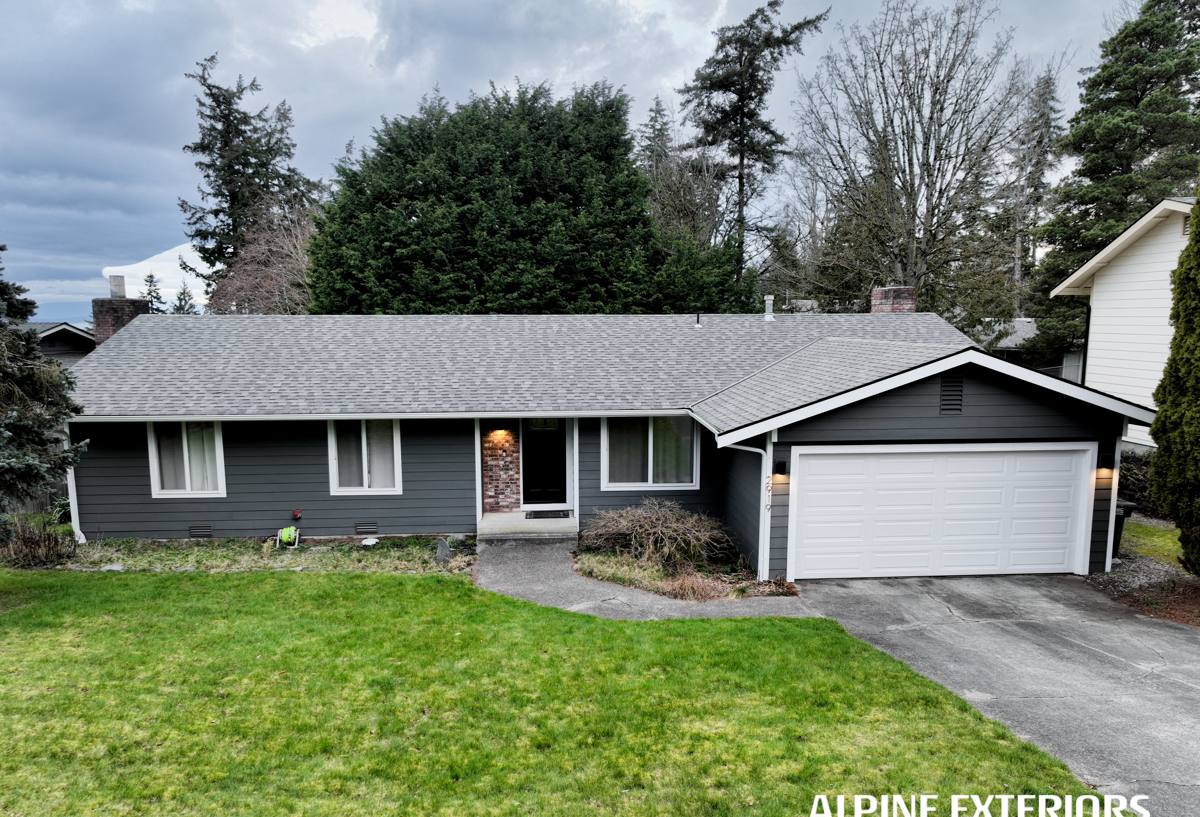
How Primed Spruce Is Built to Perform
Spruce is a softwood. It's stable enough to mill cleanly and light enough to work with, but it's also more porous and less naturally rot-resistant than cedar or the engineered wood products that have largely replaced it. The primer coat exists to seal the wood fibers and give the topcoat paint something uniform to bond to. In theory, as long as that paint film stays intact — no cracks, no gaps at the joints, no bare wood exposed — the primer and paint keep moisture out and the board underneath stays dry.
That "as long as" is the entire story with this product. Primed spruce doesn't fail because the wood is bad. It fails when the paint film that's protecting it breaks down faster than the homeowner repaints it, and once that happens, the wood underneath has no real second line of defense.
Where the paint film is weakest
Every siding installation has stress points: butt joints where two boards meet end to end, cut ends at corners and window trim, nail penetrations, and the bottom edge of each lap board where water sheets off during a storm. On primed spruce, those are exactly the spots where the factory primer is thinnest or where field cuts expose raw, unprimed wood. If those cut ends and joints aren't back-primed and caulked correctly during installation, they become the first place the wood starts absorbing water — often years before the rest of the wall shows any sign of trouble.
Why Birch Bay's Climate Is a Tough Testing Ground
We don't say this to scare anyone off wood siding categorically — we say it because Whatcom County's coastal exposure is genuinely harder on painted wood than most inland climates, and it's worth understanding why before you commit to a material with a thin margin for error.
- Salt air: Birch Bay sits directly on the water, and salt-laden air accelerates the breakdown of paint films and metal fasteners alike. Salt is hygroscopic — it pulls moisture out of the air and holds it against surfaces, which keeps painted wood damp longer after a storm passes.
- Driving rain: Wind-driven rain off the strait doesn't just wet the siding, it drives water sideways into laps, joints, and fastener holes that a straight-down rain would never reach. That's precisely where primed spruce is most vulnerable.
- A long moss and algae season: Whatcom County's mild, wet stretch from fall through spring keeps north-facing and shaded walls damp for months at a time. Moss and algae don't just look bad on painted wood siding — they hold moisture against the surface and can work into hairline paint cracks, widening them over time.
None of this is unique to our company's opinion — it's the same reason paint manufacturers and siding suppliers rate coastal and marine environments as more demanding exposure categories than typical suburban or inland sites. A product that performs acceptably in a dry inland climate can age noticeably faster a few miles from the water.
The Maintenance Reality Homeowners Take On
The repaint clock starts immediately
Primed spruce siding is not a paint-once product. Depending on exposure, sun, and how well the original installation was primed and caulked, most primed wood siding in a coastal climate needs a fresh topcoat every 5 to 8 years to keep the paint film intact — sooner on south- and west-facing walls that take the most sun and weather. Skip a cycle, and you're not just risking a faded look. You're risking the paint film cracking open and letting water into the wood underneath, which is a repair problem, not a cosmetic one.
Caulking is not a one-time job
Every joint, seam, and trim intersection on a wood siding job is caulked at installation, and that caulk has a service life shorter than the siding itself. As caulk shrinks and cracks — which happens faster with the temperature swings and moisture cycling common near the water — those joints need to be re-caulked and touched up with paint. It's routine work, but it's easy to fall behind on, and falling behind is exactly how rot gets started at a butt joint nobody's looked at closely in a few years.
What Happens When the Paint Film Fails
When water does get behind the paint on primed spruce, the wood doesn't dry out quickly, especially through a Birch Bay winter with short days and persistent damp. Trapped moisture leads to soft, punky wood, and once rot sets in at a board, it tends to spread along the grain rather than staying contained to one spot. By the time it's visible from the outside — a soft spot under a windowsill, a discolored patch near a butt joint, paint that's alligatoring or lifting in sheets — the damage underneath is often more extensive than the surface suggests.
Repairs at that point usually mean cutting out and replacing individual boards, which is more disruptive and harder to color-match than most homeowners expect, especially on a wall that's been repainted a time or two already. None of this means every primed spruce installation is doomed. Plenty of well-maintained wood siding jobs last for decades. It means the product only performs as advertised if the maintenance schedule is followed without gaps, indefinitely, in a climate that doesn't give you much slack.
Cost Over Time: A Fair Comparison
The sticker price on primed spruce is usually lower than fiber cement. Total cost of ownership over 20-30 years tells a different story once you account for repainting and repair labor, which is the number that actually matters when you're deciding what goes on your walls for the next few decades.
| Factor | Primed Spruce | James Hardie Fiber Cement |
|---|---|---|
| Initial material cost | Lower | Moderate to higher |
| Factory finish | Primer only; topcoat painted after install | Baked-on ColorPlus finish, factory-warranted |
| Repaint interval | Roughly every 5-8 years in coastal exposure | ColorPlus finish typically holds 15+ years before repaint is needed |
| Moisture vulnerability | High if paint film or caulk fails | Low; non-combustible fiber cement resists moisture-driven rot |
| Susceptibility to moss/algae staining | Moderate to high on shaded walls | Lower; engineered surface sheds and cleans more easily |
| Manufacturer warranty | Typically limited or none on the wood itself | Long-term, transferable limited warranty on product and finish |
Why We Standardized on James Hardie Instead
We made a deliberate decision to install only James Hardie fiber cement siding, and this is the kind of product comparison that explains why. Hardie's HZ5 product line is engineered specifically for climates like ours — moisture, freeze-thaw cycling, and the kind of sustained damp exposure that's normal for a Birch Bay winter. It's non-combustible, it doesn't rot the way wood does because it isn't wood, and its ColorPlus factory finish is baked on under controlled conditions rather than applied on-site, which gives it a far more consistent and durable topcoat than a field-primed-and-painted product can match.
That doesn't mean fiber cement is maintenance-free — no exterior product is. Caulking and touch-up still matter, and the product still has to be installed to Hardie's specifications, with correct clearances, fastening, and flashing, to perform the way it's designed to. But the baseline is different: the material itself isn't the thing that fails first, and homeowners aren't racing a repaint clock every five to eight years just to keep water out of the wall.
Questions to Ask Before You Choose a Siding Material
Whatever material you land on, these are the questions worth working through with any contractor bidding the job:
- What's the realistic repaint or refinish interval for this material in a coastal, high-moisture climate — not the manufacturer's best-case number?
- Does the manufacturer's warranty cover the material itself, or only defects, and is it transferable if you sell the home?
- How are butt joints, cut ends, and trim intersections detailed and sealed during installation?
- Is the finish factory-applied and warranted, or field-applied and dependent on the installer's prep and weather conditions that day?
- What does the total cost look like over 20-30 years, including repainting, caulking, and any board replacement, not just the installed price today?
- Has this contractor installed this specific product on homes with similar sun and wind exposure to yours?
If you're weighing primed spruce against fiber cement, or you're just trying to figure out what's already on your home and how it's holding up, we're happy to take a look and walk you through what we see, no pressure and no obligation. Reach out for a free estimate and we'll give you a straight answer.