 Birch Bay Siding
 Exterior Siding in Bellingham & Birch Bay, WA
Homes along this stretch of Whatcom County live with a climate that's harder on exterior materials than most homeowners realize until they've owned a house here for a few winters. Bellingham and the Birch Bay corridor sit close enough to the water that salt-laden air is a real factor, not a coastal cliché, and the region's long, wet stretch of the year keeps siding, trim, and roofing damp for weeks at a time. Add in a moss season that can run from late fall through spring, and you've got a combination of stressors that separates exterior products that merely look good on install day from ones that still look good five, ten, and twenty years later.
This page is meant to give homeowners in Bellingham and Birch Bay a straight, practical look at what the local climate does to siding, what a properly done exterior project looks like here, and why our crews only install James Hardie fiber cement siding rather than the vinyl, LP SmartSide, or bare wood products that are common elsewhere.
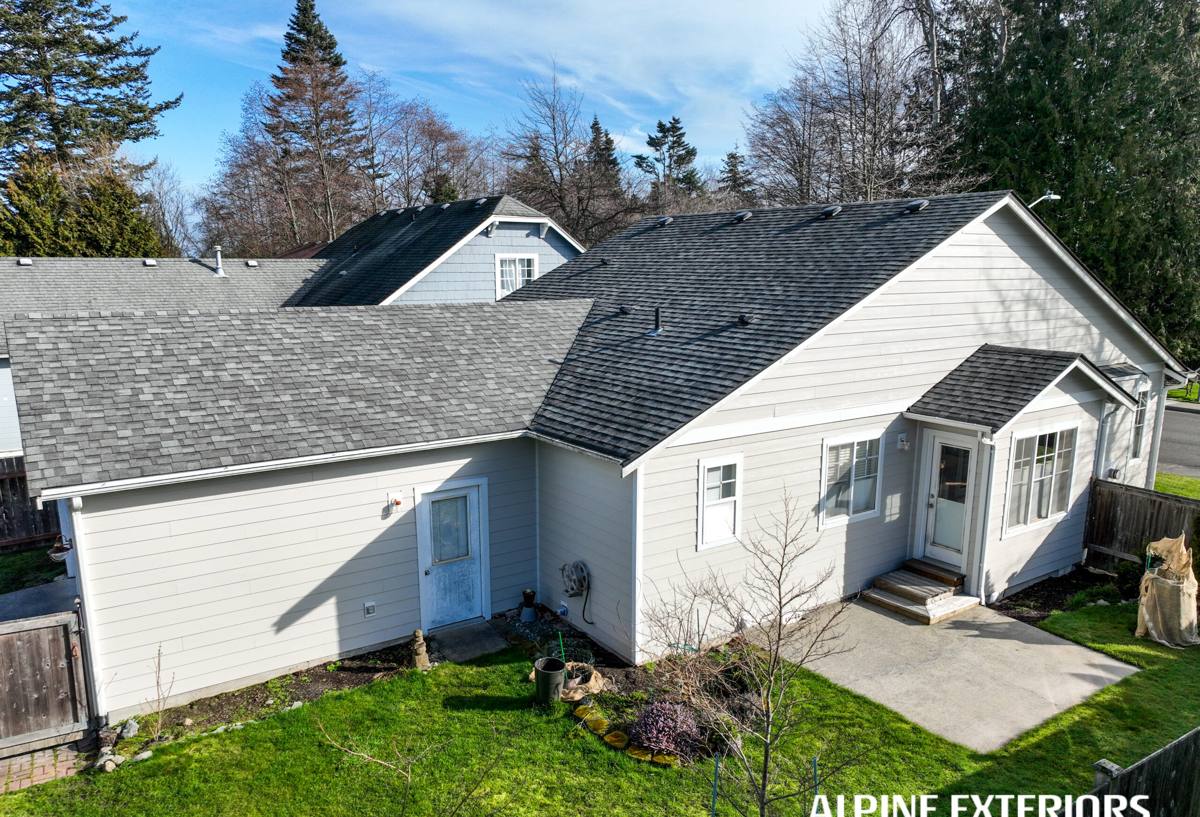
What This Climate Actually Does to a House
Salt Air and Driving Rain
Proximity to Puget Sound and the Strait of Georgia means airborne salt is part of daily exposure for a lot of homes in this area, especially those closer to the water or on higher, wind-exposed lots. Salt air accelerates corrosion on fasteners, flashing, and any exposed metal, and it can also break down certain paint and coating systems faster than inland exposure would. Combine that with wind-driven rain — which doesn't just fall straight down but gets pushed sideways into wall assemblies, window trim, and butt joints — and you have conditions that punish any siding product with weak seams, absorbent substrates, or coatings that weren't engineered for this kind of exposure.
Moss, Mildew, and Prolonged Dampness
Whatcom County's wet season keeps exterior surfaces damp for extended stretches, and shaded north- and west-facing walls in particular can stay damp long after a storm has passed. That's exactly the environment moss, algae, and mildew need to take hold. On some siding materials, that's mostly a cosmetic issue that pressure washing handles. On others — particularly wood-based and wood-fiber composite products — sustained moisture contact is how rot gets started, especially at butt joints, penetrations, and anywhere caulking has begun to fail.
Why Product Choice Matters More Here Than in Drier Climates
In a dry inland climate, a lot of siding products can get away with mediocre moisture engineering because they rarely see sustained wet conditions. Bellingham and Birch Bay don't offer that margin for error. We standardized our siding installs on James Hardie fiber cement for this reason: it's a cement-based product, not a wood-fiber or wood-composite one, so it doesn't absorb and hold water the way engineered wood siding can, and it doesn't provide the organic material that rot and certain fungi feed on. It's also non-combustible, which matters given how often the Pacific Northwest has seen extended wildfire smoke seasons affecting air quality and fire risk even west of the Cascades.
We don't install vinyl, LP SmartSide, Cemplank, Allura, primed spruce, or bare cedar siding. That's not a knock on every homeowner who has one of those products on their house today — plenty of installations hold up fine for years with good maintenance. It's a statement about what we're willing to warranty our labor against in this specific climate. Wood-fiber composite siding depends heavily on caulking, paint maintenance, and correct field-cut sealing to keep moisture out over the long run; in a climate with this much sustained dampness and salt exposure, that's a maintenance burden we don't think most homeowners want to sign up for. Vinyl expands and contracts significantly with temperature swings and can become brittle over time, and it doesn't offer the same fire performance or long-term color retention as a factory-finished fiber cement product.
How the Common Options Compare
| Factor | James Hardie Fiber Cement | Vinyl | Wood-Fiber Composite (e.g. LP) | Bare Cedar / Primed Wood |
|---|---|---|---|---|
| Moisture absorption | Very low — cement-based | Non-absorbent but seams can trap water | Higher — engineered wood core | High — natural wood |
| Rot risk in wet climates | Minimal when properly installed | Low, but trapped moisture behind panels is a risk | Moderate to significant if caulking fails | Significant without diligent upkeep |
| Salt air / coastal exposure | Engineered to resist | Generally stable, can chalk over time | Coating can degrade faster near salt air | Finish breaks down faster near salt air |
| Fire performance | Non-combustible | Combustible, can melt/warp | Combustible | Combustible |
| Maintenance | Low — factory ColorPlus finish | Low, but color fades and can't be easily touched up | Moderate — regular caulk/paint upkeep needed | High — regular staining/sealing |
| Typical lifespan with correct install | Multiple decades | 20-40 years, variable | Highly dependent on maintenance | Highly dependent on maintenance |
What a Proper Siding Installation Looks Like in This Climate
Material choice is only part of the equation — installation quality determines whether that material actually performs the way it's designed to. In a climate with driving rain and sustained moisture, the details behind the siding matter as much as the siding itself.
Water Management Behind the Cladding
A correctly built wall assembly directs any water that gets past the siding down and out, rather than letting it sit against the sheathing. That means a properly lapped weather-resistant barrier, correctly flashed windows and doors, and a drainage plane that gives water somewhere to go. This groundwork matters more here than in a dry climate because wind-driven rain will find any gap in the system eventually.
Fastening and Joint Treatment
James Hardie publishes specific fastening, clearance, and caulking requirements by climate zone (the HZ5 line is engineered for the Pacific Northwest's wetter conditions), and following those specs — correct nail placement, proper gaps at joints, factory-primed cut edges sealed in the field — is what keeps a fiber cement installation performing for decades instead of just years. Corrosion-resistant fasteners matter here too, given the salt air.
Working Around Moss-Prone Areas
Where a home has shaded, low-airflow wall sections — common under mature trees or on north-facing elevations near Birch Bay's tree line — we pay extra attention to drainage detailing and trim gaps that allow those areas to dry out between rain events rather than staying damp for weeks.
Roofing, Windows, and Decks: The Rest of the Exterior Envelope
Siding doesn't work in isolation. A roof that's shedding water improperly, windows with failed flashing, or a deck that's trapping moisture against the house all undermine even a well-installed siding job. We handle all four trades — siding, roofing, windows, and decks — specifically because they need to be thought of as one connected system in a climate like this one.
Roofing
Moss growth on roofs is one of the most visible symptoms of this region's climate, and a roof that's holding moisture or shedding debris into gutters affects how much water ends up running down exterior walls. Roof-to-wall flashing details are also a common point of failure that shows up as siding damage years later if not addressed at the source.
Windows
Window flashing integration is one of the more common weak points we find when replacing siding on older homes in this area. Even a high-quality window performs poorly if it wasn't flashed correctly into the wall assembly, and driving rain will exploit that gap over time.
Decks
Decks attached directly to the house need proper ledger flashing and separation from the siding above; a deck ledger board is a classic spot for hidden rot to develop in wet Pacific Northwest climates.
Signs Bellingham and Birch Bay Homeowners Should Watch For
- Persistent moss or dark streaking on siding, especially on shaded or north-facing walls
- Soft or spongy spots when pressing on siding near the bottom edge or around window trim
- Paint that's peeling or bubbling rather than just fading evenly
- Visible gaps or separation at siding joints and around window and door trim
- Rust staining running down from fasteners or metal flashing
- Musty smell or visible staining on interior walls that share an exterior wall
- Caulking that's cracked, shrunk, or pulled away from joints
None of these by themselves mean a full re-side is necessary, but they're worth having a professional look at before they turn into a larger repair.
What Affects the Cost and Timeline of a Local Siding Project
Every home is different, but a few factors consistently drive cost and scheduling for siding work in this area: the size and complexity of the home's exterior (number of corners, gables, and trim details), whether existing siding needs to be fully removed versus over-clad in limited cases, the condition of the sheathing and water barrier once the old siding is off, and access considerations for taller homes or tight lots. We walk through all of this during an on-site estimate rather than quoting blind, because guessing on a job like this usually means either underbidding the work or overbuilding a simple project.
Why a Local Crew Matters
A crew that works this specific corner of Whatcom County regularly understands which wall orientations tend to hold moss, how far wind-driven rain travels up a wall during a winter storm off the water, and which older homes in the area are likely to have outdated or missing water barriers behind the siding. That local knowledge shapes decisions on every job — where to add extra flashing attention, which details are worth over-building rather than building to minimum code. It's also easier to stand behind a warranty when the crew is local and available if something needs a look years down the road.
Choosing a Contractor: What to Check Before You Sign
- Confirm they're licensed and insured in Washington State, and ask to see current proof
- Ask specifically what siding brand and product line they install, and why
- Ask how they handle water barrier and flashing details, not just the visible siding
- Get a written scope of work, not just a total price
- Ask about manufacturer certification if they're installing a brand-name product like James Hardie
- Check whether the warranty covers labor as well as materials, and for how long
- Ask for references from jobs completed at least a few years ago, not just recent ones
If your home in Bellingham or Birch Bay is showing signs of wear, or if you're planning ahead for a siding, roofing, window, or deck project, we're happy to take a look and put together a straightforward, no-pressure estimate. There's no obligation — just an honest read on where your home stands and what it would take to get it right for this climate.