 Birch Bay Siding
 Exterior Work Built for Blaine's Coastline
Blaine sits at the northwest corner of Whatcom County, right on the water and right at the border, just up the coast from Birch Bay. Homes here take a different kind of beating than houses twenty miles inland. Salt air off the bay works into every seam and fastener. Driving rain off Georgia Strait and the Salish Sea comes in sideways more often than straight down. And the long gray stretch from October through April keeps north-facing walls, fence lines, and rooflines damp enough, long enough, that moss and algae get a real foothold. None of that is unique to Blaine, but the combination of shoreline exposure and a marine climate is exactly the mix that wears out the wrong exterior products fast.
We're a Birch Bay-based crew, and Blaine is inside our regular service area — not a stretch job we drive to once and forget. That matters more than most homeowners realize until they've dealt with a contractor two counties away who can't get back out for a warranty check or a small repair.
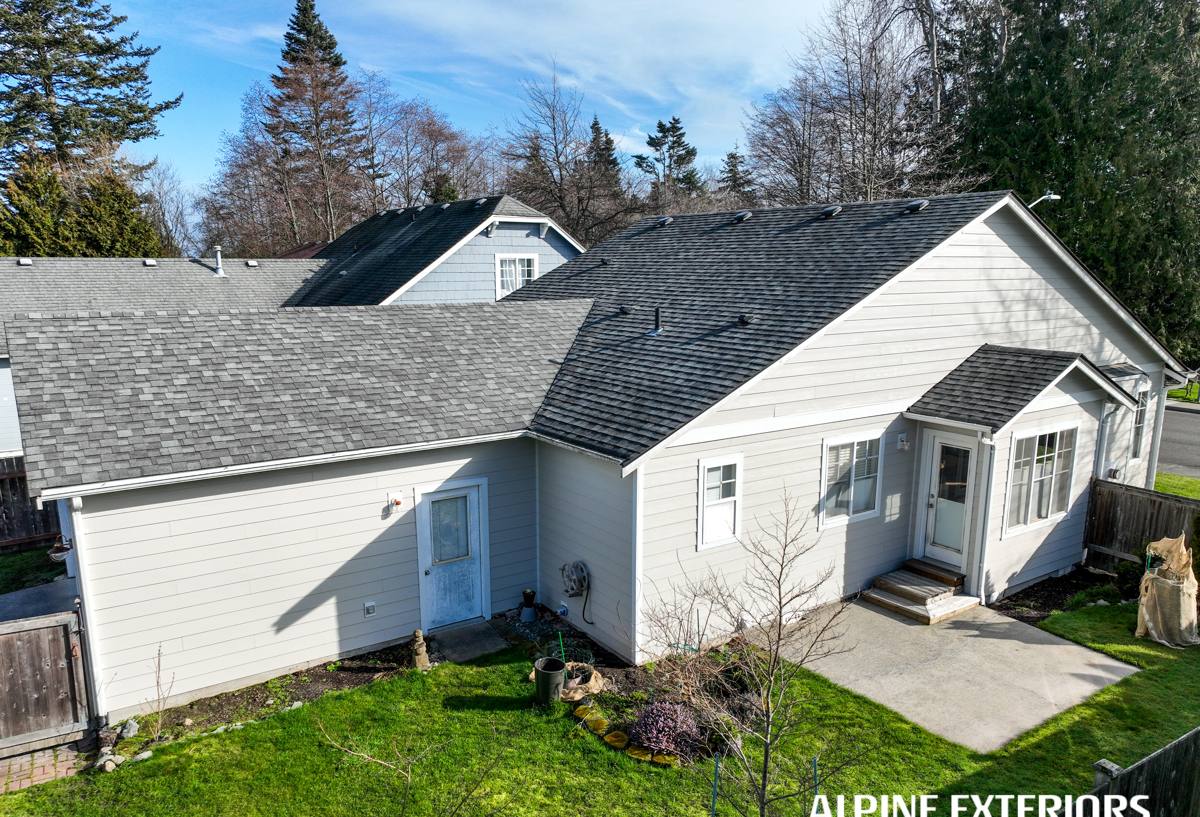
What the Climate Actually Does to a House Here
Salt Air and Metal Fasteners
Airborne salt accelerates corrosion on anything exposed — nail heads, flashing, hose bibs, light fixtures. On siding specifically, this shows up as rust streaking bleeding through paint, or fastener heads popping as corrosion expands the metal. Corrosion-resistant fasteners and proper flashing details matter more here than they would fifty miles inland, and it's worth asking any contractor bidding exterior work in Blaine what fastener spec they're actually using.
Wind-Driven Rain
Blaine's exposure means rain frequently arrives at an angle instead of falling straight down. That kind of wind-driven rain finds every gap in flashing, every poorly lapped seam, and every spot where caulk was asked to do a flashing detail's job. Siding systems and installation practices that work fine in a sheltered inland lot can fail here simply because the water load is higher and the exposure angle is worse.
Moss, Algae, and Extended Damp Season
Shaded and north-facing exterior surfaces in this part of Whatcom County stay wet for months at a stretch. Wood-based products absorb that moisture and swell, and organic growth gets a real head start on surfaces that don't dry out between rain events. Roofs and decks feel this too — moss on a roof holds moisture against the surface and shortens its life; moss on deck boards makes them slick and starts rot at the fastener points.
Why We Install James Hardie Fiber Cement — and Nothing Else
We standardized on James Hardie fiber cement siding for every job, including here in Blaine. We don't offer vinyl, LP SmartSide, Cemplank, Allura, primed spruce, or cedar as alternatives — not because those products have no merit, but because we've made a professional decision about what holds up on this coastline without turning into a maintenance project for the homeowner.
| Material | Where it struggles in a marine climate | Our take |
|---|---|---|
| Vinyl siding | Can warp or crack in temperature swings; seams and J-channels are a common path for wind-driven rain intrusion | Fine for many climates, not our choice for shoreline exposure |
| Wood-based composite (LP SmartSide) and primed spruce/cedar | Wood fiber or solid wood absorbs moisture; edges are the weak point once the factory seal is compromised | Requires disciplined caulk and paint maintenance to keep water out long-term |
| Other fiber cement (Cemplank, Allura) | Similar core material to Hardie, but we standardize on one system for consistent warranty, color-match, and install specs across every job | Not a knock on the product — a decision to specialize |
| James Hardie fiber cement | Engineered HZ5 product line specifically for cold, wet, high-moisture regions; factory-applied ColorPlus finish resists fade and doesn't rely on field paint as the primary moisture barrier | What we put on every home we side |
Hardie's fiber cement is non-combustible, doesn't swell or rot the way wood-based products can, and the ColorPlus finish process bakes color on at the factory rather than depending entirely on a field-applied coat. For a house sitting close to salt water and wind-driven rain, that combination reduces the number of things that can go wrong over the next twenty years.
Colors and Product Lines
Hardie's HZ5 line is engineered for climates like ours — freeze-thaw cycling, sustained damp, and coastal exposure. We help homeowners pick from the ColorPlus palette and match trim, fascia, and accent details so the whole exterior reads as one system rather than a patchwork of materials.
Siding Installation Done Right
Fiber cement is only as good as the installation behind it. A rushed or under-specified install can leak water just as easily as a poor material choice. Details we hold to on every Blaine job:
- Correct rainscreen or drainage plane behind the siding so any moisture that does get past the surface has somewhere to go
- Manufacturer-specified fastener type and placement — not whatever happened to be on the truck
- Properly lapped and sealed flashing at every window, door, and roof-to-wall transition
- Factory-cut and painted edges wherever possible to avoid exposing raw fiber cement to weather
- Correct clearance between siding and grade, decks, and roof lines to avoid standing moisture at the bottom edge
Roofing, Windows, and Decks — The Rest of the Envelope
Siding is one piece of a house's defense against this climate, not the whole system. We handle roofing, window replacement, and deck construction as well, because a strong siding job can still fail if the roof above it or the flashing around a window is letting water in from another direction.
Roofing
A roof in Blaine deals with the same wind-driven rain and extended damp season as the walls below it, plus moss and algae growth on shaded slopes. Ventilation, underlayment quality, and flashing at valleys and penetrations matter as much as the shingle or roofing material itself.
Windows
Old or poorly flashed windows are one of the most common leak points we find on coastal homes. Window replacement is also a chance to correct flashing details that were never right in the first place — something worth flagging to any contractor, since a new window installed over a bad flashing detail just relocates the leak.
Decks
Decks facing the water take direct sun, salt spray, and standing moisture in equal measure. Fastener corrosion resistance and proper drainage under the deck surface matter as much as the decking material on top.
Why a Local Crew Matters in Blaine
Being based in Birch Bay means we already understand the exposure profile of this stretch of coastline before we show up to look at a house — the direction storms typically come from, how shaded north sides stay wet longer, and what fastener and flashing details tend to fail first out here. It also means warranty visits, small repairs, and follow-up questions don't require a contractor to drive across the state. For a homeowner, that's the practical difference between a company that built the house and a company that's still around five years later when something needs a second look.
What to Ask Before Hiring for Exterior Work in Blaine
- What siding material do they install, and why — can they explain the trade-offs, not just the sales pitch?
- Do they carry current WA contractor licensing and insurance, and can they provide the license number directly?
- Will they specify the fastener and flashing details in writing before work starts?
- Are they based locally, or is this a one-time job for a crew from out of the area?
- What does the warranty actually cover — material, labor, or both — and who honors it if something goes wrong in year six?
Cost Factors to Expect
| Factor | Why it affects price |
|---|---|
| Home size and wall complexity | More corners, dormers, and transitions mean more cutting, flashing, and labor time |
| Tear-off vs. new construction | Removing old siding and repairing sheathing damage underneath adds cost older wood or vinyl homes often need |
| Trim and accent detail | Board-and-batten accents, shakes, or custom trim profiles add material and labor beyond flat lap siding |
| Access and site conditions | Steep lots, limited staging area, or multi-story sections increase scaffolding and labor time |
| Scope bundling | Combining siding with roofing, window, or deck work in one project can reduce overlapping setup costs |
If your Blaine home is showing signs of what this climate does to exteriors — moss buildup, fading, soft spots near the ground line, or leaks around windows and rooflines — we're glad to come take a look. The estimate is free, there's no pressure, and you'll get a straight answer about what your house actually needs.