 Birch Bay Siding
 Exterior Work for the Nooksack Area
Nooksack sits inland from the water but still gets the full Whatcom County weather package: long stretches of driving rain off the Pacific, damp winters that never quite dry out, and enough moisture in the air most of the year to keep moss and algae in business on anything that holds water. Homes here don't fail because people ignore them. They fail because the exterior materials weren't built for this specific climate in the first place, and by the time the damage shows up on the surface, it's usually been building underneath for a while.
We work throughout Whatcom County, and Nooksack is part of our regular service area for siding, roofing, windows, and decks. This page covers what local homes tend to run into and how we approach exterior work here.
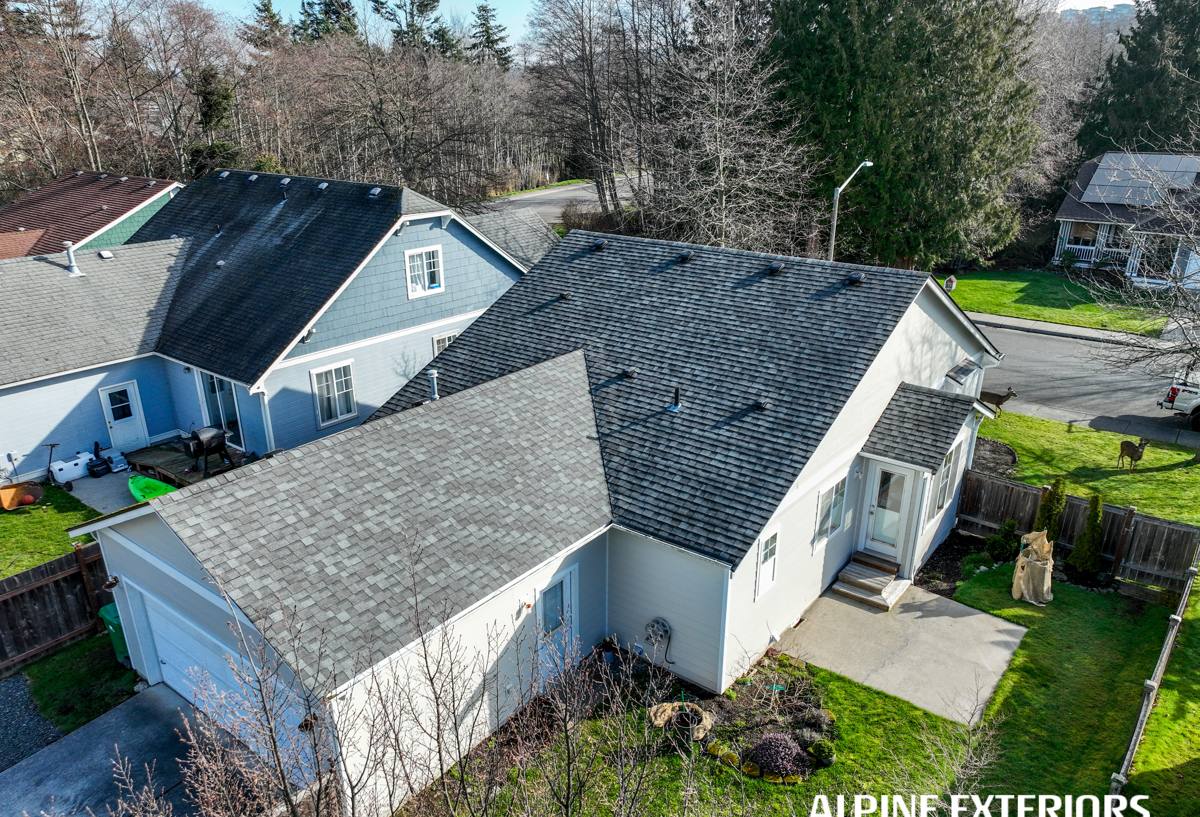
What the Climate Does to a House in Nooksack
Rain That Doesn't Let Up
It's not the hardest rain that does the damage around here — it's the duration. Whatcom County sees extended rainy seasons where siding, trim, and roofing stay wet for days at a stretch. Materials that absorb moisture, or that rely on paint and caulking to stay sealed, get tested constantly. Every seam, every nail hole, every place two materials meet is a spot where water is looking for a way in.
Salt Air's Reach
Nooksack is inland, but Whatcom County as a whole sits close enough to Puget Sound and the Strait of Georgia that salt-laden air moves through the region, especially with the prevailing westerly winds. Salt exposure accelerates corrosion on fasteners and hardware, and it degrades some paint and coating systems faster than a dry inland climate would. It's a slower, quieter form of wear than a big storm, but over ten or fifteen years it adds up.
Moss Season Is Most of the Year
Cool, damp, and shaded — that's moss and algae's ideal environment, and it describes a good chunk of the calendar in this part of Washington. North-facing walls, areas under tree cover, and anywhere siding stays shaded and damp are prone to green and black staining. On some materials that's a cosmetic nuisance you can wash off. On others, sustained moisture and organic growth actually break the material down over time.
Local Climate Stressors at a Glance
| Condition | Typical Timing | What It Stresses |
|---|---|---|
| Sustained rain | Fall through spring | Seams, fasteners, paint film, trim joints |
| Salt-influenced air | Year-round, wind-dependent | Metal fasteners, coatings, caulking |
| Moss/algae growth | Most of the year, worse in shade | Wood-based siding, unpainted surfaces, roofing |
| Freeze-thaw cycling | Winter cold snaps | Trapped moisture in siding, deck boards, roof flashing |
Why We Only Install James Hardie Siding
We made a decision a while back to stop installing several common siding products — vinyl, LP SmartSide, primed spruce and cedar boards, and other fiber cement brands — and put James Hardie on every siding job we do. That wasn't a marketing choice. It came out of watching how different materials actually hold up in this climate over years, not just in the first season after install.
What That Rules Out, and Why
- Vinyl siding expands and contracts with temperature swings, can warp or crack in cold snaps, and its seams and panels give water more opportunities to find a path behind the cladding over time.
- LP SmartSide and other wood-strand products are engineered wood — better than raw lumber, but still wood at the core. In a climate with this much sustained dampness, wood-based products depend heavily on the integrity of their factory coating and correct installation to keep moisture out.
- Primed spruce or cedar boards require ongoing painting and caulking maintenance to stay sealed. Skip a maintenance cycle in a wet climate and moisture gets in faster than in a drier region.
- Other fiber cement brands (Cemplank, Allura) are chemically similar to Hardie in the broad strokes, but we standardized on one manufacturer so we can guarantee consistency in product quality, factory finish, and warranty terms across every job.
To be fair to these products: vinyl is inexpensive and low-maintenance in mild climates, engineered wood siding gives a warm, traditional look at a lower cost than fiber cement, and cedar is a genuinely beautiful natural material. None of that is wrong. It's that none of them are the best match for a climate that stays wet this long, this often.
What James Hardie Gets Right for This Climate
Hardie fiber cement is cement, sand, and cellulose fiber — it doesn't rot, it doesn't feed moss the way wood does, and it isn't fuel for fire the way wood-based or vinyl products are. Hardie's HZ5 product line is engineered specifically for climates with heavy moisture and freeze-thaw cycling, which describes Whatcom County well. The factory-applied ColorPlus finish is baked on under controlled conditions, so it holds color and resists the fading and chalking that field-applied paint struggles with here — and it comes with a real, transferable warranty, not a maintenance-dependent one.
Roofing, Windows, and Decks in a Wet Climate
Siding gets most of the attention, but a house's exterior only performs as a system. We handle roofing, window replacement, and deck construction because these components all interact with the same moisture and weather load, and a weak point in one undermines the others.
Roofing
A roof in this region needs correct underlayment, flashing detail, and ventilation to handle sustained rain without trapping moisture in the attic. Ventilation matters as much as the roofing material itself — a roof that traps humid air underneath it will grow mold and rot decking regardless of what's on top.
Windows
Older or poorly flashed windows are one of the most common places we find hidden water damage during a siding tear-off. Correct flashing and integration with the surrounding wall assembly is what actually keeps water out — the window unit itself is only part of the story.
Decks
Decks in Whatcom County take the same rain exposure as siding, plus standing water and freeze-thaw stress on fasteners and ledger connections. Proper drainage, fastener choice, and ledger flashing matter more here than the specific decking material on top.
How We Approach a Nooksack-Area Project
- On-site inspection of the current exterior, including a look behind siding or trim wherever access allows, since visible wear is often the smaller part of the story.
- Identify moisture entry points and any hidden damage — old flashing failures, rotted sheathing, or trapped moisture under existing cladding.
- Provide a straightforward scope and estimate, explaining what's needed and why, not just a materials list.
- Install to manufacturer spec — proper fastening, clearances, flashing, and joint treatment, since Hardie's performance and warranty both depend on correct installation, not just the product itself.
- Walk the finished work with the homeowner before calling the job done.
What to Check Before Hiring an Exterior Contractor Here
- Do they carry current Washington contractor licensing and insurance, and will they provide proof without you having to push for it?
- Do they have specific, verifiable experience with the product they're proposing — not just general siding experience?
- Will they explain trade-offs between materials honestly, or just push whatever they have on hand?
- Is the warranty backed by the manufacturer and transferable, or dependent on the installer staying in business?
- Do they inspect what's underneath the existing siding before quoting, rather than just measuring the outside?
A Note on Cost Factors
Every home is different, so we won't put a fake number on this page. What actually moves the price on a siding project in this area is worth understanding before you get quotes:
| Factor | Why It Matters |
|---|---|
| Existing wall condition | Hidden rot or moisture damage found during tear-off adds repair scope |
| Home size and complexity | More corners, dormers, and trim detail means more labor and material cuts |
| Siding profile and color | Hardie offers multiple plank widths, textures, and ColorPlus color options at different price points |
| Access and site conditions | Tight lots, slopes, or landscaping can affect staging and labor time |
| Scope beyond siding | Bundling roofing, windows, or trim work can change overall project economics |
Why a Local Crew Matters Here
A crew that works Whatcom County regularly knows what this climate does to a house because they've seen it — the specific way moss takes hold on shaded north walls, which flashing details tend to fail first in this much sustained rain, how salt-influenced air changes what hardware you should trust. That's different from general siding experience picked up somewhere drier. It shapes how we sequence a job, where we pay extra attention during installation, and what we flag to a homeowner that a crew unfamiliar with this region might miss entirely.
If you're weighing options for a siding, roofing, window, or deck project in the Nooksack area, we're glad to take a look and give you a straight, no-pressure estimate. There's a form below to get started.