 Birch Bay Siding
 Exterior Work for Homes on the Point Whitehorn Shoreline
Point Whitehorn sits on the open water of the Strait of Georgia, just north of Birch Bay proper, and that stretch of Whatcom County coastline is about as demanding an environment as exterior siding, roofing, and windows ever face in this region. Homes here catch wind straight off the water, salt spray that drifts inland further than most homeowners expect, and a wet season that can stretch from October well into spring. We've built our business around installing materials that are actually engineered for that combination, not materials that merely survive it for a few years before the maintenance bills start.
This page covers what that climate does to a home's exterior over time, why we install James Hardie fiber cement siding exclusively, and how our siding, roofing, window, and deck work fits together for Point Whitehorn and the surrounding Birch Bay area.
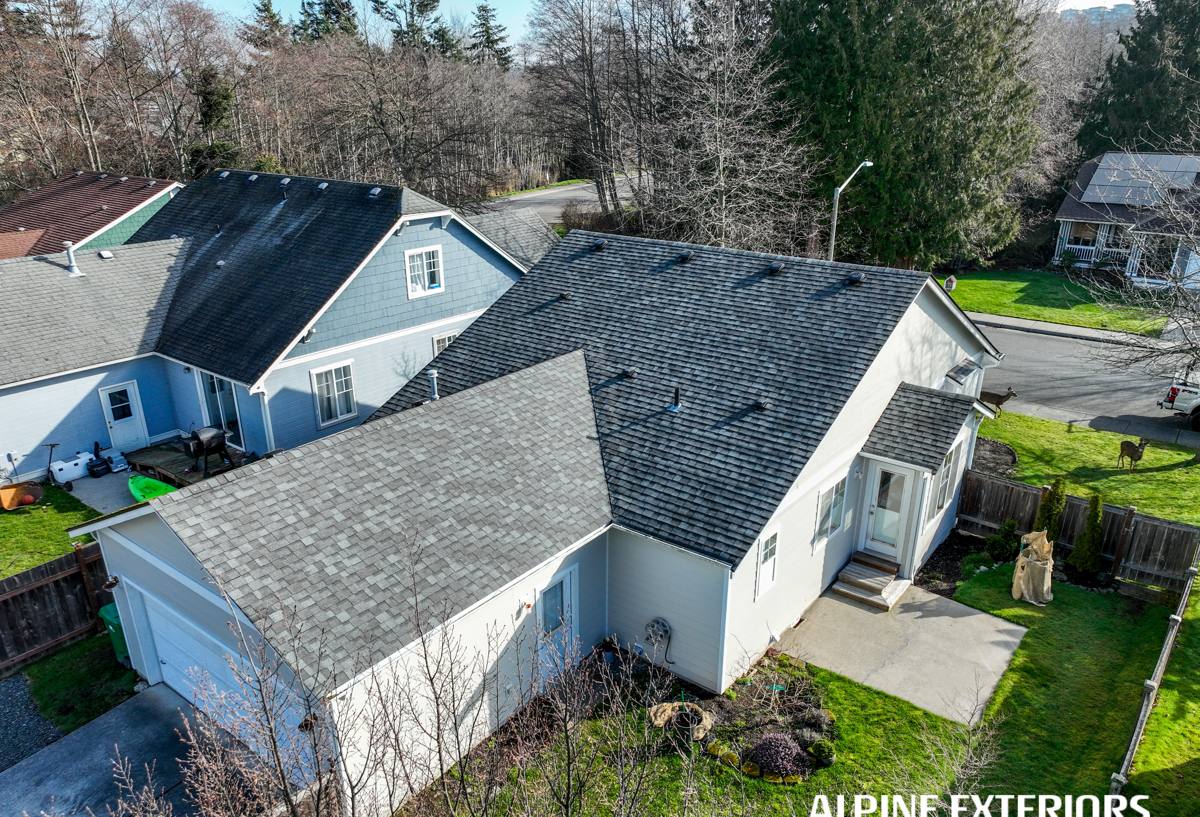
What Salt Air and Driving Rain Actually Do to a House
Salt air is corrosive in ways that aren't always obvious from the street. It accelerates the breakdown of paint films, works into fastener heads and metal trim, and speeds up the failure of caulk joints around windows and siding seams. Combine that with wind-driven rain — rain pushed sideways into a wall assembly rather than falling straight down — and you get moisture finding its way into seams, laps, and penetrations that would stay dry in a more sheltered inland location.
The practical result on a lot of older or lower-grade siding jobs near the water:
- Paint and finish failure years ahead of the manufacturer's stated life, especially on south and west-facing walls that take the brunt of the weather
- Swelling, delamination, or soft spots on wood-based products where moisture has repeatedly gotten behind the surface
- Corroding or staining fasteners and trim, which show up as rust streaks running down the siding face
- Caulk joints that crack and open up faster than inland homes, giving water a path behind the cladding
None of this means a home on the water is doomed to constant repair. It means the material and the installation both have to be chosen with that exposure in mind, not treated the same way you'd treat a sheltered lot a few miles inland.
The Long Moss Season
Whatcom County's wet, mild winters are good growing conditions for moss and algae on any exterior surface that stays damp — siding, trim, roofing, decking, fences. On a shaded or north-facing wall, or under overhanging trees common in this area, that dampness can sit for days at a time during the winter months. Porous or textured surfaces hold onto moisture and give moss and mildew something to grip; smooth, factory-finished surfaces shed water faster and give organic growth less to hold onto. Over a decade or two, that difference shows up clearly in how much a homeowner has to pressure-wash, re-stain, or repaint just to keep the exterior looking presentable.
Why We Install James Hardie Fiber Cement — and Nothing Else
We made a deliberate decision as a company to install only James Hardie fiber cement siding. We don't offer vinyl, LP SmartSide, Cemplank, Allura, primed spruce, or raw cedar as options, and that's worth explaining rather than just stating.
Fiber cement is a cement, sand, and cellulose fiber composite. It doesn't rot, it isn't a food source for moss or insects, and it's non-combustible — a real consideration anywhere in the Pacific Northwest given wildfire season concerns in recent years. James Hardie's HZ5 product line is specifically engineered for climates with significant moisture exposure, which describes a waterfront community like Point Whitehorn well. The ColorPlus factory finish is baked on under controlled conditions rather than field-applied, which means better adhesion and UV resistance than most site-applied paint jobs, and a transferable limited warranty that follows the house if it's sold.
Vinyl siding is inexpensive and low-maintenance in mild conditions, but it can warp or become brittle at temperature extremes, its seams and J-channels give wind-driven rain more entry points over time, and its color isn't as UV-stable long-term as a factory-baked finish. Wood-based products — including engineered wood like LP SmartSide, and traditional cedar or primed spruce — depend heavily on maintaining an intact paint or finish layer to keep moisture out; once that layer is compromised on a wall that takes real weather, the wood substrate underneath is vulnerable in a way fiber cement simply isn't. We're not saying those products have no place anywhere — we're saying that on the homes we work on in this climate, we don't think they hold up to the standard we want to put our name on.
How the Main Options Compare in This Climate
| Material | Moisture/salt-air behavior | Moss & algae resistance | Long-term maintenance |
|---|---|---|---|
| James Hardie fiber cement | Non-combustible, dimensionally stable, engineered moisture resistance | Smooth factory finish sheds water and growth well | Occasional wash; no repainting for the life of ColorPlus finish |
| Vinyl | Can warp/crack at temperature extremes; more seams for wind-driven rain | Textured varieties hold moisture and grime | Low, but fading and brittleness increase over time |
| LP SmartSide / engineered wood | Depends on intact finish; vulnerable once compromised | Moderate; needs a maintained finish layer | Requires monitoring seams, edges, and finish integrity |
| Cedar / primed spruce | Natural material; absorbs and releases moisture; needs consistent finish upkeep | Higher risk without regular treatment | Highest ongoing maintenance of the group |
The Rest of the Envelope: Roofing, Windows, and Decks
Siding is only part of how a house handles this coastline. We also handle roofing, windows, and decks, because a home's exterior only performs as well as its weakest component. A well-installed siding job with a roof that's letting moisture into the attic, or old windows leaking air and water at the frame, still leaves a homeowner with the same underlying moisture problems.
Roofing
Roofs on the water take the same wind and salt exposure as siding, plus direct UV and constant runoff. Flashing details around penetrations, valleys, and roof-to-wall transitions matter more here than they would on a sheltered inland roof, because wind-driven rain can push water uphill under poorly sealed flashing.
Windows
Older windows near the water often show their age at the frame and sill first — failed seals, fogging between panes, and soft spots where water has been sitting against wood trim. Replacing windows at the same time as siding lets us properly integrate the flashing and water management between the two, which is where a lot of leaks actually originate.
Decks
Decks facing the water take direct sun, salt, and rain with almost no protection. Fastener corrosion, ledger board moisture intrusion, and surface wear all show up faster here than on a covered or inland deck, and it's worth having someone look at structural connections, not just the decking surface.
What Our Process Looks Like on a Point Whitehorn Home
We walk the exterior before we talk product. That means checking which walls take the worst weather exposure, looking at existing moisture damage around windows, trim, and penetrations, and assessing what's happening at the roofline and any decks or attached structures. From there we put together a plan — sometimes that's a full siding replacement, sometimes it's siding plus targeted window or roofing work where the damage is concentrated. We don't sell a bigger job than the house needs, but we also don't recommend patching over problems that will just resurface in a wet Whatcom County winter.
Signs It's Worth Having Someone Look at Your Exterior
- Paint that's peeling, chalking, or bubbling, especially on walls facing the water or prevailing wind
- Soft or spongy spots when you press on siding, trim, or deck boards
- Persistent moss or dark streaking that comes back quickly after cleaning
- Visible gaps, cracked caulk, or warping around window and door trim
- Rust streaks below fasteners or metal flashing
- Rooms that feel drafty or show condensation near exterior walls or windows in winter
Why a Local Crew Matters Here
A crew that mostly works inland jobs doesn't always account for how differently a waterfront wall assembly needs to be detailed — flashing laps, fastener spacing, caulk selection, and drainage planes all matter more when the wall is regularly taking wind-driven rain. Working throughout Birch Bay and Whatcom County means we see how houses in this specific setting actually age, not just how a spec sheet says a product should perform. That shapes real decisions on site: where to add extra flashing, which details need the most attention, and how to sequence the work so the house isn't exposed during a stretch of bad weather.
Get a Straightforward Look at Your Home's Exterior
If you're noticing wear on your siding, roof, windows, or deck, or you're just planning ahead for a home on the Point Whitehorn shoreline, we're happy to take a look and give you an honest read on what's actually going on and what it would take to fix it. Reach out for a free, no-pressure estimate using the form below.