 Birch Bay Siding
 Exterior Work Built for the Cherry Point Shoreline
Cherry Point sits along the Whatcom County shoreline near Birch Bay, close enough to the Strait of Georgia that salt air and marine weather are simply part of daily life. Homes out here take a different kind of beating than houses twenty miles inland. Wind-driven rain comes in sideways off the water, humidity lingers longer into the afternoon, and moss finds a foothold on anything shaded and damp for more than a few weeks. If you own a home near Cherry Point, you already know your exterior works harder than most.
We're a local crew that works this stretch of Whatcom County regularly, not a subcontractor rotation dispatched from out of the area. That matters more than it sounds like it should. A crew that installs siding, roofing, windows, and decks in the same coastal microclimate week after week learns which details actually matter here — flashing laps, ventilation gaps, fastener choice — versus what a general installation manual assumes for a drier, calmer region.
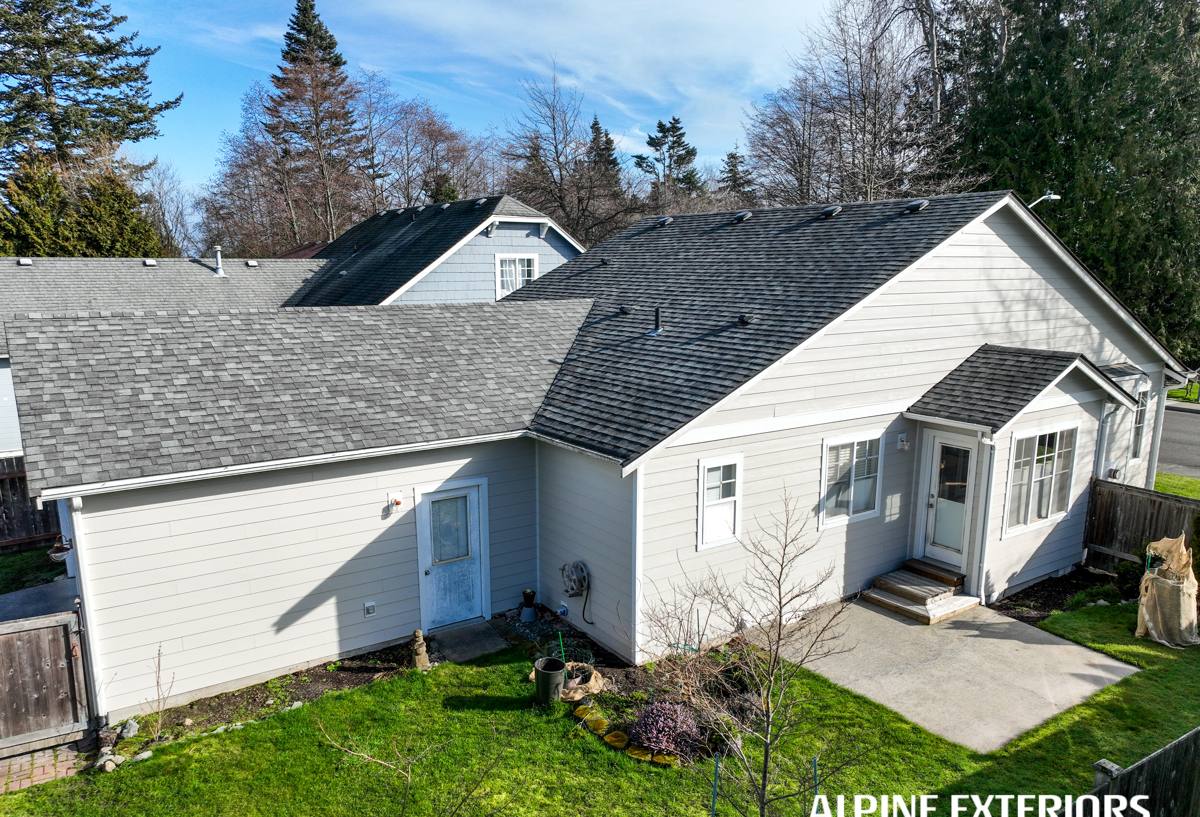
What the Climate Actually Does to a House Here
Salt Air and Moisture
Airborne salt accelerates corrosion on anything metal — fasteners, flashing, hardware — and it also holds moisture against exterior surfaces longer than dry inland air would. Materials that depend on a paint film or factory coating to keep water out are under more stress here than the same product would face fifty miles east.
Driving Rain
Storms coming off the water don't fall straight down. Wind pushes rain sideways into wall assemblies, which means seams, laps, and butt joints get tested far more often than they would on a sheltered inland lot. Any weak point in the water-management plane — not just the siding itself, but the flashing and house wrap behind it — shows up as a problem sooner near Cherry Point than it would elsewhere in Whatcom County.
The Long Moss Season
Cool, damp, and shaded conditions for much of the year give moss and algae a long runway. On roofs, moss holds moisture against shingles and lifts them over time. On siding and decking, green growth on north-facing walls and shaded deck boards isn't just cosmetic — it's a sign the surface is staying wet longer than it should.
Siding: Why We Install Only James Hardie
We install James Hardie fiber cement siding exclusively. We don't install vinyl, LP SmartSide, Cemplank, Allura, primed spruce, or cedar. That's a deliberate standard, not a matter of what happens to be on the truck, and in a climate like Cherry Point's it's an easy standard to defend.
Why Not the Alternatives
- Vinyl siding is affordable and low-maintenance, but it's a thin plastic product that can warp in temperature swings and doesn't offer the same impact resistance or dimensional stability fiber cement does. In wind-driven coastal rain, its seams and panel laps are also more forgiving of water intrusion than we're comfortable with.
- LP SmartSide is engineered wood — treated to resist moisture, but still wood at its core. Wood-based products depend on an intact factory coating and careful field sealing of every cut edge to keep water out. In a marine, high-humidity environment, that margin for error is thinner than we want to build a roof over someone's family with.
- Cemplank and Allura are also fiber cement, and reasonable products in their own right. We've simply standardized on one manufacturer's system — Hardie's specific formulation, factory finish, and installation specs — so every crew member trains on one set of details instead of splitting attention across several.
- Primed spruce and cedar are traditional, attractive options, but they require the most ongoing maintenance of anything on this list: regular repainting or restaining, vigilance about caulking, and real vulnerability to moss and rot in shaded, damp conditions — exactly the conditions common near Cherry Point.
What James Hardie Gets Right for This Climate
Fiber cement doesn't rot, and it isn't a food source for moss or insects the way wood-based sidings can be over time. Hardie's ColorPlus factory finish is baked on and warranted separately from the substrate, which matters near salt air where field-applied paint tends to fail sooner. Hardie also makes climate-specific HZ product lines engineered for wetter, harsher regions — the version we install here is built with the Pacific Northwest's weather in mind, not a generic national spec. Backed by a strong transferable warranty, it's the product we're willing to stand behind on a Cherry Point roofline.
Siding Comparison at a Glance
| Material | Moisture Behavior | Maintenance | Coastal Suitability |
|---|---|---|---|
| James Hardie fiber cement | Non-combustible, dimensionally stable, doesn't rot | Low — occasional wash, no repainting cycle | Engineered HZ lines for marine/wet climates |
| Vinyl | Can warp with heat/cold swings | Low, but seams are a water-intrusion point | Fair — thinner impact and wind resistance |
| LP SmartSide | Wood-based; depends on intact coating | Moderate — edge sealing, coating upkeep | More sensitive to sustained humidity |
| Primed spruce / cedar | Natural wood; absorbs moisture if unmaintained | High — repaint/restain cycle, caulk checks | Highest maintenance burden in damp, shaded areas |
Roofing Near the Water
A roof near Cherry Point deals with the same driving rain and moss pressure as the siding below it, plus wind exposure off open water. We pay close attention to underlayment quality, flashing at valleys and penetrations, and attic ventilation — a roof that can't breathe traps moisture underneath, which speeds up moss growth and shortens the life of the shingles from below as well as above.
Windows: Sealing Out Wind-Driven Rain
Windows are one of the most common leak points on coastal homes, and it's rarely the window unit itself — it's the flashing and sealant detail around it. Near Cherry Point, where rain regularly comes in at an angle, we treat window flashing as critical waterproofing, not a cosmetic finishing step. Replacing old, leak-prone windows also tends to cut down on the condensation and drafts that make a coastal home feel damp and cold in the winter months.
Decks: Built to Handle Shade and Moss
Decks near the water deal with a specific combination of problems: salt exposure, standing moisture in shaded corners, and moss that takes hold anywhere sunlight doesn't reach consistently. Proper board spacing, ledger flashing, and joist protection all make a real difference in how long a deck near Cherry Point actually lasts versus how long it's rated to last on paper.
Simple Checklist for a Coastal Deck
- Ledger board properly flashed where it meets the house
- Adequate gap between boards for drainage and airflow
- Joists and beams protected from standing moisture
- Shaded areas checked periodically for moss or algae buildup
- Fasteners and hardware rated for coastal/corrosive exposure
Why a Local Crew Matters Here
Whatcom County's coastal microclimates aren't uniform — a house facing open water deals with different pressures than one tucked behind a tree line a half-mile inland. A crew that works Cherry Point and the surrounding Birch Bay area regularly builds a feel for those differences: where flashing needs extra attention, which north-facing walls need a closer look for moss, and how much ventilation a given roofline actually needs. That local pattern-recognition is hard to replace with a generic installation checklist.
What to Expect From a Project Here
Every home near Cherry Point is a little different — sun exposure, tree cover, wind direction, and age of the existing exterior all factor into what a project actually needs. We start with an honest look at the current siding, roofing, windows, or deck, point out where moisture or moss has already done damage, and lay out what correct installation looks like for that specific home rather than a one-size-fits-all package.
Cost Factors to Understand Before You Budget
| Factor | Why It Matters |
|---|---|
| Home size and wall complexity | More corners, gables, and trim detail mean more labor and material |
| Extent of existing moisture damage | Rot or hidden water intrusion found during tear-off adds repair scope |
| Product line and color selection | Hardie's ColorPlus finishes and specific HZ profiles vary in cost |
| Access and site conditions | Shoreline lots, slopes, or limited access can affect scheduling and labor |
| Scope bundling | Combining siding with roofing, windows, or a deck can reduce overlapping setup costs |
If your home near Cherry Point is showing moss on the roof, green staining on shaded siding, or drafts and leaks around older windows, it's worth having a local crew take a look before small problems turn into structural ones. We offer free, no-pressure estimates — use the form below to get a straightforward assessment of your home's exterior and what it would take to make it ready for another few decades of Whatcom County weather.