 Birch Bay Siding
 Siding Built for California Creek's Marine Climate
California Creek sits close enough to the water that homes here live with a different set of exterior conditions than houses even a few miles inland in Whatcom County. Salt-laden air off the bay, long stretches of driving rain through fall and winter, and a moss and mildew season that can run most of the year all work on a home's siding, trim, and roofline at the same time. We've spent years working exteriors in this stretch of Birch Bay, and the pattern is consistent: homes here need materials and installation details chosen specifically for a marine environment, not generic products installed the same way you'd install them in a dry inland climate.
This page covers what California Creek homeowners should know about siding replacement and repair, how our process works, and why we've standardized on one siding product rather than offering a menu of options.
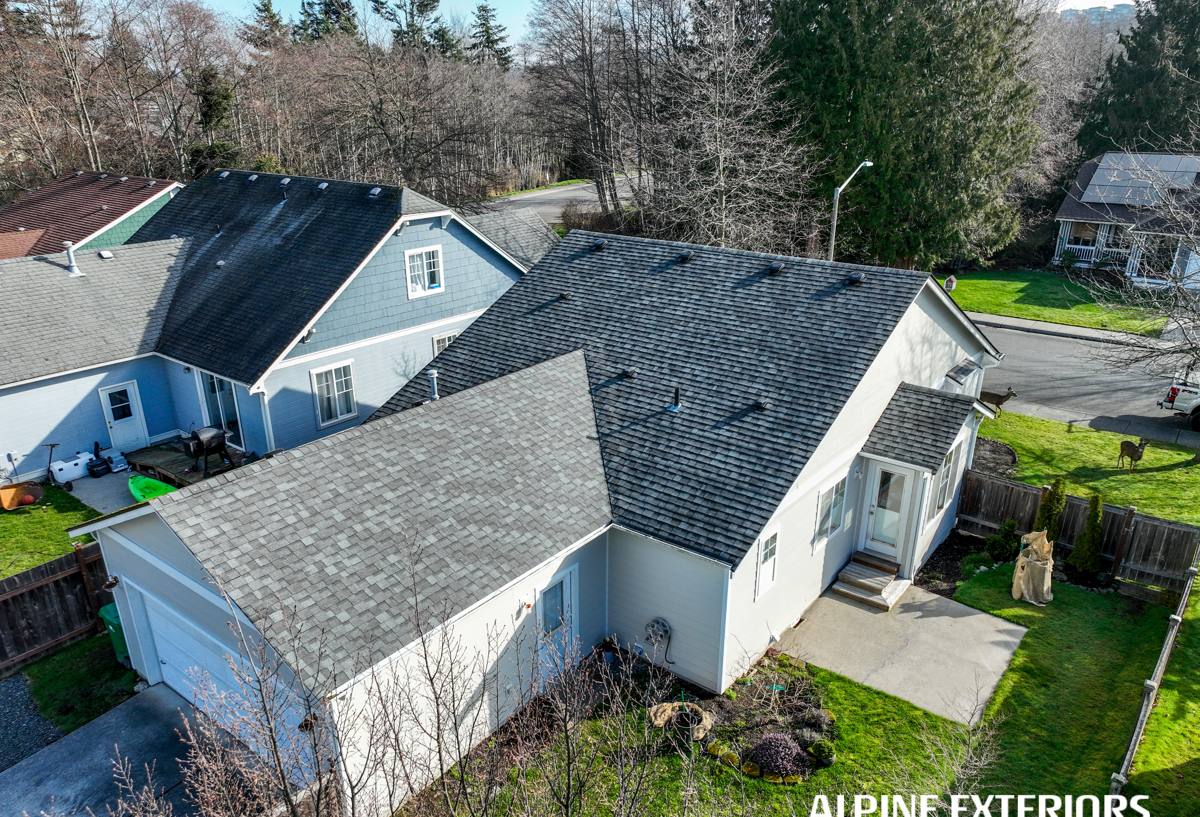
What the Local Climate Actually Does to a House
Salt Air and Corrosion
Proximity to saltwater accelerates corrosion on fasteners, flashing, and any metal trim components. Over years, this shows up as rust staining, loosened fasteners, and premature failure of lower-grade hardware. It's a slow process, which is exactly why it gets overlooked — by the time it's visible, it's usually been happening for a while.
Driving Rain and Wind-Driven Moisture
Birch Bay and the surrounding Whatcom County coastline see rain that doesn't just fall straight down — wind off the water pushes it sideways into wall assemblies, especially on west- and south-facing elevations. Siding systems, house wrap, flashing details, and caulk joints all have to work together to keep that moisture out. A single weak point — a poorly lapped joint, a missing kick-out flashing, a caulked seam where there should be a mechanical overlap — becomes the entry point for water intrusion over time.
Moss, Algae, and Extended Dampness
Shade, humidity, and mild temperatures year-round make California Creek a strong environment for moss and algae growth on roofs, siding, and decking. Organic growth on siding isn't just cosmetic — it holds moisture against the surface longer than bare material would, which matters a lot for products that aren't dimensionally stable when wet.
Freeze-Thaw and Temperature Swings
Whatcom County doesn't see extreme cold most winters, but it does see enough freeze-thaw cycling, combined with constant moisture, to stress any material that swells, contracts, or absorbs water. Siding that holds moisture and then freezes is siding that cracks, delaminates, or lets paint fail faster than the manufacturer's warranty assumes.
Why We Install Only James Hardie Fiber Cement Siding
We get asked regularly why we don't offer vinyl, LP SmartSide, or other fiber cement brands. The honest answer is that after years of exterior work in this specific climate, we standardized on one product line because it consistently performs better here, and we'd rather do one thing well than offer a catalog of products with different risk profiles.
Non-Combustible Material
James Hardie siding is fiber cement — it doesn't burn, warp from heat, or become a fuel source the way wood-based or vinyl products can. That matters more every year given regional wildfire smoke seasons and general fire-risk awareness across the Pacific Northwest.
Engineered for Climate, Not Generic
Hardie manufactures region-specific product lines (its HZ5 line, for example, is engineered for harsher, wetter climate zones) rather than a single formulation sold everywhere. That's a meaningful difference from products designed around a national average climate.
Factory-Applied ColorPlus Finish
ColorPlus finish is baked on at the factory under controlled conditions, rather than field-applied paint drying in whatever weather shows up on install day. It resists fading and chipping better than most field-applied coatings, and touch-up product is available that's formulated to match.
Moisture Behavior
Fiber cement doesn't absorb and swell the way engineered wood products can, and it doesn't trap moisture behind it the way improperly installed vinyl can. In a climate where wall assemblies see sustained dampness for months at a time, how a material handles moisture over its lifespan is the single biggest factor in how it ages.
Warranty Structure
Hardie backs its siding with a substantial, transferable limited warranty on the product itself, plus a separate finish warranty on ColorPlus products. A transferable warranty also has practical value if you sell the home — it's a documented asset, not just a talking point.
We're not saying every other product on the market is unusable — vinyl, LP SmartSide, and other fiber cement brands all have their place. We're saying that for the specific combination of salt air, driving rain, and moss exposure that California Creek homes face, we've made a professional decision to install one product we can stand behind fully, rather than installing something we'd have reservations about.
How Our Siding Process Works
Assessment and Estimate
We start with a walk-around of the home, checking existing siding condition, trim, flashing, window and door transitions, and any visible moisture damage. This is also when we look at the whole exterior envelope, since siding rarely fails in isolation from roofing and window issues.
Moisture and Substrate Check
Where we suspect water intrusion, we check sheathing condition at accessible points before quoting a full re-side. Installing new siding over compromised sheathing just hides a problem instead of fixing it.
Installation Details That Matter Here
- Correct nail placement and fastener spacing per Hardie's published installation instructions — over-driven or under-driven fasteners are one of the most common causes of early siding failure
- Proper house wrap and water-resistive barrier integration behind the siding
- Flashing at every horizontal trim break, window head, and roof-to-wall transition
- Correct clearances at grade, decks, and roof lines to keep siding from sitting in standing moisture
- Factory-mitered or properly caulked joints at corners and butt seams
- Ventilation gaps maintained where required so moisture can escape rather than get trapped
Final Walkthrough
We walk the finished job with the homeowner, checking caulk lines, trim reveals, and touch-up needs before calling it complete.
The Full Exterior Envelope: Roofing, Windows, and Decks
Siding doesn't work in isolation. A roof that's shedding granules or has failing flashing will send water down behind good siding. Windows with failed seals or poor flashing integration create the same problem from a different direction. Because we handle roofing, windows, and decks in addition to siding, we can look at a California Creek home as one connected system rather than quoting a siding job that ignores a roofing problem feeding water into the wall.
Roofing
Roof condition directly affects how long new siding lasts. Overflow from clogged gutters, ice-dam-related backup, and moss-driven shingle degradation all send moisture toward siding and trim below.
Windows
Old aluminum-frame or poorly flashed windows are a common source of water intrusion around openings — often the actual root cause when a homeowner calls about "siding rot" near a window.
Decks
Decks that attach to the house create a ledger-board connection that has to be flashed correctly, or water works its way into the wall assembly right at that joint — a detail we pay close attention to on any deck-to-house connection.
Comparing Siding Options for This Climate
| Material | Moisture Behavior | Fire Rating | Typical Maintenance | Do We Install It |
|---|---|---|---|---|
| James Hardie Fiber Cement | Dimensionally stable, engineered for wet climates | Non-combustible | Occasional wash, minimal repainting with ColorPlus | Yes |
| Vinyl | Doesn't absorb water, but can trap moisture behind it if installed poorly; warps under heat | Combustible, melts | Low, but cracks and fades over time | No |
| LP SmartSide (engineered wood) | Wood-based; vulnerable to swelling and edge damage if moisture gets in | Combustible | Regular caulk/paint upkeep at seams | No |
| Cedar / Primed Spruce | Natural wood; absorbs moisture, prone to rot without diligent upkeep | Combustible | High — refinishing, sealing, moss treatment | No |
| Other Fiber Cement (Cemplank, Allura) | Similar base material to Hardie, but different formulation/warranty structure | Non-combustible | Comparable, but coating quality varies by brand | No |
Signs a California Creek Home May Need Siding Attention
- Soft or spongy spots when pressed by hand, especially near the bottom courses or window sills
- Persistent moss or dark staining that returns quickly after cleaning
- Paint that's peeling, bubbling, or chalking well before its expected repaint cycle
- Visible gaps, warping, or separation at seams and corners
- Rust streaking below fasteners or trim pieces
- Rising energy bills that suggest the wall assembly isn't holding heat the way it used to
- Interior stains on walls near exterior corners, which often trace back to a siding or flashing failure
Cost Factors for Siding Projects in This Area
| Factor | Why It Affects Cost |
|---|---|
| Home size and elevation count | More surface area and more corners/transitions means more material and labor |
| Existing siding removal | Tear-off and disposal adds labor beyond a straightforward install |
| Substrate repair needs | Any sheathing rot found during removal has to be addressed before new siding goes on |
| Trim and detail work | Homes with more windows, dormers, or architectural detail take more time to flash and finish correctly |
| Access and site conditions | Steep lots, limited access, or extensive scaffolding needs affect labor time |
| Product line and profile selection | Hardie offers multiple plank profiles, panel styles, and colors at different price points |
We don't publish blanket per-square-foot pricing because these factors genuinely change the number from one house to the next. A walk-through gives a far more accurate picture than any general estimate could.
Why a Local Crew Matters Here
Exterior contractors who don't work this specific stretch of coastline regularly can miss climate-specific details — the flashing sequence that matters more here than inland, the clearance needed at grade given how wet the ground stays, or how aggressively moss needs to be addressed before it undermines a finish. We work Birch Bay, California Creek, and the surrounding Whatcom County coastline consistently, which means we're accounting for this climate by default, not as an afterthought. It also means we're a known, reachable crew if a warranty question or follow-up item comes up down the road, rather than a company that did one job in the area and moved on.
Get a Free, No-Pressure Estimate
If you're noticing signs of wear on your siding, planning ahead for a full exterior update, or just want an honest read on where your home stands, we're happy to take a look. Fill out the form below for a free estimate on siding, roofing, windows, or decks for your California Creek home — no pressure, just a straight assessment from a crew that knows this climate.