 Birch Bay Siding
 Terrell Creek: A Neighborhood Shaped by Salt Air and Moisture
Terrell Creek sits within the Birch Bay area of Whatcom County, close enough to the water and the tidal flats that homes here live with a different set of conditions than a house twenty miles inland. The exterior of a home in this part of the county isn't just cosmetic — it's the first line of defense against a climate that combines salt-laden air, long stretches of driving rain, and a moss and mildew season that can run most of the year. If you own a home near Terrell Creek, you've probably already noticed how quickly north-facing walls, fence lines, and rooflines pick up green growth, or how paint and caulking seem to give out faster here than they would in a drier part of the state.
This page is about what that means for your siding, roofing, windows, and decking, and how we approach exterior work for homes in this specific pocket of Birch Bay.
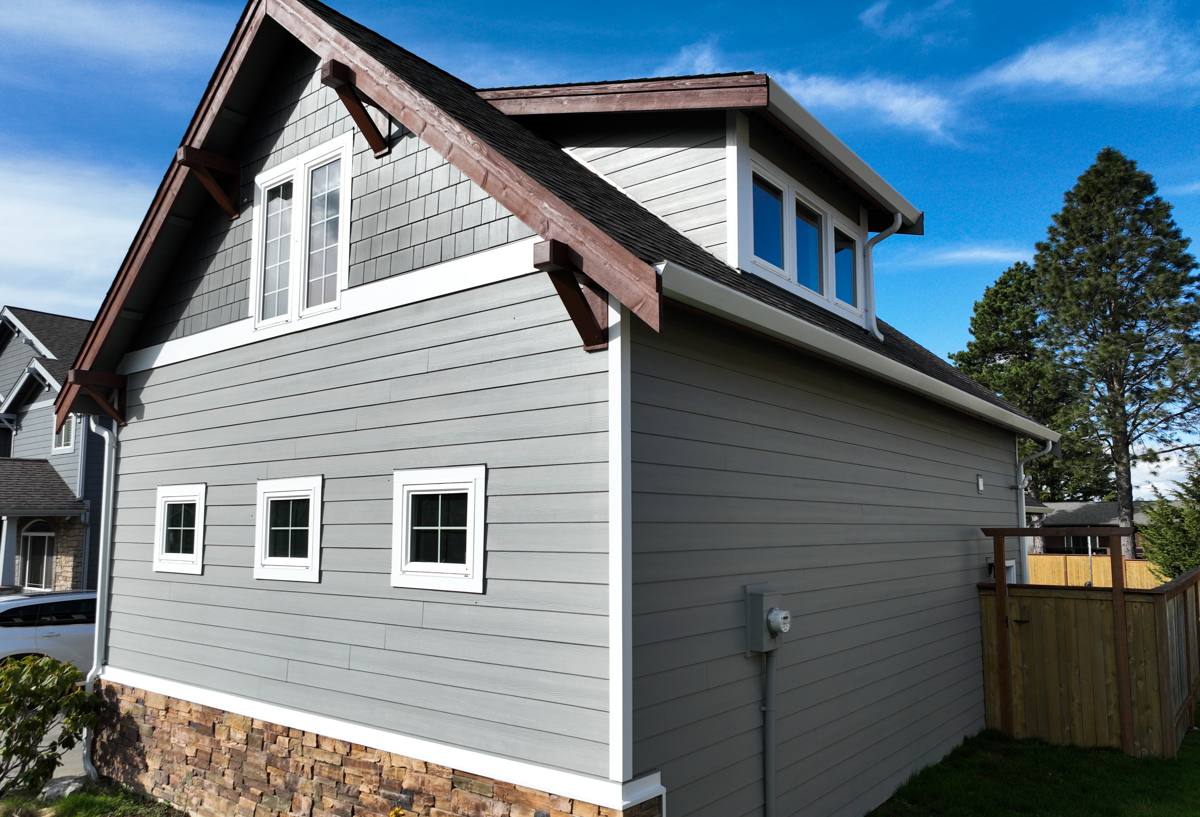
What the Local Climate Actually Does to a House
Salt Air and Corrosion
Proximity to Birch Bay and the Strait of Georgia means airborne salt is a real factor, even a mile or two back from the shoreline. Salt air accelerates corrosion on fasteners, flashing, and any metal trim that isn't rated for a marine-adjacent environment. It also breaks down lower-quality paint films faster, which is part of why factory-applied, baked-on finishes hold up so much better here than field-applied paint.
Driving Rain and Wind-Driven Moisture
Whatcom County's weather doesn't just rain straight down — storms off the water tend to drive rain sideways, which means siding, trim, and window flashing take on moisture from angles that a simple lap-siding installation in a calmer climate wouldn't have to deal with. Poor flashing details or gaps in house wrap show up as water intrusion problems years before they'd surface in a drier, more sheltered location.
Moss, Algae, and the Long Wet Season
Between the marine layer, tree cover common in this part of Birch Bay, and a wet season that stretches well beyond winter, moss and algae growth on roofs, siding, and decking is a near-constant maintenance issue. Products that absorb moisture or have organic material in their composition give moss more to grab onto and more moisture to work with, which speeds up the cycle of growth, staining, and material breakdown.
Why We Only Install James Hardie Fiber Cement Siding
We made a decision as a company to stop installing several common siding products — including vinyl, LP SmartSide, primed wood siding, and other fiber cement brands like Cemplank and Allura. That wasn't a marketing decision; it came out of years of seeing how different materials actually perform in exactly the kind of environment Terrell Creek sits in.
Non-Combustible and Dimensionally Stable
James Hardie fiber cement is cement-based rather than wood- or polymer-based. It doesn't expand and contract with moisture the way wood-based products do, and it's non-combustible, which matters both for long-term durability and for insurance considerations in some cases.
ColorPlus Factory Finish
Hardie's ColorPlus finish is baked on at the factory under controlled conditions, rather than sprayed or brushed on site. In a climate with this much UV-and-salt exposure over the year, a factory finish resists fading and chipping far longer than field-applied paint, and it comes backed by its own finish warranty separate from the product warranty.
HZ5 Engineering for Marine and Wet Climates
Hardie engineers its siding in regional "HZ" formulations specifically to handle different climate stresses. For coastal Pacific Northwest conditions — the salt exposure, the rain, the humidity — the HZ5 product line is built to hold up to moisture cycling and resist the kind of moss and mildew growth that plagues absorbent siding materials.
What We Chose Not to Install, and Why
| Product | What it does well | Why we don't install it here |
|---|---|---|
| Vinyl siding | Low upfront cost, minimal maintenance in mild climates | Can warp or become brittle with temperature swings; seams and J-channels give wind-driven rain more entry points |
| LP SmartSide | Engineered wood strength, easier on-site cuts | Wood-based core is more sensitive to sustained moisture exposure than cement-based siding, and finish maintenance is ongoing |
| Cemplank / Allura | Fiber cement basics, lower material cost than Hardie | Doesn't carry the same factory-finish warranty structure or regional engineering as Hardie's HZ5 line |
| Primed spruce or cedar | Natural look, traditional appeal | Requires the most frequent repainting and sealing of any option, especially with this much moisture and moss pressure |
None of these are "bad" products in every setting. In a drier inland climate, some of these trade-offs matter less. But for a home near Terrell Creek, taking on salt air, driving rain, and a long moss season, we'd rather install one product correctly than offer five options and let the climate sort out which one was the wrong call five years later.
How We Approach a Siding Project in This Area
Assessment and Moisture Check
Before we quote a siding replacement, we look at what's happening underneath the current siding — house wrap condition, sheathing, any signs of past water intrusion around windows and trim. In a coastal-adjacent neighborhood like this, catching moisture damage early is often what separates a straightforward re-side from a more involved repair.
Flashing and Water Management First
Siding is only as good as the water management behind it. We pay particular attention to window and door flashing, kick-out flashing at roof-wall intersections, and proper weather-resistive barrier installation — details that matter more here than in a sheltered inland location because of how much wind-driven rain this area sees.
Correct Fastening and Clearances
Hardie siding has manufacturer-specified fastening patterns, clearances from grade and roofing, and joint treatment requirements. Installed to spec, it performs the way it's engineered to. Installed off-spec — nailed too tight, wrong clearance from the ground or roofline — even a good product can develop problems. This is where an experienced local crew matters as much as the material choice itself.
Roofing, Windows, and Decks: The Rest of the Exterior
Siding doesn't work in isolation. A roof with failing flashing will feed water into a wall system no matter how good the siding is, and windows with worn seals let moisture behind trim in exactly the areas most exposed to wind-driven rain.
- Roofing: In a moss-heavy environment like this, roof material choice, ventilation, and moss-resistant treatments all affect how long a roof lasts before growth and moisture start compromising shingles or panels.
- Windows: Older or poorly flashed windows are a common source of hidden moisture problems behind siding. Replacing windows correctly — with proper flashing integration — protects the wall assembly, not just the glass.
- Decks: Decking exposed to this much rain and shade-driven moisture needs material and fastening choices that account for standing water, moss growth, and freeze-thaw cycling during colder stretches.
We look at these systems together rather than treating siding as a standalone product swap, because in this climate they all affect each other.
Signs It's Time to Look at Your Siding
- Visible moss or algae staining that returns quickly after cleaning
- Soft spots, bubbling, or bowing panels, especially on north- or west-facing walls
- Paint that's peeling or chalking well before its expected repaint interval
- Gaps or separation at seams, corners, or around window and door trim
- Rising energy bills that may point to compromised insulation behind failing siding
- Visible fastener corrosion or staining streaks running down the siding face
Any one of these on its own isn't necessarily an emergency, but a few of them together, especially on a home that's been through several wet seasons without exterior maintenance, are worth a professional look before small problems turn into sheathing or framing repairs.
Cost Factors for a Terrell Creek Siding Project
| Factor | Why it affects your project |
|---|---|
| Home size and wall complexity | More corners, dormers, and trim details mean more labor and material cuts |
| Current condition behind the siding | Moisture damage to sheathing found during tear-off adds repair scope |
| Siding profile and ColorPlus color selection | Lap width, shingle-style panels, and factory color options vary in material cost |
| Access and site conditions | Tree cover, slope, and proximity to water can affect staging and scheduling |
| Scope beyond siding | Bundling roofing, window, or deck work can affect scheduling and overall project cost |
We don't publish flat pricing because every home's condition and scope is different, but we're upfront during the estimate about what's driving your specific number, including anything we find once the old siding comes off.
Why a Local Crew Matters
A contractor who works across Whatcom County's coastal communities regularly sees how Birch Bay's climate differs even from towns just a short drive inland. That familiarity shapes real decisions — flashing details, fastener choices, and which siding clearances actually hold up here. A crew that mostly works drier, more sheltered markets and treats a Terrell Creek home the same as an inland job is more likely to miss the details that matter in this specific environment.
Get a Free, No-Pressure Estimate
If you're weighing a siding, roofing, window, or deck project for your Terrell Creek home, we're happy to take a look and walk you through what we see, no obligation attached. Use the form below to request a free estimate, and we'll go over your home's specific condition and what makes sense for your budget and timeline.