 Birch Bay Siding
 Why Bellingham Decks Wear Out Faster Than You'd Expect
If you live near Bellingham, you already know your deck doesn't get treated gently. Salt-laden air off the Salish Sea, long stretches of driving rain, and a moss season that seems to run nine months out of twelve all work on wood and fasteners in ways homeowners further inland rarely deal with. A deck that might last two decades in a drier climate can start failing structurally in half that time here if it wasn't built or finished with this specific environment in mind.
That's the gap we see most often when we're called out to look at a "tired" deck: it's not that the homeowner neglected it, it's that the deck was built to a generic standard instead of a Whatcom County one. Replacement, done right, closes that gap for good.
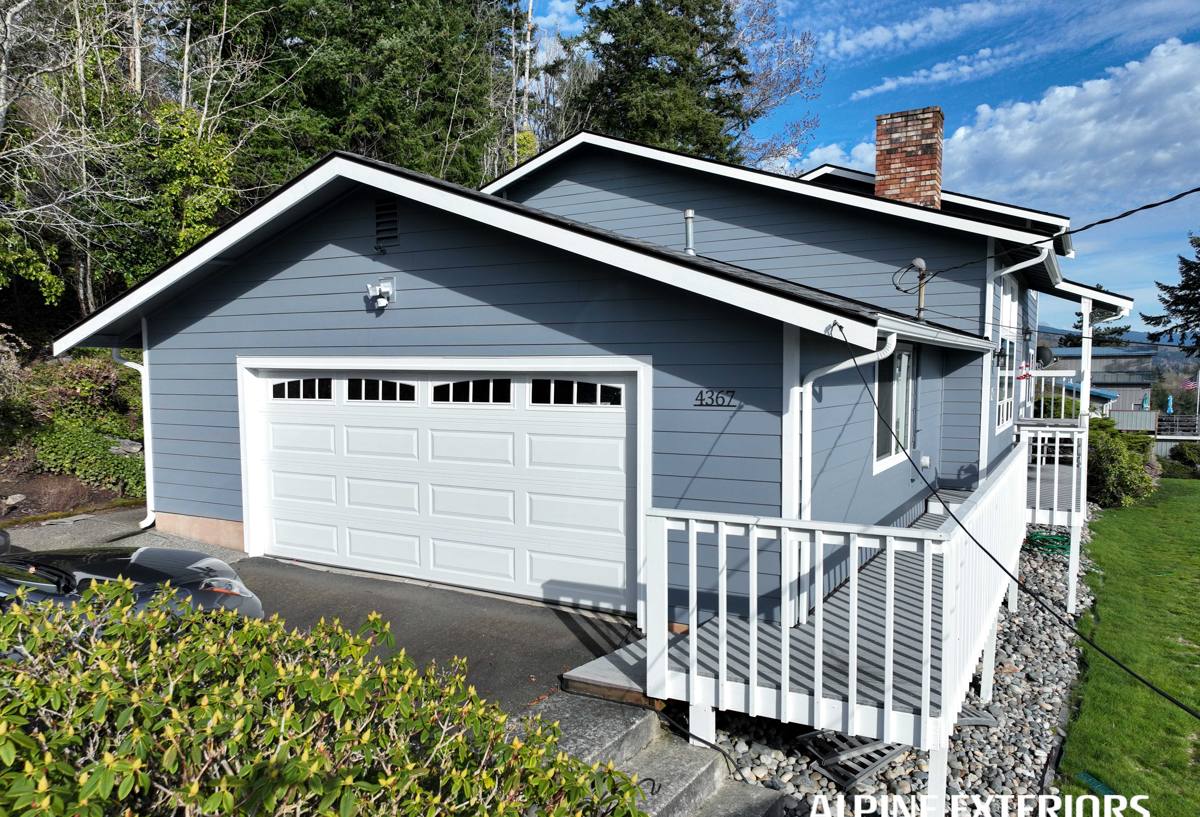
Signs You Need Replacement, Not Just Repair
Not every deck problem means starting over. But there's a point where patching boards is just delaying the inevitable and spending money that won't show up in the final result. Here's how we tell the difference on a typical visit.
- Soft or spongy decking in multiple areas, not just one board — usually means moisture has gotten under the surface finish for years.
- Rot at the ledger board (where the deck attaches to the house) — this is a structural issue, not cosmetic, and it's one of the most common failure points we find in this climate.
- Rusted or failing fasteners — coastal air accelerates corrosion on hardware that wasn't rated for it, and once fasteners go, the whole connection is suspect.
- Persistent moss or algae staining that comes back within weeks of cleaning — a sign the wood is holding moisture rather than shedding it.
- Wobble in the railing or posts — often traced back to a post base that's been sitting in standing water.
One or two of these can sometimes be repaired in isolation. Several at once, especially on a deck more than 15-20 years old, usually means the smarter money is a full replacement built to hold up going forward.
What a Correct Deck Replacement Actually Involves
It Starts Below the Boards
The decking itself — the boards you walk on — is the part everyone notices, but it's the last thing we install, not the first thing we think about. A deck that fails early almost always fails from the structure up, not the surface down. That means the framing, the ledger connection, the footings, and the flashing all need to be right before a single deck board goes down.
The Ledger and Flashing
In a climate with this much driving rain, the connection between the deck and the house is the single most important detail on the job. Water that gets behind an improperly flashed ledger board doesn't just rot the ledger — it can migrate into the house's rim joist and framing, turning a deck project into a siding and framing repair. Correct flashing, properly lapped and sealed, is non-negotiable on every replacement we do.
Footings and Posts
Whatcom County's frost depth and drainage conditions mean footings need to be set correctly, not just poured to "look done." Posts sitting directly on grade, or footings that trap water instead of shedding it, are a recurring cause of the wobble and settling we see on older decks in this area.
Choosing Decking Material for This Climate
There's no single "best" decking material for every homeowner — it depends on budget, how much upkeep you want to take on, and how long you plan to stay in the home. What we can tell you honestly is how each common option actually behaves once it's spent a few winters near the coast.
| Material | How It Handles Salt Air & Rain | Maintenance | Typical Lifespan |
|---|---|---|---|
| Pressure-treated pine | Prone to cupping and checking if not sealed regularly; moisture cycles are hard on it | Annual cleaning and re-sealing recommended | 10-15 years |
| Cedar | Naturally rot-resistant, handles moisture better than pine, but graying and softening still occur near salt air | Periodic cleaning and oiling to preserve color and surface | 15-20 years |
| Composite decking | Does not absorb water or rot; performs consistently in wet, salty conditions | Occasional washing; no sealing or staining needed | 25-30+ years |
| PVC decking | Fully synthetic, unaffected by moisture or salt exposure | Lowest maintenance of the group | 25-30+ years |
We install all of these depending on what a homeowner wants, but we'll always tell you plainly: in a moss-prone, high-moisture climate, natural wood decking asks for a maintenance commitment that composite and PVC simply don't. That's not a knock on wood — some homeowners genuinely enjoy the upkeep and prefer the look — it's just a real trade-off worth knowing before you decide.
Our Deck Replacement Process
- On-site assessment — we look at the existing structure, ledger condition, footings, and drainage before quoting anything.
- Removal — the old deck comes out, and we inspect the ledger area and any framing it was attached to for hidden rot.
- Structural repair as needed — any compromised framing or siding behind the old ledger gets addressed before rebuilding, not covered up.
- Framing and flashing — new ledger board, proper flashing, correctly spaced joists, and footings set to handle local frost and drainage conditions.
- Decking and railing installation — installed to the manufacturer's specifications for whichever material you've chosen, including fastener spacing and gapping for wet-climate expansion.
- Final walkthrough — we go over care and maintenance specific to your material choice before we consider the job done.
Permits and Local Code Considerations
Most full deck replacements in Whatcom County require a permit, particularly when the ledger connection, footings, or railings are being rebuilt rather than simply re-surfaced. Requirements can vary depending on your specific jurisdiction and the scope of the work. We handle the permitting conversation as part of the job rather than leaving it for the homeowner to sort out separately, and we build to current code for railing height, guard spacing, and structural connections regardless of what the old deck had.
Maintenance That Actually Matters Here
Whatever material you choose, a few habits make a bigger difference near the coast than almost anywhere else in the state. This is the short list we walk every homeowner through after installation.
- Keep gutters and downspouts clear so runoff isn't dumping extra water directly onto or under the deck.
- Sweep leaves and debris off the surface regularly — trapped organic matter is what feeds moss and algae growth.
- Rinse salt residue off the deck surface and hardware a few times a year, especially after storms with wind off the water.
- Check railing posts and stair connections annually for any looseness, especially going into winter.
- If you chose wood, stay on top of the re-sealing schedule — skipping a year is when moisture damage gets a foothold.
What Affects the Cost of a Deck Replacement
We don't publish flat pricing because every deck is a different size, height, and structural condition, but these are the factors that move the number most on any given project.
| Factor | Why It Matters |
|---|---|
| Deck size and height | Larger square footage and taller decks (requiring more substantial framing and railing) increase material and labor |
| Material choice | Composite and PVC cost more upfront than wood but reduce long-term maintenance spending |
| Ledger and framing condition | Hidden rot discovered during demolition can add scope, which is why an honest assessment upfront matters |
| Footing and drainage work | Sites with poor existing drainage may need additional footing or grading work to hold up long-term |
| Railing style and stairs | Custom railing designs and multi-level stairs add both material and labor time |
We'll walk through each of these with you during the estimate so you understand exactly what's driving the number, not just a total at the bottom of a page.
Why Hire a Crew That Already Works in the Bellingham Area
A deck built for a dry-climate suburb and a deck built for the Bellingham area shouldn't look the same on the inside, even if they look identical from the yard. Flashing details, fastener selection, footing depth, and material recommendations all shift when you're building somewhere with this much rain and this much salt in the air. A crew that works this region regularly has already seen which shortcuts fail here and which details are worth the extra time — that's not something you get from a contractor who mostly works somewhere else and takes the occasional Whatcom County job.
We also know that a deck doesn't exist on its own — it ties into your siding, your house's flashing, and your drainage. Because we work on the full exterior of homes in this area, we look at your deck replacement in that context, not as an isolated carpentry project.
If your deck is showing its age or you're just ready for something built to actually hold up to Bellingham's weather, we'd be glad to take a look. Reach out for a free, no-pressure estimate using the form below — we'll give you a straight assessment of what your deck needs and what your options actually cost.