 Birch Bay Siding
 Bellingham's Coastal Climate Is Hard on Roofs
Bellingham sits close enough to Bellingham Bay and the Salish Sea that salt-laden air is a daily fact of life for anything installed outdoors, including the roof over your head. Add Whatcom County's long, wet fall-through-spring stretch and the shaded, tree-heavy lots common around Bellingham neighborhoods, and you get a climate that pushes roofing materials in three directions at once: corrosion from salt air, saturation from near-constant rain, and moss and algae growth that thrives in cool, damp, low-sun conditions for much of the year. A roof designed for a dry inland climate will not perform the same way here. A new roof installation in this area has to account for all three factors from the underlayment up, not just the shingle color on top.
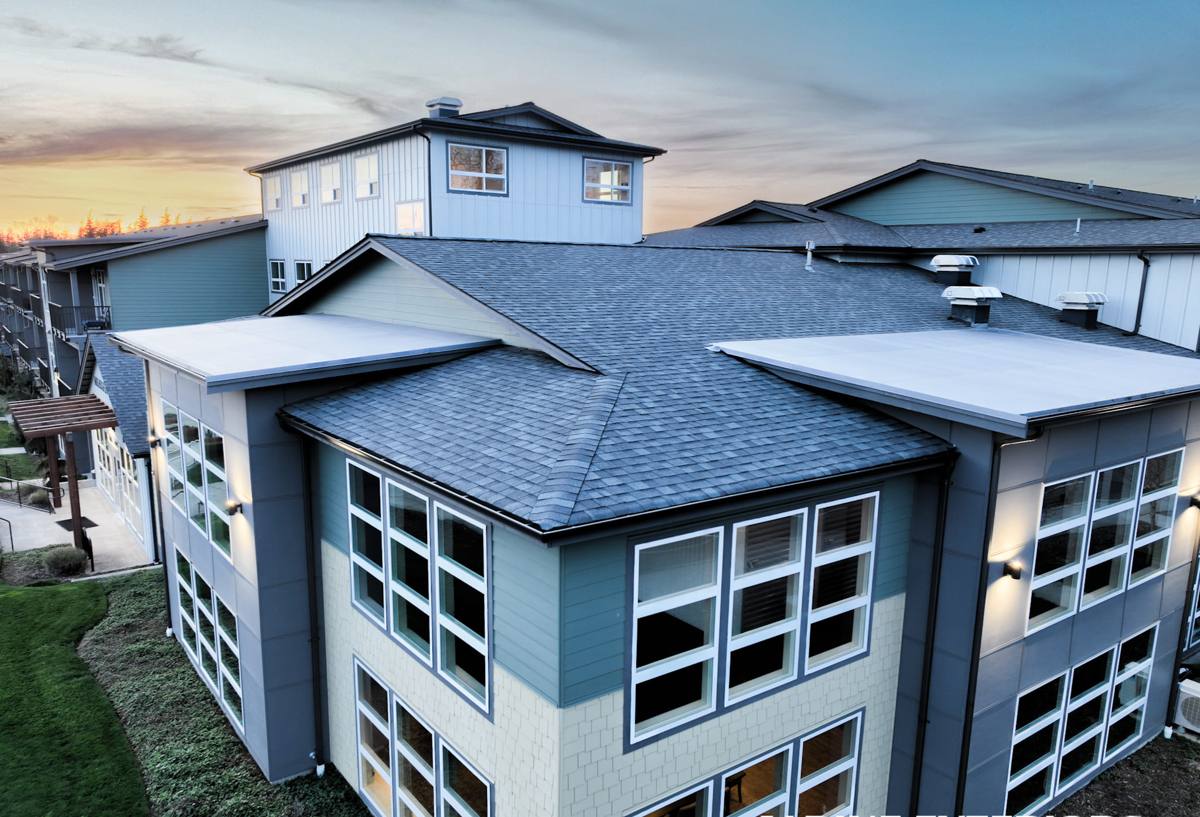
What a Correct Roof Installation Looks Like in Bellingham
A roof is a system, not a single layer of material. In a climate this wet, the components most homeowners never see matter as much as the shingles or panels on top.
Underlayment and Moisture Barriers
We install a synthetic underlayment across the full roof deck rather than older felt paper, because synthetic underlayment holds up better to prolonged moisture exposure and doesn't wrinkle or tear as easily during the wetter months when a project can't always finish in a single dry stretch. Along eaves, valleys, and any low-slope transitions, we add a self-adhering ice-and-water membrane. It's not just an ice-dam product; in Bellingham it does double duty protecting the areas most exposed to wind-driven rain, which tends to find its way under standard shingles at the eaves and in valleys before it finds its way anywhere else.
Flashing Details That Matter
Most roof leaks trace back to flashing, not the field material. Around chimneys, skylights, sidewalls, and any roof penetration, we use step flashing and counter-flashing sized and lapped correctly for the pitch involved, not a bead of caulk standing in for proper metalwork. Given the salt air, we also pay attention to what the flashing and fasteners are made of.
Ventilation and Moss Prevention
A roof that can't breathe traps moisture in the attic, which shortens the life of the decking and encourages moss growth on shaded slopes from the underside as much as the top. Balanced intake and exhaust ventilation, matched to the size of the attic space, keeps the deck drier and the roof surface less hospitable to moss and algae over the long, gray Whatcom County winters.
Roofing Material Options for Bellingham Homes
There is no single "best" roofing material everywhere, but some options are a better fit for our specific coastal, moss-prone climate than others. Here's how the common choices compare for local conditions:
| Material | Moss/Algae Resistance | Wind & Rain Performance | Typical Lifespan | Maintenance |
|---|---|---|---|---|
| Architectural asphalt shingle (with algae-resistant granules) | Good with periodic cleaning | Strong when properly nailed and sealed | 25-30 years | Low to moderate |
| Standard 3-tab asphalt shingle | Fair; more prone to staining | Adequate but less wind-rated | 15-20 years | Moderate |
| Standing seam metal | Excellent; moss struggles to grip smooth panels | Excellent, sheds rain fast | 40-50+ years | Low |
| Cedar shake | Poor without diligent upkeep | Good, but seams need attention | 20-30 years with maintenance | High |
| Synthetic composite shingle | Good, varies by product | Strong impact and wind ratings | 30-50 years | Low |
Architectural asphalt with algae-resistant (copper-infused) granules is the most common choice we install in this area because it balances cost, appearance, and moss resistance well. Standing seam metal is worth the higher upfront cost for homeowners who want to largely stop thinking about moss and roof maintenance for decades, especially on steep, shaded roof planes where moss is most persistent. Cedar shake looks the part in a Pacific Northwest setting, but it's an honest trade-off: it demands real upkeep in a climate this wet, and we're straightforward with clients about that maintenance burden before they commit to it.
Moss, Algae, and the Long Wet Season
Whatcom County's moss season isn't a two-week nuisance — cool, damp conditions that favor moss growth can persist for much of the year on north-facing and shaded roof slopes. A new roof installation is the best opportunity to build in long-term moss defense rather than fighting it after the fact:
- Algae-resistant shingles with copper or zinc granules, which release trace amounts that inhibit growth over time
- Zinc or copper strips installed near the ridge on request, letting rain carry trace metal down the roof plane
- Proper attic ventilation so the underside of the deck stays dry, denying moss the moisture it needs from below
- Correct slope and overhang detailing so water sheds fully instead of sitting in shaded low spots
None of these eliminate moss entirely on a shaded Bellingham roof — nothing does — but together they slow it down significantly and make routine soft-washing far more effective when it is needed.
Our Installation Process
Homeowners deserve to know what actually happens once a crew is on the roof. Our process is the same on every job:
- On-site inspection and estimate. We walk the roof (weather permitting) and the attic, check the decking condition, ventilation, and flashing points, and put together a written scope and price.
- Material selection. We go over the material options above in the context of your home's slope, shading, and budget, not a one-size-fits-all recommendation.
- Tear-off and deck inspection. Old roofing comes off down to the deck, and we inspect for soft spots, rot, or prior water damage that needs to be addressed before new material goes down — this is where hidden problems from years of Bellingham rain usually surface.
- Deck repair as needed. Any damaged sheathing is replaced before underlayment goes on; installing new roofing over a compromised deck just hides a problem that gets worse.
- Underlayment, ice-and-water membrane, and flashing installation. The moisture-management layer goes in first and gets the same attention as the finished surface.
- Field material installation. Shingles, panels, or shakes go down to manufacturer spec and local code, with attention to nail placement and exposure, which affects both wind resistance and warranty validity.
- Ventilation and final detailing. Ridge vents, boots, and remaining flashing are completed and checked.
- Site cleanup and walk-through. Magnetic sweep for stray fasteners, debris removal, and a final walk-through so you know exactly what was done.
Signs Your Bellingham Roof Needs Replacing, Not Repairing
Not every roof problem calls for full replacement, but in this climate certain signs tend to mean patch repairs won't hold much longer:
- Granule loss heavy enough that shingles look bald or patchy in spots exposed to years of driving rain
- Curling, cupping, or cracked shingles, especially on south- and west-facing slopes that see the most sun-to-rain cycling
- Persistent moss or dark algae staining that returns quickly after cleaning
- Soft spots or sagging in the roof deck, often a sign moisture has reached the sheathing
- Daylight visible through the attic roof boards, or damp insulation after storms
- A roof approaching or past 20-25 years old (asphalt) with multiple repair patches already on it
- Rusted or deteriorating flashing around chimneys, vents, or skylights
Permits, Codes, and Local Considerations
Full roof replacements in and around Bellingham typically require a permit through the applicable local building department, and inspections confirm that decking, underlayment, and ventilation meet current code. Homes here also need to be built for the wind and rain loads typical of a coastal Whatcom County location, which affects fastening patterns and material wind ratings, particularly on more exposed lots. We handle the permitting and code compliance as part of the job so it isn't left for the homeowner to sort out.
Roof Maintenance After Installation
A well-installed roof still benefits from basic upkeep, especially in a climate this wet. Keeping gutters clear so water isn't backing up under the eave line, having moss growth addressed with a gentle soft-wash rather than pressure washing (which can strip granules), and scheduling a periodic visual inspection after major windstorms all go a long way toward getting the full service life out of a new roof. We're happy to walk homeowners through a simple maintenance schedule at the end of an install.
Why Hire a Crew That Already Works Bellingham
Roofing crews who work regularly in Bellingham and the surrounding Whatcom County coastline see the same recurring problems — moss on shaded north slopes, flashing corrosion from salt air, deck rot from long-term slow leaks — often enough to know what to check for and how to build a roof that resists them from day one. That local pattern recognition is different from general roofing experience; it comes from working this specific coastline repeatedly, not from a manual. It also means we're a known, reachable local business if a question comes up after the job is done, not a crew that worked its way through once and moved on.
If you're weighing a new roof for your Bellingham home, we're glad to come take a look, walk the attic and roof deck with you, and put together a straightforward, no-pressure estimate. There's a form below — reach out and we'll get a time on the calendar.