 Birch Bay Siding
 Windows Built for the Birch Bay Village Climate
Birch Bay Village sits close enough to the water that the air itself works against your windows year-round. Salt-laden marine air off the bay settles on glass, frames, and hardware, and it doesn't just sit there — it corrodes metal components, dulls finishes, and works its way into any gap in a seal. Add Whatcom County's long wet season, with driving rain that comes in sideways during winter storms, and you have a climate that punishes any window that isn't installed correctly the first time.
Then there's moss. The same damp, shaded conditions that grow moss on roofs and siding also encourage it around window sills, trim, and anywhere water sits instead of draining. Once moss and organic buildup take hold near a window opening, they hold moisture against wood trim and framing long after the rain stops, which is exactly the kind of slow, hidden damage that turns a simple window job into a structural repair if it's ignored.
None of this means Birch Bay Village homes need exotic materials or a complicated process. It means the details that get rushed or skipped on an easy job — flashing, sealant choice, drainage paths — cannot be skipped here. That's the standard we hold every window replacement to in this neighborhood.
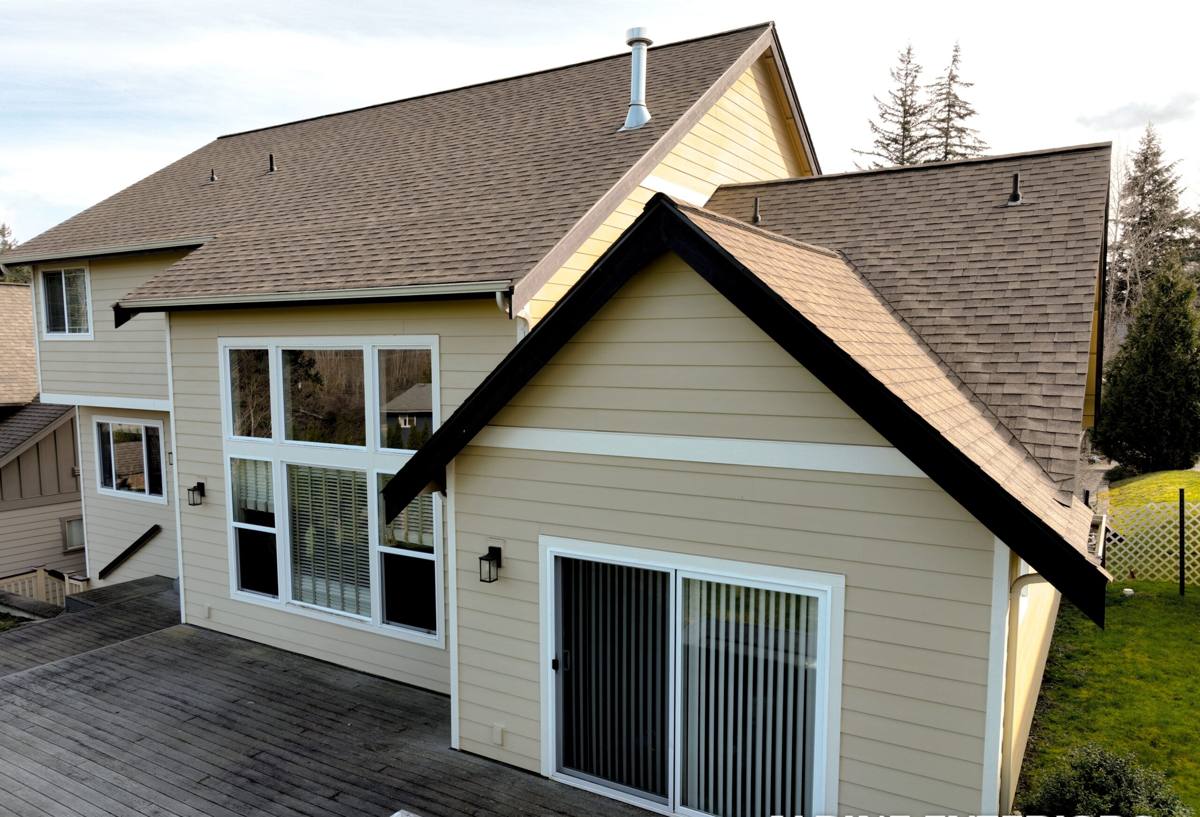
How to Tell Your Windows Are Losing the Battle
Window failure in a marine climate rarely announces itself with a cracked pane. It shows up gradually, and homeowners often adjust to it without realizing how much it's costing them in comfort and energy use.
Common warning signs
- Fogging or a hazy film between the panes of a double-pane window — the seal has failed and the gas fill has escaped
- Visible pitting, chalking, or corrosion on metal hardware, hinges, or locks
- Soft, discolored, or spongy wood trim around the frame, especially at the bottom sill
- A noticeable draft near the frame even when the window is fully latched
- Difficulty opening, closing, or locking a window that used to operate smoothly
- Moss or dark streaking building up on or just below the sill
- Condensation forming on the inside of the glass regularly, even in mild weather
Any one of these on its own might just mean the window needs attention. Several at once, especially on a wall that faces prevailing wind and rain, usually means the window and its surrounding flashing have reached the end of their service life.
What a Correct Window Replacement Actually Involves
Swapping an old window for a new one is the easy part. The work that determines whether that window lasts is what happens in the rough opening before the new unit ever goes in.
Inspecting what's behind the old window
Once the old window is out, we check the framing, sill, and sheathing for rot, moisture staining, or prior water intrusion. In a climate like Birch Bay's, it's not unusual to find that water has been getting behind an old window for years without any obvious sign from inside the house. Any damaged wood gets addressed before a new window goes anywhere near the opening — installing new glass over a compromised frame just hides the problem for a little while longer.
Flashing and drainage, not just caulk
A window's long-term performance in wind-driven rain comes down to how water is directed around it, not just how well it's sealed. That means a proper sill pan to catch and drain any water that gets past the exterior, correctly lapped flashing tape so water sheds outward and downward, and sealant used only where it belongs — as a backup, not as the primary line of defense. Caulk alone, with no flashing behind it, is a common shortcut that fails within a few years in this kind of weather.
Fit, shimming, and insulation
A window that's shimmed unevenly will stress the frame, bind the hardware over time, and leave gaps for air and moisture. We set each unit level, plumb, and square, then insulate the gap between the frame and the rough opening with a material that stays flexible rather than a can of rigid foam that can bow the frame inward.
Exterior trim and finish
The last step is finishing the exterior in a way that sheds water and resists the buildup of moss and grime — proper caulking joints, correctly pitched sills, and trim that doesn't trap water against the wall.
Choosing Materials for a Salt-Air, High-Moisture Climate
There's no single "best" window material for every home — the right choice depends on your home's exposure, your budget, and how much upkeep you want to take on. What matters is understanding the honest trade-offs.
| Frame Material | Performance in Salt Air / Rain | Maintenance | Typical Trade-Offs |
|---|---|---|---|
| Vinyl | Good — won't corrode or rot, handles moisture well | Low — occasional cleaning | Limited color/finish options; quality varies widely by manufacturer |
| Fiberglass | Excellent — very stable, resists warping and corrosion | Low | Higher upfront cost than vinyl |
| Aluminum | Fair — prone to corrosion and pitting near salt air unless well-coated | Moderate to high | Thin sightlines, but conducts heat/cold and needs a good thermal break |
| Wood / Wood-clad | Fair — attractive but vulnerable to moisture intrusion if seals fail | High — regular inspection and refinishing of any exposed wood | Best appearance for some home styles; more sensitive to installation quality |
We don't push one brand or material on every homeowner. What we do insist on is being straight about which options make sense for a given wall's sun and rain exposure, and steering away from products that carry a maintenance burden most people underestimate until it's a repair bill.
Glass and hardware matter too
Beyond the frame, look at the glass package (dual or triple pane, low-E coatings for our overcast climate) and the hardware finish. Standard hardware finishes can pit and discolor faster this close to the water — a corrosion-resistant finish costs a little more up front and saves you from sticky locks and stained sills a few years down the road.
Our Process for a Birch Bay Village Window Job
- On-site assessment. We look at every window being discussed, check for existing moisture or rot, and note exposure — which walls take the brunt of driving rain and wind off the bay.
- Honest recommendations. You get options that fit your home and budget, with the real trade-offs explained, not a single upsell pitch.
- Accurate measurement and ordering. Every opening gets measured individually — older Birch Bay Village homes are rarely perfectly square, and assuming otherwise leads to gaps and callbacks.
- Removal and inspection. Old windows come out carefully, and we inspect and repair the framing before anything new goes in.
- Correct installation. Sill pan, flashing, shimming, insulation, and finish work done in the sequence that actually keeps water out.
- Walkthrough and cleanup. We check operation on every window with you and leave the work area clean.
Why a Crew That Knows Birch Bay Village Matters
A window install that works fine in a drier, more sheltered inland location can fail within a few seasons on a wall that takes direct wind and rain off the water. Crews who work Birch Bay and the surrounding Whatcom County coastline regularly get a feel for which walls and window styles need extra attention to flashing and drainage detail, and which corrosion-resistant hardware and finishes hold up instead of needing replacement in a handful of years.
That local pattern recognition doesn't replace doing the fundamentals correctly on every job — it just means fewer surprises, and fewer callbacks for water intrusion that shows up two winters later.
What to Ask Before You Hire
- Will you inspect and repair any rot or moisture damage found behind the old window before installing the new one?
- What's your flashing and sill pan method, and will it be visible for me to see before it's covered?
- Which frame materials and hardware finishes do you recommend for a wall facing the water, and why?
- Is the quote itemized, and does it include exterior trim and finish work, not just the window unit?
- What's the warranty on both the window product and your installation labor, and who do I call if something goes wrong?
A contractor who answers these clearly and specifically, rather than in vague reassurances, is one who actually does this work the right way.
Cost Factors to Expect
Window replacement pricing depends on more variables than most homeowners expect, and anyone quoting a firm number before seeing your windows in person is guessing.
| Factor | Why It Affects Cost |
|---|---|
| Frame material | Vinyl, fiberglass, aluminum, and wood-clad windows carry different material costs |
| Window size and style | Larger units, custom shapes, and operable styles (casement, sliding, awning) vary in price |
| Condition behind the old window | Rot or water damage found during removal adds repair time before the new window goes in |
| Number of windows and access | Multi-window jobs and hard-to-reach second-story openings affect labor and scheduling |
| Glass package | Dual vs. triple pane, and low-E coatings, change the per-unit cost |
| Exterior finish work | Trim replacement, painting, or matching existing siding adds scope |
We give straightforward, itemized estimates after actually looking at your windows — not a generic per-window number pulled from a national average.
Get a Straight Answer About Your Windows
If your windows in Birch Bay Village are fogging, drafting, sticking, or showing wear around the sills, it's worth having them looked at before another wet season adds to the damage. We'll give you an honest read on what's actually going on and what it would take to fix it right — no pressure, no upsell. Use the form below to request a free estimate.