 Birch Bay Siding
 Storm Damage Roof Repair for California Creek Homes
California Creek sits close enough to the water that every roof in the area earns its keep. Salt-laden air moves in off Birch Bay and the Strait, winter storms bring sideways rain instead of the gentle straight-down kind, and the tree cover that makes this part of Whatcom County so pleasant to live in also means shade, damp, and moss for most of the year. When a windstorm or a heavy blow comes through, the damage isn't always obvious from the driveway. That's the trouble with storm damage — the roof can look fine from the ground and still be quietly letting water in.
This page covers what storm damage roof repair actually means for a California Creek property: what the climate does to roofs here specifically, how to tell if you've got real damage versus cosmetic wear, what a proper repair involves, and how we handle the job from first call to final inspection.
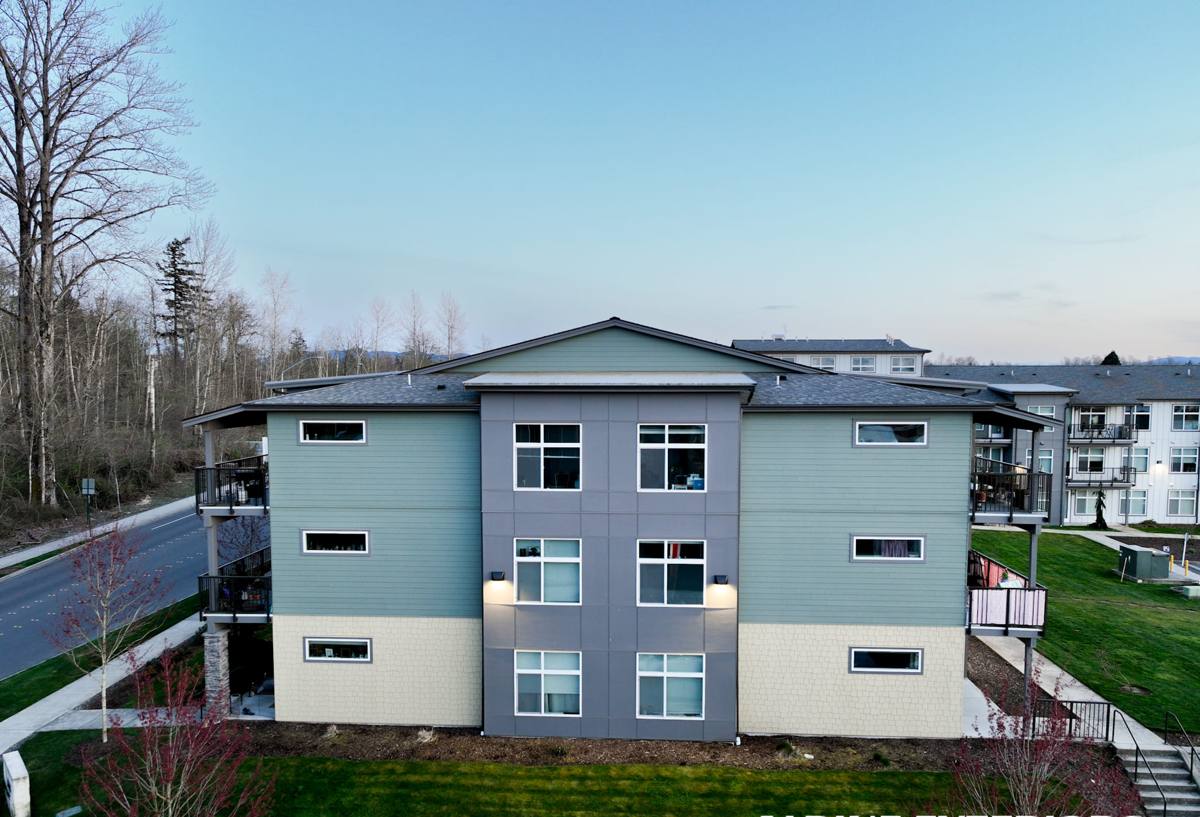
Why Storm Damage Hits Different in California Creek
Roofs fail predictably when you understand the conditions working against them. In this part of Whatcom County, there are three forces doing most of the damage over time, and storms are usually what finally exposes the weak points they've created.
Salt Air and Metal Fatigue
Properties within a mile or two of the water deal with salt air settling on every exposed surface. It accelerates corrosion on exposed fasteners, flashing, and any metal roofing components. A nail or screw that's lost its coating to salt exposure loses holding power well before it looks obviously bad, which is exactly the kind of thing a storm will find.
Wind-Driven Rain
Straight-down rain is easy on a roof — it lands on the shingle and runs off. Wind-driven rain, which is the norm during a Pacific storm system moving through, gets pushed sideways and even slightly upward under the tab line of shingles, around flashing edges, and into any gap that a calm-weather roof would never notice. This is why storm damage often shows up as an interior leak in a spot that has nothing to do with where the wind was strongest.
The Long Moss Season
Shade from mature trees plus consistent moisture means moss and moderate growth get a long runway here — often eight or nine months of the year with conditions favorable to it. Moss holds water against the roofing material, lifts shingle edges as it grows, and adds weight. A roof carrying a moss mat going into a windstorm is far more vulnerable to wind lift and shingle loss than a clean one, because the moss has already loosened the seal.
Recognizing Real Storm Damage vs. Normal Wear
Not every mark on a roof after a storm needs a repair crew. But a few signs are reliable indicators that something needs attention before the next weather system arrives.
- Shingles that are creased, curled up at the edge, or missing entirely, especially on the side of the roof that faces prevailing wind
- Granules collecting in gutters or at downspout outlets — a sign of shingle surface abrasion from wind and debris
- Flashing around chimneys, vents, or skylights that's visibly bent, lifted, or separated from the roofline
- New or worsening interior water stains on ceilings, especially near exterior walls or around penetrations
- Soft spots or sagging when walked, which can indicate saturated decking underneath
- Debris damage — branch strikes or impact marks from wind-blown material
- Gutters pulled away from the fascia or full of shingle fragments and moss clumps knocked loose by wind
If you see any of these after a storm, the priority is getting a look at it before the next rain event, not necessarily before the end of the week. A tarped or temporarily sealed vulnerable spot buys time; an ignored one usually gets worse with the next system.
What a Correct Storm Damage Repair Actually Involves
A repair that only addresses what's visible from the ground is a repair that often gets redone within a year or two. Here's what we check and address on every storm damage call in this area.
Full Roof Assessment, Not Just the Reported Spot
Wind damage rarely announces itself in only one place. We walk the full roof plane, not just the area near the reported leak, because a storm that lifted shingles on one slope frequently loosened fasteners or seals on an adjacent slope too. Given the salt air exposure common to California Creek properties, we also check exposed fastener condition as part of that walk.
Underlayment and Decking Check
If water has been getting past the shingle layer for any length of time, the underlayment and the decking beneath it need to be checked for saturation and soft spots. Replacing shingles over compromised decking doesn't fix the problem — it just re-covers it.
Flashing Repair or Replacement
Flashing failure is one of the most common sources of storm-related leaks, particularly around chimneys, skylights, and roof-to-wall transitions. Flashing that's been bent or partially lifted by wind needs to be properly reseated or replaced, not just re-caulked over.
Moss and Debris Removal Before Repair
Given how much moss this area supports, we clear growth and debris from the repair area and its surroundings before doing any patch work. Sealing shingles down over moss just traps moisture underneath the repair.
Matching Materials
Where shingles need replacing, matching the existing product as closely as possible matters both for water-shedding continuity and for appearance. A visibly mismatched patch is often a sign a repair was rushed.
Cost Factors for Storm Damage Repair
Every storm damage job is different, but the price generally comes down to a handful of factors. This table covers what tends to move the estimate up or down, without pretending to give you a number that depends on seeing your actual roof.
| Factor | Lower Cost End | Higher Cost End |
|---|---|---|
| Extent of damage | Isolated shingle loss, small area | Multiple slopes affected, decking compromised |
| Underlying material condition | Roof otherwise sound and recently maintained | Older roof nearing end of service life |
| Flashing involvement | Flashing intact, shingle-only repair | Chimney, skylight, or valley flashing needs replacement |
| Moss/debris condition | Roof was clean prior to storm | Heavy moss requiring removal before repair |
| Access and roof pitch | Standard pitch, easy access | Steep pitch or difficult access requiring extra safety setup |
| Material match availability | Common shingle style, easy to match | Discontinued or unusual product requiring closer color/style search |
We give a firm number after the assessment, not before — a phone estimate on storm damage is a guess, and we'd rather look first.
Insurance and Storm Damage Claims
Many storm damage repairs in this area go through homeowner's insurance, particularly when a named windstorm or a documented weather event caused the damage. A few practical points worth knowing:
- Document damage with photos before any temporary tarping or cleanup, if it's safe to do so
- An assessment and written estimate from a local contractor is generally what an adjuster will want to see alongside their own inspection
- Temporary protection (tarping an exposed area) is usually reasonable and often expected to prevent further damage, but keep records of what was done and when
- Not all storm damage is claim-worthy — some is simply the roof reaching the end of its service life, which a straightforward assessment will make clear either way
We're not an insurance company and we don't handle the claim itself, but we can provide the documentation and estimate a claim typically requires.
Why Local Experience with California Creek Roofs Matters
A roofing crew that mostly works inland doesn't spend much time thinking about salt exposure on fasteners or how long moss sits on a north-facing slope near the water. Those aren't abstract concerns here — they're the difference between a repair that holds and one that needs revisiting.
Working regularly in and around Birch Bay and Whatcom County means we already know which failure patterns show up on which types of homes near the water, what the prevailing storm direction tends to do to a given roof orientation, and how aggressively moss needs to be managed on a property with heavy tree cover. That's not a substitute for inspecting your specific roof, but it does mean fewer surprises once we're up there.
Our Process for a Storm Damage Call
- Initial call to understand what happened — when the storm hit, what you're seeing (leak, missing shingles, debris), and how urgent it is
- On-site assessment of the full roof, not just the reported area, including flashing, decking condition where accessible, and moss/debris state
- Written estimate covering the repair scope, materials, and — if relevant — documentation suitable for an insurance claim
- Temporary protection first if the roof is actively letting water in and full repair can't happen immediately
- Repair work: decking replacement if needed, flashing correction, matched shingle replacement, and moss/debris clearing in the work area
- Final walk-through so you can see what was done and ask questions before we consider the job finished
Keeping Storm Damage from Recurring
A repair only holds if the conditions that caused the original damage are addressed too. A few habits that reduce repeat storm damage on California Creek roofs:
- Keep gutters clear so wind-driven rain has somewhere to go instead of backing up under the shingle edge
- Have moss addressed on a regular schedule rather than waiting for it to visibly cover a slope
- Trim back tree limbs that overhang the roof, both to reduce impact risk and to cut down on shade that prolongs moss growth
- After any significant windstorm, a quick visual check (or a call to have it looked at) catches small issues before the next system rolls through
If a recent storm has you wondering about your roof, we're happy to take a look. We offer a free, no-pressure estimate — no obligation, just an honest read on what's going on and what it would take to fix it right. You can request one using the form below.