 Birch Bay Siding
 Roofing Built for Cottonwood Beach, Not Just "Birch Bay"
Cottonwood Beach sits close enough to the water that its roofs live a different life than a roof three miles inland. Homes here take a steady dose of salt-laden air off the bay, get hit with wind-driven rain that finds its way sideways under loose flashing, and sit under enough tree cover on the landward side to grow moss almost year-round. A new roof installed here has to account for all three of those things at once, not just the general Whatcom County climate. That's the difference between a roof that looks right on installation day and one that's still performing at year twelve.
This page covers what a correct new roof installation looks like specifically for Cottonwood Beach properties — what the exposure demands, how we approach the tear-off and install, and what to look for in any crew you're considering for the job.
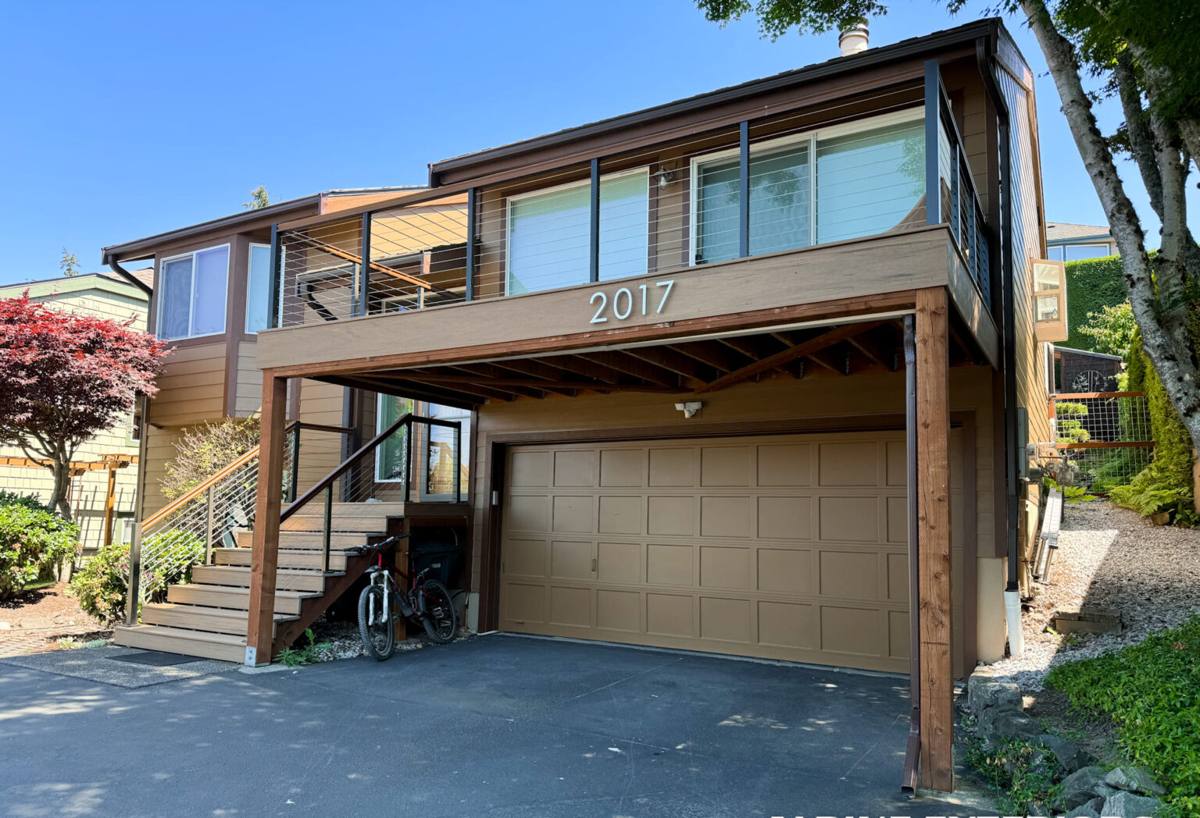
What This Exposure Actually Does to a Roof
Salt Air
Salt-laden air accelerates corrosion on anything metal — nails, flashing, drip edge, vent caps, and the fasteners holding it all together. On a standard build, that means the components most responsible for keeping water out are also the first to weaken. We spec corrosion-resistant fasteners and flashing metals for waterfront-adjacent homes as a matter of course, not as an upsell.
Driving Rain
Rain that comes in mostly straight down is one problem. Rain that comes in at an angle, pushed by wind off open water, is a different problem — it can work its way under shingle tabs, around chimney flashing, and into valleys that would shed a gentler rain just fine. Roofs near the water need tighter fastening patterns, properly lapped underlayment, and valley and flashing details built with more margin for wind-driven moisture than a textbook installation calls for.
Moss Season
Cottonwood Beach's mix of marine humidity and tree cover on the inland side means moss isn't a once-in-a-while nuisance — it's a seasonal certainty on north-facing slopes and anywhere shade lingers. Moss holds moisture against the roof surface, works its way under shingle edges as it grows, and shortens the life of the roofing material underneath it. A new roof should be installed in a way that slows moss establishment and makes the eventual cleaning safe to do without damaging the surface.
What a Correct New Roof Installation Involves
A new roof is more than shingles nailed to plywood. Done right, it's a system, and every layer matters:
- Deck inspection and repair — any soft, rotted, or delaminated sheathing gets replaced before anything new goes down. Roofing over a bad deck just hides the problem.
- Ice-and-water or self-adhering membrane at eaves, valleys, and around every penetration — the areas most exposed to wind-driven rain and moss-related moisture.
- Synthetic underlayment across the full field, properly lapped, rather than relying on the shingle alone as the water barrier.
- Corrosion-resistant flashing and fasteners at chimneys, walls, skylights, and roof-to-wall transitions — the details most vulnerable to salt exposure.
- Balanced intake and exhaust ventilation so the attic isn't trapping moisture that feeds moss growth and rot from underneath.
- Manufacturer-correct fastening — nail count, placement, and pattern matched to the specific shingle or panel product and to the higher wind exposure near the water.
Choosing the Right Roofing Material for This Location
There's no single "best" roofing material for every Cottonwood Beach home — it depends on the roof's exposure, slope, budget, and how much long-term maintenance you want to take on. Here's how the common options stack up for this specific setting:
| Material | Salt Air / Corrosion | Moss Resistance | Relative Cost | Typical Lifespan |
|---|---|---|---|---|
| Architectural asphalt shingle | Good, with corrosion-resistant fasteners and flashing | Moderate — benefits from algae-resistant granules and periodic cleaning | Lower to mid | 25-30 years |
| Standing seam metal | Very good with proper coated/coastal-rated panels | Very good — sheds moisture quickly, little surface for moss to grip | Higher | 40-50+ years |
| Composite / synthetic shake | Good | Good, depending on product | Mid to higher | 30-50 years |
| Traditional cedar shake | Fair — needs diligent upkeep in this climate | Poor without regular treatment and cleaning | Higher, plus ongoing maintenance | 20-30 years with upkeep |
For most Cottonwood Beach homes, we steer clients toward architectural asphalt with algae-resistant granules or a coastal-rated metal roof. Cedar shake can look great, but in a marine, moss-prone environment it demands a level of ongoing maintenance that most homeowners don't want to sign up for — that's a maintenance-burden call, not a knock on the material itself.
Our Installation Process
- On-site evaluation — we walk the roof and attic, check the decking, ventilation, flashing points, and note any moss or moisture staining that points to past problems.
- Written estimate — clear scope, material options, and pricing, so you know exactly what's included before any work starts.
- Tear-off and deck repair — old roofing removed down to the deck, damaged sheathing replaced, deck re-nailed to current code where needed.
- Underlayment and flashing — membrane at vulnerable zones, synthetic underlayment across the field, new flashing and drip edge in corrosion-resistant metal.
- Roofing installation — material installed to manufacturer spec, with fastening patterns adjusted for this location's wind and rain exposure.
- Ventilation check — intake and exhaust balanced so the finished attic system actually performs, not just looks complete.
- Final walkthrough — cleanup, magnetic sweep for stray nails, and a walk of the finished roof with you before we call it done.
Ventilation and Moss: Getting Ahead of It
You can't eliminate moss risk on a shaded, coastal-humid property, but you can make it far less aggressive and far easier to manage. Balanced attic ventilation keeps roof deck temperatures more even, which reduces the condensation that helps moss and algae take hold from underneath. On the surface, algae-resistant shingle granules and, where the design allows it, discreet zinc or copper strips near the ridge help suppress regrowth between cleanings. None of this replaces occasional gentle cleaning, but it changes how often you need to do it and how much moss can gain a foothold in the meantime.
Signs Your Roof Needs Replacement, Not Repair
Not every roof problem calls for a full replacement, but in a climate this hard on roofing, some symptoms are a sign the underlying system has run its course:
- Granule loss heavy enough to see bare asphalt on multiple slopes
- Shingles curling, cupping, or lifting at the edges, especially on wind-exposed faces
- Soft spots in the decking felt when walking the roof
- Moss that's returned repeatedly to the same areas despite cleaning
- Flashing that's visibly corroded, rusted, or pulling away at joints
- Interior staining on ceilings or in the attic after wind-driven rain
- A roof already past, or close to, its material's expected service life
If you're only seeing one or two of these in a limited area, a targeted repair may still make sense. When several show up together, or the roof is old enough that repairs are just delaying the inevitable, replacement is usually the more honest recommendation.
Permits and Local Considerations
Full roof replacements in Whatcom County typically require a building permit, and the requirement applies whether you're a few blocks from the water in Cottonwood Beach or further inland in Birch Bay. Permit requirements and inspection steps can vary by scope of work, so we handle that coordination as part of the job rather than leaving it for the homeowner to sort out. Wind exposure near the water can also affect fastening and material requirements under current code — another reason to work with a crew that installs roofs in this specific area regularly, not just in Whatcom County generally.
Why Local Experience in Cottonwood Beach Matters
A crew that mostly works inland jobs will build a roof to a generic standard — technically sound, but not tuned to what this stretch of shoreline actually throws at a house. Working Cottonwood Beach roofs regularly means knowing which slopes on this type of lot hold moss longest, which flashing details tend to fail first under wind-driven rain, and which fastener and flashing materials actually hold up against the salt air instead of just meeting minimum code. That local pattern recognition is the difference between a roof that's installed correctly on paper and one that's installed correctly for this specific piece of coastline.
Questions Worth Asking Before You Hire
- Do you install roofs elsewhere in Birch Bay and Whatcom County regularly, or is this a one-off for your crew?
- What fastener and flashing materials do you use for homes this close to the water?
- How do you handle ventilation balancing, not just the visible roofing surface?
- What's included in your written estimate, and what would trigger a change order?
- Who pulls the permit, and who's responsible for scheduling inspections?
- What warranty covers the material, and what covers your labor separately?
If your roof is showing its age or you just want an honest read on where it stands, we're happy to take a look. Estimates are free and there's no pressure to move forward — you'll get a clear picture of your options and what a correct installation looks like for your specific home in Cottonwood Beach. Use the form below to get started.