 Birch Bay Siding
 Why Decks in Custer Wear Out Faster Than People Expect
Custer sits close enough to the water that salt-laden air is a constant, not an occasional visitor. Add Whatcom County's long wet season, driving rain that comes in sideways off Georgia Strait storms, and a moss season that can run eight or nine months out of the year, and you have a climate that is genuinely hard on outdoor living spaces. A deck built to a generic national spec, without any thought to this specific mix of conditions, tends to show its age within a handful of years — fading unevenly, staying damp longer than it should, growing moss and algae in shaded corners, and loosening hardware as wood substructure swells and shrinks through repeated wet-dry cycles.
Composite decking exists specifically to solve most of these problems, but only when it is chosen, framed, and installed with this climate in mind. A composite deck put together the same way you'd build one in a dry inland climate will still struggle here. The material matters, but the build matters just as much.
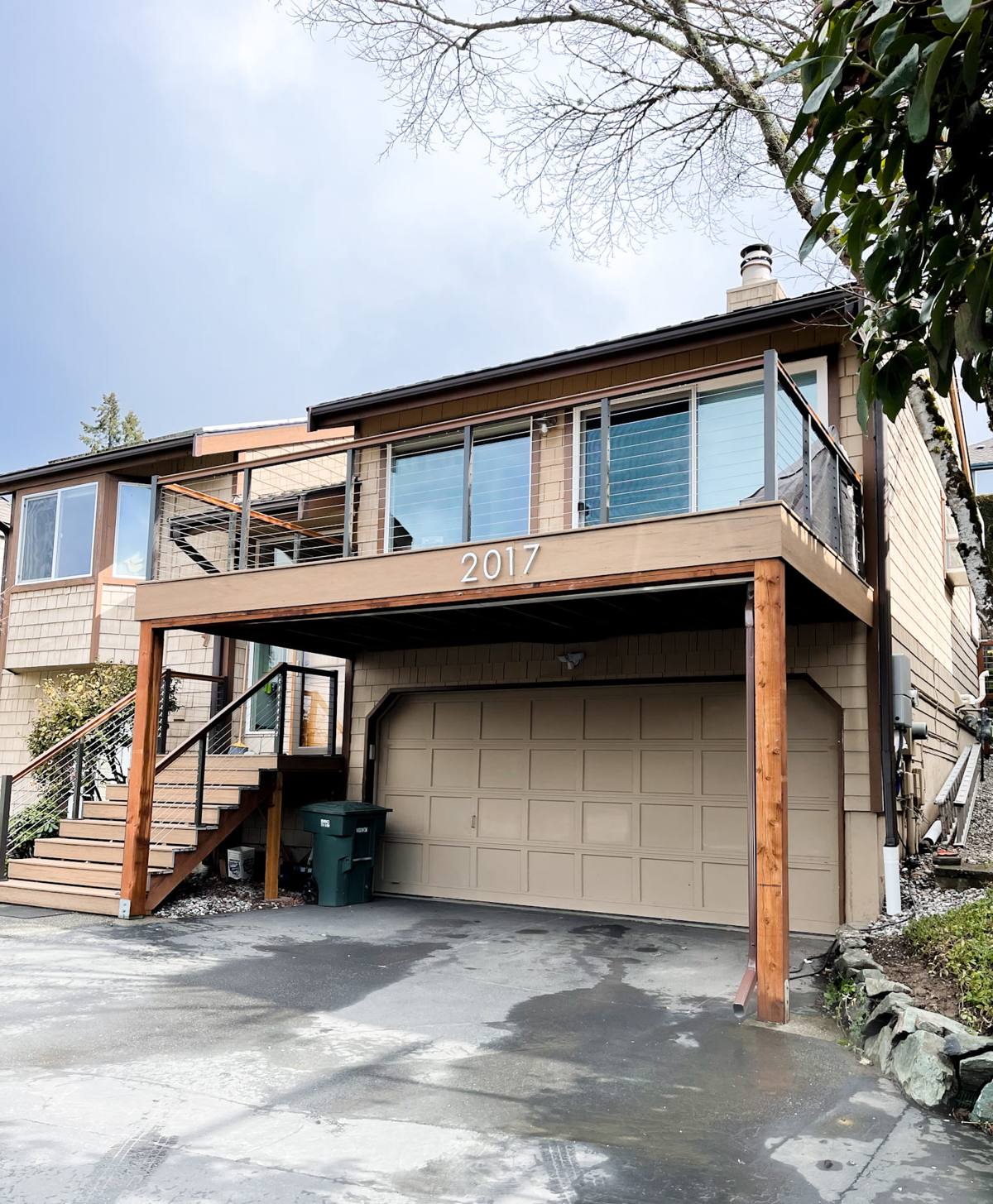
What Composite Decking Actually Is
Composite decking boards are made from a blend of wood fiber and recycled plastic, usually with a protective outer shell (a "capstock") that resists moisture absorption, staining, and UV fading. Because the board itself doesn't absorb water the way solid wood does, it doesn't cup, crack, or splinter from repeated soaking — which is exactly the failure pattern we see most often on old wood decks in this area.
That doesn't mean every composite board performs the same. Quality varies a lot between manufacturers and product lines, and the difference shows up specifically in how a board handles moisture and salt exposure over time, not in how it looks on day one.
What We Look For in a Board for This Area
- A fully capped profile on all four sides, not just the top surface — uncapped edges are where moisture gets in first
- A solid manufacturer warranty that explicitly covers moisture-related failure, fading, and staining, not just structural breakage
- A surface texture that sheds water and doesn't create flat pooling spots where algae and moss can take hold
- A color and finish that has a track record of holding up under UV and salt exposure, not just marketing claims
Composite vs. Wood vs. PVC: An Honest Comparison
There's no single "best" decking material for every situation — each comes with real trade-offs. Here's how they generally compare for a coastal Whatcom County property:
| Material | Moisture/Salt Resistance | Maintenance | Typical Lifespan Here | Upfront Cost |
|---|---|---|---|---|
| Pressure-treated wood | Fair — absorbs moisture, needs sealing | Annual cleaning, sealing/staining every 1-2 years | 10-15 years before major repair | Lowest |
| Composite | Good to excellent, depending on brand | Occasional washing, no sealing/staining | 25-30+ years | Mid-range |
| Cellular PVC | Excellent — no wood fiber to absorb moisture | Occasional washing | 25-30+ years | Highest |
Composite tends to hit the sweet spot for Custer homeowners: meaningfully better moisture and salt performance than wood, at a cost most people find easier to justify than full PVC, with the low-maintenance upkeep that matters when you're dealing with this much rain and moss pressure.
The Part That Actually Fails First: The Substructure
Most deck problems we get called out for aren't the decking boards themselves — they're the frame underneath. If the joists, ledger board, and posts are standard untreated or under-protected lumber sitting in a damp, shaded yard for years, that's where rot and structural weakness start, regardless of how good the decking on top looks.
For a proper build in this climate, that means:
- Ground-contact rated or better lumber for anything near soil or persistent shade
- Joist tape or a moisture barrier on top of every joist, so fasteners don't create a path for water into the wood
- Proper flashing where the deck ledger attaches to the house, so water can't work its way behind the siding
- Adequate airflow underneath the deck so the substructure can actually dry out between rain events instead of staying damp
- Stainless steel or coated, corrosion-rated fasteners and hardware throughout — not standard galvanized, which corrodes faster in salt air
Skipping any of these steps to save money on the front end is the single most common reason a composite deck looks fine for a few years and then develops soft spots, squeaks, or sagging.
Our Installation Process
1. On-Site Assessment
We walk the property, check drainage patterns, note sun and shade exposure, and look at how close the deck site is to prevailing wind and salt exposure. This tells us what substructure protection and board selection actually make sense for that specific spot, rather than applying a one-size-fits-all approach.
2. Framing and Substructure
We build or reinforce the frame to the standards above — proper lumber rating, joist protection, ledger flashing, and corrosion-resistant fasteners — before a single composite board goes down. This is the step that determines whether the deck lasts 10 years or 30.
3. Decking Installation
Boards are installed with the manufacturer's specified gapping to allow for expansion and contraction, and with hidden or approved fastening systems that keep the surface clean and reduce the number of exposed fastener points where water could otherwise sit.
4. Railing, Stairs, and Finish Details
Railing posts and stair stringers get the same moisture-conscious treatment as the deck frame. We also make sure any post bases or connection points aren't creating a spot where water pools against untreated wood or bare metal.
5. Final Walkthrough
We go over the finished deck with the homeowner, point out any manufacturer-specific care notes, and explain what routine maintenance actually looks like — which for most composite decks is a lot simpler than people expect.
Designing Around Custer's Conditions
A few design choices matter more here than they would in a drier climate:
Board Orientation and Drainage
Wherever possible, boards should be run to promote water shedding rather than pooling, especially on lower decks close to grade or in shaded areas that don't get much direct sun to dry things out.
Shaded Areas and Moss Pressure
North-facing or heavily shaded sections of a deck are where moss and algae take hold first. Board texture and color choice, along with keeping overhanging vegetation trimmed back, make a real difference in how much cleaning a homeowner ends up doing.
Railing Material
Composite or aluminum railing systems generally hold up better than wood railing in salt air, since railing posts and top rails see more direct wind and moisture exposure than the deck surface itself.
What a Composite Deck Actually Costs
Pricing depends on square footage, framing condition, height off grade, railing choices, and board tier, so we'd rather give you a real number after seeing the site than a rough figure that doesn't match your project. In general terms, expect composite decking to cost more upfront than pressure-treated wood but less than full PVC systems, with the difference largely paid back over time in reduced maintenance and a longer service life before replacement.
| Cost Factor | Why It Matters |
|---|---|
| Existing substructure condition | Reusing a sound frame costs less than rebuilding a rotted one |
| Deck height and footing requirements | Taller decks need more structural work and permitting |
| Board tier | Entry-level vs. premium capped composite affects both price and long-term performance |
| Railing and stair complexity | Multi-level decks and custom railing add labor and material |
| Site access | Difficult access can add time and equipment costs |
Maintaining a Composite Deck in This Climate
One of the real advantages of composite is how little upkeep it needs compared to wood — but "low maintenance" doesn't mean "no maintenance," especially with this much moss and moisture pressure. A simple seasonal routine goes a long way:
- Sweep off debris and standing leaves regularly, especially in fall, so organic matter doesn't sit and feed moss growth
- Wash the deck surface once or twice a year with a soft-bristle brush and a composite-safe cleaner, not a pressure washer on high setting, which can damage the capstock
- Check that gaps between boards stay clear so water can drain through rather than sitting on the surface
- Trim back overhanging branches and vegetation to reduce shade and moisture retention on the deck surface
- Inspect railing posts and stair connections once a year for any looseness, which can signal a substructure issue worth catching early
Why Hiring a Crew That Already Works in Custer Matters
A lot of deck problems we're called in to fix started with a build that wasn't wrong anywhere obvious — it just wasn't built for this specific climate. Framing details that are fine in a dry inland town aren't sufficient here, and a crew that hasn't spent real time building and repairing decks along this stretch of coast doesn't always know that until a homeowner is dealing with a soft spot five years in.
We work throughout Birch Bay and the surrounding Whatcom County communities, including Custer, and we build every deck assuming it has to survive salt air, sustained rain, and a long moss season — because around here, that's just what the job requires.
If you're planning a new deck or replacing an aging one in Custer, we're happy to take a look and talk through what makes sense for your property. There's no pressure and no cost to get our honest read — just fill out the form below for a free estimate.