 Birch Bay Siding
 Windows in Ferndale Face a Different Set of Demands
Ferndale sits inland from the shoreline but still well within reach of the marine air that moves off the Salish Sea through Birch Bay and the rest of Whatcom County. That means homes here deal with a combination most inland Washington towns never see: salt-tinged moisture in the air, wind-driven rain that comes in sideways during winter storms, and a moss season that can stretch from fall through spring thanks to the region's shade, humidity, and mild temperatures. Windows take the brunt of all three. A roof sheds water quickly; a window assembly has to manage water at a dozen small joints, seams, and moving parts, any one of which can let moisture in if it wasn't detailed correctly the first time.
Window installation done for a dry-climate spec sheet doesn't hold up out here. What holds up is an installation built around this area's actual weather pattern — and installed by people who understand what that pattern does to a window over ten or twenty years, not just on the day it's hung.
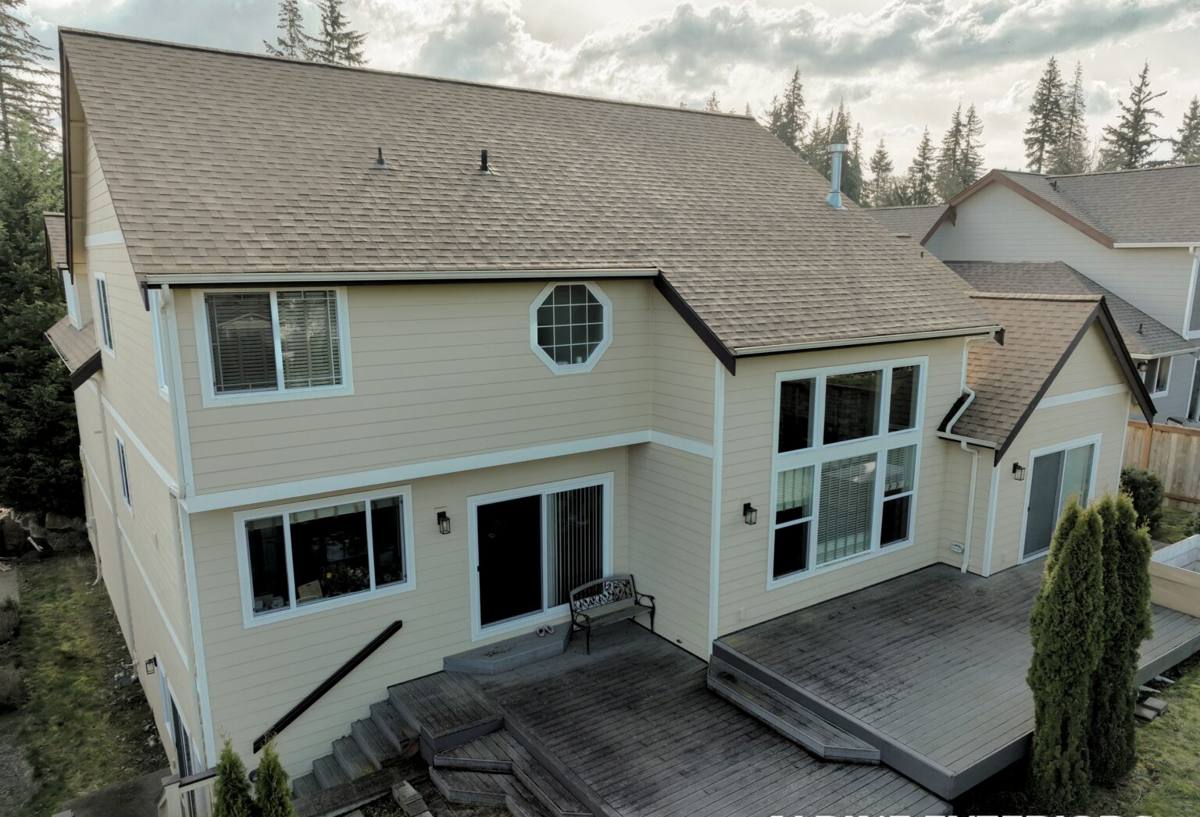
What Actually Fails First on Coastal-Exposed Windows
Seal and Glazing Failure
Modern insulated glass units rely on a sealed air or gas gap between panes. Constant humidity cycling — wet mornings, damp afternoons, cool nights — stresses that seal faster than it would in a drier climate. Once it fails, you get fogging or a faint haze between the panes that no amount of cleaning will fix, because the moisture is trapped inside the glass unit itself.
Frame and Sill Rot
Wood and wood-composite frames that don't have proper sill pan flashing or a slight outward slope will hold water at the bottom corners. That's almost always where rot starts on an older window — not in the middle of the sill, but tucked into the corners where water sits longest and drains last.
Corroded Hardware
Salt-laden air is hard on metal even when it's protected. Cranks, latches, and balance hardware on windows facing open exposure toward the bay can start sticking or corroding years before they would in a more sheltered inland location. It's a slow problem, which is exactly why it tends to get ignored until a window won't latch anymore.
What a Correct Window Installation Involves
There's a real difference between a window that's screwed into an opening and one that's properly integrated into the wall's water management system. In this climate, that difference shows up within a few winters, not decades. A correct installation accounts for where every drop of water that reaches the window is supposed to go — down and out, never sideways into the wall cavity.
- A sloped sill pan flashing under the window, so any water that gets past the exterior seal drains back outside instead of pooling on the sill
- Proper integration with the house's weather-resistive barrier — flashing tape lapped correctly so water sheds over each layer like shingles, never under it
- Correct shimming and squaring so the sash operates smoothly and the weatherstripping seals evenly on all four sides
- Sealant used only where it belongs — a continuous bead on the exterior face, with the bottom of the window left able to drain rather than fully caulked shut
- Interior air sealing done separately from exterior weatherproofing, so the assembly can manage incidental moisture without trapping it inside the wall
- Fasteners and hardware rated for coastal or high-moisture exposure, not just standard-grade hardware
Skip any one of these steps and the window can still look fine going in. The problems show up later — a draft in year two, a soft spot in the sill in year five, moisture staining on the interior drywall in year eight.
Material Choice Matters More in a Salt-Air Climate
There's no single "best" window material for every home, but in Ferndale's climate some trade-offs matter more than they would somewhere drier and calmer. Here's how the common options generally compare for coastal Whatcom County exposure:
| Material | Moisture Resistance | Salt Air Durability | Maintenance |
|---|---|---|---|
| Vinyl | Very good — won't rot or corrode | Good; hardware is the main wear point | Low — occasional track cleaning |
| Fiberglass | Excellent — dimensionally stable in wet/dry cycling | Very good | Low |
| Wood (unclad) | Requires diligent upkeep to avoid rot | Poor without regular maintenance | High — repaint/reseal on a schedule |
| Aluminum/wood-clad | Good on the exterior face | Fair — cladding can pit or oxidize over time near salt air | Moderate |
We're upfront with homeowners about why we lean toward vinyl and fiberglass for most Ferndale-area replacements: they simply ask less of the homeowner over time. Wood-frame windows can look beautiful and perform well, but they only hold up if someone stays on top of the finish every few years — and in a climate with this much seasonal moisture, that maintenance window is shorter than it is inland.
Our Installation Process
- On-site assessment — we look at each window opening individually, not just the window schedule, because sill condition and exposure direction vary window to window on the same house
- Careful removal — old units come out without tearing up more siding or trim than necessary
- Sill and framing inspection — any soft wood or hidden moisture damage gets addressed before a new window ever goes in; installing a new window over a compromised sill just hides the problem
- Flashing and drainage detailing — sill pan and flashing tape integrated with the existing wall assembly
- Setting and sealing the window — squared, shimmed, fastened, and sealed at the correct points, inside and out
- Insulation and interior finish — gaps insulated properly, trim reinstalled or replaced to match
- Final walkthrough — operation, locks, and seals checked with the homeowner before we consider the job done
Cost Factors for Ferndale Window Replacement
Every home is different, and we won't quote a number without seeing the actual openings, but these are the variables that generally move the price up or down:
| Factor | Effect on Cost |
|---|---|
| Number of windows | Per-window cost typically drops on larger, single-visit projects |
| Material (vinyl vs. fiberglass vs. clad wood) | Fiberglass and clad wood generally run higher than vinyl |
| Window type (fixed vs. operable, standard vs. large custom sizes) | Custom and larger operable units cost more than standard fixed sizes |
| Condition of existing sill/framing | Rot repair adds labor before installation can begin |
| Access (second story, tight trim work) | Harder access adds time and equipment cost |
| Disposal of old windows | Usually a modest add-on, more with older single-pane units |
Be cautious of a quote that skips a sill inspection entirely — it usually means rot repair gets discovered (and billed) mid-project instead of planned for upfront.
Why a Crew That Already Works Birch Bay and Ferndale Matters
A contractor who works this stretch of Whatcom County regularly already knows which wall orientations take the worst of the winter storms, how long moss actually takes to establish on a shaded north-facing wall here, and what "driving rain" really means for flashing details in this specific area. That's not something you can fully substitute with a generic install checklist, no matter how good the checklist is. It also matters for warranty follow-through — a local crew is the one that's still nearby in three years if a question comes up, not a crew that moved on to the next region after the install.
Maintaining New Windows in a Salt Air, High-Moss Environment
A properly installed window still benefits from a little seasonal attention in this climate. None of this is complicated, but it's easy to let slide:
- Rinse tracks and sills periodically to clear salt residue and organic debris before it holds moisture against the frame
- Check that weep holes on the exterior sill stay clear — moss and debris can block them and cause water to back up
- Inspect exterior caulking once a year, especially on walls facing open exposure, and re-seal any cracked or shrunken beads
- Keep moss and organic growth from building up on sills and trim, particularly on shaded sides of the house
- Operate hardware (locks, cranks) a few times each season so components don't seize up from disuse plus humidity
None of this replaces a correct installation — it just protects the investment once it's in.
Get a Straight Answer for Your Home
If you're dealing with foggy glass, drafts, or a sill that feels soft when you press on it, it's worth having someone look before you decide what you actually need. We offer a free, no-pressure estimate for Ferndale-area window installation — use the form below and we'll take a look and give you a straight answer about what your windows need and what it'll cost to do it right.