 Birch Bay Siding
 Why Metal Roofing Makes Sense on Lummi Island
Lummi Island sits out in the marine air of Whatcom County, exposed to wind off the water, driving winter rain, and a shade canopy that keeps moss and moisture around longer than most inland neighborhoods ever see. Asphalt shingles can work here, but they're fighting an uphill battle against salt exposure, wind-driven rain that gets under tabs, and moss that takes hold in shaded, north-facing sections and never fully lets go. A correctly installed metal roof handles all three of those problems better than shingles do, which is why we get asked about it so often on island homes specifically.
That doesn't mean metal is automatically the right call for every house, or that any metal roof will do. The coating, the fastener type, the underlayment, and the way flashing details are handled all matter more here than they would on a roof twenty miles inland. This page focuses specifically on what a metal roof needs to succeed on Lummi Island, not on metal roofing in general.
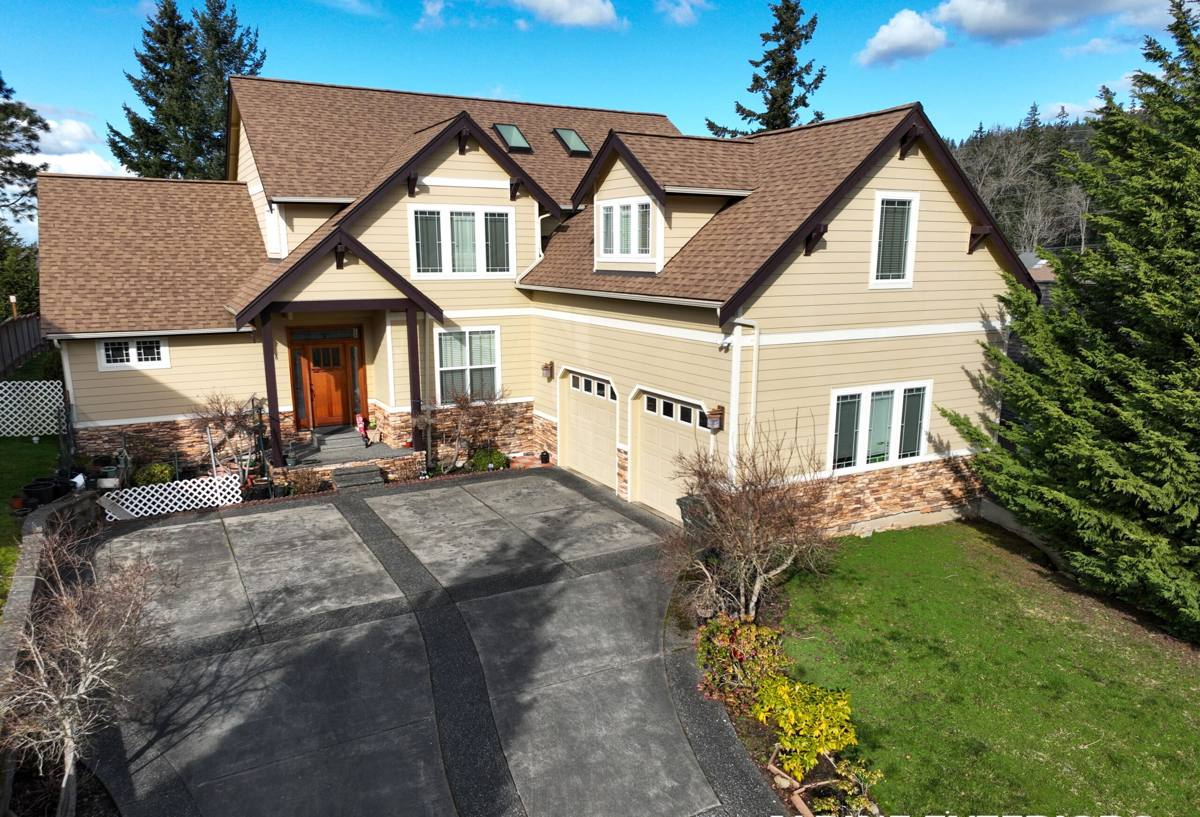
What Salt Air and Marine Exposure Actually Do to a Roof
Salt-laden air doesn't just sit on a roof surface — it works into any exposed metal edge, fastener head, or scratch in a coating, and it accelerates corrosion wherever it finds a foothold. On a shingle roof, that shows up as faster granule loss and brittle nail heads. On a metal roof, it shows up in a couple of predictable places if the wrong materials or details were used.
Fastener Corrosion
Exposed-fastener metal panels rely on screws with rubber washers driven through the face of the panel. Every one of those penetrations is a spot where the coating has been broken and bare metal is exposed to the weather. In a marine environment, cheap or mismatched fasteners will rust years before the panel itself shows any wear, and a rusting screw head eventually stops sealing at all.
Coating and Finish Breakdown
Not all painted or galvanized finishes are rated the same way for coastal exposure. A finish that's fine forty miles inland can chalk, fade, or start pitting noticeably faster right on the water. This is the single biggest reason we steer island customers toward specific coating systems rather than whatever's cheapest at the supply house that week — it's not brand preference, it's matching the product to the exposure it will actually live in.
Choosing the Right Metal System for an Island Home
There isn't one "best" metal roof — there's a best fit for a given house, budget, and roof shape. The table below covers the tradeoffs we walk through with Lummi Island homeowners most often.
| System | How It's Attached | Best Fit For | Coastal Consideration |
|---|---|---|---|
| Standing Seam | Concealed clips, no face penetrations | Most exposed, wind-driven, or waterfront-facing roofs | Best resistance to wind-driven rain and salt intrusion since fasteners aren't exposed to weather |
| Exposed Fastener Panel | Screws driven through panel face | Outbuildings, budget-conscious projects, lower-exposure roof faces | Requires marine-rated fasteners and periodic fastener inspection |
| Stone-Coated Steel | Interlocking panels, concealed fasteners | Homes wanting a shingle or shake look with metal durability | Coating quality matters more here than on smooth panel systems |
For most island roofs with real exposure to wind and rain off the water, we lean toward standing seam because there's no face fastener for salt air to attack. Where budget or roof style call for an exposed-fastener panel, we specify stainless or coastal-rated fasteners rather than standard galvanized screws, and we're upfront when a lower-cost option is likely to mean more maintenance down the road rather than pretending it won't.
Getting Materials and Crews to the Island
Working on Lummi Island means every roll of underlayment, panel bundle, and box of fasteners has to make it across on the ferry before a crew can start, and that changes how a job gets planned. We order and stage materials ahead of time rather than making repeat supply runs mid-project, and we schedule crew days around ferry timing so a delay on the water doesn't turn into a half-finished roof sitting open to rain overnight. A metal roof job that gets rushed to fit a ferry schedule is exactly how corners get cut on flashing and sealant details that matter most in this climate — we plan around the logistics instead of letting the logistics dictate the workmanship.
What a Correct Metal Roof Installation Involves
Metal panels themselves are durable, but the roof's actual performance comes down to everything underneath and around them. A metal roof that leaks almost never fails because the panel rusted through — it fails because of a detail that was rushed or skipped at install.
- A synthetic or high-temp underlayment rated for the panel type, fully sealed at laps and penetrations
- Ice-and-water membrane at eaves, valleys, and low-slope transitions where wind-driven rain is most likely to push moisture backward under the panel
- Proper panel fastening pattern and spacing matched to the region's wind exposure, not a generic factory minimum
- Correctly formed and lapped flashing at every ridge, valley, wall transition, and penetration — this is where the majority of real-world roof leaks originate
- Closure strips or foam closures at ridges and eaves to keep wind-driven rain and pests out without blocking airflow
- Ventilation that lets the roof deck breathe, since a sealed-up deck under metal traps moisture and invites rot even if the metal above is performing fine
- Fasteners and trim matched to the panel's coating so dissimilar metals aren't left to corrode against each other
Skipping or shortcutting any one of these doesn't usually show up as a problem on day one. It shows up two or three winters later, as a stain on a ceiling or rot in a fascia board, by which point it's a repair job instead of a five-minute install detail.
Moss, Debris, and Long-Term Roof Care
Metal roofing is genuinely more moss-resistant than shingles because there's no granulated, porous surface for moss spores to grip and root into. That said, "moss-resistant" isn't "moss-proof" — organic debris can still build up in valleys, behind chimneys, and along any spot where two roof planes meet, especially under tree cover, which describes a good share of Lummi Island's tree-lined lots. Left alone, that debris holds moisture against the panel and its flashing longer than the roof was designed to handle.
The fix isn't chemical moss treatments or pressure washing, both of which can do more harm than good on a coated metal finish. It's simple, periodic clearing of valleys and low points, and keeping gutters free-flowing so water actually leaves the roof instead of backing up under an edge. We're happy to walk homeowners through what a reasonable maintenance interval looks like for their specific roof shape and tree cover.
Our Process, Start to Finish
We start with an on-site look at the existing roof, not just a measurement off a satellite photo — roof pitch, existing decking condition, tree exposure, and how exposed each roof face is to wind off the water all factor into what we recommend. From there we walk through system options and give a straightforward, itemized estimate so there's no guessing what's included.
Once a project is scheduled, we handle material ordering and ferry logistics on our end so homeowners aren't managing that piece. Installation follows the same detailing standards described above regardless of which panel system is chosen, and we do a final walkthrough before calling a job finished — checking flashing, fastener torque, and cleanup, including magnet-sweeping the property for stray fasteners.
Repair or Replace: Reading the Signs
Not every roof problem on the island means a full metal roof is the answer, and not every metal roof problem means starting over. A few signs worth knowing:
| What You're Seeing | Likely Meaning |
|---|---|
| Isolated rust at a few screw heads | Usually a fastener replacement, not a roof replacement |
| Rust or pitting spreading across panel faces | Coating failure — often means the roof is nearing the end of its service life |
| Staining on interior ceilings near a valley or wall transition | Almost always a flashing detail, not the panel itself |
| Panels lifting, oil-canning badly, or fasteners backing out | Sign of an installation or fastening problem worth a full inspection |
When in doubt, we'd rather look at it in person and tell a homeowner honestly that a repair will hold than sell a full replacement that isn't needed yet.
Why Working With a Crew That Already Knows Lummi Island Matters
A lot of what separates a metal roof that lasts on Lummi Island from one that causes problems in five years comes down to details a crew only gets right if they've dealt with this specific exposure before: which fastener and coating combinations actually hold up to salt air, how to plan a project around ferry access without rushing flashing work, and where moss and debris actually collect on tree-shaded island roofs versus a typical mainland lot. None of that is exotic knowledge, but it's the difference between a roof that's installed correctly for its environment and one that was installed correctly for somewhere else.
If you're weighing a metal roof for a Lummi Island home, we're glad to come take a look, walk through what your specific roof needs, and put together a straightforward, no-pressure estimate using the form below.