 Birch Bay Siding
 Deck Building in Lynden, Built for Whatcom County Weather
Lynden sits inland from Birch Bay, but it shares the same weather system that soaks the rest of Whatcom County for much of the year. The driving rain that pushes off the Georgia Strait and up the valley doesn't stop at the coastline, and the long, wet moss season that coats roofs and siding around Birch Bay does the same thing to decks in Lynden. A deck built here has to shed water fast, dry out between storms, and resist the slow creep of moss and algae on any surface that stays shaded or damp. That's a different design problem than building a deck in a dry climate, and it changes real decisions: how footings are set, how the ledger board is flashed, what gaps are left between boards, and what material actually holds up.
We build and repair decks for homeowners throughout Lynden and the surrounding Whatcom County area, and we design every deck around the water first, the look second. A beautiful deck that traps moisture under the boards or against the house will show problems within a few wet seasons. A deck built to move water off and away holds its finish, its structure, and its value for decades.
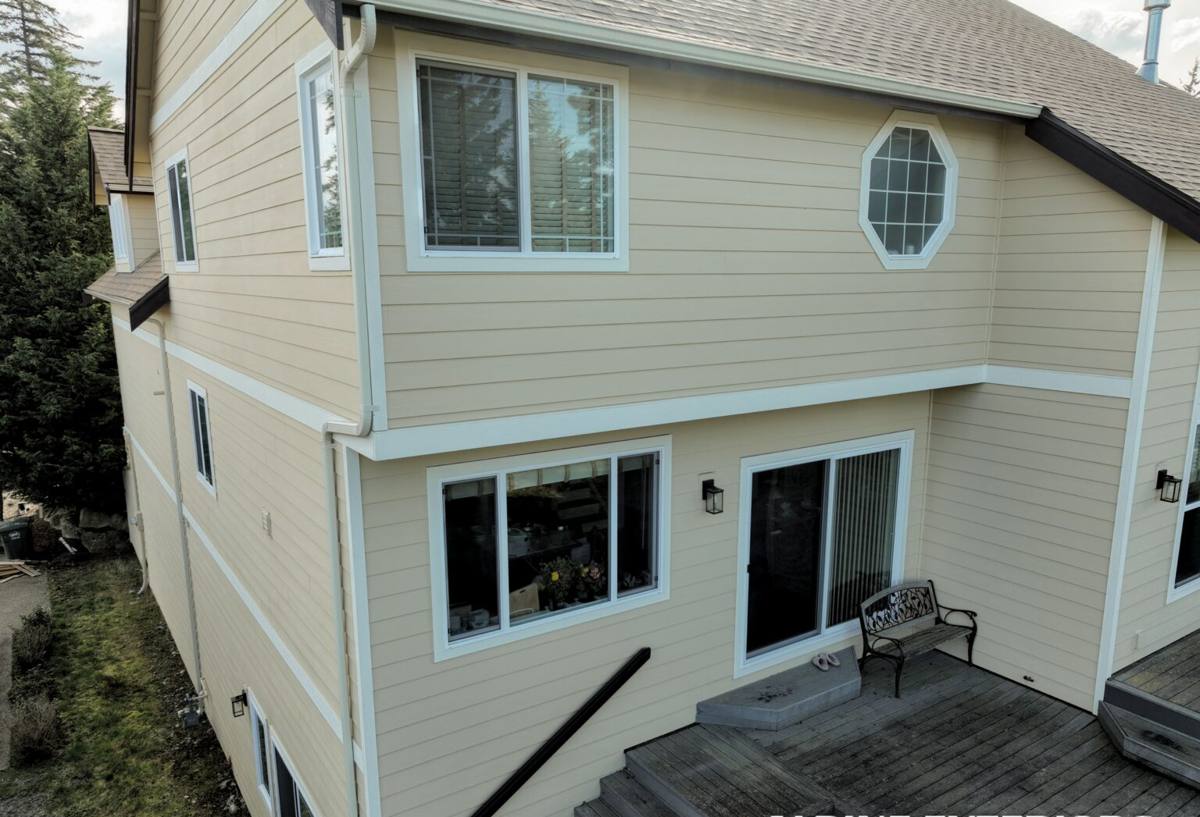
What Lynden's Climate Actually Does to a Deck
Most deck failures we see aren't dramatic. They're slow. Water gets trapped somewhere it shouldn't, moss or algae holds moisture against wood or fasteners, and a few years later a board is soft, a post base is rotting, or the ledger connection to the house has started to fail. In a climate with long stretches of steady rain and short, cool summers that don't dry things out quickly, a few specific failure points show up again and again:
- Ledger board rot where the deck attaches to the house, if flashing wasn't installed correctly or was skipped
- Post base rot where wood posts sit in or near standing water at grade
- Moss and algae buildup on shaded boards and stair treads, which holds moisture and becomes slick
- Fastener corrosion where the wrong screws or nails were used with pressure-treated lumber or newer composite decking
- Gapped or cupped boards from wood that wasn't dried or spaced properly before installation
None of these are exotic problems. They're what happens when a deck is built to a generic standard instead of to the actual conditions a Whatcom County winter puts it through.
Sun, Shade, and Moss Season
A deck on the north or east side of a Lynden home, shaded by the house or by trees, is going to hold moisture longer than a south-facing deck in open sun. That doesn't mean a shaded deck can't be built well — it means the board spacing, the surface texture, and sometimes the material choice need to account for less drying time between rains. We look at sun exposure on every site visit before recommending a decking product, not after.
What a Correctly Built Deck Involves
A deck is a structure first and a surface second. Framing, footings, and flashing decide whether the deck is safe and long-lasting; decking boards and railings decide how it looks. Both matter, but the framing is the part a homeowner can't see once the project is done, which is exactly why it has to be done right the first time.
Footings and Framing
Footings need to be sized and set below frost depth per Whatcom County building code, on undisturbed or properly compacted soil. Undersized or shallow footings are one of the most common shortcuts on older or lower-bid deck work, and they show up years later as a deck that's started to sag or shift. Joists are sized to span and load correctly, spaced to support the decking product chosen, and, where they contact concrete or sit near grade, protected from ongoing moisture contact.
Ledger Attachment and Flashing
Where a deck attaches to the house, the ledger board has to be properly flashed so water is directed away from the house's wall assembly, not funneled into it. This is the single most common point of hidden rot on attached decks in wet climates, because a poorly flashed ledger can look fine on the surface for years while moisture works into the framing behind it. We flash every ledger connection to shed water away from the structure, not just seal it and hope.
Drainage and Grade
Water needs somewhere to go, both under the deck and around the posts. We grade and, where needed, add drainage so water doesn't pool against post bases or under low decks where it can't evaporate. A deck built directly over poor drainage is set up for post rot regardless of how good the lumber is.
Choosing a Decking Material for Lynden Conditions
There's no single right material for every deck — it depends on budget, maintenance appetite, and how much sun the deck gets. Here's how the common options actually perform in a wet, moss-prone climate:
| Material | Upfront Cost | Maintenance | Moisture & Moss Behavior |
|---|---|---|---|
| Pressure-treated wood | Lowest | Annual cleaning and periodic staining/sealing | Absorbs moisture; needs regular sealing to resist rot and moss growth in shaded areas |
| Cedar | Moderate | Regular cleaning and refinishing to hold color and resist moisture | Naturally more rot-resistant than treated pine but still needs upkeep in constant damp shade |
| Composite decking | Higher | Occasional washing; no staining or sealing | Doesn't absorb water like wood, but can still grow surface algae/moss film in shaded, low-airflow spots and needs washing |
| PVC decking | Highest | Lowest — occasional washing | Fully moisture-resistant material; best resistance to rot, though surface mildew film can still form and needs washing in shaded areas |
We'll walk you through these trade-offs honestly based on your deck's sun exposure and how much maintenance you actually want to do. A low-maintenance composite or PVC board isn't automatically the right call for every deck, and a wood deck isn't automatically a bad one — it's about matching the material to the site and to what you're willing to keep up with.
Railings, Stairs, and Finishing Details
Railings and stairs take the most direct weather exposure and the most physical wear of any part of a deck, so they're worth getting right. Stair treads in shaded spots are where moss and slickness show up first, so we pay attention to board spacing and surface texture on stairs specifically, not just the main deck surface. Railing posts need solid, code-compliant attachment to the framing — a railing that flexes or feels loose is a structural problem, not a cosmetic one. Fasteners throughout should be rated for exterior and, where applicable, treated-lumber contact, since the wrong hardware corrodes and stains the deck around it within a couple of wet seasons.
How We Build a Deck, Start to Finish
- Site visit — We look at sun exposure, drainage, soil, and how the deck will attach to the house before recommending anything.
- Design and material discussion — We go over layout, size, railing style, and decking material trade-offs based on your site and budget.
- Permitting — Deck projects in Whatcom County typically require a building permit; we handle that process as part of the job.
- Footings and framing — Footings set to code depth, framing sized correctly, ledger flashed to shed water away from the house.
- Decking, railings, and stairs — Installed with attention to spacing, drainage, and fastener choice for long-term performance.
- Final walkthrough — We review the finished deck with you and go over what maintenance it needs going forward.
Keeping a Lynden Deck in Good Shape
Even a well-built deck needs some seasonal attention in this climate. A short annual routine prevents most of the problems we get called out to fix on older decks:
- Sweep debris and standing leaves off the deck surface regularly, especially in fall
- Wash the deck surface at least once a year to remove algae and moss film before it takes hold
- Check and clear any drainage paths under and around the deck before winter rains set in
- Inspect the ledger flashing and house connection point yearly for any signs of moisture staining
- Reseal or restain wood decking on the manufacturer's recommended schedule, not just when it looks faded
- Check railing posts and stair connections for looseness once a year
Why a Crew That Works Lynden Regularly Matters
Deck building isn't unique to any one region, but building one that lasts in Whatcom County's wet, moss-prone climate takes knowing how local weather actually behaves over years, not just what the building code minimum requires. We work on homes throughout Lynden and the surrounding area, so we're familiar with local permitting, typical soil and drainage conditions, and the way sun and shade patterns play out on lots around here. That's the difference between a deck that's built to pass inspection and one that's built to still be solid in fifteen years.
If you're planning a new deck or need an honest look at an existing one, we're happy to come out, take a look, and give you a straightforward, no-pressure estimate. Use the form below to get started.