 Birch Bay Siding
 Board & Batten in Marietta: A Style That Has to Earn Its Keep
Board and batten siding has a clean, vertical-line look that suits the mix of farmhouse-style homes, cabins, and newer builds you'll find around Marietta and the rest of the Birch Bay area. It's a popular choice for accent walls, gable ends, and full-elevation siding alike. But out here, close to Semiahmoo Bay and Drayton Harbor, board and batten isn't just a design decision — it's a material and installation decision, because the wrong product or the wrong detailing will fail faster on this stretch of Whatcom County coastline than it would twenty miles inland.
This page is about doing board and batten siding correctly for a Marietta home: what the local climate demands from vertical siding, what a proper installation actually involves, and why we install it only in James Hardie fiber cement rather than the wood, vinyl, or engineered-wood alternatives also sold as "board and batten."
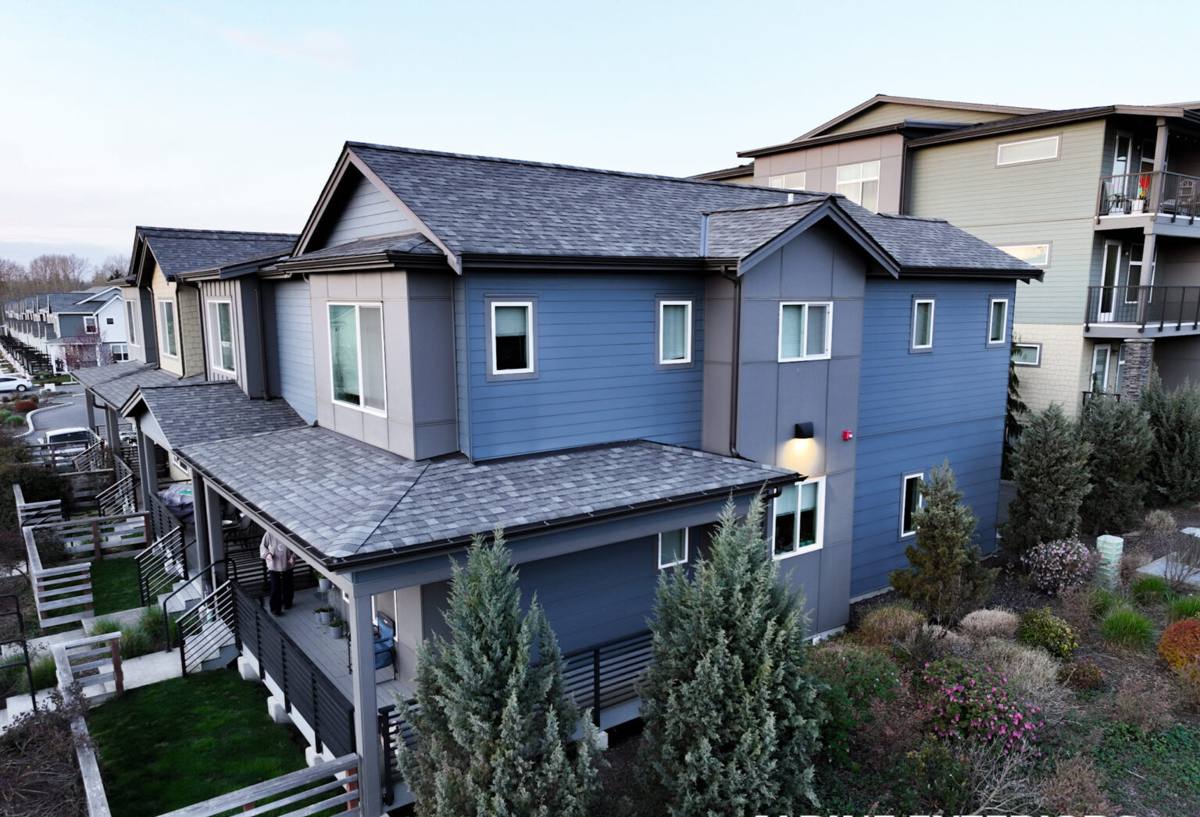
What Marietta's Climate Does to Vertical Siding
Marietta sits close enough to the water that salt-laden air is a constant, low-grade stressor on exterior building materials. Add Whatcom County's long wet season — driving rain that comes in sideways off the water during winter storms — and a moss season that can stretch for months on shaded or north-facing walls, and you have three separate mechanisms working against any siding product:
- Salt air accelerates corrosion of fasteners, flashing, and any exposed metal trim, and it degrades paint and coatings faster than an inland environment.
- Driving rain pushes water sideways into seams, laps, and butt joints that would stay dry in a calmer climate — this is especially unforgiving on vertical siding, where every batten joint is a potential water path straight down the wall.
- Moss and algae growth holds moisture against the siding surface for extended periods, which is hard on any substrate that isn't dimensionally stable or that absorbs water at the core.
Board and batten is more exposed to these forces than lapped horizontal siding in one specific way: the vertical boards and battens create long, continuous joints running from eave to foundation. Any weakness in those joints gives water a straight downhill run, so the margin for error in material choice and installation detail is smaller than it looks.
Why We Install James Hardie for Board & Batten — and Not the Alternatives
Board and batten is sold in several materials, and we've made a deliberate choice to install it only in James Hardie fiber cement. Here's the honest comparison for a Marietta application specifically:
| Material | How it holds up near Birch Bay's salt air and moisture | Our take |
|---|---|---|
| James Hardie fiber cement (HardiePanel vertical, Artisan) | Non-combustible, dimensionally stable, factory ColorPlus finish resists fading and doesn't need repainting on the same cycle as wood; engineered HZ product lines account for regional moisture exposure | What we install |
| Cedar board and batten | Attractive natural material, but real wood expands, contracts, and absorbs moisture — in a wet, moss-prone climate it needs diligent, recurring maintenance to avoid rot at joints and fastener points | Not installed by our crew |
| Primed spruce / engineered wood (e.g., LP SmartSide) | Wood-based core is more vulnerable to moisture intrusion at cut edges and joints than fiber cement if any water gets behind the cladding; performance depends heavily on installer discipline with sealants and flashing | Not installed by our crew |
| Vinyl board and batten | Won't rot, but it's a thin plastic product that can warp, fade, or crack under UV and temperature swings, and it doesn't hold paint if a color change is ever wanted | Not installed by our crew |
None of these are junk products — cedar has real aesthetic appeal, engineered wood has come a long way, and vinyl is inexpensive. But in a climate that combines salt exposure, sustained wet weather, and moss, we'd rather stand behind one product system we trust than offer several and let cost be the deciding factor. James Hardie's fiber cement is inert to moss and insects, doesn't absorb water into a wood-based core, and comes factory-finished with a paint warranty that isn't dependent on how well field-applied paint was maintained.
What a Correct Board & Batten Installation Actually Involves
A Rainscreen Gap, Not Face-Nailed Direct to the Wall
The single biggest factor in how long board and batten siding lasts in a wet coastal climate is whether it's installed with a drainage gap behind it. Furring strips (or an engineered rainscreen product) create a small air gap between the siding and the water-resistive barrier, so any moisture that does get past the battens has somewhere to drain and dry out instead of sitting against the sheathing. Face-nailing panels directly to the wall with no gap is faster and cheaper, but it's the detail most likely to cause hidden rot behind board and batten siding over time.
Flashing and Sealant at Every Penetration
Every window, door, hose bib, light fixture, and vent penetration through vertical siding needs proper flashing — not just a bead of caulk. Caulk is a maintenance item that fails eventually; flashing is a permanent water-diversion detail. Given how much driving rain this area sees, we treat flashing at penetrations and the base of the wall as non-negotiable, not an upsell.
Fastening and Batten Spacing
James Hardie specifies fastener type, spacing, and placement for its panel and batten products, and following that spec matters more in a corrosive salt-air environment than it does inland — the wrong fastener will corrode and stain the siding, or lose holding power, well before the siding itself would ever fail.
Our Process for a Marietta Board & Batten Project
- On-site assessment of the existing wall assembly, moisture conditions, and any rot or damage that needs addressing before new siding goes on
- Confirming the water-resistive barrier and flashing plan around every window, door, and penetration
- Installing furring or a rainscreen product to create a drainage gap behind the panels
- Installing James Hardie vertical panels and battens to manufacturer fastening specifications
- Detailing all trim, corners, and transitions with the same attention as the field of the wall
- Final walkthrough covering care and what to watch for over the first few seasons
We don't treat board and batten as a simpler or faster version of lap siding. The vertical joint pattern actually demands more discipline at the details, not less, and that's where a rushed installation shows its weaknesses first.
Living With Board & Batten Near the Water
One advantage of James Hardie's factory-applied ColorPlus finish is that it holds up to UV and salt exposure without the repainting cycle that wood siding demands. That said, no siding is maintenance-free in this climate. A simple annual rinse-down helps prevent moss and algae buildup on shaded elevations, and it's worth checking caulked joints, trim intersections, and the base of the wall each year for any early signs of a sealant failure. Catching a small gap before a wet winter sets in is far cheaper than repairing hidden damage after the fact.
Why Local Experience Matters for This Job
A contractor who mostly works drier, calmer inland areas can install board and batten siding perfectly well by the book and still get burned by details that only matter near the water — how much drainage capacity a rainscreen gap needs given the volume of driving rain here, which elevations need extra attention for moss, and how corrosion-resistant fasteners and flashing need to be given sustained salt exposure. A crew that already works Marietta and the surrounding Birch Bay area has already made those judgment calls on other homes nearby, in the same wind and weather patterns your house sits in.
Cost Factors Worth Understanding
| Factor | Why it affects your project |
|---|---|
| Existing wall condition | Rot or hidden moisture damage found during tear-off adds repair scope before new siding can go on |
| Rainscreen/furring installation | Adds labor and material versus direct-to-wall installation, but is the detail that protects the wall long-term |
| Batten spacing and pattern | Wider spacing uses less material; tighter spacing changes both appearance and total board footage |
| Trim and penetration complexity | Homes with more windows, doors, and fixtures require more flashing and detail work |
| Elevation exposure | Walls facing prevailing wind and rain may warrant extra flashing attention versus more sheltered elevations |
If you're weighing board and batten siding for a home in Marietta, we're glad to walk the property, talk through what your specific walls need given their exposure, and put together a free, no-pressure estimate — no obligation, just a straight assessment.