 Birch Bay Siding
 Why Nooksack's Climate Puts Extra Demands on a Roof
Homes around Nooksack sit close enough to the water that salt air is part of daily life, whether you notice it or not. Combine that with Whatcom County's long run of driving rain each fall and winter, plus a moss season that can stretch from early fall into late spring, and a roof here is working harder than one thirty or forty miles inland. That doesn't mean a roof is doomed to fail early — it means the installation has to be built around those conditions from the deck up, not just topped with shingles and called done.
We see the same failure patterns over and over on older Nooksack roofs: fasteners that corroded faster than they should have, valleys that trapped moisture because the flashing wasn't lapped correctly, and moss that worked its way under the shingle edges because there was never enough airflow underneath to dry the roof out between storms. A correct installation addresses all three before they become problems, not after.
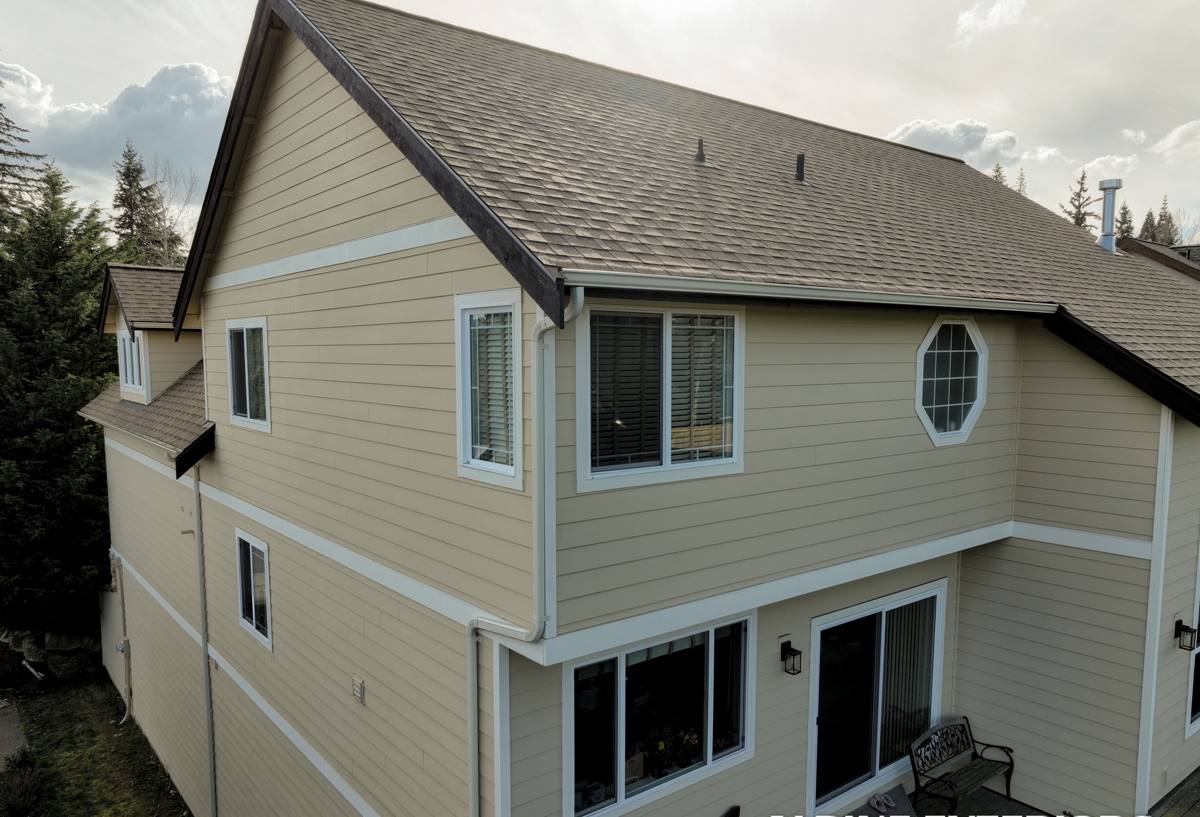
What a Correctly Installed Roof Actually Includes
"New roof" covers a lot of ground, and the difference between a roof that lasts its full expected lifespan and one that needs attention in year eight usually comes down to details that aren't visible once the job is finished. Here's what we consider non-negotiable.
Deck Inspection and Repair
Once the old roofing is stripped off, the decking underneath gets inspected board by board. Soft spots, rot around old vent penetrations, and delamination in plywood are common on homes that have been through a few decades of wet Whatcom County winters. Any damaged sections get replaced before anything new goes down — covering over a compromised deck just hides the problem for a future owner to find.
Underlayment and Moisture Protection
Synthetic underlayment goes down as the primary water-resistant layer beneath the shingles or panels, and self-adhering ice-and-water membrane goes in at the eaves, valleys, and around every penetration — the spots where wind-driven rain is most likely to find a way in. In a climate that gets sustained rain rather than short bursts, this layer matters as much as the visible roofing material.
Flashing Details in Wind-Driven Rain
Flashing around chimneys, skylights, sidewalls, and valleys is where most roof leaks actually start, not in the field of the roof itself. Step flashing at sidewalls, properly lapped valley metal, and counterflashing that's tucked correctly rather than just caulked over the top are what keep water out when rain is being pushed sideways by a storm coming off the water.
Ventilation and Moss Resistance
A roof that can't breathe stays damp longer after every rain, and a roof that stays damp is a roof that grows moss. Balanced intake and exhaust ventilation — soffit vents paired with ridge or roof vents — lets the roof deck dry out between storms instead of holding moisture against the underside of the shingles all winter.
Choosing a Roofing Material That Holds Up Near the Water
There's no single "best" roofing material for every home — the right choice depends on the roof's exposure, the home's style, and how much long-term maintenance you're willing to take on. Here's how the common options compare for a Nooksack property.
| Material | Moss & Moisture Resistance | Maintenance | Typical Lifespan |
|---|---|---|---|
| Architectural asphalt shingle | Good with proper ventilation; algae-resistant granule options available | Periodic moss/debris removal | 25–30 years |
| Standing seam metal | Excellent — sheds moisture fast, little surface for moss to grip | Low; occasional fastener/sealant check | 40–50+ years |
| Composite/synthetic shingle | Very good; engineered to resist moisture absorption | Low to moderate | 30–50 years |
| Cedar shake | Requires diligent upkeep in a wet, mossy climate | High; regular treatment and inspection | 20–30 years with upkeep |
For most Nooksack homes, we lean toward architectural asphalt with algae-resistant granules or standing seam metal, because both perform well against sustained rain and moss pressure without demanding constant upkeep. Cedar shake can still look right on the right home, but we'll tell you honestly what that choice means for maintenance before you commit to it — it's a legitimate option, just not a low-maintenance one in this climate.
Our New Roof Installation Process
Every roof is different, but the sequence we follow doesn't change:
- On-site inspection and honest assessment of what the current roof needs versus what it doesn't.
- Written estimate that spells out material, scope, and timeline before any work is scheduled.
- Full tear-off of the existing roofing down to the deck — we don't install over old layers.
- Deck inspection and repair of any rot, soft spots, or damaged sheathing.
- Ice-and-water membrane at eaves, valleys, and penetrations, followed by synthetic underlayment across the field.
- Flashing installed or replaced at every chimney, skylight, sidewall, and valley.
- Roofing material installed to manufacturer specifications, with attention to nailing pattern and exposure — both of which matter more in high-wind, high-rain areas than people expect.
- Ventilation confirmed and corrected if the existing intake/exhaust balance is off.
- Final walkthrough and cleanup, including a magnetic sweep for stray fasteners.
What Drives the Cost of a Nooksack Reroof
We won't quote a number without seeing the roof, but these are the factors that move a price up or down, so you can understand your estimate instead of just trusting it.
| Factor | Why It Matters |
|---|---|
| Roof size and pitch | Steeper roofs take longer to work safely and use more material per square |
| Number of layers to remove | Some older homes have two or three layers of roofing stacked over the years |
| Deck condition | Rot or soft sheathing found during tear-off means repair before new roofing goes on |
| Roof complexity | Valleys, dormers, chimneys, and skylights each add labor and flashing work |
| Material selection | Asphalt, metal, and composite options carry different material and install costs |
| Access | Trees, tight lot lines, or difficult staging areas affect equipment and labor time |
Broad ranges for a full tear-off and reroof on a typical single-family home run from the mid five figures for standard architectural asphalt up to significantly more for standing seam metal or complex rooflines — but the only way to give you a real number is to walk your roof.
Moss and Algae: Building Prevention Into the Job, Not Just a Maintenance Checklist
Moss doesn't grow on a roof because a homeowner is neglectful — it grows because the roof stays damp longer than it should, usually from a combination of shade, poor airflow, and a long wet season. Rather than handing you a maintenance schedule and hoping for the best, we build prevention into the installation itself: adequate ventilation so the deck dries between storms, algae-resistant shingle options where they make sense, and zinc or copper strips near the ridge on roofs where moss has historically been a problem, since the trace metal washing down with rainwater discourages regrowth.
None of that eliminates the need for occasional debris removal and gutter cleaning — moss can still take hold anywhere organic material collects — but it means you're not fighting the roof's own design to keep it clean.
Why a Crew That Already Works Nooksack Matters
A roofing crew that mostly works drier, inland climates tends to build to a general standard and assume it'll hold up everywhere. A crew that works Whatcom County's coastal edge day in and day out treats sideways rain, salt exposure, and moss pressure as the baseline, not the exception — which changes decisions like fastener material, flashing laps, and how much ventilation is actually enough.
There's also a practical side to local experience: knowing how to sequence a tear-off around a stretch of unpredictable weather, understanding what the local permitting and inspection process actually requires, and having a track record in the area that a homeowner can ask neighbors about rather than just take our word for.
Roof Replacement Checklist Before You Sign a Contract
Whoever you hire, these are worth confirming in writing before work starts:
- Full tear-off to the deck, not an overlay on existing layers
- Written scope that names the underlayment, ice-and-water barrier, and flashing materials
- A plan for deck repair if rot or damage is found once the old roofing comes off
- Ventilation assessed as part of the job, not treated as an optional add-on
- Manufacturer-specified nailing pattern and exposure for wind and rain resistance
- Proof of current licensing and insurance for work in Washington State
- A clear cleanup and fastener-sweep step at the end of the job
- Warranty terms explained in plain language, both for materials and for workmanship
If a bid skips most of these details, it's usually a sign the crew is pricing for a simpler climate than the one your roof actually has to survive.
If your roof is due for replacement or you're not sure whether it needs full replacement versus repair, we're happy to take a look and give you a straight answer — no pressure, no upsell. Use the form below to request a free estimate for your Nooksack home.