 Birch Bay Siding
 Roof Repair Built for Sandy Point's Coastal Conditions
Sandy Point sits close enough to the water that its homes take on a different kind of weather load than roofs even a few miles inland in Whatcom County. Salt-laden air off the Strait works on metal fasteners and flashing year-round. Wind-driven rain doesn't just fall on a roof here, it gets pushed sideways into laps, seams, and vent penetrations that were never designed to handle water moving uphill. And the long, wet moss season common to this stretch of the Washington coast means organic growth gets a head start every fall and doesn't let go until late spring. A roof repair that works fine in a drier, more sheltered neighborhood can fail fast out here if it isn't built with those three things in mind.
This page is specifically about roof repair for Sandy Point homes — not a full re-roof, and not roofing in general. If your roof is leaking, losing granules, growing moss, or showing damage after a windstorm, this is what a correct repair looks like in this specific location, and how we approach it.
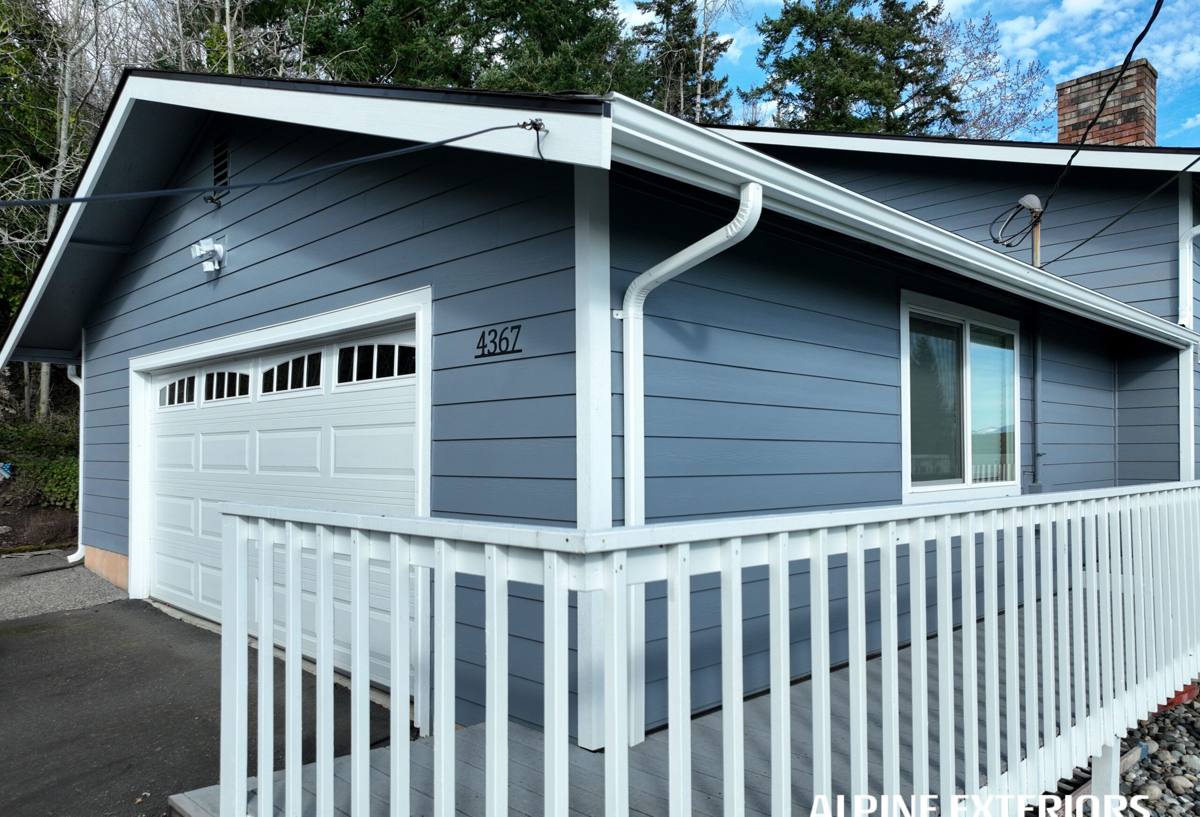
What Makes Sandy Point Roofs Wear Differently
Salt Air and Metal Fatigue
Nails, flashing, valley metal, and vent boots all contain metal components, and salt air accelerates corrosion on all of them. A fastener that would last decades in a dry inland climate can start to weaken and back out years earlier this close to the water. Once a nail or staple loosens, the shingle or panel around it moves in the wind, and that movement is usually where a leak starts.
Wind-Driven Rain
Sandy Point's exposure to open water means storms often arrive with a horizontal push behind the rain, not just a vertical drop. Water gets forced under shingle tabs, up and under flashing edges, and into places that rely on gravity alone to shed water in calmer conditions. Repairs that only address the visible damage and ignore how wind pressure changes water's path tend to leak again in the next storm.
Moss and Organic Growth
The combination of shade, moisture, and mild temperatures common around Birch Bay and Sandy Point gives moss and algae a long growing season. Moss doesn't just look bad — it holds water against the roofing material, lifts shingle edges as it grows, and breaks down granule protection over time. On north-facing slopes and anywhere tree cover keeps a roof damp longer, moss-related deterioration is one of the most common repair calls we get in this area.
Common Roof Problems We Repair in Sandy Point
- Lifted, cracked, or missing shingles after wind events
- Leaks at chimney, skylight, and vent flashing
- Moss and algae damage along shaded slopes and roof valleys
- Corroded or failing nails, staples, and metal flashing
- Damaged or deteriorated roof valleys where water volume is highest
- Soft spots or sagging decking from long-term moisture intrusion
- Gutter and edge flashing issues that push water back under roofing material
Some of these are obvious from the ground. Others — especially early moss growth or a slow flashing leak — show up first as a stain on an interior ceiling or a musty smell in an attic, long before there's visible damage on the roof itself.
What a Correct Repair Actually Involves
Diagnosis Before Patching
A roof leak's entry point is often several feet away from where the water actually shows up inside the house, because water travels along decking and framing before it drips. Patching the spot above a ceiling stain without tracing the real source is one of the most common reasons repairs fail. We look at the whole roof plane — flashing, penetrations, shingle condition, and how water moves during wind-driven rain — before we decide what actually needs to be fixed.
Matching Materials and Techniques
A repair should match the performance of the surrounding roof, not just its color. That means using fasteners and flashing rated for coastal exposure, tying new shingles or panels into the existing roofing system correctly so water still sheds the way it's supposed to, and not creating a new weak point next to the one we just fixed.
Addressing the Cause, Not Just the Symptom
If moss caused the damage, a repair that doesn't also address the moss and the conditions feeding it is a temporary fix. If wind-driven rain got under a flashing edge, replacing the shingle without correcting the flashing detail just delays the next leak. Good repair work solves the underlying problem, not only the visible one.
Repair vs. Replacement: How We Help You Decide
Not every roof problem in Sandy Point needs a full replacement, and not every roof is a good candidate for another round of patching. The honest answer usually comes down to the roof's age, how widespread the damage is, and how much of the underlying decking and structure is still sound.
| Factor | Repair Usually Makes Sense | Replacement Should Be Considered |
|---|---|---|
| Roof age | Under 15-20 years, or well within expected lifespan for the material | Near or past the material's typical service life |
| Damage extent | Isolated to one area — a valley, a flashing point, a section of shingles | Spread across multiple slopes or recurring in different spots each year |
| Decking condition | Solid, dry, no soft spots | Soft, delaminated, or water-stained in multiple areas |
| Moss/algae history | First occurrence, manageable with treatment and repair | Chronic, returning yearly, with granule loss or shingle lifting |
| Underlying cause | A single identifiable failure point (flashing, fastener, one damaged section) | General material wear across the whole roof |
We'll tell you plainly which category your roof falls into. If a repair is the right call, that's what we'll recommend and price. We don't upsell a replacement when a properly done repair will genuinely hold up.
Our Roof Repair Process
- Inspection. We walk the roof (or use safe elevated access where needed) and check flashing, fasteners, shingle condition, valleys, and any interior signs of past or active water intrusion.
- Honest diagnosis. We explain what's actually causing the problem, in plain terms, before recommending a fix.
- Written scope and estimate. You'll know what's being repaired, with what materials, and what it costs before any work starts.
- The repair itself. Damaged material is removed, decking is checked and replaced if compromised, and the repair is tied into the surrounding roof correctly — flashing, underlayment, and shingles or panels all working together.
- Cleanup and check. Debris is cleared, and we confirm the repair area sheds water the way the rest of the roof does.
Materials and Methods for Coastal Whatcom County Conditions
For fasteners and flashing, we favor corrosion-resistant materials suited to salt-air exposure over standard-grade hardware — the cost difference is small relative to how much longer it holds up this close to the water. For shingle repairs, we match the existing product where possible and pay close attention to how each course laps the one below it, since that overlap is what actually stops wind-driven rain. Where moss has been a recurring issue, we'll talk through practical, non-damaging treatment options as part of the repair rather than just replacing shingles that will grow moss again in the same spot for the same reasons.
We're straightforward about trade-offs. Some roofing products look good but carry maintenance demands or moisture sensitivities that don't hold up well in a marine climate like Sandy Point's. When we steer a homeowner away from a particular material or method for a repair, it's because of how it performs in these specific conditions — not because of brand loyalty one way or another.
Maintenance Checklist for Sandy Point Homeowners
Between repairs, a little attention goes a long way toward avoiding the next one. Homeowners in this area should:
- Check for moss or algae on shaded and north-facing roof slopes each fall
- Clear gutters and downspouts before the winter storm season
- Look for lifted or missing shingles after any significant windstorm
- Check attic spaces periodically for staining, dampness, or musty odors
- Trim back overhanging branches that keep sections of the roof shaded and damp
- Have flashing around chimneys, skylights, and vents checked every couple of years, since these are the most common leak points
Catching a small issue during a routine check is almost always cheaper and less disruptive than dealing with interior water damage after a repair has been put off too long.
Why Local Experience in Sandy Point Matters
A crew that regularly works this stretch of Birch Bay and the surrounding Whatcom County coastline already knows how salt exposure, wind direction, and moss season behave here — they're not learning it on your roof. That familiarity shows up in the details: which fasteners actually hold up, which flashing details fail first in wind-driven rain, and which slopes on a typical Sandy Point roof need the closest attention for moss. It's the difference between a repair that's technically correct on paper and one that's built for the conditions your roof actually faces every winter.
If you're dealing with a leak, storm damage, moss buildup, or just want an honest read on your roof's condition, we're glad to take a look. Reach out for a free, no-pressure estimate using the form below.