 Birch Bay Siding
 Siding Replacement Built for Sandy Point's Waterfront Exposure
Sandy Point sits right on the water along Birch Bay, and that location is exactly what makes siding replacement here different from a job three miles inland in Whatcom County. Homes in this neighborhood face onshore wind almost year-round, salt-laden air off the bay, and rain that doesn't just fall straight down — it drives sideways into walls, soffits, and trim. Add a long, damp moss season that stretches from fall through spring, and you have a set of conditions that will find every weak point in a siding system faster than almost anywhere else in the county.
We install siding for homes along this stretch of coastline regularly, and we've built our process around what actually happens to a wall assembly out here — not around a generic install checklist written for a drier climate. This page walks through what Sandy Point homes need from a siding replacement, what a correct job looks like, and how we approach the work.
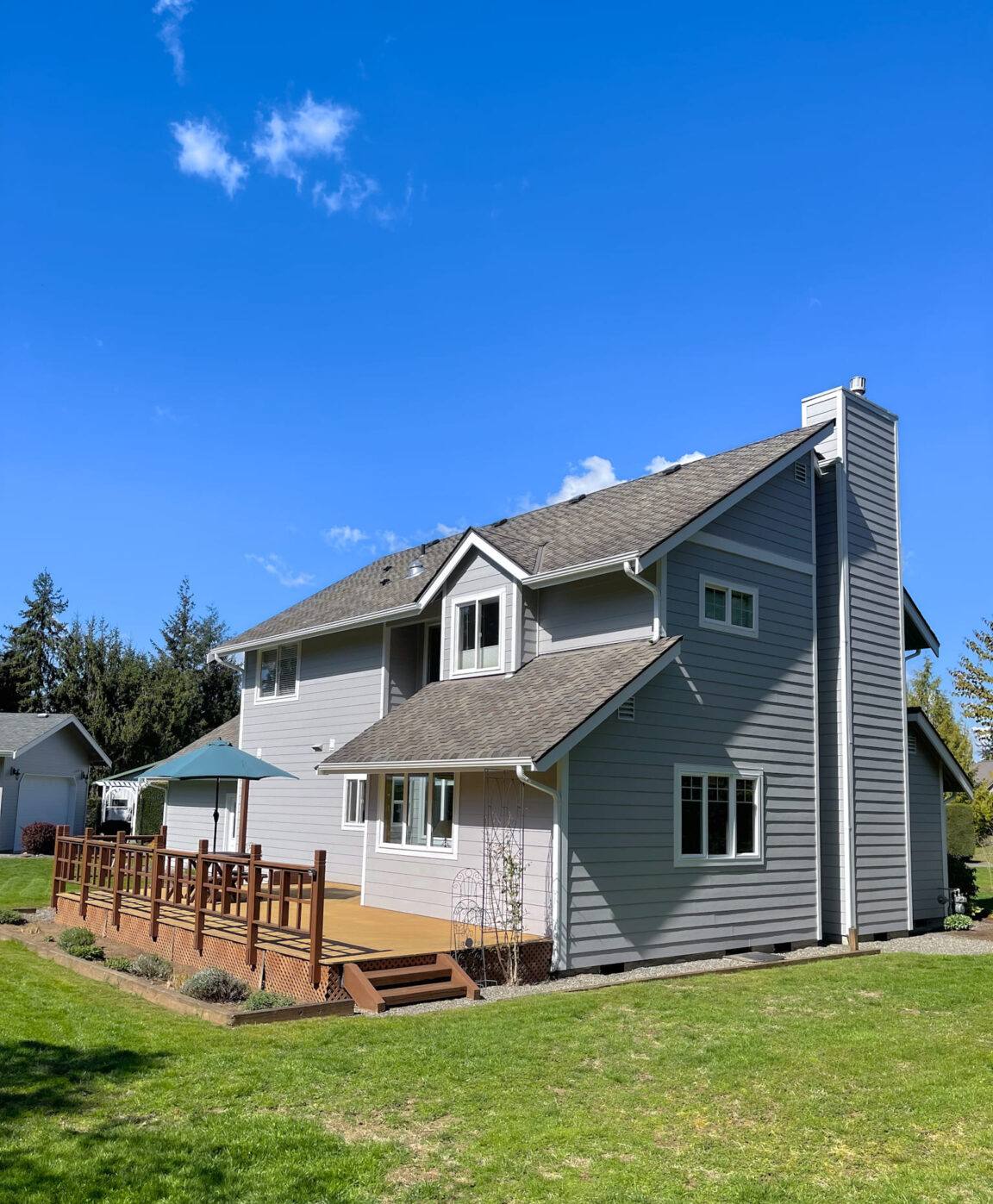
What Salt Air, Driving Rain, and Moss Season Do to Siding Over Time
Three environmental factors do most of the damage to siding in Sandy Point, and they compound each other.
Salt Air
Airborne salt from the bay settles on exterior surfaces and accelerates corrosion on fasteners, flashing, and any exposed metal trim. It also breaks down paint films and coatings faster than inland exposure does, which is why siding on waterfront lots tends to look tired years before the same product would on a home set back from the water.
Driving Rain
Wind off the bay pushes rain horizontally against walls instead of letting it run straight down and off. That means water gets forced up under laps, into butt joints, and around penetrations like hose bibs, light fixtures, and vents — spots that stay mostly dry on a sheltered inland home but take a real beating on a waterfront one.
Moss and Sustained Moisture
Whatcom County's wet season is long, and Sandy Point's exposure keeps surfaces damp even longer than average. Moss and algae take hold on north-facing walls, shaded corners, and anywhere siding stays wet between rain events. Left alone, that growth holds moisture against the surface and works into any cracks, seams, or failed caulk joints underneath.
None of this means siding fails quickly — it means the margin for error in material choice and installation detail is smaller here than in most parts of the region.
Signs Your Sandy Point Home Needs Siding Replacement
Because moisture damage tends to work from the inside of a wall assembly outward, the visible signs often show up after the problem has been developing for a while. Here's what we look for during an inspection:
- Soft, spongy, or crumbling spots when you press on the siding, especially near the bottom courses and around windows
- Paint that's peeling, bubbling, or failing repeatedly in the same spots no matter how often it's repainted
- Visible warping, buckling, or gaps opening up between boards or panels
- Persistent moss or dark staining that returns quickly after cleaning
- Rust streaks below nail heads or trim fasteners
- Rot at butt joints, corner boards, or anywhere two pieces of siding meet
- Rising energy bills or noticeably drafty rooms along exterior walls
- Interior signs like musty smells, discolored drywall, or trim separating from walls on the side of the house that faces the water
One or two of these on their own might be a spot repair. Several together, especially on the weather-facing side of the house, usually point to a wall assembly that's been absorbing moisture for a while and is due for a full replacement rather than another patch.
Why We Install Only James Hardie Fiber Cement in This Area
We install James Hardie fiber cement siding exclusively — we don't offer vinyl, LP SmartSide, Cemplank, Allura, primed spruce, or cedar. That's a deliberate standard, not a limitation, and it matters more in a place like Sandy Point than almost anywhere else we work.
Vinyl siding can warp and distort under sustained heat and impact, and its butt joints and J-channels give wind-driven rain more places to work its way behind the cladding over time. Wood products like cedar or primed spruce look excellent when new, but they require an ongoing commitment to painting, caulking, and moisture management that salt air and a long wet season make harder to keep up with. Other fiber cement brands compete reasonably well on paper, but we've standardized on Hardie because of the consistency of their HZ5 climate-engineered formulation for this region, the factory-applied ColorPlus finish, and a warranty structure we're comfortable standing behind on every job.
Fiber cement is non-combustible, holds paint and factory finish far longer than wood, and doesn't soften or distort the way vinyl can. For a home absorbing salt air and driving rain on a near-daily basis, that durability difference shows up years sooner than it would on a sheltered lot.
What a Correct Siding Replacement Job Involves
The siding itself is only part of what determines how a wall performs. On a waterfront exposure, the details underneath the siding matter just as much as the product on top.
Full Tear-Off and Wall Inspection
We remove the old siding down to the sheathing rather than installing over it. That's the only way to actually find hidden rot, compromised sheathing, or moisture trapped from a previous install — problems that are common on older waterfront homes and invisible from the outside.
Water-Resistive Barrier
A correctly lapped weather-resistive barrier goes on before any siding, installed shingle-style so water sheds down and out rather than getting trapped behind the cladding. Given how much wind-driven rain this location sees, this layer is not optional and not a place to cut corners.
Flashing at Every Penetration
Windows, doors, vents, hose bibs, and light fixtures all need proper flashing integrated with the water-resistive barrier — not just caulk. Caulk fails; correctly lapped flashing sheds water even after the caulk eventually does.
Fastening and Clearances to Manufacturer Spec
James Hardie siding has specific fastener spacing, nailing patterns, and clearance requirements — including gaps at grade, roof lines, and decks — that are engineered into the product warranty. Skipping these details can void coverage and, more importantly, gives moisture a path in.
Corrosion-Resistant Fasteners and Trim
Given the salt exposure at Sandy Point, we use fasteners and trim components rated for coastal environments rather than standard hardware, which corrodes faster here than it would inland.
Our Process for Sandy Point Homeowners
| Step | What Happens |
|---|---|
| Inspection & Estimate | We walk the exterior, check for moisture and rot at vulnerable points, and give you a clear, honest scope and estimate — no pressure. |
| Product Selection | We help you choose the right James Hardie plank profile and ColorPlus finish for your home's exposure and style. |
| Tear-Off & Sheathing Check | Old siding comes off, sheathing is inspected and repaired as needed before anything new goes on. |
| Weather Barrier & Flashing | Water-resistive barrier and flashing are installed at every penetration, following manufacturer lapping requirements. |
| Siding Installation | Hardie siding is installed to spec — correct fastening, clearances, and corrosion-resistant hardware throughout. |
| Final Walkthrough | We walk the finished job with you and address anything before we consider it done. |
Cost Factors for Siding Replacement in Sandy Point
Every home is different, so we don't quote broad numbers without seeing the house — but the main factors that move a Sandy Point job up or down are consistent:
| Factor | Why It Matters Here |
|---|---|
| Sheathing condition | Homes with hidden moisture damage from prior siding need repair before new siding goes on, which adds time and material |
| Wall complexity | Corners, dormers, and multiple penetrations mean more flashing detail and labor, especially on waterfront elevations |
| Siding profile and finish | Plank width, texture, and ColorPlus color selection affect material cost |
| Trim and accessory work | Corner boards, fascia, and soffit work done alongside siding affects overall scope |
| Site access | Waterfront lots, fencing, and tighter setbacks can affect staging and labor time |
Why Hiring a Crew That Already Works This Coastline Matters
A siding crew that mostly works inland Whatcom County jobs isn't necessarily prepared for what a waterfront wall assembly needs. Flashing details that are "good enough" on a sheltered lot can fall short against sustained wind-driven rain. Fastener and trim choices that hold up fine away from the water can start corroding within a few seasons at Sandy Point.
Working this area regularly means knowing where moisture tends to collect on these homes, which elevations take the worst of the weather, and how to detail a wall so it actually performs under these conditions rather than just looking right on installation day. That experience shows up in fewer callbacks and siding that's still doing its job a decade or two down the road.
Caring for Your New Siding After Installation
James Hardie siding with a ColorPlus finish is low-maintenance, but "low-maintenance" isn't "no-maintenance," especially in this location. A periodic rinse to remove salt residue and moss growth, prompt attention to any caulk lines that start to fail, and keeping vegetation trimmed back from walls all go a long way toward getting the full life out of the installation. We're happy to walk you through a simple care routine suited to a Sandy Point exposure when the job wraps up.
If your siding is showing wear, or you'd simply like an honest opinion on where your home stands, we're glad to take a look. Reach out for a free, no-pressure estimate — we'll assess the house, answer your questions, and give you a straight read on what it needs.