 Birch Bay Siding
 New-Construction Windows for Sumas Homes
Building new in Sumas puts you in a corner of Whatcom County where the weather doesn't cut anyone slack. You're inland from the Salish Sea, but the same marine weather systems that soak Birch Bay push moisture straight through this valley too — long stretches of driving rain, heavy fall and winter cloud cover, and a moss season that seems to start earlier every year. New-construction windows are your first and most important defense against all of that, and they only work if they're installed correctly the first time. There's no siding to pull back and fix later — once the cladding goes on, the window's flashing and drainage details are sealed inside the wall for the life of the house.
We install new-construction windows for builders and owner-builders working in and around Sumas, and we treat this stage differently than a replacement job on an existing home. New construction is a sequencing problem as much as a window problem — get the order of operations wrong with the weather-resistive barrier, flashing tape, and siding and you've built a leak into the wall that won't show up for a few years.
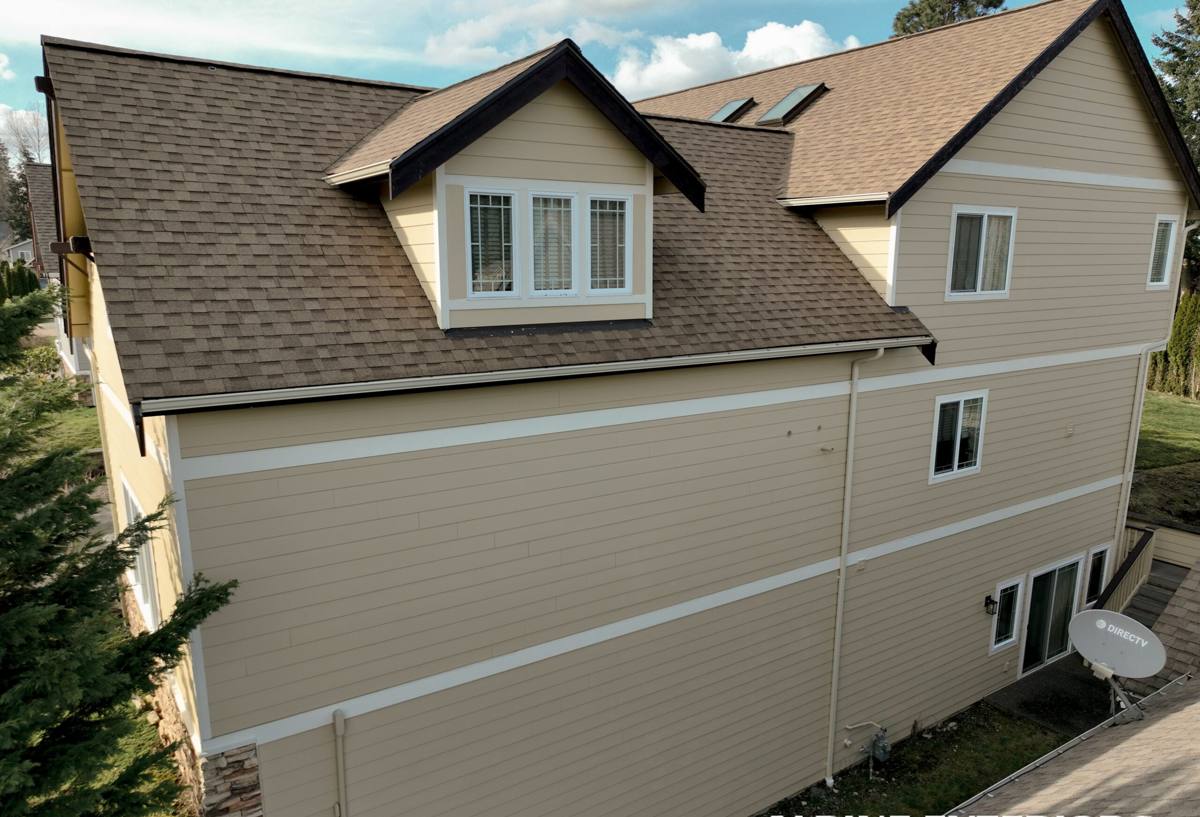
Why New-Construction Details Matter More Here
Sumas sits in a low valley near the Canadian border, and like the rest of Whatcom County it sees a wet season that runs long — often eight or nine months of the year with meaningful rainfall. That kind of exposure means:
- Wall assemblies stay damp longer between storms, so any flashing gap has more opportunity to let water in before it dries
- North and shaded elevations grow moss and algae readily, and moss holds moisture against trim and sills far longer than bare siding would
- Wind-driven rain during winter storms can push water sideways into a wall, not just straight down — a detail that matters for how flashing laps are shingled
- Even away from the immediate shoreline, the humid marine air that rolls in off Birch Bay and the broader Salish Sea keeps building materials at higher moisture content most of the year
New-construction windows give you the chance to build the wall correctly around the window from the start — full flashing pan, proper WRB laps, and a drainage path that assumes water will get behind the cladding eventually, because in this climate it eventually does.
Nail-Fin vs. Block-Frame Installation
Most new-construction homes in this area use nail-fin (flange) windows, which get integrated directly into the WRB before siding goes on. Some designs — particularly masonry or certain modern facades — call for block-frame windows set into a rough opening and flashed differently. The install sequence changes depending on which type is specified, and mixing up the details between the two is one of the more common sources of early water intrusion we see corrected on newer homes.
What a Correct Installation Actually Involves
"New-construction window install" covers a lot of steps that don't show once the house is finished. Doing it right means every one of these gets done in order, not skipped to save time:
- Rough opening check — verify the opening is square, plumb, and sized correctly before the window ever gets set
- Sill pan flashing — a sloped, sealed pan at the bottom of the opening so any water that gets past the window has somewhere to go besides the framing
- Window-specific flashing tape — compatible with both the window manufacturer's flange and the WRB, applied in the correct shingle-lap order (sides, then head, never head-first)
- Setting and fastening — window shimmed level and plumb, fastened per the manufacturer's schedule so the frame doesn't rack or bow
- WRB integration — housewrap or building paper lapped over the flanges correctly so water sheds outward at every seam
- Head flashing — a drip cap or integrated head flashing that directs water away from the top of the window rather than letting it pool
- Interior air sealing — a continuous air seal between the frame and rough opening, which also helps control condensation inside the wall cavity
- Sealant at the right joints only — sealed where it should drain, left open where the assembly is designed to weep water back out
Skip or reorder any of these and you can end up with a window that looks fine and performs poorly — the kind of failure that shows up as staining or soft trim two or three winters later, long after the crew that installed it has moved on.
Our Process for New-Build Projects in Sumas
Coordinating with Your Builder or Timeline
On new construction, we work within your build schedule rather than around it. That means confirming window sizes and rough openings against the plans before framing is closed up, showing up at the right point in the WRB installation sequence, and communicating clearly with your general contractor or building crew so nobody is waiting on us — or working around us — unnecessarily.
Product Selection
We'll walk through vinyl, fiberglass, and wood-clad options based on your budget, the home's design, and how much upkeep you want going forward. In a climate like this, we lean toward products with proven moisture performance and manufacturer flashing instructions we can follow to the letter — installation quality matters as much as the window itself, and a well-installed mid-range window will outlast a poorly installed premium one.
Inspection Before Siding
Before siding closes up the wall, we do a final check of every flashing lap and seal. This is the last point where a mistake is cheap to fix — after siding goes on, the same fix means removing cladding.
Cost Factors for New-Construction Windows
| Factor | Why It Affects Cost |
|---|---|
| Window material (vinyl, fiberglass, wood-clad) | Material and manufacturing cost varies widely; fiberglass and clad-wood run higher than standard vinyl |
| Number and size of openings | More openings and larger units mean more flashing detail work and labor time |
| Energy code glazing requirements | Washington's energy code sets minimum performance ratings, which can push you toward higher-spec glass packages |
| Flashing and WRB complexity | Homes with more wall penetrations, dormers, or multiple siding transitions take longer to flash correctly |
| Site access and building stage | Coordinating around scaffolding, other trades, or a tight framing schedule can affect labor efficiency |
We're not going to quote a number here without seeing your plans — every new build is different — but we'll give you a clear, itemized estimate before any work starts, broken out so you can see what you're paying for.
What to Ask Before Hiring a Window Crew for New Construction
New-construction window work rewards experience with this specific stage of building — it's a different skill set than replacement work, even though the trade overlaps. Before hiring, it's worth asking:
- Do you follow the window manufacturer's published flashing instructions, or a generic method?
- Who installs the sill pan flashing, and what material do you use?
- Can you coordinate directly with my builder's schedule and framing crew?
- What happens if a rough opening isn't sized correctly when you arrive?
- Do you inspect and photograph flashing details before siding covers them?
- What's covered under your workmanship warranty, separate from the manufacturer's product warranty?
A crew that's worked new construction in Whatcom County specifically will already know how to sequence flashing for our wet season and won't need to relearn it on your project.
Why Local Experience Matters in Sumas
Sumas isn't a huge market, and window crews that mostly work drier climates or high-volume tract developments elsewhere don't always carry over the habits this region demands — tighter flashing laps, more conservative sealant choices, and a healthy respect for how long a wall stays damp here after a storm. A crew that already works Whatcom County new-construction jobs has seen what happens when those details get skipped, usually because they've been called back to fix someone else's shortcuts. That experience shows up in small decisions — how a sill pan is formed, how much lap a WRB seam gets, where sealant is used versus left open to drain — that don't matter much in a dry climate but matter a great deal in one that sees rain nine months a year.
Maintenance After Installation
Even a correctly installed new-construction window benefits from basic upkeep in this climate:
- Keep gutters and downspouts clear so roof runoff isn't dumping extra water near window heads
- Rinse pollen, moss spores, and debris off sills and tracks a couple of times a year, especially on shaded north-facing walls
- Check exterior sealant joints annually for cracking or separation, particularly after the first year or two as the house settles
- Keep an eye on interior sills for condensation in winter, which can signal ventilation or humidity issues worth addressing early
If you're planning a new build in Sumas and want windows installed by a crew that treats flashing and sequencing as seriously as the windows themselves, we're happy to walk your plans, answer questions, and put together a free, no-pressure estimate. There's a form below — reach out and we'll get you scheduled.