 Birch Bay Siding
 Asphalt Shingle Roofing Built for the Terrell Creek Area
Terrell Creek sits close enough to Birch Bay and the Whatcom County shoreline that its homes deal with the same demanding mix of conditions as the waterfront itself: salt-laden air drifting in off the bay, long stretches of wind-driven rain through fall and winter, and a moss season that can run most of the year on shaded rooflines. Add in the creek corridor's tree cover and the low-lying, often shaded lots that come with it, and you get a roofing environment that punishes shortcuts faster than a drier, more open location would. An asphalt shingle roof installed correctly for this specific setting can last decades. One installed to a generic spec, without accounting for the moisture and organic growth this area sees, tends to show problems within a handful of wet seasons.
We install and repair asphalt shingle roofs on homes throughout the Terrell Creek area, and we treat every job with this climate as the starting assumption rather than an afterthought. That shows up in the underlayment we choose, how we detail flashing at every penetration, and how much attention we pay to attic and roof deck ventilation — all details that matter more here than they would on a roof further inland or in full sun.
What the Local Climate Actually Does to a Shingle Roof
Salt Air and Metal Fatigue
Even set back from the immediate shoreline, homes in the Terrell Creek area still get meaningful salt exposure carried in on marine air. Salt accelerates the corrosion of exposed fasteners, drip edge, and flashing, and it can shorten the working life of lower-grade metal components well before the shingles themselves wear out. A roof system here needs corrosion-resistant hardware chosen with that in mind, not just standard-grade fasteners picked for cost.
Driving Rain That Doesn't Fall Straight Down
Wind off the bay pushes rain sideways into roof planes, valleys, and roof-to-wall transitions rather than letting it run straight off a slope the way a calm-climate rain does. That means flashing details — around chimneys, skylights, dormers, and anywhere a roof meets a wall — carry more of the waterproofing burden here than they would in a sheltered inland location. A shingle roof can look fine from the ground and still be taking on water at these transition points if the flashing wasn't lapped and sealed correctly.
Shade, Moisture, and a Long Moss Season
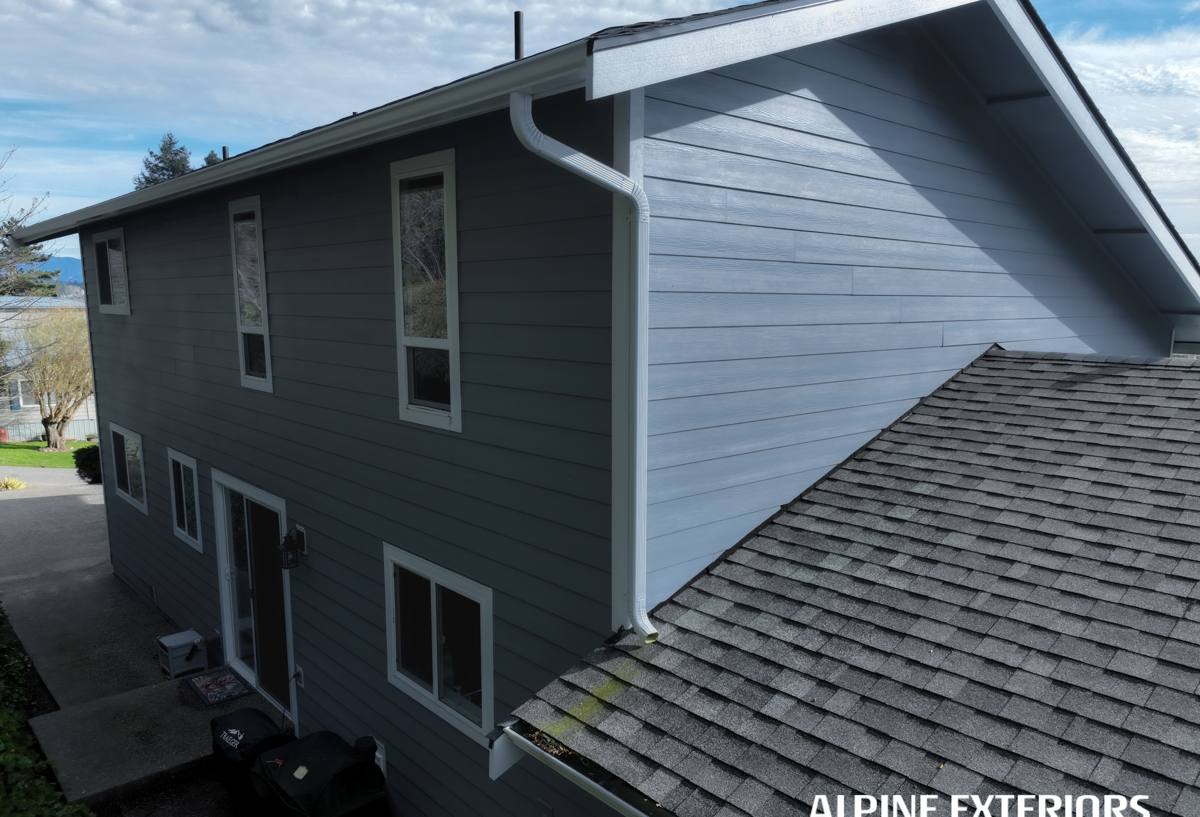
Terrell Creek's tree cover and the general dampness of this corner of Whatcom County add up to a moss and mildew season that runs longer than most homeowners expect. North-facing slopes and anything shaded by mature trees are usually the first areas to show growth, and moss does more than look bad — it holds moisture against the shingle surface and can work its way under shingle tabs over time, lifting them and creating a path for water intrusion. Roofs on shaded Terrell Creek lots typically need more frequent moss removal and inspection than a roof sitting in full sun a few miles away.
What a Correctly Installed Asphalt Shingle Roof Looks Like Here
Asphalt shingles are a proven, cost-effective roofing material, but their performance in a climate like this comes down almost entirely to the details underneath and around them. The shingles themselves are only one layer of a system.
- Ice-and-water shield at vulnerable areas: Self-adhering waterproof membrane at eaves, valleys, and around penetrations, backing up the field underlayment where wind-driven rain is most likely to get pushed uphill under shingles.
- Synthetic underlayment across the field: A durable, water-resistant layer under the shingles that holds up to the moisture exposure typical of this area better than older felt products.
- Correctly lapped step and counter-flashing: Properly integrated flashing at every wall transition, chimney, and skylight, since these are the most common failure points on shingle roofs in wind-driven rain climates.
- Balanced attic ventilation: Intake at the eaves and exhaust at the ridge working together so the roof deck can dry out between storms instead of trapping moisture that leads to rot or premature shingle failure from underneath.
- Corrosion-resistant fasteners and drip edge: Hardware rated for the salt exposure this area sees, not standard-grade materials that corrode faster near the coast.
Where Shortcuts Show Up First
On a roof that's cutting corners, the first signs usually aren't in the middle of a roof plane — they show up at the edges and transitions. Valleys without proper ice-and-water protection, flashing that's caulked instead of properly lapped, and ventilation that's an afterthought rather than a calculated intake-to-exhaust balance are the details that separate a roof that lasts one or two decades from one that lasts three or more in this specific climate.
Signs a Terrell Creek Roof Needs Attention
- Moss buildup in valleys or on shaded, north-facing slopes that keeps coming back after cleaning
- Granule loss showing up in gutters or at the base of downspouts
- Shingle tabs that are curling, cupping, or visibly lifted at the edges
- Soft spots or sagging when walking the roof, or visible daylight at roof-to-wall transitions from inside the attic
- Water staining on interior ceilings near exterior walls, especially after a windy storm
- Flashing around chimneys, skylights, or vents that looks lifted, rusted, or missing sealant
Repair, Re-Roof, or Full Replacement: How We Make the Call
Not every roofing issue on a Terrell Creek home means a full tear-off. We look at the age of the existing roof, the extent and location of any damage, and how the roof has handled moisture over time before recommending a path. A roof with isolated flashing failure or a small area of wind damage may only need a targeted repair. A roof approaching the end of its shingle warranty, or one where moisture has already reached the deck in multiple spots, usually calls for full replacement rather than patching around problems that will keep resurfacing.
| Situation | Typical Approach | What We Check Before Deciding |
|---|---|---|
| Isolated flashing leak, roof otherwise sound | Targeted repair | Extent of any deck moisture, age and condition of surrounding shingles |
| Widespread granule loss, shingles near end of service life | Full re-roof | Remaining warranty life, overall shingle brittleness, deck condition underneath |
| Recurring moss and moisture on shaded slopes | Cleaning plus targeted underlayment/flashing repair, or re-roof if damage has spread | Whether moisture has reached the deck, how far lifted shingles extend |
| Storm or wind damage to a section of roof | Section repair matched to existing shingle | Availability of matching shingle, condition of underlayment in the affected area |
Our Process for Terrell Creek Roofing Jobs
We start with an on-site roof inspection, walking the roof plane where it's safe to do so and checking the attic from underneath for ventilation, moisture staining, and deck condition. That inspection tells us whether we're looking at a repair or a full replacement, and it lets us flag problem areas — a valley without proper protection, a chimney with failing flashing — before they turn into interior damage. From there we put together a clear, written scope covering materials, underlayment, flashing details, and ventilation plan, along with a firm timeline, before any work begins.
During the install, tear-off is done down to the deck so we can check for hidden rot or damage that wouldn't show up from an exterior inspection alone. Any damaged decking gets replaced before new underlayment and shingles go down. We install ice-and-water shield at eaves, valleys, and penetrations as standard practice on every job in this area, not as an optional upgrade, because the wind-driven rain and moss exposure here make that protection worth the cost on nearly every roof we touch.
A Simple Checklist Before Hiring for Roofing Work Near Terrell Creek
- Ask what underlayment and ice-and-water protection they use at valleys, eaves, and penetrations
- Confirm they carry current Washington contractor licensing and active liability insurance
- Ask how they handle flashing at chimneys, skylights, and roof-to-wall transitions specifically
- Ask whether they inspect and replace damaged decking as part of a tear-off, not just layer over it
- Get a written scope of work, including ventilation plan and shingle warranty terms, before signing anything
Why Local Roofing Experience Matters Here
A roofing crew that regularly works the Terrell Creek area and the broader Birch Bay shoreline already knows which slopes hold moss longest, which roof details tend to fail first under wind-driven rain, and how much ventilation a roof needs to dry out between storms in this specific stretch of Whatcom County. That familiarity isn't abstract — it shows up in which valleys get extra ice-and-water protection, which fastener grade gets specified, and how carefully flashing gets integrated at every transition. Those are exactly the details that determine whether a shingle roof holds up for its full expected service life or starts leaking well ahead of schedule.
Maintaining a Shingle Roof in This Climate
Even a well-installed roof benefits from regular attention in an area with this much shade and moisture. Periodic moss removal on affected slopes, keeping gutters and downspouts clear so water doesn't back up under the roof edge, and a visual check of flashing after major windstorms all go a long way toward catching small problems while they're still small. A quick inspection every year or two, especially after a particularly wet or windy season, is far less costly than discovering a slow leak after it's already reached the attic insulation or interior ceiling.
If you're weighing a repair or a full roof replacement for a home in the Terrell Creek area, we're happy to walk the roof and attic with you and give an honest, no-pressure read on what it actually needs. Reach out below for a free estimate.