 Birch Bay Siding
 What Terrell Creek Siding Is Up Against
The Terrell Creek area of Birch Bay sits close enough to the water that salt-laden air is a daily fact of life, not an occasional nuisance. Add in wind-driven rain rolling off the Strait of Georgia, tree cover that keeps parts of many lots shaded and damp for months at a time, and a moss season that in Whatcom County can stretch from fall through spring, and you have a set of conditions that will find every weak point in a home's exterior. Siding here doesn't just need to look good on install day — it needs to hold up through repeated wetting and drying cycles, resist salt corrosion at fasteners and trim, and shed moisture fast enough that moss, algae, and mildew never get a foothold.
This is exactly the kind of environment where the choice of siding material, and the quality of the installation behind it, makes a bigger difference than almost anywhere else in the region. A product or installation detail that would be a minor cosmetic issue in a drier inland neighborhood can become a real moisture problem in Terrell Creek within a few seasons.
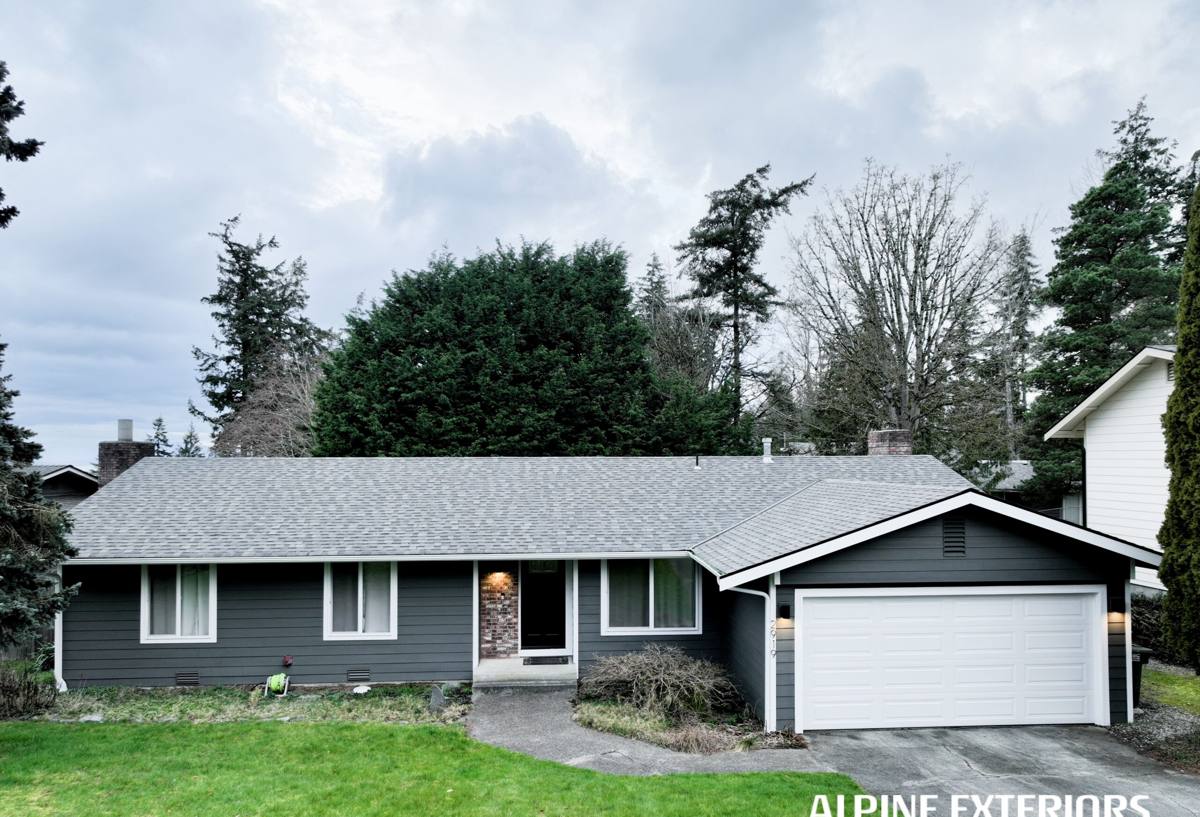
Why Fiber Cement Holds Up Where Other Materials Struggle
Moisture
Fiber cement is made from cement, sand, and cellulose fiber, pressed and cured into a dense, stable board. It doesn't swell, cup, or delaminate the way wood-based products can when they take on repeated moisture, and it doesn't trap water behind its face the way some engineered wood products do if a seam or cut edge is left unsealed. That stability matters in a climate where siding rarely gets a long, uninterrupted stretch of dry weather to fully recover between rain events.
Salt Air
Salt air accelerates corrosion in exposed metal and breaks down lesser paint systems faster than it would inland. Fiber cement itself is inert to salt in a way that raw wood and some coated products aren't, and a factory-applied finish (rather than a job-site paint job) holds its color and integrity longer under that kind of exposure.
Moss and Organic Growth
Moss and algae need a damp, textured surface to establish themselves. A siding product with a smooth, dense, factory-finished face and tight, correctly caulked joints gives spores far less to grip onto than a porous or heavily textured surface does. That's a real advantage on shaded Terrell Creek lots where north-facing walls and areas under tree canopy can stay damp for days after a storm.
Why We Install Only James Hardie
We don't install LP SmartSide, vinyl, Cemplank, Allura, primed spruce, or cedar. Every one of those products has legitimate uses, and some homeowners are happy with them. But we've made a professional decision to standardize on James Hardie fiber cement siding, because it's engineered specifically for climates like this one and backed by a finish and warranty system that holds up to scrutiny over decades, not just years.
James Hardie's HardieZone system assigns products to climate zones based on real regional data — moisture exposure, freeze-thaw cycles, and humidity. Western Washington, including Birch Bay, falls into the HZ5 zone, and Hardie's HZ5 product line is formulated and engineered for exactly this kind of wet, coastal, moss-prone environment. That's not a marketing detail — it's the reason we don't treat all fiber cement, or all siding materials, as interchangeable.
ColorPlus Technology, Hardie's factory-applied finish, is baked on and cured under controlled conditions rather than brushed or sprayed on-site. It resists fading, chipping, and moss adhesion better than field-applied paint, and it comes with its own finish warranty on top of Hardie's product warranty — both of which are transferable if the home changes hands.
What a Correct Installation Looks Like in This Climate
Clearance and Flashing
Fiber cement is only as good as the water management behind it. In a high-rain, high-humidity area like Terrell Creek, that means correct ground clearance, proper flashing at every window, door, and roofline intersection, and a weather-resistive barrier installed and lapped the right direction so water is directed out and down, never trapped behind the board.
Fastening and Joints
Hardie specifies fastener type, spacing, and placement for a reason — under-fastened or over-driven boards can crack, work loose, or open small gaps that let moisture behind the siding. Butt joints and trim seams need to be caulked with a flexible, paintable sealant rated for exterior use, not just filled and left.
Cut Edges and Touch-Up
Any factory edge that gets cut on-site exposes raw fiber cement that needs to be sealed or touched up with the matching ColorPlus touch-up product. Skipping this step is one of the most common ways an otherwise good installation starts absorbing moisture at the edges within the first few winters.
How Fiber Cement Compares in This Environment
| Material | Moisture Behavior | Salt Air Durability | Moss Resistance |
|---|---|---|---|
| James Hardie Fiber Cement | Dimensionally stable; won't swell or rot | Inert to salt; factory finish holds up | Smooth, dense face resists spore adhesion |
| Vinyl Siding | Sheds water but can warp or buckle with heat/cold cycling | Fasteners and trim more prone to corrosion over time | Textured panels can trap grime that feeds growth |
| Cedar / Primed Wood | Absorbs moisture; needs consistent upkeep to avoid rot | Vulnerable without diligent sealing and repainting | Porous surface is a common moss and mildew host |
| Engineered Wood (LP SmartSide) | Treated to resist moisture but edge/seam sealing is critical | Coating can degrade faster under salt exposure | Textured finish can hold moisture longer than smooth fiber cement |
Our Process for a Terrell Creek Siding Project
- On-site assessment. We look at sun and shade exposure, wind direction, existing moisture damage, and how close the home sits to tree cover or open water — all of which shape the plan for this specific property.
- Tear-off and sheathing check. Removing the old siding lets us inspect the sheathing and framing underneath for hidden rot or moisture damage before anything new goes on. Problems found here get addressed, not covered up.
- Weather barrier and flashing. A properly lapped weather-resistive barrier and correctly detailed flashing at every penetration go on before a single piece of Hardie board is installed.
- Installation to HZ5 spec. Boards are fastened, spaced, and joined according to James Hardie's published installation instructions for our climate zone — not shortcuts or "close enough."
- Sealing and touch-up. All cut edges, joints, and trim transitions are sealed and touched up to match, closing off the entry points moisture would otherwise find.
- Final walkthrough. We review the finished work with the homeowner and clean the site thoroughly before we consider the job done.
Keeping Terrell Creek Siding Looking Good Long-Term
Fiber cement is low-maintenance compared to wood, but "low-maintenance" doesn't mean "no-maintenance," especially in a climate this wet and shaded. A short annual routine keeps a correctly installed job performing the way it's designed to for decades.
- Rinse siding with a garden hose once or twice a year to clear salt residue, pollen, and grime before it builds up
- Walk the exterior after major storms and check caulked joints around windows, doors, and trim for cracking or separation
- Trim back tree branches and shrubs that keep any section of wall shaded and damp longer than the rest of the house
- Watch north-facing and tree-shaded walls first — they're the areas most likely to show early moss or algae growth
- Avoid pressure washing directly at high pressure; a gentle rinse is enough and won't drive water behind boards or joints
Cost Factors for a Terrell Creek Fiber Cement Project
Every home is different, and we'll always give you exact numbers after an on-site look rather than a guess over the phone. In general, these are the factors that move the price up or down on a project in this area.
| Factor | Why It Matters |
|---|---|
| Home size and wall complexity | More square footage, corners, gables, and dormers mean more cutting, fitting, and labor time |
| Condition of existing sheathing | Hidden rot or moisture damage found during tear-off adds repair scope before new siding can go on |
| Existing siding removal | Some materials come off quickly; others (like multiple old layers) take longer to strip and dispose of |
| Trim and accessory detail | Corner boards, window and door trim, and specialty accents add material and labor beyond flat wall coverage |
| Home height and access | Two- and three-story sections, steep grades, or limited access around the home affect equipment and time needed |
| Siding profile and color | Lap width, shingle-style panels, and standard versus premium ColorPlus color options carry different material costs |
Why Local Experience Matters in Terrell Creek
A siding crew that already knows Whatcom County's coastal conditions isn't guessing at flashing details or fastening schedules — they've seen how this specific mix of salt air, driving rain, and shade-driven moss plays out on real homes in the area, year after year. That experience shows up in the small decisions: where to add extra flashing attention, which walls need closer inspection during tear-off, and how to sequence a project around this region's weather patterns rather than around a generic install checklist. It also means familiarity with local permitting and inspection expectations, so the project moves forward without avoidable delays.
If you're weighing a siding replacement or new construction project in Terrell Creek, we're happy to walk your property, look at what your home is currently dealing with, and put together a straightforward, no-pressure estimate for a James Hardie fiber cement installation built for this exact climate. Use the form below to get started.