 Birch Bay Siding
 Asphalt Shingle Roofing for California Creek Homes
California Creek sits in the lower, more sheltered part of the Birch Bay area, where mature tree cover and low-lying, damp ground work alongside the same salt air and driving rain that shape roofs all along this stretch of Whatcom County. That combination changes the maintenance picture in a specific way: homes here tend to fight moss and trapped moisture harder than more open, sun-exposed lots nearby, even when the roof itself is only a few years old. A roof that's shaded most of the day by surrounding trees and sits close to low, wet ground simply dries out slower after every storm, and that difference shows up over time in ways a generic roofing job doesn't account for.
This page covers what an asphalt shingle roof needs to hold up specifically in California Creek — not roofing in general, but the details that matter for a home sitting in this kind of shaded, damp, coastal-adjacent setting.
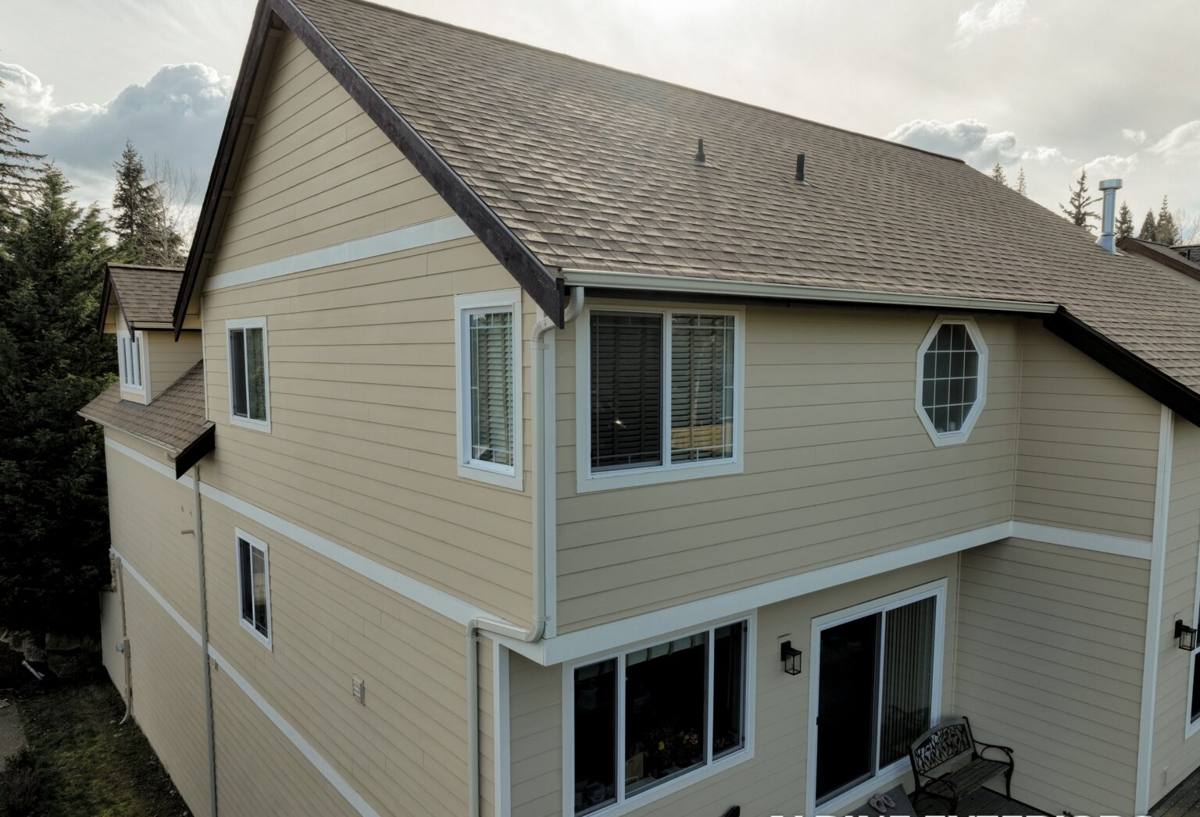
What This Setting Actually Does to a Roof
Shade and Slow Drying
A roof plane that stays shaded for most of the day, whether from tree canopy or the low position of the lot itself, holds moisture on its surface far longer after rain than a roof out in open sun. That extended dampness is exactly what moss and algae need to establish themselves, and once they've taken hold on shingle granules, they hold even more moisture against the roof surface, feeding the cycle further. On a lot of California Creek properties, it's the shaded, tree-lined roof planes that need attention years before the open, sun-facing ones do.
Salt Air and Driving Rain
Being close to Birch Bay means this area still gets the same salt-laden marine air and wind-driven rain that affect the whole coastline here, even with more tree cover softening the wind itself. Salt speeds up corrosion on exposed fasteners and flashing metal over years, and driving rain gets pushed under shingle edges and into valleys rather than simply running off the roof. A roof built for this area has to handle both the corrosion risk and the wind-driven moisture, on top of the extra drying time the shade adds.
Organic Debris Load
Roofs surrounded by trees deal with more than just shade — they collect needles, leaves, and small branches in valleys, at eave edges, and behind chimneys and vent stacks, all of which trap moisture directly against the shingle surface. That debris buildup is one of the more overlooked causes of early shingle failure in a setting like this, because it happens quietly in spots that aren't visible from the ground.
Why Asphalt Shingles Are Still a Solid Choice Here
None of this rules out asphalt shingles for a California Creek home. They remain a well-proven, cost-effective roofing material in this climate when the product and the install account for the extra moisture load this setting creates. The mistake we see most often isn't picking asphalt shingles — it's picking a standard-grade product and a standard installation approach on a roof that's going to sit wet longer than most.
- Algae-resistant granules: Copper- or zinc-infused granules slow the dark streaking and moss growth that shaded roofs in this area are especially prone to.
- Full synthetic or self-adhered underlayment: A stronger secondary water barrier matters more here, given how long moisture sits on shaded roof planes before drying.
- Wider ice-and-water shield coverage: Extra membrane at valleys, eaves, and around chimneys and vents gives extra protection exactly where debris and standing moisture concentrate.
- Corrosion-resistant fasteners and flashing: Standard galvanized components corrode faster this close to the water, even under tree cover that blocks direct wind.
What a Correct Install Looks Like for This Setting
Full Tear-Off and Deck Inspection
Shaded, damp roofs are more likely to be hiding deck-level moisture damage than roofs that dry out quickly between storms, which makes a full tear-off down to the plywood or OSB especially important here rather than optional. A layover install simply seals whatever rot or soft spots already exist underneath a fresh layer of shingles, and on a roof in this setting, that's a real risk rather than a theoretical one.
Underlayment and Valley Protection
Given how much organic debris ends up in valleys on a tree-surrounded roof, we treat valley protection as a priority detail rather than a standard afterthought. Self-adhered membrane in valleys and at other water-concentration points gives the roof a real second line of defense in exactly the spots where debris and moisture build up together.
Flashing at Chimneys, Vents, and Wall Transitions
Leaks on roofs like these tend to start at penetrations and transitions, not in the open field of shingles, because that's where debris collects and water lingers longest. Flashing needs to be properly lapped and integrated with the underlayment at every chimney, vent stack, skylight, and wall intersection, not caulked over after the shingles are already down.
Ventilation Sized for a Shaded Roof
Balanced attic ventilation matters on every roof, but it matters more on a shaded, damp lot, because the roof deck has less help drying out from solar heat during the day. Proper intake and exhaust airflow keeps the underside of the deck drier year-round, which slows both wood rot and moss growth working up from underneath.
Comparing Shingle Options for a Shaded, Coastal-Adjacent Roof
| Shingle Type | Typical Lifespan | Fit for California Creek |
|---|---|---|
| 3-Tab Shingles | 15-20 years | Lowest cost, but thinner and less algae-resistant — a weaker fit under heavy tree cover |
| Architectural (Laminated) Shingles | 25-30 years | Heavier build and better moisture resistance; the practical baseline for shaded lots here |
| Premium/Designer Shingles with Algae Protection | 30+ years | Strongest algae resistance available; worth the upcharge on the most shaded roof planes |
For most California Creek homes, architectural shingles with algae-resistant granules are the sensible default, especially on roof planes that sit under significant tree canopy. Whether it's worth stepping up further usually comes down to how much of the roof stays shaded year-round and how much moss and cleaning the current roof has needed in the past.
Cost Factors Worth Understanding
| Factor | What It Affects |
|---|---|
| Tear-off vs. layover | Whether hidden deck rot from prolonged moisture gets found and repaired |
| Underlayment and valley membrane grade | How well the roof resists water sitting in debris-prone valleys |
| Shingle algae resistance | How long the roof stays clean and how often it needs professional moss treatment |
| Flashing scope at penetrations | Leak resistance at chimneys, vents, and wall transitions |
| Ventilation upgrades | Long-term moisture control on a roof that gets less daily sun exposure |
| Tree trimming or clearance needs | Debris load on the finished roof and how often gutters and valleys need cleaning |
An itemized written estimate is the only way to fairly compare bids on a job like this, since two roofers can scope the same roof very differently once shade, debris, and moisture exposure are factored in. Ask any contractor to walk through what's included line by line before comparing numbers.
How Our Process Works
- In-person inspection: We walk the roof and attic ourselves, checking valleys, penetrations, and shaded planes specifically, rather than estimating from a photo.
- Written estimate: A clear, itemized bid covering tear-off, underlayment, valley protection, flashing, ventilation, and material selection.
- Scheduling around weather and access: We build in reasonable flexibility for wet-season delays and any tree clearance work needed before the crew starts.
- Tear-off and deck repair: Old roofing comes off completely, and any moisture damage we find at the deck gets repaired before new material goes down.
- Underlayment, flashing, and shingle installation: Each layer goes on to manufacturer specification, with extra attention at valleys and penetrations.
- Final walkthrough and cleanup: We review the finished roof with you and do a full site and magnetic nail sweep, including debris cleared from gutters and valleys.
Why Hiring a Crew That Already Works in California Creek Matters
A crew that's worked roofs in and around California Creek has already seen how much longer shaded planes stay wet after a storm, which valleys collect the most debris, and how quickly moss establishes itself under tree cover this close to the bay. That's practical knowledge that shows up in small decisions throughout the job — where to add extra underlayment, which penetrations need the most careful flashing, how much ventilation the specific roof actually needs — decisions a crew unfamiliar with this particular setting might not think to make.
It also matters after the job is finished. A workmanship warranty only means something if the company behind it is still reachable locally years later, not a crew that worked the area once and moved on.
A Practical Checklist Before You Choose a Roofer
- Do they perform a full tear-off with deck inspection, not just a layover?
- Does the estimate call out algae-resistant shingles and valley protection specifically, or just "new shingles"?
- Is flashing work at chimneys, vents, and wall transitions explicitly written into the bid?
- Do they carry current WA contractor licensing, liability insurance, and workers' compensation?
- Can they point to recent, real roofing work in or near Birch Bay?
- Does the bid separate the manufacturer's material warranty from the contractor's own workmanship warranty?
Signs Your California Creek Roof May Need Attention
Shaded, tree-surrounded roofs tend to show trouble in specific spots first, and catching it early is usually the difference between a repair and a full replacement.
- Moss or dark algae streaking building up faster on shaded planes than it used to
- Granules collecting in gutters, signaling shingles wearing thinner than expected
- Standing debris in valleys that doesn't clear on its own between storms
- Water staining on interior ceilings, especially near valleys or roof penetrations
- Curling or lifted shingle edges on any plane that stays damp longer than the rest of the roof
If any of that sounds familiar, it's worth having the roof looked at before the next wet stretch rather than waiting for a leak to make the decision.
If you'd like an honest, no-pressure look at your California Creek roof and a written estimate you can compare against anything else you've received, we're glad to come take a look. Use the form below to request a free estimate.