 Birch Bay Siding
 Roof Repair Built for Bellingham's Marine Climate
Bellingham sits close enough to the water that its roofs take on a specific combination of stresses: salt-tinged marine air working on metal and fasteners, wind-driven rain that gets pushed sideways and upward under shingle edges instead of simply running off, and a moss season that runs long and wet for much of the year. None of that means every roof problem in Bellingham requires a full replacement. A large share of the roof issues we see here are legitimately repairable, but only when the repair is done correctly — matched to the actual cause of the problem rather than a quick patch over the visible symptom.
This page focuses on roof repair specifically for Bellingham homes: what the local climate actually does to a roof over time, what separates a repair that holds up from one that fails again within a season or two, and how our process works from first inspection to final walkthrough.
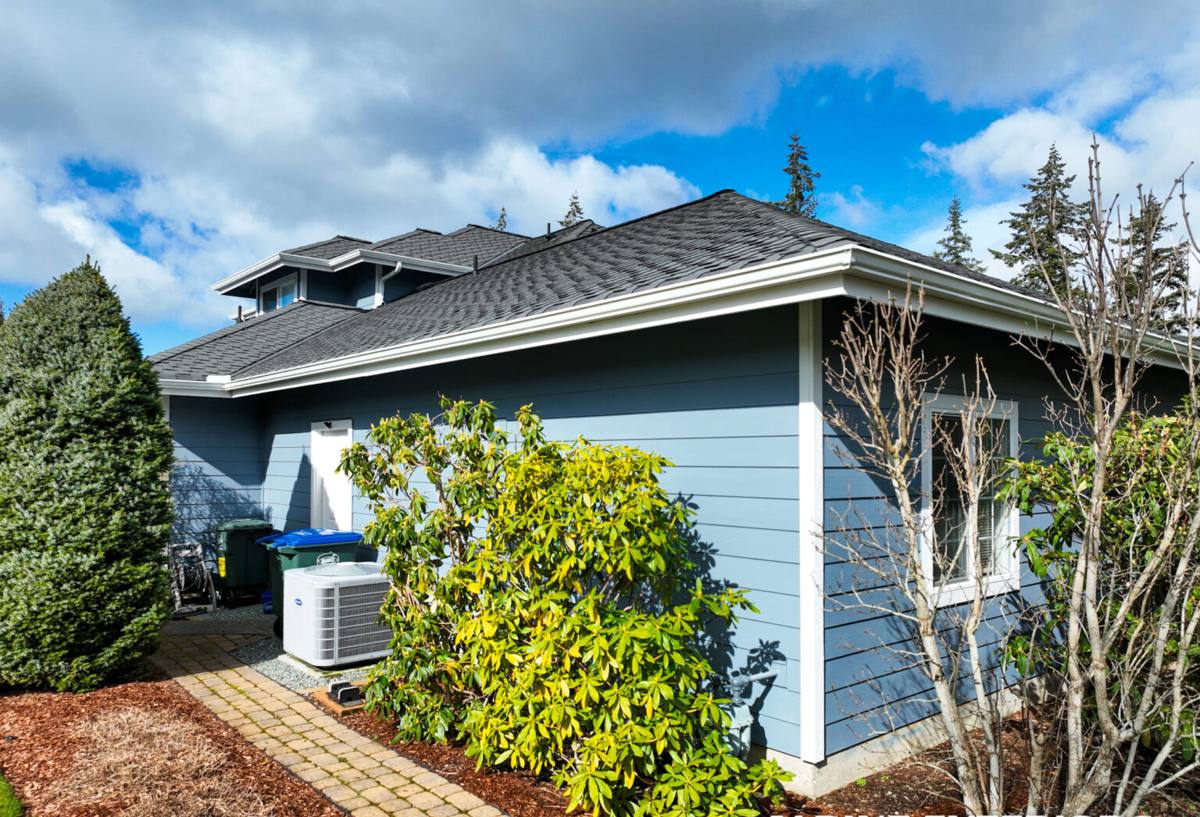
Why Bellingham Roofs Need Repair Sooner Than a Generic Guide Suggests
Most national roofing advice is written for a drier, more moderate climate than what Whatcom County actually sees. A roof detail that would hold up fine in a dry inland climate can fail within a few years here, because the stresses are different and they compound. Wind-driven rain doesn't respect the tidy assumption that water only ever runs downhill on a roof. It gets forced under tab edges and into laps that were never sealed with that possibility in mind. Salt air accelerates corrosion on exposed fasteners and thin flashing metal, which is often where a slow, hard-to-trace leak actually starts. And a long moss season means organic growth gets a real foothold on shaded or north-facing roof planes, holding moisture against the roof surface for months at a time rather than drying out between storms.
The result is that a Bellingham roof often develops problems in a different order and at a different pace than a roof somewhere drier — and a repair that doesn't account for that usually just delays the next call, rather than actually fixing anything.
What Local Weather Actually Demands From a Repair
- Corrosion-resistant fasteners and flashing: Salt-tinged air breaks down undersized or low-grade metal faster than a repair estimate written for a drier region would assume.
- Repairs sealed against wind-driven rain, not just falling rain: A patch that only accounts for water running straight downhill will leak again the first time rain gets pushed sideways under an edge.
- Moss removed and treated, not just scraped off the surface: Surface scraping without addressing what's underneath usually means the same growth returns within a season.
- Attention to shaded, north-facing, and low-slope areas: These hold moisture longest through Bellingham's wet stretches and are where repairs need to be most thorough, not just where damage happens to be visible from the ground.
What a Correct Roof Repair Actually Involves
A roof repair done right is not just replacing what's visibly damaged. It starts with figuring out why that damage happened in the first place, because a leak's entry point and the spot where water actually shows up inside the house are frequently two different locations on the roof.
Diagnosing the Real Source, Not Just the Symptom
Water travels. It can enter at a flashing lap, a cracked shingle, or a failed sealant joint several feet away from where a ceiling stain or attic damp spot eventually appears, since it often runs along the underlayment or a rafter before dripping down. A repair that only addresses the visible stain without tracing the path back to the actual entry point is a repair that looks finished but isn't. This is why a proper repair starts with a hands-on inspection of the roof surface itself, not just a look at the interior damage.
Flashing Repair
Flashing at valleys, chimneys, skylights, and wall-to-roof intersections is where the large majority of repairable leaks in this region actually originate, far more often than failures in the open shingle field. Correcting a flashing problem means re-lapping and re-sealing the metal properly and tying it back into the underlayment beneath it, not just running a bead of caulk over the visible gap. Caulk is a reasonable short-term stopgap in some situations, but it's not a substitute for flashing that's mechanically and physically shedding water the way it's supposed to.
Shingle and Underlayment Patching
Damaged, cracked, or missing shingles get replaced with matching material where possible, and the underlayment beneath them gets inspected at the same time, since a shingle that failed from wind or age often took underlayment damage with it. Patch repairs are tied into the surrounding shingle courses so water sheds correctly across the transition rather than pooling at the edge of the repair.
Moss and Algae Treatment
Moss on a Bellingham roof isn't just cosmetic. Its root structure lifts shingle edges and holds moisture directly against the roof surface, which accelerates granule loss and can eventually work moisture down to the deck. A correct repair removes existing growth without damaging the shingle surface underneath, and addresses the moisture and shading conditions that let it establish in the first place, rather than just clearing what's visible and leaving the same conditions in place for it to grow back.
Decking and Structural Checks
Any area where a leak has been active for a while gets checked for deck-level moisture damage or soft spots, since a repair that replaces surface material over a compromised deck won't hold. Catching this early, while it's still a localized repair, is a large part of what keeps a repairable problem from turning into a full section replacement.
Repair or Replace? How to Tell the Difference
One of the most common questions we get is whether a specific problem is worth repairing or signals it's time to plan for replacement instead. The honest answer depends on the roof's overall age and condition, not just the one issue that prompted the call.
| Situation | Repair Usually Makes Sense | Replacement Usually Makes More Sense |
|---|---|---|
| Roof age | Well within its expected shingle lifespan | At or past the manufacturer's expected service life |
| Damage extent | Localized to one area, flashing detail, or a limited number of shingles | Spread across multiple roof planes or recurring in several spots |
| Deck condition | Solid, no widespread soft spots or rot | Soft decking or rot found in more than a small, isolated area |
| Leak history | First occurrence or an isolated, identifiable cause | Repeat leaks in different areas over recent years |
| Granule loss | Isolated to the damaged section | Widespread bald patches across most of the roof |
We'll always tell you honestly which side of that line your roof falls on, and we'll show you what we found rather than just asserting a conclusion. A repair that's genuinely the right call shouldn't need to be talked into.
Common Bellingham Roof Repair Issues
| Issue | Typical Cause Locally | What a Correct Repair Involves |
|---|---|---|
| Leak at a valley | Flashing not properly lapped or sealed against wind-driven rain | Re-flash the valley and tie it back into the surrounding underlayment |
| Leak near a chimney or skylight | Aged or corroded flashing metal, or failed sealant joints | Replace flashing and re-integrate it with the roofing system, not just re-caulk |
| Moss and dark streaking | Prolonged shade and moisture on north-facing slopes | Careful removal, treatment, and addressing the moisture conditions that let it establish |
| Lifted or missing shingles | Wind exposure combined with under-fastened original installation | Replace and correctly fasten matching shingles, checking underlayment beneath |
| Granule loss and thinning | Age combined with sustained moisture exposure | Assess remaining service life honestly; patch if localized, discuss replacement if widespread |
| Soft or spongy deck sections | A leak that went unaddressed long enough to reach the decking | Cut back to sound decking, replace the damaged section, then repair the roofing over it |
How Our Process Works
We keep repair work straightforward, because a homeowner dealing with a leak deserves clarity about what's happening and why, not just a bill at the end.
- In-person inspection: We get on the roof and, where relevant, into the attic to trace the actual path water is taking, rather than guessing from ground level or a photo.
- Honest diagnosis: We tell you what we found, what's causing it, and whether it's a repair or something that points toward replacement, before any work starts.
- Written estimate: You get a clear scope covering exactly what will be repaired, replaced, and re-sealed, so there's no ambiguity about what's included.
- Scheduling around weather: Wet-season timing is a normal part of working in Whatcom County, and we build reasonable flexibility into the schedule rather than pretending weather won't be a factor.
- The repair itself: Flashing, shingles, underlayment, and any affected decking are addressed together as a system, not as isolated patches.
- Final walkthrough: We review the completed repair with you, explain what was done, and do a site cleanup before calling the job finished.
Why Hiring a Crew That Already Works in Bellingham Matters
A crew that regularly repairs roofs in and around Bellingham has already seen how salt air corrodes underspecified flashing, how wind-driven rain finds its way past a lap that wasn't sealed with that in mind, and which roof orientations hold moss the longest through the wet months. That familiarity shows up in the small judgment calls made during a repair — decisions a crew without regular experience in this specific climate might not think to make at all, because the failure mode simply isn't as common where they usually work.
It also matters after the job is done. A repair warranty is only as good as the company standing behind it, and a contractor with an established, ongoing presence in the Bellingham area is one you can actually reach if a question comes up a year or two later, not one that's moved on to a different region entirely.
A Practical Checklist Before You Choose a Repair Contractor
- Do they inspect the roof in person before quoting, rather than pricing from a description over the phone?
- Does the estimate explain the cause of the problem, not just list materials being replaced?
- Is flashing work specifically addressed when a leak is involved, not just shingle replacement?
- Do they carry current WA contractor licensing, liability insurance, and workers' compensation?
- Can they point to recent, real repair work in or near Bellingham?
- Are they willing to tell you honestly if a repair isn't the right long-term fix, even if that means a smaller job for them?
Signs Your Bellingham Roof Needs Repair Now
Roof problems in this climate rarely announce themselves clearly. Catching the early signs is usually the difference between a contained repair and a much larger job later.
- A ceiling stain or damp spot that appears or spreads after a heavy or wind-driven rain event
- Granules collecting in gutters or downspouts, signaling shingle wear
- Visible moss or dark streaking building up on shaded roof sections
- A shingle that looks lifted, curled, or missing after a windy stretch
- Daylight visible through the roof deck from inside an accessible attic
- A musty smell in the attic that wasn't there before, which can indicate trapped moisture
If any of that sounds familiar, it's worth having someone look before the next round of weather makes the decision for you. If you'd like an honest, no-pressure look at your Bellingham roof and a written estimate that lays out exactly what we find, we're glad to come take a look. Use the form below to request a free estimate.