 Birch Bay Siding
 Siding Repair Built for the Bellingham and Birch Bay Climate
Homes in the Bellingham and Birch Bay area sit in one of the more punishing microclimates in Whatcom County for exterior materials. You've got salt-laden air coming off the water, long stretches of driving rain pushed sideways by wind, and a moss season that can run most of the year on shaded or north-facing walls. None of that is exotic weather — it's just constant, and constant is what wears siding down. A repair job that would hold up fine in a drier inland town can fail here within a couple of seasons if it isn't done with this specific environment in mind.
That's the lens we use on every repair call in this area: not "how do we patch this," but "how do we fix this so it survives another decade of salt air and rain in Bellingham and Birch Bay."
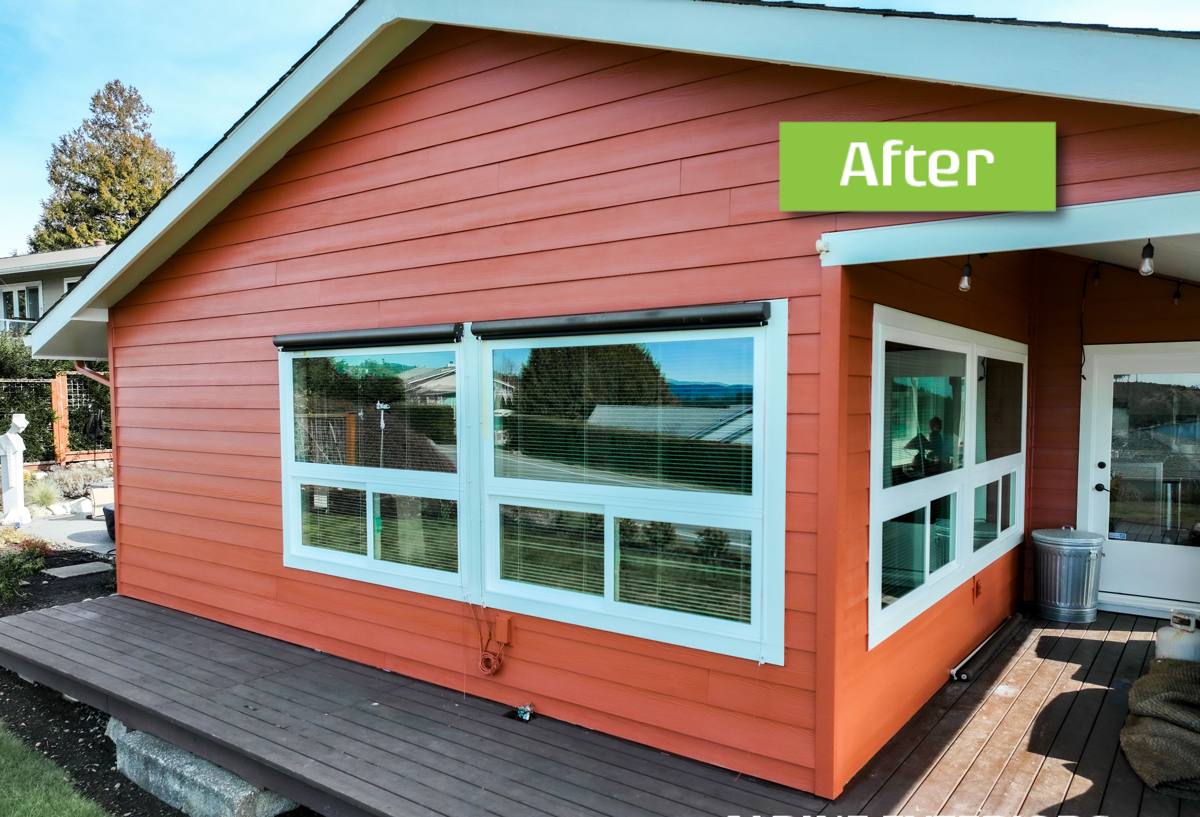
What Salt Air, Driving Rain, and Moss Actually Do to Siding
Salt air
Airborne salt is corrosive to metal fasteners, flashing, and trim components, and it accelerates the breakdown of coatings on materials that aren't formulated to resist it. Over years, homes closer to the water tend to show fastener staining, chalking finishes, and faster fade on lower-quality paint jobs than homes even a few miles inland.
Driving rain
Wind-driven rain doesn't just wet the face of the siding — it gets pushed sideways and upward, finding its way behind panels through gaps, poor overlaps, and failed caulk joints. Once water gets behind siding, the damage often isn't visible until it's already reached the sheathing or framing underneath. This is why so many "small" siding problems in this area turn out to be bigger once a panel comes off.
Moss and organic growth
Our long wet season and heavy tree cover mean moss, algae, and lichen get a real foothold on shaded walls, north-facing elevations, and anywhere siding stays damp longer than it should. Beyond the cosmetic issue, moss holds moisture against the siding surface for extended periods, which shortens the life of the material underneath it and can mask rot or damage happening below.
Signs a Bellingham or Birch Bay Home Needs Siding Repair
- Soft or spongy spots when you press on the siding, especially near the bottom courses or around windows and doors
- Visible gaps, warping, or buckling panels after a windy or wet stretch
- Persistent moss or dark staining that keeps coming back after cleaning
- Peeling or bubbling paint/finish, particularly on the side of the house that faces prevailing wind and rain
- Rust streaks below fasteners or trim pieces
- Cracked, missing, or separated caulk joints at corners, seams, and penetrations
- Interior signs: musty smell, discoloration on interior walls, or peeling interior paint near exterior walls
Any one of these on its own might be minor. Several at once, or any sign near a window, door, or roofline, usually means water has already gotten behind the siding and the repair needs to include what's underneath, not just the visible panel.
What a Correct Siding Repair Actually Involves
A repair that's done right isn't just "replace the bad piece and caulk it." It's a diagnosis first, then a fix that addresses the cause, not just the symptom. In our experience, that means:
1. Finding the actual water path
Damage rarely shows up exactly where the water got in. We trace back from the visible problem — a stained board, a soft spot — to figure out where moisture is actually entering, whether that's a flashing gap, a failed joint, a missing kick-out flashing, or wind-driven rain finding its way under an improperly lapped panel.
2. Checking what's behind the siding
Once panels come off, we look at the house wrap or building paper, the sheathing, and the framing in that area. If there's rot or persistent moisture damage, patching the visible siding without addressing what's behind it just buys a year or two before the same spot fails again.
3. Matching materials correctly
Repairs need to match not just in color but in profile, exposure, and material type. Mixing incompatible materials or mismatched panel reveals is one of the most common ways a "repaired" section ends up looking patched forever and performing differently than the rest of the wall.
4. Re-flashing and re-sealing to code, not just cosmetically
Any repair around a window, door, deck ledger, or roofline needs correct flashing and drainage detailing, not just a bead of caulk over the gap. Caulk is a backup, not a waterproofing strategy.
Why We Only Repair and Replace With James Hardie Fiber Cement
We get asked fairly often to patch vinyl, older cedar, or engineered wood siding, and we're upfront about our position: we don't install those materials, including on repair work, because we don't think they hold up to this climate the way homeowners deserve. Vinyl can warp and crack in temperature swings and doesn't offer much resistance to wind-driven rain intrusion at the seams. Wood-based products, including engineered wood siding, are vulnerable to moisture absorption at cut edges and seams — exactly the failure point we see most often on Bellingham and Birch Bay homes with heavy moss and rain exposure. Cedar needs ongoing maintenance and refinishing to keep performing, which is a real cost most homeowners underestimate.
James Hardie fiber cement is non-combustible, engineered specifically for wet climates through its HZ5 product line, and holds a factory-applied ColorPlus finish that resists fading and doesn't need repainting on the same schedule as wood. When we repair a Hardie installation, we're working with a material that behaves consistently and predictably. When a home has a different siding type, we'll be honest about what a patch can and can't do, and where a full Hardie section replacement is the more durable long-term answer.
Repair or Replace? How We Help You Decide
| Factor | Repair Usually Makes Sense | Replacement Is Usually Smarter |
|---|---|---|
| Extent of damage | Isolated to one or two panels/areas | Spread across multiple walls or elevations |
| Underlying structure | Sheathing and framing are dry and sound | Rot or sustained moisture damage found behind siding |
| Material type | Existing siding is Hardie fiber cement in good condition elsewhere | Existing siding is vinyl, cedar, or engineered wood nearing end of service life |
| Age of siding | Siding is well within its expected service life | Siding is original to an older home and showing widespread wear |
| Match availability | Profile and color can be closely matched | Discontinued profile/color makes seamless patching impossible |
We'll always tell you honestly which side of this table your home falls on. A lot of contractors default to full replacement because it's a bigger job — we'd rather do the repair that's actually warranted and earn the bigger project later if and when it's genuinely needed.
Our Repair Process
- On-site inspection: we walk the exterior, check every elevation (not just the spot you called about), and look for related issues like flashing gaps or drainage problems that could cause repeat damage.
- Moisture check: where we suspect water intrusion, we open up the affected area to check the sheathing and framing before quoting the fix.
- Written scope and estimate: you get a clear explanation of what's damaged, why, and exactly what the repair includes — no vague line items.
- Correct repair, not a patch job: matched materials, proper flashing and drainage detail, and fasteners and finishes suited to a salt-air, high-rain environment.
- Cleanup and walkthrough: we show you what was done and what to watch for going forward.
Managing Moss and Ongoing Exposure Between Repairs
Even a correctly repaired section of siding needs a little help staying that way in this climate. A few habits go a long way toward extending the life of any repair we do:
- Rinse moss and algae off shaded or north-facing walls with a garden hose and soft brush rather than a pressure washer, which can drive water behind panels and damage finishes
- Trim back vegetation and tree limbs that keep siding shaded and damp
- Keep gutters clear so overflow isn't running down the siding face during heavy rain
- Re-caulk visibly failed joints promptly rather than waiting for a wet season to find the gap for you
- Walk the exterior once or twice a year, especially after a windstorm, and check the areas most exposed to prevailing weather
Why It Matters That We Already Work This Area
Bellingham and Birch Bay have their own weather pattern within Whatcom County — proximity to the water changes how much salt exposure and driving rain a given wall actually sees, and tree cover on a lot of lots here creates the shaded, damp conditions moss thrives in. A crew that repairs siding across a wide range of inland climates won't necessarily flag those local factors the way a crew that works this specific area every week will. We know which elevations tend to take the worst of the weather here, what moss and moisture problems typically look like on local homes, and how to size a repair so it actually holds up to another few winters of this coastline's weather, not just looks fixed on the day we leave.
If you're seeing soft spots, recurring moss, or water stains on your Bellingham or Birch Bay home, we're happy to come take an honest look. We'll tell you straight whether it's a repair or something bigger, and there's no pressure either way — request a free estimate using the form below.