 Birch Bay Siding
 Building Decks That Hold Up in Blaine
Blaine sits right on the water at the northern edge of Whatcom County, and that location shapes everything about how a deck should be built here. Homes close to Semiahmoo Bay and the Strait of Georgia deal with salt-laden air, wind-driven rain that gets pushed sideways under eaves and railings, and a wet season that stretches long enough for moss and algae to take hold on any surface that doesn't drain and dry properly. A deck that would be perfectly fine in a drier inland town can start showing corrosion, soft spots, or slick green growth within a couple of seasons out here if it wasn't built with those conditions in mind.
We build and repair decks for homeowners throughout the Birch Bay and Blaine area, and the difference between a deck that lasts and one that needs early repairs almost always comes down to a handful of decisions made before the first board goes down: the fasteners, the flashing, the footing depth, and the material chosen for the surface itself. This page walks through what we look at specifically for Blaine properties, not generic advice pulled from a national deck-building guide.
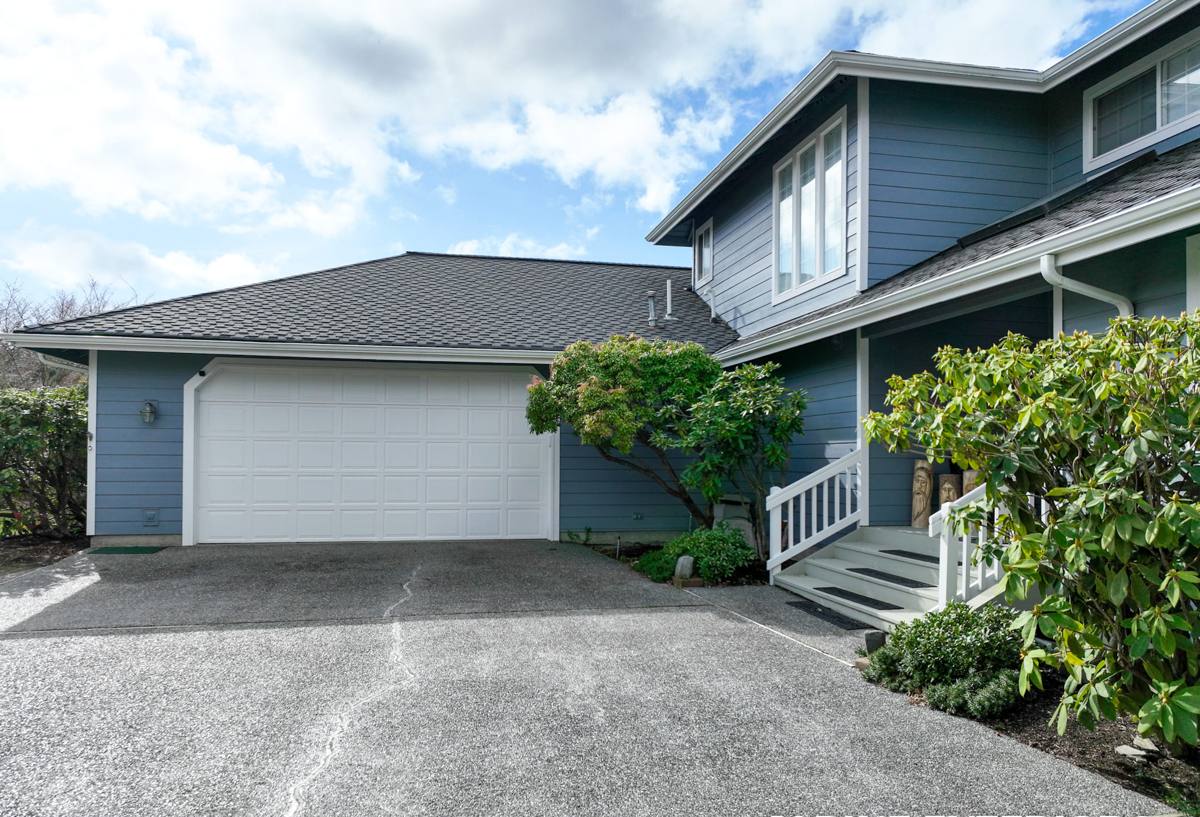
What Blaine's Climate Actually Does to a Deck
Salt Air and Corrosion
Proximity to saltwater accelerates corrosion on any metal component that isn't rated for it. Standard galvanized screws, brackets, and joist hangers can start rusting and staining the wood around them well before the structural wood itself is a problem. Once fasteners weaken, the whole connection they're holding — a ledger board, a stair stringer, a railing post — is only as strong as the corroding metal underneath.
Driving Rain and Trapped Moisture
Storms off the Strait don't always fall straight down. Wind-driven rain gets pushed into gaps, under railing caps, and behind ledger boards where a normal roof overhang would otherwise keep water away. If flashing and gaps aren't detailed correctly at the house connection, water works its way behind the siding and into the rim joist, which is one of the more expensive repairs a deck can need.
Moss, Algae, and a Long Wet Season
Whatcom County's wet months run long, and shaded or north-facing decks in Blaine can stay damp for days at a time. Any decking surface with poor drainage, tight board spacing, or a texture that holds moisture will grow moss and algae faster here than almost anywhere else in the state. That's not just a cosmetic issue — wet moss on a walking surface is a real slip hazard on stairs and landings.
Choosing the Right Decking Material for Blaine
There's no single "best" decking material — the right choice depends on your budget, how much upkeep you want to do, and how exposed the deck is to salt air and standing moisture. Here's how the common options actually perform in this climate:
| Material | Salt Air Performance | Moss/Moisture Resistance | Maintenance |
|---|---|---|---|
| Pressure-treated wood | Good if fasteners are corrosion-rated | Needs regular cleaning and sealing to resist moss | Annual cleaning, re-sealing every 2-3 years |
| Cedar | Naturally rot-resistant, but needs sealing near salt spray | Attractive but can gray and grow moss without upkeep | Regular cleaning, periodic oil/sealant |
| Composite decking | Excellent — no wood grain for salt to penetrate | Textured surfaces need occasional washing to prevent film buildup | Low — periodic washing only |
| PVC/capped polymer | Excellent — fully sealed surface | Very good, sheds water well | Lowest — occasional rinse |
For homes closer to the water where salt exposure is heaviest, we generally steer clients toward composite or capped polymer decking, not because wood is a bad product, but because a solid-surface material removes one whole category of maintenance — sealing and re-sealing — that's easy to fall behind on in a climate this wet. For homeowners who want the look and feel of real wood and are willing to keep up with cleaning and sealing on a set schedule, cedar or pressure-treated lumber is still a sound choice, especially on covered or partially protected decks.
A Word on Fastener and Hardware Choice
Whatever decking material you choose, the hardware matters just as much. This is where we don't cut corners: standard galvanized fasteners are not our standard for anything within reach of salt air. We use stainless steel or heavily coated, marine-rated screws and structural connectors on Blaine projects, because the cost difference is small compared to what it costs to repair a deck that's failing at the joist hangers five years in.
What a Correctly Built Deck Involves
A deck that lasts in this climate isn't just about the decking boards on top — most of what determines its lifespan is underneath, where you never see it once the project is finished.
- Footings sized for the soil and frost depth — undersized or shallow footings are one of the most common causes of a deck settling or racking over time.
- Ledger board flashing — properly integrated with the house's water-resistive barrier and siding so rain doesn't get channeled behind the wall.
- Joist spacing matched to the decking material — composite and PVC boards often need tighter joist spacing than solid wood to avoid flexing.
- Corrosion-rated fasteners and connectors throughout — not just at visible points, but at every hanger, post base, and structural screw.
- Proper drainage slope — a slight pitch away from the house so water doesn't pool against the ledger or under the decking.
- Gapping between boards — enough space for airflow and drying, without gaps so wide they're uncomfortable or unsafe.
Skipping any one of these doesn't usually show up as a problem on day one. It shows up two, five, or ten years later as soft framing, a leaning post, or a ledger board that's rotted from the inside out. Building it right the first time is almost always cheaper than fixing it later.
Our Process for a Blaine Deck Project
- On-site assessment. We look at sun and wind exposure, proximity to the water, existing drainage, and how the deck will tie into your home before recommending materials.
- Design and material selection. We walk through the tradeoffs between wood and composite for your specific site, along with railing style, stair layout, and any covered or multi-level features you want.
- Permitting. Most new decks and significant rebuilds in Whatcom County require a permit, particularly for structures above a certain height or attached to the home. We handle that process rather than leaving it to you.
- Demolition and site prep (if replacing an existing deck), including a check of the ledger connection and any hidden rot in the rim joist.
- Framing and footings, built to local frost depth and load requirements, with corrosion-rated hardware throughout.
- Decking, railing, and stair installation, using the material and fastening method appropriate to what you chose.
- Final walkthrough where we go over basic care for your specific decking material so you know what upkeep, if any, to expect.
Railings, Stairs, and the Details That Get Overlooked
Railings take a beating from wind and rain because they're the most exposed part of a deck. Post bases and railing brackets are common weak points if they're not properly flashed or if the fasteners aren't rated for the exposure. We pay close attention to how railing posts are attached to the frame, since a loose or corroding post connection is both a durability issue and a safety issue.
Stairs deserve the same attention, especially on a deck that gets shaded or damp. Stringers should be set on proper footings, not just resting on grade, and stair treads benefit from a decking material or finish with reasonable slip resistance, since a shaded staircase is exactly the kind of spot where moss takes hold first.
Keeping a Deck in Good Shape Once It's Built
No decking material in this climate is truly "no maintenance," but the amount of work varies a lot. A short seasonal routine keeps most decks in good shape regardless of material:
- Sweep debris and standing leaves off the surface regularly, especially in fall and winter when organic matter feeds moss growth.
- Rinse or wash the deck surface a couple of times a year to remove salt film and organic buildup before it sets in.
- Check railing posts and stair connections annually for looseness or early rust staining.
- For wood decks, re-seal on the schedule appropriate to the product — don't wait until the wood looks gray and dry.
- Keep gutters and downspouts near the deck clear so runoff isn't dumping extra water onto or near the structure.
Permits and Local Considerations
Whatcom County and the City of Blaine have their own permitting requirements depending on deck height, size, and whether it's attached to the home. Requirements can also differ slightly depending on whether a property is inside city limits or in the surrounding unincorporated area. We handle the permit application and inspection process as part of the build so you're not stuck figuring out the paperwork on your own, and so the finished deck is documented correctly if you ever sell the home.
Why Hire a Crew That Already Works This Area
A lot of the decisions that matter on a Blaine deck — which fasteners to use, how much slope to build into the footings, which decking material actually holds up against salt air rather than just looking good in a showroom — come from having built and repaired decks in this specific environment before. A crew unfamiliar with waterfront conditions in Whatcom County might build a technically sound deck by generic standards and still hand you one that corrodes early or grows moss on the north side within a year or two. We've seen what fails here and what doesn't, and we build accordingly from the first footing.
If you're planning a new deck or need to replace one that's showing its age, we're happy to come take a look and walk you through honest options for your property. There's no pressure and no cost to get an estimate — just a straightforward conversation about what your home actually needs.