 Birch Bay Siding
 For homes in Blaine, window installation is not a cosmetic upgrade — it is frontline defense against some of the harshest residential exterior conditions in Whatcom County. This page covers what a correct installation looks like on this stretch of coastline, what our process involves, and why local experience on Semiahmoo Bay's shoreline changes how the work gets done.
Why Windows Take a Beating on Semiahmoo Bay
Blaine sits right on the water, a few minutes from the Canadian border, and that location comes with a specific set of problems for window installation. Salt-laden air off Semiahmoo Bay and Drayton Harbor works into aluminum hardware, steel fasteners, and unprotected wood trim year-round, not just during storms. Add driving, wind-driven rain that comes in sideways off the water, and any gap in the flashing or sealant becomes a path for water to reach framing that's expensive to repair once rot sets in. Then there is the long stretch of gray, damp months each year when moss and mildew get a foothold on anything that stays wet too long — including window sills, exterior trim, and the lower corners of frames that don't drain properly.
None of this is unique to one house. It's the baseline condition for every home in this part of Whatcom County, from older single-pane wood windows original to a decades-old build to vinyl replacements installed years ago that were never detailed correctly for this exposure. A window that would last thirty years in a drier, inland climate can fail in a fraction of that time here if it wasn't installed with this weather in mind.
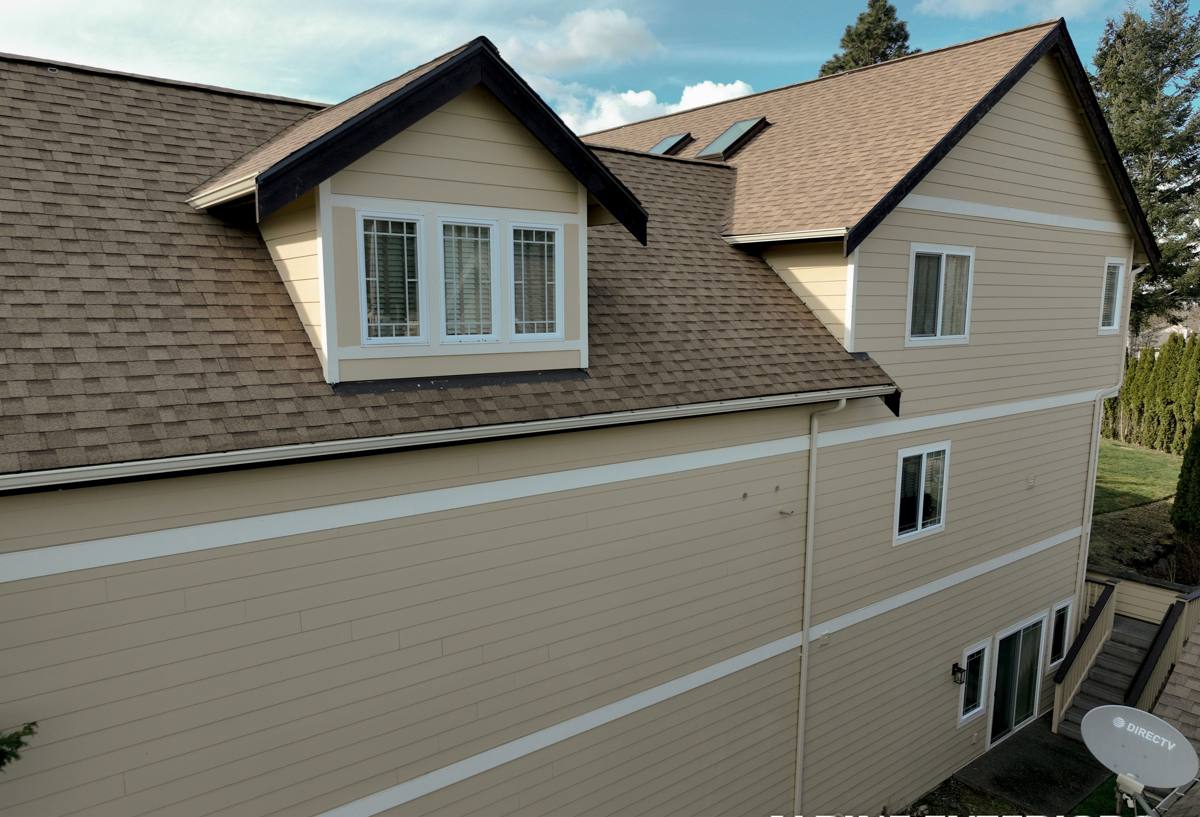
Signs a Blaine Home Needs New Windows, Not Just Repairs
Some window problems are simple fixes — a worn weatherstrip, a sticky lock, a bit of failed caulk. Others point to a bigger issue underneath. Watch for:
- Condensation or fogging trapped between the panes of a double-pane window — the seal has failed and the gas fill is gone
- Wood sills or jambs that are soft, discolored, or growing moss or mildew even after cleaning
- Visible daylight or a steady draft around the sash when the window is closed and locked
- Paint or caulk that keeps cracking or peeling within a year or two of being redone
- Windows that are hard to open, close, or lock — often a sign the frame has racked or swollen
- A noticeable jump in heating costs with no other clear cause
- Rust staining on hardware or fasteners, or visible corrosion on an aluminum-frame window
Any one of these can sometimes be handled with a repair. Several at once — especially on the elevation that takes the worst of the weather off the bay — usually means the window and the flashing behind it have reached the end of their useful life.
What a Correct Installation Actually Involves
Flashing and Water Management
The window itself is almost never where a leak starts — the flashing around it is. A correct install integrates a sloped sill pan so any water that gets past the glass drains back out instead of into the wall, head flashing that laps over the housewrap above the window, and jamb flashing that ties into the drainage plane on both sides. In a climate with this much wind-driven rain, we treat every window opening as a place water will reach and build the flashing to manage it, rather than counting on caulk to hold it back. Caulk is a backup layer, not the primary defense.
Shimming, Insulation, and Air Sealing
A window has to be shimmed square and plumb before it's fastened, or it will bind, leak, and wear out its own hardware early. The gap between the window frame and the rough opening also has to be filled correctly. Packed too tight with rigid foam, it can bow the frame inward; left with loose fiberglass batting alone, it becomes a path for both air and moisture. Low-expansion foam or backer rod and sealant, sized to the actual gap, is what holds up over years of coastal weather rather than months.
Choosing Windows for a Coastal Whatcom County Home
Frame material matters as much as brand here, because salt air and constant moisture treat every material differently.
| Frame Material | How It Handles This Climate | Maintenance |
|---|---|---|
| Vinyl | Won't rust or rot; handles moisture well; some expansion/contraction with temperature swings | Low — occasional cleaning |
| Fiberglass | Very stable through temperature swings; holds paint well; strong moisture resistance | Low — occasional cleaning, repaint if desired |
| Wood, unclad | Classic appearance but depends entirely on an intact paint or finish barrier to keep salt-laden moisture out | High — repainting or refinishing on a regular cycle |
| Wood-clad (vinyl or aluminum exterior) | Good moisture protection outside with a real wood interior look | Moderate — watch cladding seams and corners |
| Aluminum | Prone to corrosion and interior condensation in salt air unless thermally broken | Moderate to high, depending on finish |
For most Blaine homes exposed to bay winds, we steer customers toward vinyl or fiberglass on the water-facing elevations and reserve unclad wood for sheltered sides of the house where a painted finish will actually hold up over time. That's a maintenance and moisture call, not a knock on any particular manufacturer.
Glass matters too. A double-pane, low-E unit with warm-edge spacers is the practical baseline for this climate; argon fill and a slightly higher-performance coating are worth the added cost on any elevation that faces prevailing wind and rain directly. Triple-pane glass is available and helps with both energy performance and sound, though it adds weight and cost that not every project needs.
Full-Frame Replacement vs. Pocket (Insert) Replacement
When Insert Replacement Works
If the existing frame, sill, and surrounding wall are still solid and dry, an insert — where the new window fits inside the old frame — can be a faster, less invasive option. It leaves existing exterior trim in place and disturbs less siding around the opening.
When Full-Frame Is the Right Call
If there's any sign of water intrusion, soft wood, or flashing that was never detailed correctly, an insert replacement just seals that problem behind a new window instead of fixing it. Full-frame replacement removes the old unit down to the rough opening so we can inspect the sheathing, correct the flashing, and start clean. Given how much wind-driven rain this stretch of coastline sees, we lean toward full-frame more often here than we would further inland.
Permits, Energy Code, and Older Blaine Homes
Window replacement in Washington falls under the state energy code, which sets minimum performance requirements for new windows — worth confirming before choosing a product on price alone. Whatcom County and the City of Blaine also have permitting requirements that apply to full-frame replacements, particularly when framing is altered or an opening is enlarged. We handle that paperwork as part of the job rather than leaving it for you to sort out.
Bedroom windows carry a separate consideration: egress code sets a minimum opening size and maximum sill height for emergency exit. Plenty of older homes in this area predate current code, and it's common for a bedroom window to fall short of today's egress minimums. Replacement is a natural point to bring that opening up to code, even if it means a slightly larger unit than what's there now.
Our Installation Process
- On-site assessment — measure each opening and check existing flashing and framing condition before quoting anything
- Product selection — match frame material, glass package, and style to each elevation's exposure and your budget
- Careful removal — old window and trim removed without unnecessary damage to siding or interior finishes
- Inspect and repair the opening — any soft sheathing or framing is addressed before a new window goes in
- Install and flash correctly — sill pan, window, and head/jamb flashing integrated with the existing water-resistive barrier
- Shim, insulate, and seal — window set square and plumb, gap filled correctly, interior and exterior sealed
- Trim and finish — interior and exterior trim reinstalled or replaced to match
- Walkthrough — every window operated and checked with you before we call the job done
Why a Crew That Already Works Blaine Matters
Window installation looks similar on paper everywhere, but the details that make it hold up change with the site. A crew that works Blaine regularly already knows which elevations catch the worst of the wind off the bay, how quickly moss and mildew can take hold on a shaded wall, and which older homes in the area tend to have non-standard rough openings that need extra care during removal. That kind of judgment doesn't come from a spec sheet — it comes from doing the work here, in this weather, on this housing stock.
It also means we aren't guessing at flashing details for a climate we don't normally work in. Wind-driven rain off Semiahmoo Bay behaves differently than a typical inland storm, and a flashing detail that's adequate elsewhere can fall short here. We build every installation assuming that exposure, because it's the actual condition Blaine homes face.
If your windows are drafty, foggy between the panes, or getting harder to open and close, or you're simply planning ahead for a full-frame replacement, we're glad to take a look and give you an honest read on what your home needs. Estimates are free and there's no pressure to move forward — fill out the form below and we'll set up a time to come take a look.