 Birch Bay Siding
 Board & Batten Siding, Done Right for Bellingham
Board and batten siding has become one of the most requested looks for homes in and around Bellingham — the clean vertical lines read as modern farmhouse or Pacific Northwest craftsman depending on the trim and color, and it pairs well with the mix of ranch, craftsman, and newer builds common in this part of Whatcom County. But the look is only half the job. Bellingham sits close enough to the water that homes take on salt-laden air, long stretches of driving rain off the Strait, and a moss season that can run from October through May. A board and batten system installed the way it's often done — as a purely decorative pattern nailed straight to the wall — will show problems here faster than it would in a drier inland climate. Done correctly, with the right materials and the right drainage details behind it, board and batten can be one of the longest-lasting sidings you put on a Bellingham home.
This page covers what board and batten siding actually needs to hold up in this specific climate, what a correct installation involves step by step, and why we've built our crew around doing this job locally in Birch Bay and the surrounding Bellingham area rather than treating it as a one-size-fits-all install.
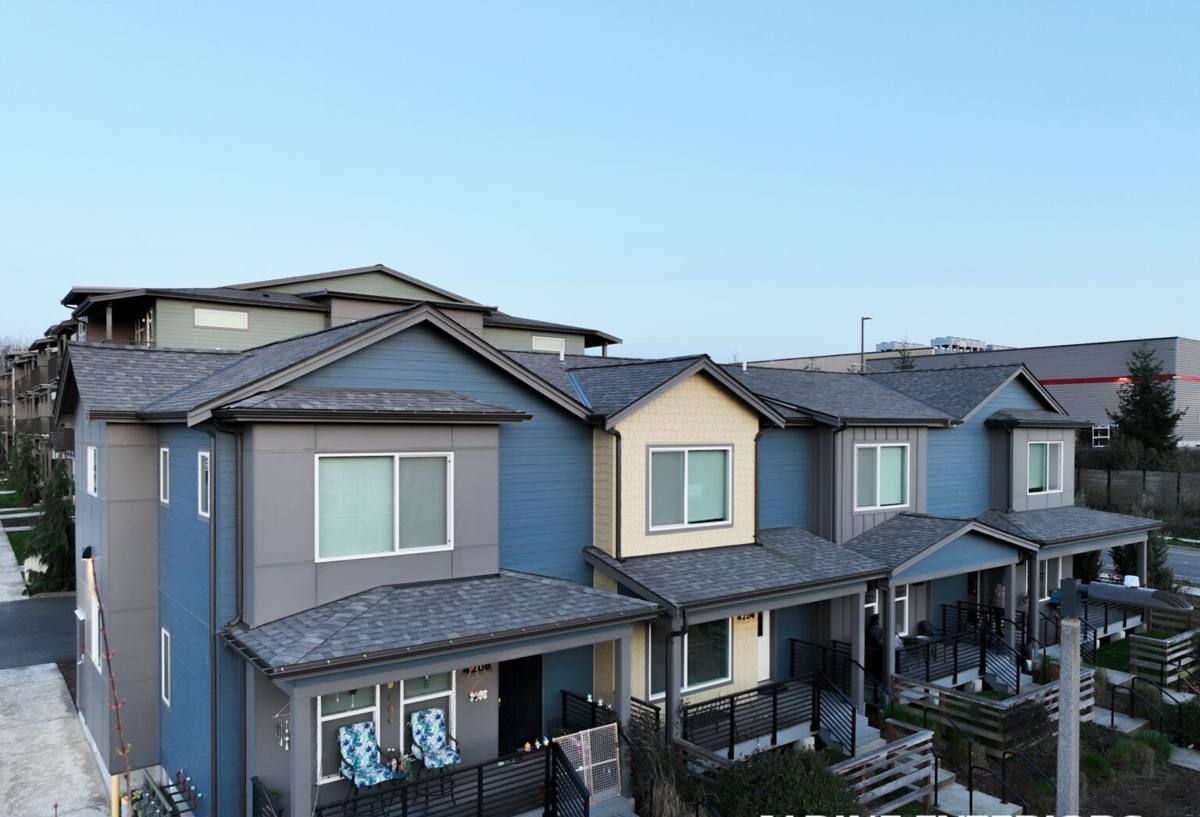
Why Bellingham's Climate Is Hard on Vertical Siding
Salt Air and Corrosion
Homes closer to Birch Bay and the Bellingham shoreline pick up airborne salt that accelerates corrosion on fasteners, flashing, and any exposed metal trim. Board and batten siding has more vertical seams and batten-to-panel joints than a standard lap siding wall, which means more fastener penetrations and more places where the wrong hardware becomes a weak point over time. Stainless or hot-dip galvanized fasteners rated for coastal exposure matter more here than in most parts of the state.
Driving Rain
Storms moving in off the water tend to drive rain sideways rather than straight down, which pushes water into any gap a wall assembly leaves open. A board and batten pattern relies on the vertical battens to shed water down and away from the seams underneath — if the batten spacing, fastening, or flashing behind it is off, driving rain will find the one seam that wasn't sealed correctly. This is a much bigger factor in Bellingham than in a low-wind, low-rain climate.
Moss and Sustained Moisture
Whatcom County's moss season isn't just a roof problem. Moss and algae will colonize any siding surface that stays damp for extended periods, and board and batten's vertical battens create narrow shaded channels that hold moisture longer than a flat wall does if there's no airflow behind the cladding. Over a few seasons, that trapped moisture is what causes swelling, paint failure, or rot in wood-based products — long before the siding is old enough to have failed on its own merits.
What a Correct Board & Batten Assembly Actually Includes
The visible battens and panels are the part homeowners see, but the assembly behind them is what determines whether the siding survives a Bellingham winter. A correct installation includes:
- A weather-resistive barrier (housewrap) installed with proper shingle-lap sequencing so water sheds outward at every seam
- A rain screen gap — a drainage cavity between the wrap and the siding — so any moisture that does get past the cladding can drain and the wall can dry
- Correctly flashed window and door openings, with head flashing that directs water out and over the siding below, not behind it
- Batten spacing and fastening that follows the manufacturer's engineering, not just "even enough by eye"
- Corrosion-resistant fasteners sized and spaced for coastal wind and moisture exposure
- Factory-finished panels and trim so field-cut edges are the only places needing site-applied sealant or paint
Skip the rain screen gap or get the flashing sequence wrong, and the siding can look perfect for the first year or two while moisture is already building up behind it. That's the part of the job that doesn't show up in a driveway estimate but is the difference between siding that lasts twenty-plus years and siding that needs rework in five.
Why We Install James Hardie, Not Wood or Vinyl Board & Batten
Board and batten can be built out of several materials — primed wood, engineered wood, vinyl panel systems, or fiber cement. We install James Hardie fiber cement exclusively, and in a climate like Bellingham's the reasons are practical, not just brand preference.
Primed wood board and batten looks good on day one, but wood is the material most vulnerable to the exact conditions this area produces: sustained moisture, moss growth, and swelling at end grain and joints. Vinyl board and batten sheds water fine but expands and contracts significantly with temperature swings, which stresses seams and fasteners over time, and it can't take the crisp, deep shadow lines that make board and batten look right architecturally — vinyl battens tend to look thin and hollow up close.
James Hardie's fiber cement is dimensionally stable in wet climates, doesn't feed moss and mildew the way wood does, and comes with a factory-applied ColorPlus finish that's baked on rather than field-painted, which matters a lot when a house is going to see months of rain before it ever fully dries out between storms. It's also non-combustible, which is a genuine advantage regardless of coastal exposure. We install Hardie's vertical panel and batten systems specifically engineered for this kind of application, backed by a manufacturer warranty that holds up when the installation follows their published specifications — which is exactly why correct installation, not just correct material, is the point of this whole page.
Board & Batten vs. Other Common Sidings in This Climate
| Siding Type | Coastal/Moisture Performance | Maintenance Burden | Typical Lifespan Here |
|---|---|---|---|
| James Hardie Board & Batten (fiber cement) | Strong — stable, moisture and moss resistant with correct rain screen detailing | Low — occasional wash, no repainting for factory finish | 30+ years to warranty period, longer with upkeep |
| Primed Wood Board & Batten | Weak — prone to swelling, rot, and moss at joints and end grain | High — repainting, caulking, and rot repair on a recurring cycle | 10–15 years before major repair or replacement |
| Vinyl Board & Batten Panels | Fair — sheds water but seams stress with thermal movement | Low but limited — cannot be repainted, fades and becomes brittle over time | 15–20 years before visible fading/warping |
| Standard Lap Siding (any material) | Depends on material — fewer vertical seams than board and batten | Varies by material | Varies by material |
The table isn't meant to say board and batten is riskier than lap siding across the board — it's meant to show that the choice of material matters more for a vertical batten pattern than it does for other siding profiles, simply because there are more seams and more fastener penetrations per square foot of wall.
Our Process for a Bellingham Board & Batten Project
1. On-Site Assessment
We walk the exterior with you, looking specifically at exposure — which walls take the most driving rain and wind off the water, where existing moisture or moss staining shows up, and where old flashing or trim is already failing. This shapes where we pay extra attention during installation, not just how the final product will look.
2. Tear-Off and Substrate Check
Removing the old siding is also when we find out what's actually happening behind the wall — sheathing damage, old inadequate flashing, or moisture trapped from a previous installation without a rain screen. We address what we find rather than covering it back up.
3. Weather Barrier and Rain Screen Installation
Housewrap goes on with correct lap sequencing, followed by furring strips or a manufactured rain screen product that creates the drainage gap behind the Hardie panels. This step is invisible in the finished product and is exactly the step that gets skipped by installers trying to save time.
4. Flashing at Every Penetration
Windows, doors, hose bibs, vents, and any other wall penetration get flashed before the siding goes on, directing water outward at every level.
5. Panel and Batten Installation
Hardie panels and battens are installed to manufacturer spacing and fastening specs, with corrosion-resistant fasteners appropriate for this coastal air. Factory-finished edges are used wherever possible to minimize field-applied sealant.
6. Final Walkthrough
We inspect the finished wall with you, checking seams, trim, and caulking lines, and go over basic maintenance so the siding performs the way it's designed to for its full service life.
Maintenance Checklist for Board & Batten in This Climate
Even correctly installed fiber cement siding benefits from a small amount of seasonal attention in a climate like Bellingham's:
- Rinse the exterior once or twice a year to clear salt residue and early moss growth before it takes hold
- Check caulking at trim and window edges annually for cracking or separation
- Keep gutters clear so overflow doesn't run down wall sections repeatedly
- Trim back vegetation and landscaping that shades siding and keeps it from drying between storms
- Have any visible staining or discoloration checked promptly — it's often easier to address early than after a full season of moisture exposure
Why Hiring a Crew That Already Works Bellingham Matters
Board and batten installation isn't a niche skill nationally, but installing it correctly for Whatcom County's specific mix of salt exposure, wind-driven rain, and moss pressure is a narrower skill set. A crew that works Bellingham and the greater Birch Bay area regularly already knows which wall orientations on local homes take the worst of the weather, has already dealt with the moisture patterns specific to this stretch of coastline, and isn't learning coastal detailing for the first time on your house. That local pattern recognition — knowing where to over-build the flashing detail and where standard spacing is fine — is what separates a board and batten job that looks good for one season from one that looks good for decades.
We also stand behind James Hardie's manufacturer warranty, which depends on installation matching their published specifications. A crew unfamiliar with coastal Whatcom County conditions can install technically-compliant siding that still underperforms here simply because they didn't account for the exposure this area actually sees.
What This Means for Your Project
If you're considering board and batten for a home in Bellingham or elsewhere near Birch Bay, the questions worth asking any contractor are straightforward: what's behind the panels, what fasteners are being used, and how is water being directed away from every seam and penetration. Anyone who can't answer those clearly hasn't planned for this climate specifically, regardless of how good their sample board looks.
If you'd like a straightforward look at whether board and batten is the right fit for your home, and what correct installation would involve on your specific walls and exposure, we're happy to walk the property with you. There's no pressure and no cost for an estimate — just a clear look at what your home actually needs.