 Birch Bay Siding
 Siding Built for California Creek's Weather, Not Just Its Looks
California Creek sits close enough to the water that homes here deal with a different set of pressures than siding fifteen miles inland. Salt-laden air off the bay, wind-driven rain that gets pushed sideways into wall assemblies, and a wet season that stretches long enough to grow moss on anything that stays damp too long — all of it adds up over the life of a house. Siding that looks fine going up can fail years later for reasons that had nothing to do with the installer's craftsmanship and everything to do with the material itself not being suited to this kind of exposure.
We install James Hardie fiber cement siding exclusively in Birch Bay and the surrounding Whatcom County communities, including California Creek. That's not a marketing angle — it's a decision we made after watching what other siding materials do in this specific climate over ten, fifteen, twenty years. This page walks through what a California Creek home actually needs from its siding, what a correct Hardie install looks like, and how we run the job from first call to final walkthrough.
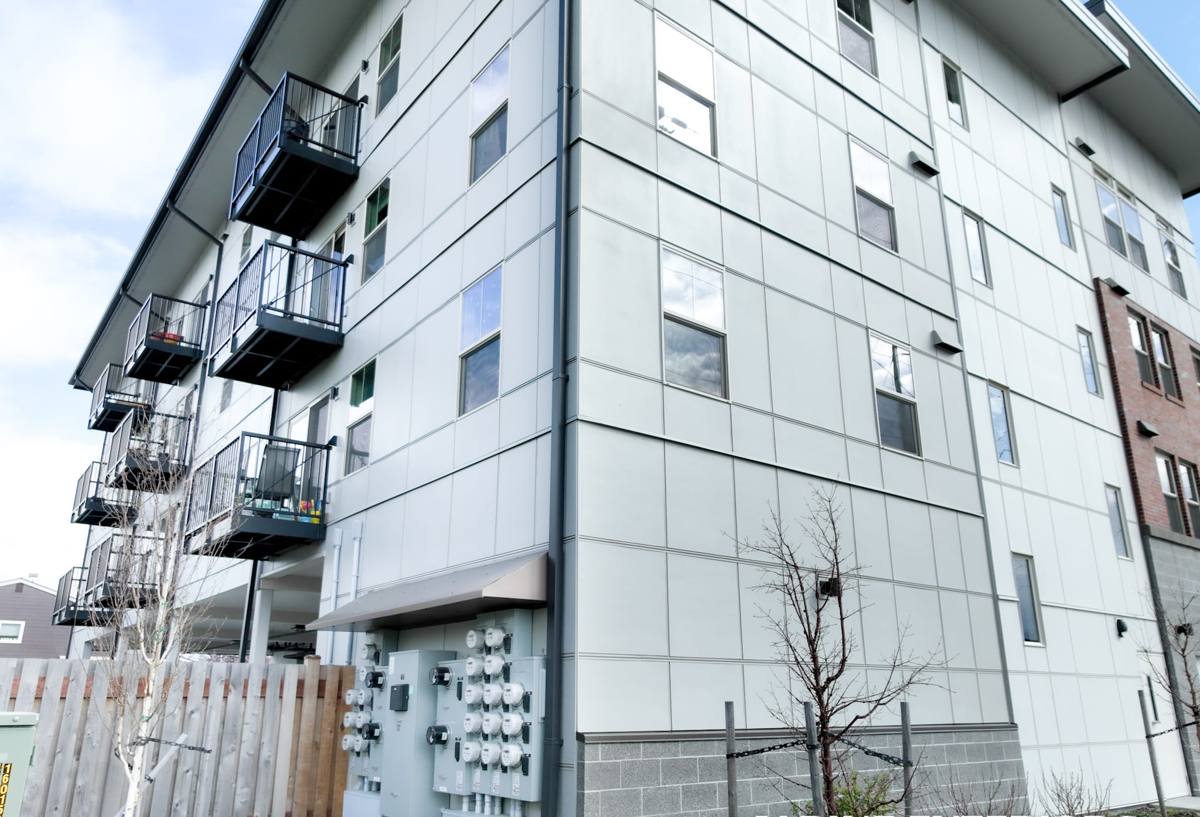
What Whatcom County's Coastal Climate Does to Siding Over Time
It helps to be specific about the mechanisms at work, because "coastal weather is tough on houses" is true but not useful on its own.
Salt Air and Moisture-Laden Wind
Homes near the bay take in air that carries fine salt particulate, especially during winter storms. That salt settles on exterior surfaces and, combined with near-constant moisture, accelerates corrosion of fasteners, trim, and any exposed metal. It also degrades certain coatings and finishes faster than the same product would wear inland.
Driving Rain
Wind off the water doesn't just drop rain straight down — it pushes it horizontally into wall surfaces, seams, and penetrations. That means water finds its way into gaps that would stay dry in a calmer climate. Flashing details, caulk joints, and butt seams matter more here than they would in a low-wind region.
Long Moss and Mildew Season
Northwest Washington's wet stretch runs long, and anything that holds moisture against a wall — a porous surface, a poorly ventilated cavity, a material that swells when wet — becomes a host for moss, algae, and mildew growth. Once organic growth establishes itself on siding, it holds even more moisture against the wall, and the cycle compounds.
None of this is unique to California Creek, but proximity to the water intensifies it compared to homes further inland in Whatcom County. Siding choice and installation quality matter more here, not less.
Why We Install Only James Hardie Fiber Cement
We get asked regularly why we don't offer vinyl, LP SmartSide, or cedar as options. The honest answer is that we looked at how each of those materials performs under sustained coastal exposure and decided we didn't want our name on installs that we expected to need real trouble within a decade or two.
- Non-combustible core: Hardie's fiber cement composition doesn't burn, which matters in a region where wildfire smoke and ember exposure are a growing seasonal concern.
- Dimensionally stable: Fiber cement doesn't swell, warp, or rot the way wood-based products can when they take on repeated moisture cycles.
- Factory-applied ColorPlus finish: The finish is baked on under controlled conditions rather than field-painted, which gives better adhesion and color consistency than most site-applied coatings — a real advantage against salt air degradation.
- Climate-engineered product lines: Hardie makes region-specific formulations (their HZ5 line, for example) engineered for freeze-thaw and moisture exposure profiles like ours.
- Backed by a strong transferable warranty: Hardie's warranty coverage is a known quantity in the industry, and it transfers to a new owner if the home sells — a real factor in resale.
We're not going to tell you every other product is junk — vinyl and engineered wood siding have legitimate uses and reasonable installations exist. But for what California Creek homes face — salt, wind-driven rain, and a long wet season — we decided fiber cement was the only material we were comfortable standing behind long-term.
What a Correct Hardie Install Actually Involves
The material is only half the equation. A huge share of siding failures we get called to look at — regardless of brand — trace back to installation shortcuts, not the product itself. For a coastal property like the ones near California Creek, these details matter more than average.
Water Management Behind the Siding
Correct installation means a weather-resistant barrier, properly lapped and sealed, with rainscreen or drainage detailing where the assembly calls for it. Siding is the last line of defense, not the only one — if water gets behind it, the wall assembly underneath needs a way to drain and dry.
Flashing at Every Penetration
Windows, doors, hose bibs, vents, light fixtures — every penetration through the siding plane is a potential entry point for wind-driven rain. Each one needs proper flashing and sealant detail, not just a bead of caulk after the fact.
Fastening to Hardie's Spec
Hardie publishes specific fastener patterns, types, and clearances for coastal and standard exposures. Using the wrong fastener spacing, the wrong nail type, or fastening through manufacturer-specified clearance zones voids warranty coverage and creates long-term problems — cracking, popped fasteners, water intrusion at fastener heads.
Proper Clearances
Hardie siding needs minimum clearance from grade, roofing, decks, and other horizontal surfaces so water doesn't wick up into the board ends. This is one of the most commonly skipped details on cut-rate installs, and it's one of the most consequential near the water.
Caulking and Joint Treatment
Butt joints, trim intersections, and corner details all need the correct sealant approach — the wrong caulk, or caulk applied to a joint that should be left to drain, causes trapped moisture instead of preventing it.
| Detail | Why It Matters More Near the Bay |
|---|---|
| Rainscreen / drainage gap | Gives moisture that gets behind siding a path to drain and dry instead of sitting against sheathing |
| Fastener type and spacing | Salt air accelerates corrosion of incorrect fasteners; spec fasteners resist it |
| Flashing at penetrations | Driving rain finds gaps a calmer climate would never test |
| Grade and surface clearances | Prevents wicking during the long wet season, discourages moss and rot at board ends |
| ColorPlus vs. field paint | Factory finish holds up better against salt exposure over decades |
Our Process for California Creek Homes
- On-site assessment: We walk the exterior, check the current siding and sheathing condition, and look specifically for signs of past moisture intrusion — a common issue on older homes in this area.
- Detailed estimate: You get a written scope covering material, prep work, flashing and water management upgrades if needed, and timeline — no vague allowances.
- Prep and water management setup: Before a single piece of Hardie goes up, we address the weather barrier, flashing, and drainage detailing the wall assembly needs.
- Installation to Hardie spec: Correct fasteners, correct clearances, correct joint treatment — done to manufacturer specification so your warranty coverage is intact, not assumed.
- Final walkthrough: We go over the finished work with you directly and answer questions before we consider the job done.
Why Local Experience in This Specific Area Matters
A crew that's worked California Creek and the rest of Birch Bay already knows which exposures on a given lot see the worst wind-driven rain, how close homes typically sit to grade, and where past installations in this area tend to have cut corners. That's not something you get from a crew that installs siding across a much broader, less consistent climate zone. We're not guessing at how coastal Whatcom County weather behaves on a wall assembly — we've seen it, and we build for it from the start.
Signs Your Current Siding Is Already Losing the Fight
- Visible moss or algae growth that returns shortly after cleaning
- Soft spots, bubbling, or warping, especially near the bottom courses or trim
- Paint that's peeling or chalking faster than expected
- Visible fastener corrosion or staining running down from nail heads
- Gaps opening up at butt joints or trim intersections
- A musty smell near exterior walls, which can indicate moisture behind the siding
Any one of these on its own isn't necessarily an emergency, but on a home this close to the water, they're worth having looked at before the underlying sheathing is affected.
Cost Factors Specific to This Kind of Job
Every home is different, so we won't quote numbers without seeing the property, but the factors that actually move the price on a California Creek job tend to be the same handful every time.
| Factor | Why It Affects Cost |
|---|---|
| Condition of existing sheathing | Moisture-damaged sheathing found during tear-off needs repair before new siding goes on |
| Amount of trim and detail work | Complex rooflines, dormers, and trim add labor beyond flat wall area |
| Water management upgrades needed | Adding proper drainage or flashing where none existed adds scope but reduces future risk |
| Board profile and finish selection | Different Hardie plank widths, textures, and colors carry different material costs |
| Access and site conditions | Waterfront lots and tight setbacks can affect staging and labor time |
If you'd like a straight, no-pressure look at what your home actually needs, we're glad to come take a look. There's a free estimate request form below — use it and we'll get back to you with an honest assessment, not a sales pitch.