 Birch Bay Siding
 Siding Replacement Built for California Creek's Weather
California Creek sits close enough to Birch Bay and the water that homes here take a different kind of beating than a house ten miles inland in Whatcom County. Salt-laden air rolls in off the bay, wind-driven rain finds every gap in a wall system, and the shaded, damp stretches along the creek corridor stay wet longer after storms pass. If your siding is original to the house, or if you've already patched, caulked, and repainted more times than you can count, it's worth understanding what's actually happening behind those boards before you spend money on another round of patches.
This page is about one job, done right, in one area: full siding replacement for California Creek homes. Not a general overview of siding options — a straight answer on what this specific climate does to a house, what a correct replacement involves, and why the crew you hire matters as much as the material.
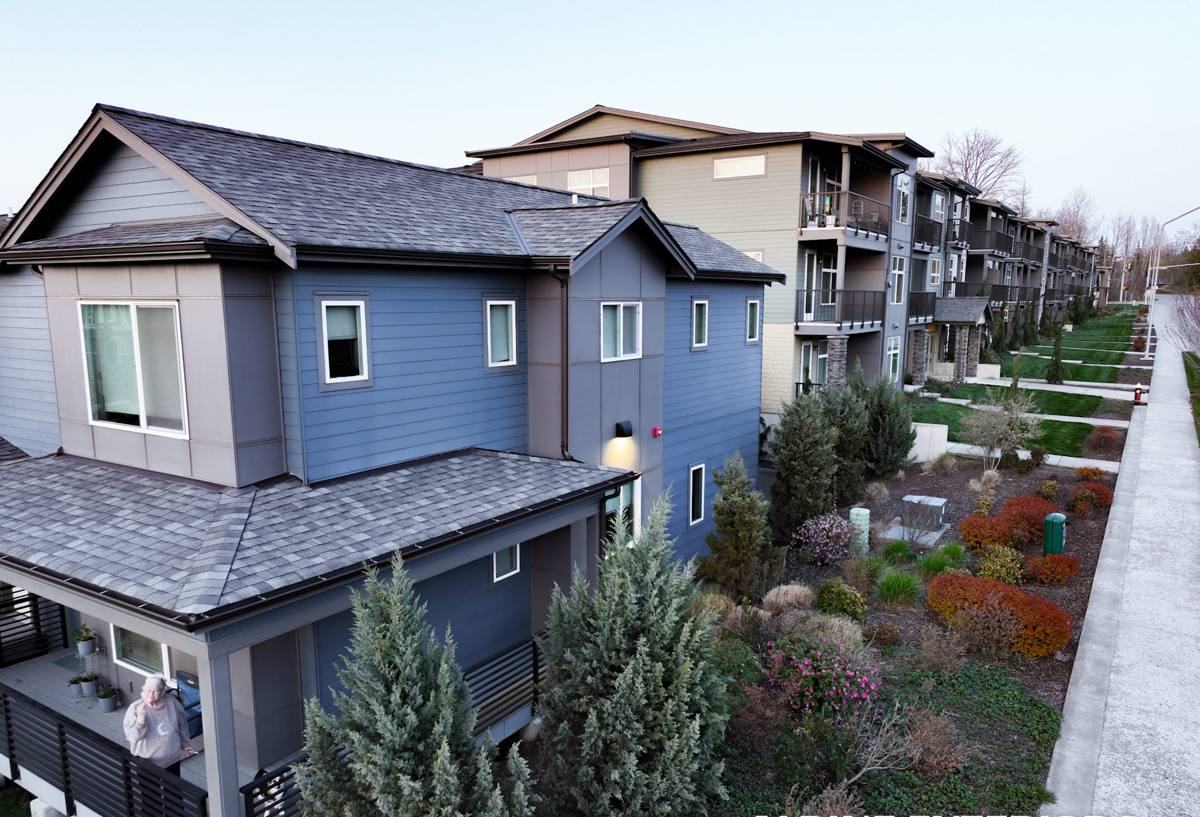
What Salt Air, Rain, and Moss Actually Do to Siding
Salt air
Airborne salt is corrosive and hygroscopic — it draws moisture to itself. On painted wood or engineered wood siding, that means the surface film absorbs and holds moisture longer than it would a few miles inland, which accelerates paint failure, edge swelling, and delamination at seams. Fasteners and trim hardware corrode faster too, which is why you'll often see rust streaking below nail heads on older siding near the water.
Driving rain
Birch Bay's storms don't just fall straight down — wind pushes rain sideways into wall assemblies, especially on west- and southwest-facing elevations that catch the weather off the water. Any siding system that depends on face-sealing (caulk and paint alone) rather than proper water-shedding laps and flashing will eventually let water track behind the cladding. Once that happens, the sheathing and framing behind the siding start absorbing moisture that has nowhere to go.
A long moss season
Shaded, damp conditions along the creek and under mature tree cover mean moss and algae have a long window to establish themselves — often close to year-round rather than just a wet winter stretch. Moss holds moisture against the siding surface, and on porous or absorbent materials that moisture retention is exactly what feeds rot underneath. It's also just a maintenance headache: pressure washing the wrong siding material too aggressively can strip finish and force water into seams.
None of this means a house here is doomed — it means the siding system has to be chosen and installed with these three factors specifically in mind, not treated as an afterthought.
Signs a California Creek Home Needs Replacement, Not Another Repair
- Soft or spongy spots when you press on the siding, especially near the bottom courses or under windows
- Paint that fails again within a year or two of repainting, even with a quality product
- Visible swelling, delamination, or bubbling at panel edges and seams
- Persistent moss or algae growth that returns within weeks of cleaning
- Rust streaking below nail heads or trim fasteners
- Musty smell or visible staining on interior walls that share an exterior with a suspect siding area
- Siding that's original to a house built before modern moisture-barrier practices were standard
If you're seeing two or more of these, patching individual boards is usually a delay tactic, not a fix — the underlying moisture problem is still there and will keep resurfacing somewhere else on the wall.
What a Correct Replacement Involves
Full siding replacement is not just pulling old boards off and nailing up new ones. In a climate like this, the work that happens between the studs and the finished siding matters as much as the siding itself.
Tear-off and inspection
Once old siding is off, we inspect sheathing and framing for rot, soft spots, and prior water damage. Anything compromised gets replaced before new siding goes on — covering damaged sheathing with new siding just hides a problem that will keep spreading.
Weather-resistive barrier
A correctly lapped, sealed weather-resistive barrier goes over the sheathing, with proper flashing at every penetration — windows, doors, hose bibs, light fixtures, vents. In a driving-rain environment, flashing details at these transitions are where most future leaks originate if they're rushed or skipped.
Rainscreen or drainage gap where appropriate
Depending on the wall assembly and exposure, a drainage gap behind the siding lets any incidental moisture that gets past the cladding drain and dry out instead of sitting against the sheathing. This matters more on shaded, damp elevations than on a south-facing wall that dries out quickly between rains.
Fastening and installation to manufacturer spec
Fiber cement siding has specific nailing patterns, gap and clearance requirements, and caulking rules that are engineered around how the product moves with moisture and temperature. Installed off-spec, even the best material will underperform. This is a large part of why we standardized on one product line we install correctly every time, rather than juggling installation methods for several different materials.
Why We Install Only James Hardie Fiber Cement
We don't install LP SmartSide, vinyl, Cemplank, Allura, primed spruce, or cedar. That's a deliberate standard, not a lack of options. For a property exposed to salt air, driving rain, and extended moss season, the trade-offs of those materials — engineered wood's sensitivity to sustained moisture at cut edges, vinyl's tendency to warp and gap in wind-driven rain, softwood's ongoing maintenance demand in a damp environment — are exactly the failure modes we see called out for repair over and over in this area.
James Hardie fiber cement is non-combustible, doesn't absorb and swell the way wood-based products can, and Hardie's HZ5 product line is engineered for the Pacific Northwest's wet, humid climate specifically. The factory-applied ColorPlus finish is baked on under controlled conditions, which holds up better against salt air and UV exposure than field-applied paint, and it carries a real transferable warranty backed by the manufacturer — not just our workmanship warranty.
That doesn't mean Hardie is maintenance-free. It still needs to be installed with correct clearances, caulked at the right joints, and kept clear of standing moss and debris. But it gives a California Creek home a siding system built to handle the specific conditions of this stretch of coast, rather than one that needs constant intervention to survive it.
Comparing Common Siding Materials in This Climate
| Material | Salt air performance | Driving rain behavior | Moss/algae resistance | Typical maintenance |
|---|---|---|---|---|
| James Hardie fiber cement | Strong — non-combustible, factory finish resists salt/UV wear | Engineered laps and flashing detail shed water correctly when installed to spec | Good — dense material, doesn't feed rot the way absorbent substrates can | Periodic gentle cleaning, occasional caulk check |
| Engineered wood (e.g. LP SmartSide) | Moderate — coating protects surface but cut edges are vulnerable | Can swell at exposed edges/seams if water intrudes | Moderate — organic wood fiber core is more susceptible if moisture gets in | Edge sealing, prompt repair of any breach |
| Vinyl siding | Moderate — doesn't corrode but can become brittle over time | Relies on lap fit; wind-driven rain can push behind panels at gaps | Moderate — smooth surface, but moss collects in J-channels and laps | Low, but limited repair options if warped or cracked |
| Cedar / primed softwood | Weak without diligent upkeep — absorbs salt-laden moisture | Prone to cupping and checking under repeated wetting | Weak — organic material is a moss/algae food source | Frequent refinishing and inspection |
This table reflects general material behavior, not a claim about any specific product failing on any specific job — it's the reasoning behind our standard, laid out plainly.
Our Process for a California Creek Home
- On-site assessment. We look at exposure direction, tree cover, drainage around the foundation, and the condition of the existing siding and trim.
- Honest scope. We tell you what's failing, what's still sound, and whether full replacement or a targeted section makes sense — we don't upsell a full tear-off if it isn't warranted.
- Written estimate. Material, labor, trim work, and any sheathing repair contingencies spelled out before work starts.
- Tear-off and structural check. Old siding comes off, sheathing and framing get inspected, and any damage is repaired before moving forward.
- Barrier and flashing installation. Weather-resistive barrier, flashing, and drainage detailing installed to manage this area's wind and rain patterns.
- Hardie installation to spec. Correct fastening, clearances, and joint treatment per manufacturer requirements.
- Final walkthrough. We review the finished work with you and go over any care recommendations specific to your home's exposure.
Cost Factors Specific to This Area
Every home is different, but a few factors tend to move the number more in California Creek than they would on a more sheltered inland property:
- Hidden moisture damage: homes closer to the water or under heavy tree cover more often have sheathing damage discovered at tear-off, which adds scope once we can actually see behind the old siding
- Access and site conditions: creek-side lots, slopes, or limited driveway access can affect setup and material staging
- Trim and detail work: homes with more window and door penetrations need more flashing and trim labor, which is proportionally more important in a driving-rain environment
- Moss and growth removal: heavier existing moss coverage adds prep time before tear-off can begin
We don't quote off a square-footage rule of thumb alone — the honest number comes from seeing the actual house.
Why the Local Crew Matters
A siding crew that already works Birch Bay and the surrounding Whatcom County coastline has already seen how salt air, wind direction, and moss pressure play out on real houses in this specific area — not a generic installation manual. That translates into practical judgment calls: where to add extra flashing attention, which elevations need more drainage consideration, and what a normal amount of moss regrowth looks like versus a sign something's wrong underneath. It also means we're a known, findable local business if a warranty question or follow-up comes up years down the road — not a crew that worked the area once and moved on.
If your California Creek home's siding is showing its age, or you just want a straight answer on whether it's a repair or a replacement, we're happy to take a look. Reach out for a free, no-pressure estimate using the form below.