 Birch Bay Siding
 Why Board & Batten Fits Cherry Point Homes
Board and batten has become one of the most requested looks along the Birch Bay shoreline and out toward Cherry Point, and it's not just a style trend. The vertical lines read clean against the marine backdrop, they pair well with the mix of cottage-style and newer builds in this part of Whatcom County, and — when the material and installation are right — the pattern actually sheds water more predictably than some horizontal profiles because every batten creates a secondary drainage break. That matters here. Cherry Point sits exposed to wind off the Strait of Georgia, and homes in this stretch take a steady combination of salt-laden air, sideways rain, and long stretches of damp, low-sun weather that keeps surfaces wet far longer than homeowners moving from drier climates expect.
We install board and batten in one material only: James Hardie fiber cement, engineered for this exact climate zone. We'll explain why below, but the short version is that a siding system for Cherry Point has to handle constant moisture cycling and salt exposure without swelling, cupping, or feeding moss — and that's a narrower list of products than most homeowners realize.
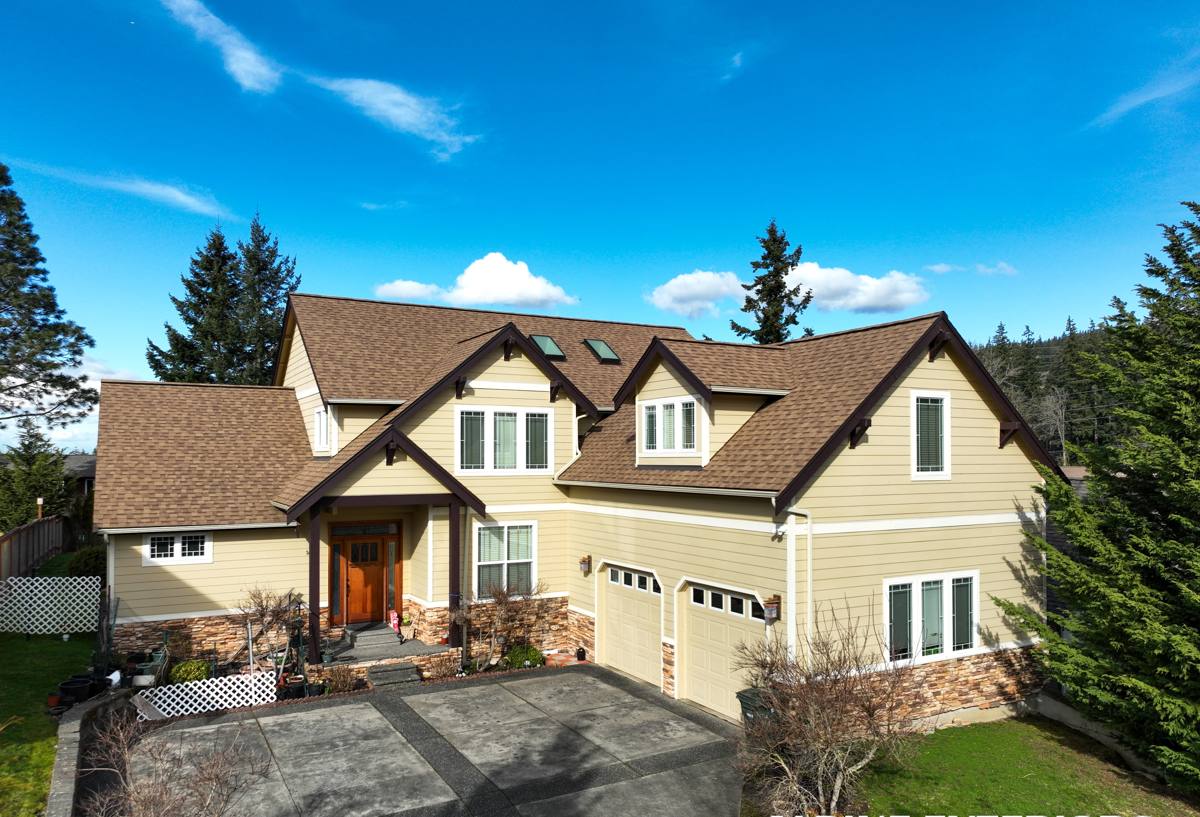
What the Cherry Point Climate Actually Does to Siding
Salt Air
Properties closer to the water pick up airborne salt that settles on exterior surfaces and accelerates corrosion on fasteners, trim, and any metal flashing that isn't rated for coastal exposure. Over time, salt exposure also degrades paint films faster than inland conditions, which is why factory-cured, baked-on finishes hold up so much better here than field-applied paint.
Driving Rain
Wind-driven rain off the Strait doesn't fall straight down — it hits siding at an angle and gets pushed into every seam, joint, and fastener penetration that isn't detailed correctly. Board and batten has more vertical seams than lap siding, which means the batten spacing, caulking, and flashing details carry more of the waterproofing load. Done wrong, this is the siding style most likely to leak at the seams. Done right, it's genuinely durable.
Moss Season
Whatcom County's long, wet stretch from fall through spring keeps north- and shade-facing walls damp for weeks at a time, which is exactly the environment moss and algae need to take hold. Porous or absorbent siding materials give moss something to grip and feed on; dense, factory-finished fiber cement gives it far less to work with, though no siding is fully moss-proof without occasional cleaning.
Why We Only Install James Hardie for This Application
Board and batten is an unforgiving style to get wrong because of how many vertical joints it introduces. That's why the material choice matters more here than on almost any other siding profile.
- Vinyl board and batten can work loose or warp under temperature swings and doesn't hold a factory finish the way fiber cement does — salt air accelerates fading on lower-grade vinyl.
- Primed spruce or cedar board and batten is a real historical look, but raw wood battens absorb moisture at every seam in a driving-rain climate, which is exactly where board and batten is most vulnerable. Maintenance intervals shrink fast near the water.
- LP SmartSide is an engineered wood product with a treated strand core — it performs reasonably in moderate climates, but wood-based cores still carry more moisture-management risk at cut edges and seams than fiber cement, and board and batten multiplies the number of exposed edges.
- Cemplank and Allura are fiber cement competitors to Hardie, and fiber cement as a category is the right call for this climate. Where they differ is in factory finish warranty terms, HZ climate-specific engineering, and long-run manufacturer support — the details that matter most 10 and 20 years in, not on install day.
James Hardie's HZ10 product line is engineered specifically for the wetter, cooler climate zones of the Pacific Northwest, and its ColorPlus finish is baked on at the factory in multiple coats rather than field-sprayed, which holds color and resists the salt-and-moisture fade cycle far longer than site-applied paint. Fiber cement itself is non-combustible and dimensionally stable — it doesn't swell, cup, or rot the way wood-based products can when a seal fails. For a siding style that depends on every vertical joint staying tight, that stability is the whole point.
What a Correct Board & Batten Installation Involves
The visual appeal of board and batten is simple — vertical boards with battens covering the seams — but the water-management system behind that look is where jobs succeed or fail. A correct install includes:
- Proper weather-resistive barrier installed continuously behind the siding, lapped correctly to shed water downward.
- Rainscreen or furring strategy that gives the wall assembly a drainage and drying gap — critical in a climate where walls stay damp for extended periods.
- Correct batten spacing and fastening per Hardie's engineering specs, not shortcuts that leave panels under- or over-fastened.
- Flashing at every horizontal transition — window heads, doors, roof-to-wall intersections — since board and batten's vertical run means water has fewer places to divert except down.
- Factory-cut and factory-primed edges wherever possible, with field cuts sealed per manufacturer specification.
- Correct fastener type and spacing — stainless or coated fasteners rated for coastal exposure, not standard interior-grade hardware that corrodes and stains the face of the siding.
Board & Batten vs. Other Hardie Profiles for This Site
| Profile | Look | Coastal Performance Notes |
|---|---|---|
| Board & Batten (vertical panel + batten) | Clean vertical lines, farmhouse/modern coastal | More seams to detail correctly; excellent water shedding when installed to spec |
| HardiePlank Lap Siding | Traditional horizontal | Fewer vertical joints, slightly more forgiving in driving rain; less distinct look |
| HardiePanel Vertical (no battens) | Modern flat vertical | Fewer seams than board & batten but less shadow-line depth |
| Mixed (board & batten accents + lap field) | Gable accents, dormers | Popular locally for combining curb appeal with lower-maintenance field siding |
Many Cherry Point and Birch Bay homeowners land on a mixed approach — board and batten on gables, entry features, or accent walls, with lap siding on the primary field. It's a practical way to get the look without maximizing seam count across the whole house, and we'll walk through that trade-off honestly during your estimate if it fits your home.
Our Process for This Job
We work this area regularly, which matters for a style this detail-sensitive. Our process:
- On-site assessment of your home's exposure — which walls take the worst wind-driven rain, where moss has historically formed, and where existing trim or flashing needs attention before new siding goes up.
- A written scope specifying HZ10 board and batten product, batten spacing, fastener type, and flashing details — no vague "siding replacement" line items.
- Removal of old siding with an inspection of the sheathing underneath for hidden moisture damage before anything new goes on — a step that's easy to skip and expensive to regret later.
- Installation to Hardie's published fastening and clearance specifications, including proper ground clearance and roof-line flashing.
- A final walkthrough where we show you the completed detailing, not just the finished color.
Maintenance Expectations Near the Water
Even with the right material, coastal homes need a little more upkeep attention than inland ones. Realistic expectations for Cherry Point:
- Rinse siding periodically to clear accumulated salt residue, especially on walls facing prevailing wind.
- Keep gutters and downspouts clear so water doesn't sheet down siding faces during heavy rain events.
- Trim back vegetation that shades walls and slows drying, which reduces moss pressure.
- Inspect caulking at trim and penetrations every year or two — caulking is a maintenance item on any siding system and ages faster in salt air.
- Address any moss growth early with a gentle wash rather than pressure-washing directly into seams.
What Board & Batten Siding Typically Involves Cost-Wise
Board and batten generally costs somewhat more than standard lap siding per square foot, mainly due to the additional batten material and labor time for correct seam detailing. Exact pricing depends on your home's size, existing wall condition, trim complexity, and how much of the exterior you're covering versus accenting. We provide a written, itemized estimate after seeing the specific home — not a phone-quote number that changes once we're on site.
Get an Honest Estimate for Your Cherry Point Home
If you're weighing board and batten for a home in Cherry Point or elsewhere around Birch Bay, we're happy to walk the exterior with you, point out what your specific exposure requires, and give you a straightforward, no-pressure estimate using James Hardie's climate-engineered HZ10 product line. Fill out the form below and we'll set up a time to take a look.