 Birch Bay Siding
 Building a Deck That Can Actually Handle Cherry Point
Cherry Point sits close enough to the water that every deck built here has to answer to conditions a lot of inland builders never think about. Salt-laden air off the Strait of Georgia works into fasteners and connectors year-round. Driving rain off Birch Bay pushes water sideways into places a "waterproof" deck was never designed to shed it. And the long Whatcom County moss season turns any shaded, damp deck surface into a slick, green problem within a season or two if it wasn't built with drainage and airflow in mind. A deck built to a generic national spec will show these problems early. A deck built for this specific stretch of coastline won't.
This page covers what actually matters when building a deck for a Cherry Point property: material choices, fastener selection, framing details, drainage, and the maintenance reality of owning a deck in this climate.
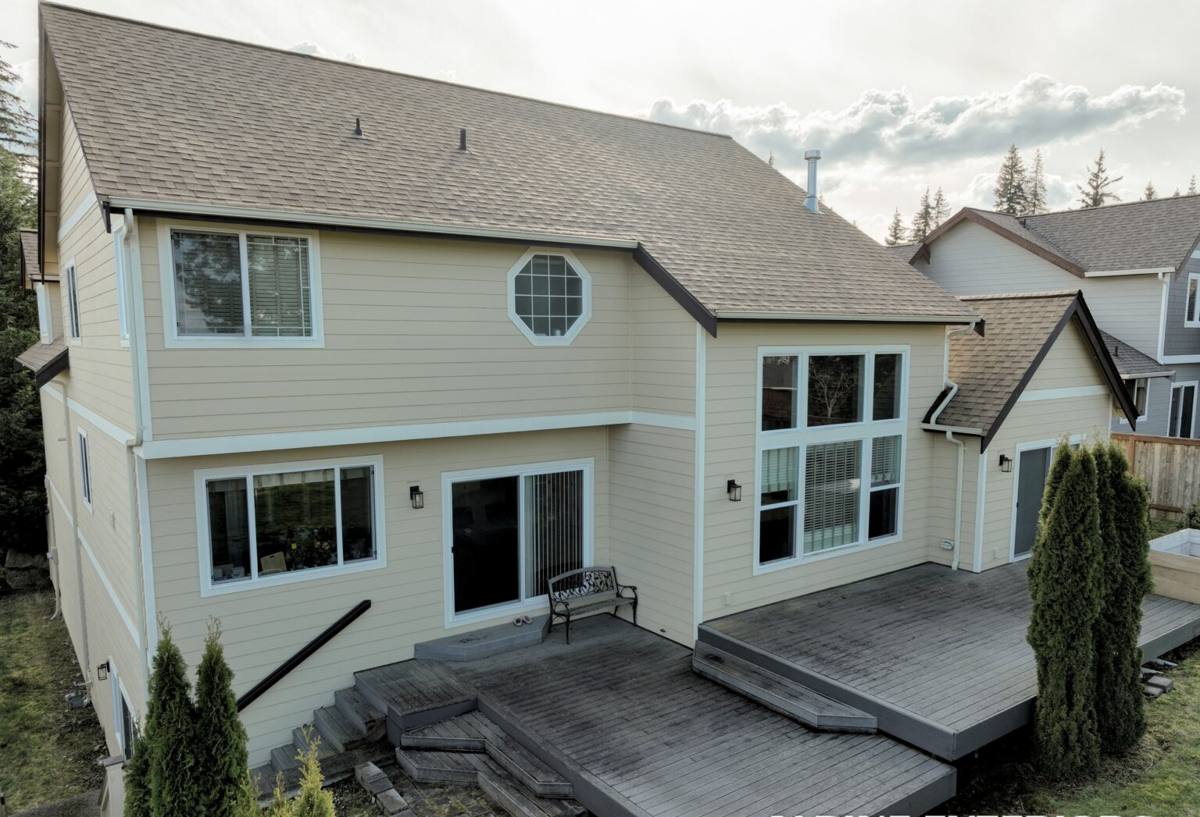
What This Climate Actually Does to a Deck
Salt Air and Metal Fatigue
Airborne salt doesn't need direct ocean spray to cause corrosion — it travels on wind and settles on any exposed metal. Standard coated deck screws, joist hangers, and bolts that hold up fine 30 miles inland will start rusting at the head and losing grip strength within a few years near Cherry Point. Once a fastener starts to corrode, it weakens the connection long before it's visually obvious, which is exactly why fastener spec matters more here than almost anywhere else in the build.
Driving Rain and Water Intrusion
Rain here rarely falls straight down. Wind off the water pushes it sideways, which means it gets up under railings, behind ledger boards, and into end-grain cuts that a calmer climate would never test. A deck that isn't detailed for wind-driven rain will leak at the house connection first — usually the single most expensive spot to repair once rot sets in behind the siding.
Moss, Algae, and Shade
Long wet winters and mild, damp shoulder seasons give moss and algae months to establish on any deck surface that stays damp. Boards laid tight, decks built low to grade, or areas that don't get sun and air movement will green up regardless of what material they're made from. The fix isn't a different board — it's spacing, slope, and airflow built in from the start.
Choosing the Right Decking Material
There's no single "correct" material for every Cherry Point property — it depends on budget, how much upkeep you want to do, and how the deck is oriented. Here's how the common options actually compare in this climate, not in a showroom.
| Material | How It Handles Salt Air & Rain | Moss Resistance | Maintenance |
|---|---|---|---|
| Cedar | Naturally rot-resistant heartwood; needs sealed end cuts and fasteners rated for treated/coastal use | Needs periodic cleaning; grain can hold moisture if not sealed | Refinish/reseal every 2-3 years |
| Pressure-Treated Pine | Good with proper coastal-rated fasteners; budget-friendly framing standard | Prone to moss if not cleaned; texture holds moisture | Seal or stain regularly; inspect fasteners |
| Composite Decking | Won't rot or absorb salt spray; color-stable in marine air | Better resistance but still needs airflow underneath to avoid surface algae | Occasional wash; no sealing required |
| PVC Decking | Fully synthetic; unaffected by salt or moisture absorption | Best resistance when combined with proper spacing | Lowest ongoing maintenance |
Composite and PVC decking have become popular for Cherry Point properties specifically because they remove the moisture-absorption variable, but they still need to be installed with the right gapping and substructure ventilation — a composite deck laid without airflow underneath will still grow moss on the surface. Cedar remains a solid choice for homeowners who want the look and are willing to keep up a sealing schedule; the wood itself isn't the weak point, neglected maintenance is.
What a Correctly Built Deck Involves Here
Fasteners and Hardware
Every screw, bolt, and joist hanger should be rated for coastal or marine-grade exposure — typically stainless steel or a heavy-duty coated fastener designed for ground contact and salt exposure, not the standard galvanized hardware sold as a general-purpose default. This is the single most overlooked upgrade on budget deck builds, and it's the one that determines whether the structure is still sound in 15 years or starting to fail in 5.
Ledger Attachment and Flashing
Where the deck ties into the house is the highest-risk point for water intrusion in a wind-driven rain climate. Proper flashing — installed so water sheds out and over, never trapped behind the ledger board — is non-negotiable. This is also the detail most likely to be shortcut on a fast, low-bid job, because it's hidden once the deck boards go down.
Framing and Footings
Footings need to be set below frost depth and sized for the soil conditions on the specific lot — glacial till and clay-heavy soils common in this part of Whatcom County drain differently than sandy soil, which affects footing design. Framing should also account for wind exposure on open, water-facing lots, with appropriate blocking and bracing rather than a bare minimum joist layout.
Board Spacing and Drainage Slope
A deck surface should have a slight slope away from the house and consistent board gapping so water and debris don't sit and collect. Tight-fit boards look clean on install day but are exactly what creates the standing moisture that feeds moss growth through a long wet winter.
Our Deck Building Process
- Site assessment — we look at sun/shade exposure, prevailing wind and rain direction, soil, and how the deck ties into the existing structure.
- Design and material selection — we walk through wood versus composite/PVC tradeoffs based on your maintenance preference and budget, not a one-size pitch.
- Permitting — we handle the local permit application and required inspections so the structure is documented and code-compliant.
- Footings and framing — footings poured to proper depth, framing built with coastal-rated fasteners and hardware throughout.
- Flashing and ledger work — the house connection is flashed and sealed correctly before any decking goes down.
- Decking, railing, and finish work — boards installed with correct spacing and slope; railings set to code for height and baluster spacing.
- Final walkthrough — we go over the maintenance schedule specific to whatever material you chose.
Permits and Code in This Area
New decks above a certain height or attached to the home typically require a building permit, along with inspections at the footing and framing stages before decking is installed. Requirements vary depending on deck size, height above grade, and whether it's attached or freestanding. We handle the permit process as part of the build so you're not tracking down inspections yourself, and so the structure is properly documented if you ever sell the property.
Living With a Deck in a Marine, Mossy Climate
Even a well-built deck needs some seasonal attention here. A short annual routine keeps ahead of the two things that shorten deck life in this climate: trapped moisture and fastener corrosion.
- Sweep debris out of board gaps each fall before wet weather sets in — trapped leaves hold moisture against the surface
- Rinse off moss or algae buildup in early spring before it gets established and slick
- Check railing posts and stair connections annually for any looseness at the fasteners
- Reseal or restain wood decking on the schedule appropriate to the product — don't wait until it looks obviously weathered
- Confirm gutters and downspouts near the deck are directing water away, not onto the deck surface or framing below
- Look underneath the deck once a year for standing water or blocked airflow at the substructure
Why Local Experience Matters for This Job
A deck builder who mainly works inland, drier communities will default to standard fasteners, standard flashing details, and standard spacing — because that's what holds up where they normally build. None of that is wrong on its own, it's just built for a different climate than Cherry Point's. A crew that already works this stretch of Birch Bay and the surrounding Whatcom County coastline knows which fastener grade actually holds up, which flashing details matter most against wind-driven rain, and how to frame a deck so it doesn't turn into a moss magnet by its second winter. That local knowledge shows up in the parts of the job you can't see once it's finished — and in how the deck looks and performs five and ten years out, not just on installation day.
If you're planning a new deck or need to know whether an existing one was built to hold up in this climate, we're happy to take a look. Reach out for a free, no-pressure estimate using the form below.