 Birch Bay Siding
 Composite Decking Built for Ferndale's Weather, Not Just Its Looks
Ferndale sits close enough to the water that homes here deal with a steady mix of salt-laden air, driving rain off the Strait, and a moss season that seems to stretch longer every year. A deck in this part of Whatcom County isn't just furniture for the backyard — it's a structure that has to shed water fast, resist rot in framing members that stay damp for weeks at a time, and hold its finish without turning gray, spotted, or slick underfoot. Composite decking earns its keep here because it doesn't absorb water the way wood does, doesn't need annual staining, and doesn't give moss and algae the same foothold that bare wood grain provides.
That said, "composite" isn't one product. The board you pick, and more importantly how it's installed underneath, determines whether you get fifteen-plus years of low-maintenance decking or a board that traps moisture against a wet substructure and causes problems nobody sees until the deck starts to feel spongy.
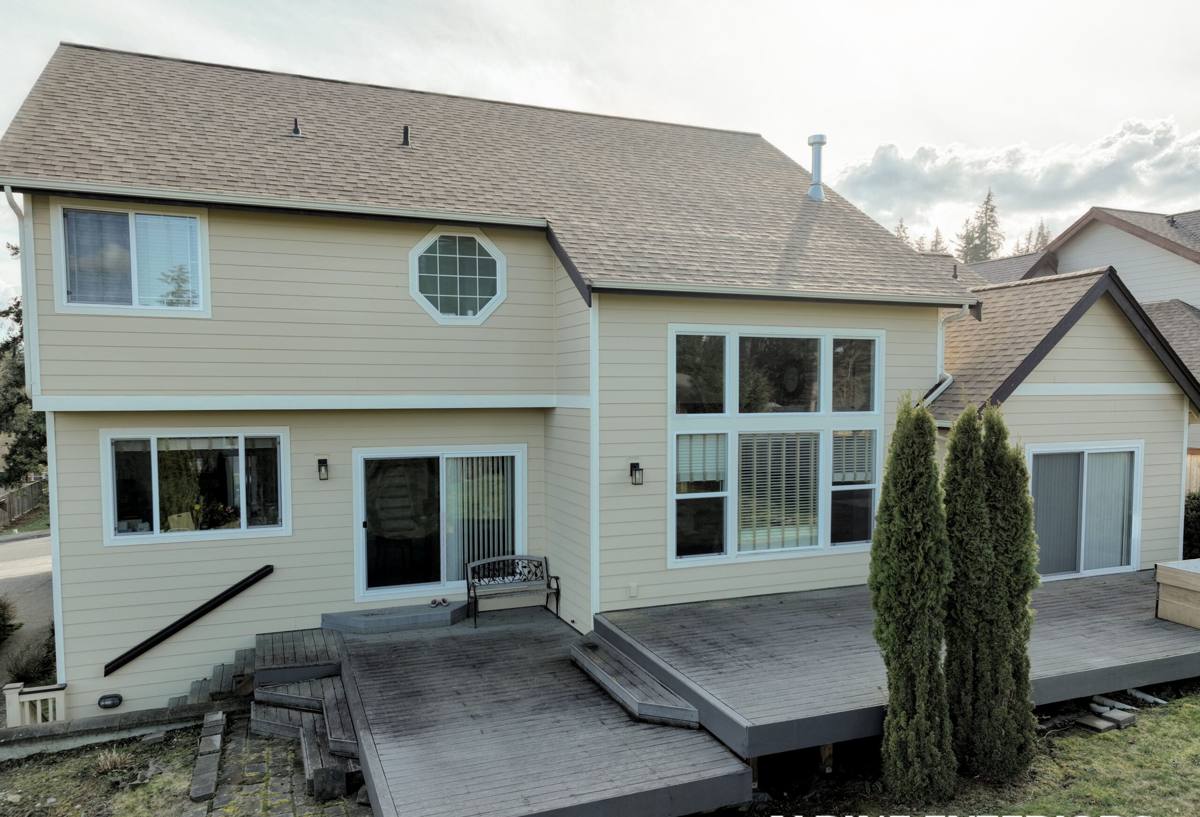
What Ferndale's Climate Actually Does to a Deck Over Time
Understanding the local conditions helps explain why certain installation details matter more here than they would in a drier climate.
Salt Air and Coastal Moisture
Proximity to the water means fasteners, brackets, and any exposed metal hardware are exposed to a slow, steady corrosion process even when they're never directly rained on. Standard hardware can start showing rust streaks on light-colored decking within a few seasons if the wrong grade of fastener was used.
Driving Rain and Wind-Driven Moisture
Rain here doesn't just fall straight down — wind pushes it sideways into ledger boards, under railings, and into any gap where flashing was skipped or done poorly. Water finds the weak point in a deck build faster than almost anything else.
Extended Moss and Algae Season
Cool, damp conditions for much of the year give moss, algae, and mildew a long window to establish themselves, especially on decks that sit in shade from trees or the house itself, and on boards with a lot of surface texture that holds moisture.
Freeze-Thaw Cycling
Whatcom County gets enough cold snaps mixed with wet weather that water trapped in joints, fastener holes, or poorly sealed cuts can freeze, expand, and slowly work a deck apart over several winters.
Composite vs. Other Decking Materials for This Area
Every material has trade-offs. Here's how the common options stack up for a coastal Whatcom County property.
| Material | Moisture Behavior | Maintenance | Typical Lifespan Here |
|---|---|---|---|
| Pressure-treated wood | Absorbs water, swells and shrinks seasonally, prone to splinters and rot at fastener points | Annual sealing/staining recommended | 10-15 years before major repairs |
| Cedar | Naturally rot-resistant but still absorbs moisture; softens over time in wet exposure | Regular sealing to maintain color and water resistance | 15-20 years with upkeep |
| Composite (capped) | Moisture-resistant surface, minimal absorption, won't splinter or rot the board itself | Occasional washing; no staining or sealing | 25-30 years, manufacturer-backed |
| PVC/vinyl decking | Fully moisture-resistant, but can feel less natural and shows scratches differently | Very low | 25+ years |
We install composite most often in this area because it hits the balance homeowners actually want: it looks and feels close to real wood, it's forgiving of the wet climate, and it doesn't demand a maintenance schedule most people don't have time for.
What a Correct Composite Deck Installation Actually Involves
The board itself is only part of the equation. A composite deck that holds up in Ferndale's climate depends on what's underneath and around it.
Framing and Ledger Attachment
The framing still needs to be pressure-treated lumber or an approved alternative, properly spaced to manufacturer spec (composite typically needs tighter joist spacing than wood, especially at angles or diagonal patterns). The ledger board — where the deck attaches to the house — is the single most common source of hidden water damage if flashing isn't installed correctly.
Ventilation Underneath
Composite doesn't rot, but the framing beneath it can if airflow is blocked. Low decks close to grade, or decks with skirting, need enough ventilation gaps to let moisture escape rather than sit trapped against joists.
Fastener Selection
Given the salt air, we use hidden fastener systems and hardware rated for coastal or treated-lumber exposure. Cheaper fasteners that aren't corrosion-rated are one of the more common reasons a deck develops staining or hardware failure years before it should.
Board Spacing and Expansion Gaps
Composite expands and contracts with temperature more than people expect. Gaps between boards, around posts, and at butt joints have to be set correctly or you end up with buckling in summer heat or gapping that catches debris and moisture in winter.
Our Process for a Ferndale Composite Deck
- On-site assessment — we look at existing framing (if this is a resurface), drainage around the foundation, sun/shade exposure, and how the deck ties into the house.
- Framing evaluation or build-out — we confirm joist spacing, ledger flashing, and structural condition meet code and manufacturer requirements before any composite goes down.
- Material selection — we walk through board color, texture, and fastening system options based on how the space is used and how much shade or moss exposure it gets.
- Installation — hidden fastener systems, proper expansion gaps, and correctly flashed ledger and post connections.
- Final walkthrough — we check railing security, fastener finish, and drainage before calling the job done.
Choosing the Right Composite Board for This Climate
Not all composite boards perform the same in a wet, shaded, coastal environment.
Capped vs. Uncapped Composite
Capped composite has a protective outer layer (often called capstock) that resists moisture absorption and staining far better than older-style uncapped composite, which can still take on water at the core over time. For this climate, we recommend fully capped boards, including on the cut ends where exposed.
Grooved vs. Solid Boards
Grooved boards pair with hidden fastener systems for a clean look, but the grooves themselves can hold moisture and debris longer in a wet climate. Solid boards with a lightly textured face tend to shed water and moss buildup a bit better in shaded, damp spots.
Color Considerations
Darker composite boards absorb more heat and can expand more noticeably; lighter and mid-tone colors also tend to show less algae staining over time in areas that don't get much direct sun. It's a trade-off worth discussing based on where the deck sits on the property.
Maintenance Checklist for Composite Decks in Ferndale
Composite cuts maintenance dramatically compared to wood, but it isn't zero-maintenance in this climate. A little seasonal attention goes a long way.
- Sweep off leaves, needles, and debris regularly, especially in fall — trapped organic matter feeds moss and algae growth
- Rinse or wash the deck surface a couple times a year to clear salt residue and early moss/algae before it sets in
- Check railing posts and fastener points annually for any looseness or corrosion staining
- Keep gutters and downspouts near the deck clear so runoff isn't dumping extra water onto the surface or framing
- Trim back overhanging branches that keep sections of the deck shaded and damp longer than the rest
- Confirm under-deck ventilation gaps and skirting vents haven't been blocked by landscaping or storage
Cost Factors for a Ferndale Composite Deck Project
Composite decking generally costs more upfront than pressure-treated wood but less over the life of the deck once you factor out annual staining and repair. Actual pricing depends on several project-specific factors.
| Factor | Why It Matters |
|---|---|
| Deck size and shape | Cutouts, angles, and multi-level designs increase labor and material waste |
| Board tier and brand | Entry-level, mid-range, and premium capped composite (from manufacturers like Trex, TimberTech, or Fiberon) vary in price and warranty coverage |
| Framing condition | New framing vs. reusing existing structure (only viable if it passes inspection) changes the scope significantly |
| Height and railing needs | Elevated decks need code-compliant railing systems, which add cost |
| Site access | Sloped lots or limited access around the house can add labor time |
We give a firm, itemized quote after seeing the site — not a rough number pulled from square footage alone.
Why Hiring a Crew That Already Works in Ferndale Matters
A composite deck installed to spec in a dry inland climate can still underperform here if the crew doesn't account for salt exposure, wind-driven rain, and the region's long wet stretches. We work throughout Whatcom County and see the same failure patterns repeatedly on decks built by out-of-area crews: under-spec'd fasteners, skipped ledger flashing, and ventilation gaps that got closed off during landscaping. Knowing what actually fails first in this climate changes what we prioritize during the build, not just what board color gets picked.
If you're weighing a new composite deck or replacing a tired wood deck in Ferndale, we're happy to walk the site, talk through board options, and give you a straightforward, no-pressure estimate using the form below.