 Birch Bay Siding
 Decking Built for Marietta's Weather, Not Just Its View
Homes in the Marietta neighborhood sit close enough to the water that the weather does things a lot of decking never has to deal with inland. Salt-laden air works into fasteners and finishes. Driving rain comes in sideways during winter storms and finds every gap in a poorly built deck. And the long gray stretch of fall through spring here in Whatcom County grows moss on anything that stays damp and shaded for more than a few days. A deck built for a dry climate, or built the way a crew from outside the area might build it, tends to show its age fast around here.
Composite decking, installed correctly, holds up well against all three of those pressures. But "correctly" is doing a lot of work in that sentence. The material matters less than the framing underneath it, the fasteners holding it down, and whether the deck was built to shed water instead of trap it. That's what this page is about — what a Marietta deck actually needs, and how we build to that standard.
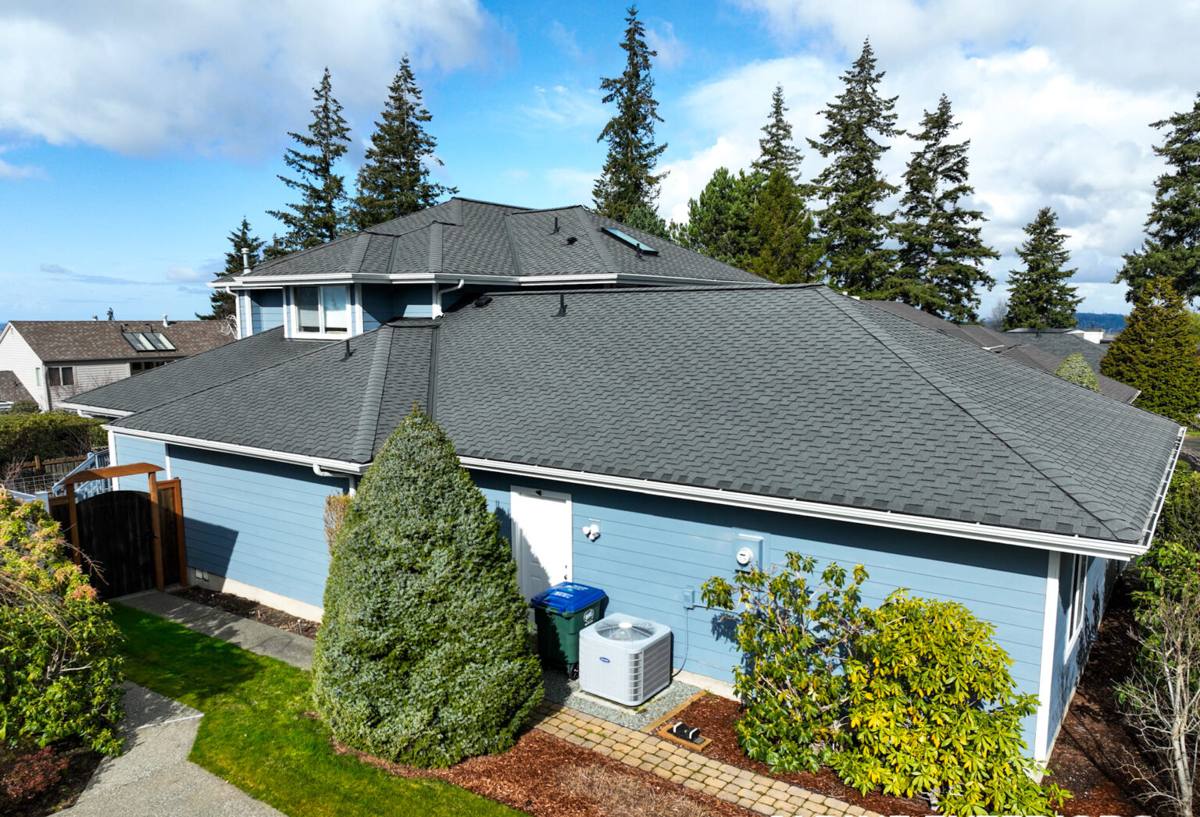
What Salt Air, Rain, and Moss Actually Do to a Deck
Salt air and hardware
Airborne salt from the nearby marine waters accelerates corrosion on anything that isn't rated for coastal exposure. Standard zinc-coated screws and joist hangers can start rusting within a few seasons this close to the water. Once a fastener corrodes, it weakens, stains the decking around it, and eventually needs to be replaced — which usually means pulling up boards that were never meant to come up.
Driving rain and hidden framing
Storms here don't just fall straight down. Wind-driven rain gets pushed under railings, into ledger connections, and behind fascia boards. If the framing and flashing underneath a deck weren't built to shed that water, moisture gets trapped against wood framing that's hidden from view — and by the time it shows up as a soft spot or a sagging board, the damage has been happening for years.
Moss and shaded, damp surfaces
Whatcom County's moss season is long, and any deck surface that stays damp and shaded builds up moss and algae faster than most homeowners expect. On top of being slippery and unattractive, moss holds moisture against the board surface, which matters more for some decking materials than others.
Why Composite Decking Is the Right Call for This Climate
We install composite decking on a lot of Marietta and Birch Bay homes because it handles these three problems better than the alternatives, without asking homeowners to keep up with heavy annual maintenance. That said, composite isn't magic — it still needs to be installed with the right fasteners, the right ventilation underneath, and a plan for cleaning off moss and organic debris. Here's how it stacks up against the other common choices for this climate:
| Factor | Composite Decking | Natural Wood (Cedar/Fir) | Pressure-Treated Pine |
|---|---|---|---|
| Salt air / corrosion resistance | High — boards themselves don't corrode; hardware still needs coastal-rated fasteners | Moderate — wood is tolerant but surface hardware still corrodes | Moderate — same fastener concern, plus treatment chemicals can accelerate hardware wear |
| Moisture / rot resistance | High — engineered board resists rot; core matters (see below) | Low to moderate — needs regular sealing to resist rot | Moderate — treatment resists rot but surface checking lets water in over time |
| Moss / algae growth | Low to moderate — smooth capped boards shed moss easier than textured wood grain | Moderate to high — grain and checking give moss a place to grip | Moderate to high — similar to untreated wood once the surface weathers |
| Ongoing maintenance | Occasional wash-down; no staining or sealing | Annual sealing/staining recommended | Sealing every 1-2 years to keep water out |
| Typical lifespan in this climate | 25-30+ years with proper install | 15-20 years with consistent upkeep | 15-20 years with consistent upkeep |
Wood decking isn't a bad product — plenty of homeowners like the look and are willing to put in the yearly maintenance. Our job is to be honest about the trade-off: composite costs more up front but asks a lot less of you over the life of the deck, which matters when the local weather is actively working against low-maintenance assumptions.
What a Correct Composite Deck Build Actually Involves
The composite boards get most of the attention, but the framing underneath is what determines whether a deck lasts 10 years or 30 in a marine climate. A correct build includes:
Framing and structure
Pressure-treated or coastal-rated framing lumber, joists spaced to the composite manufacturer's spec (often tighter than standard wood-deck spacing — composite boards flex differently than wood), and structural connections rated for the load and the exposure.
Ledger flashing and water management
Where the deck attaches to the house, proper flashing is the single most important detail on the whole project. This is where driving rain finds its way into wall framing if it's done wrong, and it's invisible once the deck is finished — which is exactly why it has to be done right the first time.
Fasteners and hardware
Coastal-rated, corrosion-resistant fasteners and hidden fastener systems throughout — not standard interior-grade hardware that saves a few dollars up front and costs more in five years.
Ventilation underneath
Airflow beneath the deck surface keeps framing dry and helps prevent the moisture buildup that leads to both rot and moss. Skirting and low-clearance decks need this considered deliberately, not as an afterthought.
Choosing the Right Composite Board for a Marine Climate
Not all composite decking is built the same, and the differences matter more here than in a drier inland climate.
Capped vs. uncapped composite
Capped composite boards have a protective polymer shell around a wood-plastic composite core. That shell is what actually resists moisture absorption, staining, and fading. Uncapped composite (or composite capped on only one side) is more exposed to moisture intrusion at cut edges and fastener holes — a real consideration in a climate with this much annual rainfall. We install capped boards on the great majority of Marietta and Birch Bay projects for exactly this reason.
Board profile and surface texture
Grooved-edge boards (for hidden fasteners) versus square-edge, and smooth versus wood-grain-textured surfaces, are largely a look-and-feel choice — but smoother surfaces tend to shed moss and debris a little easier than deep wood-grain embossing, which is worth knowing if low maintenance is the priority.
Color and heat considerations
Darker composite colors handle this region's cloud cover well and don't fade as dramatically as they might in a sunnier climate, but they can get warm underfoot on the rare hot summer day. It's a minor factor here compared to inland Washington, but worth a conversation if you're deciding between a light and dark tone.
Our Process, Start to Finish
- Free on-site estimate — we walk the site, look at drainage, sun/shade exposure, and how the deck connects to the house.
- Design and material selection — board brand, color, and layout, with honest guidance on what fits the budget and the site conditions.
- Permitting — we handle the Whatcom County permitting process for the project so you don't have to chase it down.
- Demo and framing — removal of the old deck if applicable, then framing built to coastal-exposure standards.
- Flashing and waterproofing — the ledger, any wall connections, and structural posts are sealed before a single composite board goes down.
- Composite installation — hidden fastener systems, correct board spacing for expansion, and finished edge and stair details.
- Final walkthrough — we go over care and cleaning specific to your board choice before we consider the job done.
Living With a Composite Deck in Marietta's Climate
Composite decking is genuinely low-maintenance compared to wood, but "low-maintenance" isn't "no-maintenance" — especially with a moss season as long as this one. A little seasonal attention keeps a composite deck looking new for decades instead of just holding up structurally while looking tired.
- Sweep off leaves, needles, and organic debris regularly — this is what actually feeds moss and algae growth
- Wash the deck surface with soap and water (or a manufacturer-approved composite cleaner) once or twice a year, more often in shaded areas
- Avoid pressure washing at close range or high PSI — it can damage the board's protective cap
- Keep gutters and downspouts near the deck clear so water isn't dumping directly onto the surface
- Check railing and stair connections annually for any movement, even though the boards themselves won't rot
- Trim back overhanging vegetation that keeps sections of the deck shaded and damp longer than the rest
Why a Crew That Already Works Marietta and Birch Bay Matters
Composite decking failures we get called to fix almost never come from the boards themselves — they come from framing that wasn't built for this exposure, flashing that was rushed, or fasteners that weren't rated for salt air. Those are the details a contractor learns by building decks in this exact climate, season after season, not from a spec sheet.
A crew that already works throughout Birch Bay and the surrounding Whatcom County coastline knows the drainage patterns, the wind exposure, and the moss growth that this specific stretch of coastline produces. That's the difference between a deck that's built to spec on paper and one that's actually built for where it sits.
Get a Straight Answer on Your Deck Project
If you're weighing composite decking for a home in Marietta or elsewhere around Birch Bay, we're happy to walk the site, look at what your specific location is dealing with, and give you a straightforward estimate — no pressure, no upsell. Use the form below to get started.