 Birch Bay Siding
 Windows in Custer's Coastal Climate
Custer sits close enough to Birch Bay and the Strait of Georgia that it gets the same weather the shoreline gets: salt-tinged marine air, wind-driven rain that comes in sideways during winter storms, and long gray stretches where shaded siding and trim never quite get to dry out. For window replacement, that combination matters more than most homeowners expect. A window that would perform fine in a dry inland climate can fail years early here if the installer doesn't account for wind-driven rain at the sill, or if the materials around the frame hold moisture instead of shedding it.
We've replaced windows on homes throughout Custer and the wider Birch Bay area long enough to recognize which failure patterns show up first in Whatcom County's climate, and which installation details actually head them off. This page covers what a correct window replacement looks like for this specific area — not a generic overview of window types.
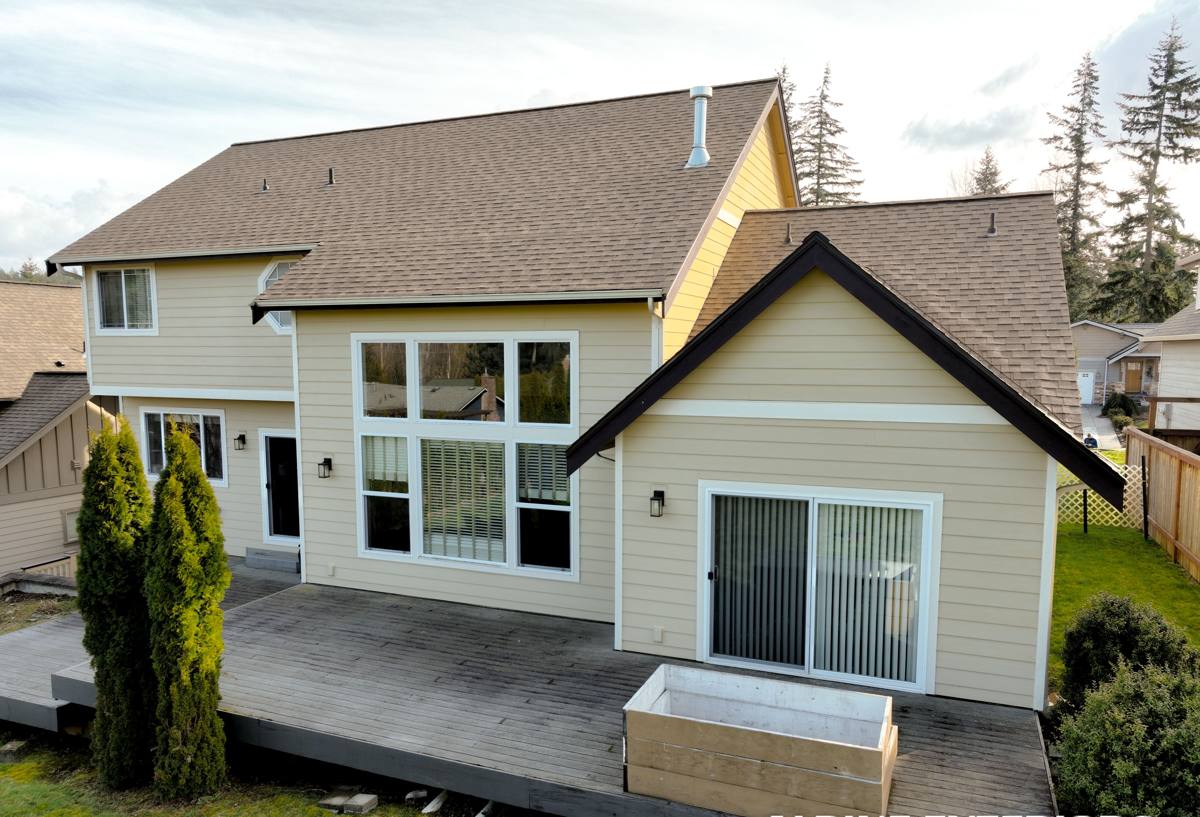
What Custer Homes Need From a Window Replacement
Salt Air and Hardware
Homes within a few miles of Birch Bay and the strait deal with airborne salt that settles on window hardware, screens, and exterior trim over time. It's not as aggressive as a beachfront property, but it's enough to accelerate corrosion on cheap fasteners, hinges, and balance systems over the years. We spec corrosion-resistant hardware and fasteners on every replacement in this area as a standard practice, not an upcharge — it's simply what holds up here.
Wind-Driven Rain and Water Management
Custer's winter storms don't just drop rain straight down — wind pushes it sideways and up under sills and trim. Most window failures we find in this area aren't glass failures at all; they're water intrusion at the sill or head flashing that let moisture behind the siding for years before anyone noticed a soft spot or a stain. Correct flashing and sill pan details matter more here than in a sheltered inland location, and it's the single biggest factor separating a window replacement that lasts from one that quietly rots the wall behind it.
Moss, Shade, and Moisture Cycling
Whatcom County's long moss season — moisture and low sun for months at a stretch — keeps north-facing and shaded walls damp longer after every rain. That slow dry-out cycle is hard on wood trim, caulk joints, and any gap in the water-resistive barrier around a window opening. It doesn't damage the window itself so much as it damages what's around it if the original installation wasn't sealed correctly.
Signs Your Windows Are Due for Replacement
Some of these show up on the window itself, others show up on the wall around it — both matter.
- Fogging or a hazy film between the panes (failed seal, no longer worth repairing)
- Sills or trim that feel soft, spongy, or discolored to the touch
- Visible gaps between the frame and siding, or daylight around the edges
- Windows that are difficult to open, close, or lock, or that no longer sit flush
- Noticeable draft near the frame during windy weather
- Condensation forming on the inside of the glass regularly in cold months
- Peeling paint or bubbling finish concentrated around the window opening
- A jump in heating costs with no other explanation
What a Correct Window Replacement Job Actually Involves
Removal and Opening Inspection
Once the old window is out, the opening gets inspected before anything new goes in — sill condition, framing, and whether the existing water-resistive barrier is intact. This is the point where hidden water damage from a previous poor installation usually shows up. Skipping this step and just dropping a new window into a bad opening is how the same failure repeats a few years later.
Flashing and Weatherproofing
Given how much of this region's window failures trace back to water management rather than the window itself, flashing gets treated as the most important part of the job, not an afterthought. That means a proper sill pan to direct any water that gets past the window back outside, correctly lapped head and jamb flashing, and integration with the existing weather-resistive barrier so water can't work its way behind the siding.
Installation, Shimming, and Insulation
The window has to be shimmed level, plumb, and square before it's fastened — a slightly out-of-square window puts uneven stress on the frame and hardware for the life of the installation. The gap between the window frame and the rough opening gets insulated (typically low-expansion foam or backer rod, never packed too tight), which handles both energy performance and reduces the path for air and moisture to move through the wall.
Trim and Finish Work
Interior and exterior trim get resealed and caulked with products rated for this climate's moisture cycling, and any disturbed siding or trim is put back correctly rather than just caulked over. This is also where hardware selection matters again — corrosion-resistant screws and fasteners on the exterior finish work, not just the window unit itself.
Full-Frame vs. Insert Replacement: Which Fits Your Home
Both are legitimate approaches — the right one depends on the condition of your existing frame and sill, not on which one costs more.
| Factor | Full-Frame Replacement | Insert (Pocket) Replacement |
|---|---|---|
| Best for | Frames with rot, water damage, or out-of-square openings | Sound existing frames in good condition |
| What's replaced | Entire window unit down to the rough opening, including sill | New window fitted inside the existing frame |
| Access to flashing/sill | Full access — problems get fixed, not covered | Limited — existing frame and flashing stay in place |
| Typical project time | Longer per window, more finish work | Faster, less disruption to interior and exterior trim |
| Typical cost range | Higher, varies with size and condition found | Generally lower per window |
Given how much water intrusion drives window failure in this area, we recommend full-frame replacement whenever the opening inspection turns up soft wood, staining, or signs of past leaks — an insert replacement over a compromised frame just buries the problem behind a new window. If the existing frame is solid and dry, an insert is a perfectly good, more economical option.
Window Materials and Glass for This Climate
Vinyl and fiberglass frames both handle this region's moisture cycling well and don't require the ongoing paint and sealant maintenance that wood trim needs to keep water out. We'll walk through the trade-offs for your specific project rather than push one line — fiberglass holds up slightly better under large size or dark exterior colors that absorb heat, while vinyl is a solid, cost-effective choice for most standard openings. Wood-clad windows can look great, but the maintenance burden of keeping every joint sealed against this climate's rain and moss season is a real commitment, and we'll be straightforward about that before you commit to it.
For glass, dual-pane with a low-E coating is the baseline we'd recommend for anyone in Whatcom County — it cuts heat loss and helps control condensation on cold mornings. Triple-pane adds another layer of insulation and sound dampening; it's worth discussing for north-facing rooms or homes closer to the water where wind exposure is higher, though it adds cost and weight that matters for larger openings.
Our Process for Custer Projects
- On-site visit to measure openings, check existing frame and sill condition, and discuss materials and budget
- Written estimate covering window units, flashing and weatherproofing details, and finish work — no vague allowances
- Scheduling that accounts for weather windows, since flashing and sealant work needs a dry install
- Removal, opening inspection, and correction of any hidden water damage found before the new window goes in
- Installation with proper flashing, insulation, and fastening, followed by trim and finish work
- Final walkthrough so you can see and test every window before we consider the job done
Why a Crew That Already Works Custer Matters
A window replacement crew that already works this area isn't guessing at how much wind-driven rain a west- or south-facing wall takes in a January storm, or how long a shaded north wall stays damp after it. That familiarity shows up in the small decisions — how much sill pan overhang to leave, which sealants actually stay flexible through a Whatcom County winter, when a "minor" stain around a sill is actually worth opening the wall up to check. It also means straightforward scheduling and communication with a crew that isn't driving in from out of the area and isn't unfamiliar with Birch Bay's coastal exposure.
If you're weighing whether your Custer home's windows need replacing or just some attention around the edges, we're glad to take a look and give you a straight answer either way. Use the form below to request a free, no-pressure estimate.