 Birch Bay Siding
 Decks Built for California Creek's Waterfront Climate
California Creek sits close enough to Birch Bay and the water that every outdoor structure on a property takes a different kind of beating than it would ten miles inland. Salt-laden air moves in off the bay, driving rain comes in sideways during winter storms, and the shaded, moisture-heavy months grow moss on anything that stays damp too long. A deck built without those specific conditions in mind will look fine for a year or two and then start showing problems: rusted fasteners, cupped boards, slick green film on the walking surface, and rot working in from the underside where nobody looks. A deck built for California Creek's actual conditions holds its finish, its footing, and its safety margin for decades instead of years.
This page covers what a correctly built custom deck looks like specifically for this neighborhood — the materials, the fastener choices, the drainage details, and the maintenance realities — not a generic overview that could apply anywhere in the country.
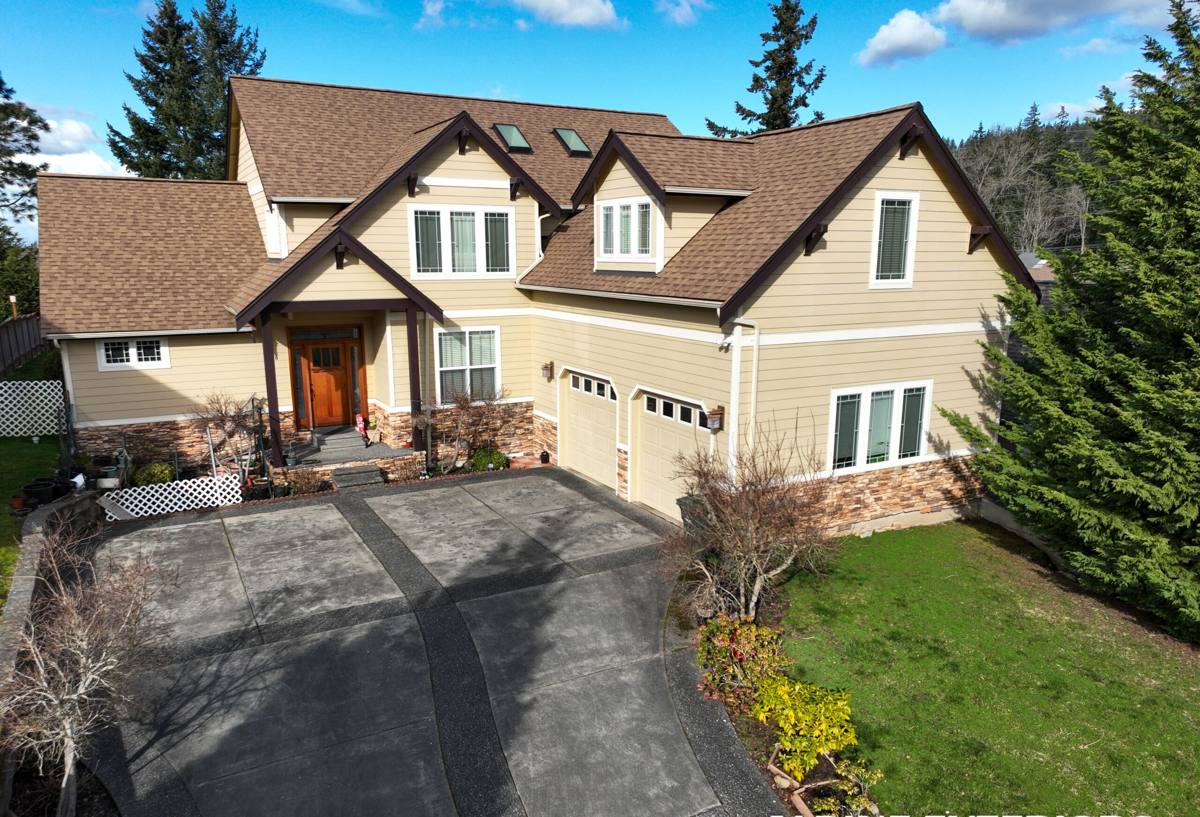
What Whatcom County's Coastal Conditions Do to a Deck
Salt Air and Metal
Airborne salt from Birch Bay and the surrounding shoreline settles on every exposed surface, including deck hardware. Standard zinc-coated fasteners and generic joist hangers corrode faster here than in a typical inland yard. Over a few seasons that corrosion weakens the connections holding the deck together — and because it happens underneath the boards, it's invisible until something fails or a home inspector flags it during a sale.
Driving Rain and Moisture Intrusion
Storms off the water don't just fall straight down — wind-driven rain gets pushed sideways and up under railings, ledger boards, and stair stringers. Any deck attached to the house needs proper flashing at the ledger connection, or water works its way behind the siding and into the rim joist over time. This is one of the most common hidden failure points we find on older decks in this area.
Moss, Algae, and Shade
Whatcom County's long wet season, combined with mature trees and partial shade common on California Creek lots, gives moss and algae plenty of time to establish on horizontal surfaces. Beyond being unattractive, a mossy deck surface is a genuine slip hazard, especially on stairs. Board spacing, surface texture, and drainage underneath the deck all affect how fast moss takes hold.
Material Choices That Actually Hold Up Here
There's no single "best" decking material for every budget and every home — but there are clear trade-offs worth understanding before you decide.
| Material | How It Handles This Climate | Maintenance | Typical Lifespan |
|---|---|---|---|
| Pressure-treated wood | Good if properly sealed and re-coated; softer wood absorbs moisture faster without upkeep | Annual cleaning and re-sealing recommended | 15–20 years with upkeep |
| Cedar | Naturally rot- and insect-resistant, ages well with the regional palette, but needs finish maintenance to resist moisture and moss | Periodic cleaning and refinishing | 20–25 years with upkeep |
| Composite decking | Doesn't absorb water or feed rot, resists moss better on the surface, but still needs proper substructure ventilation underneath | Occasional washing, no sealing or staining | 25–30+ years |
| PVC decking | Fully moisture-resistant surface, performs well in salt air, higher upfront cost | Low — occasional washing | 30+ years |
For a lot of California Creek homeowners, composite or PVC decking makes sense specifically because it removes the annual sealing chore that this climate otherwise demands. That said, a well-built and properly maintained cedar or treated-wood deck can absolutely go the distance here — the framing and hardware underneath matter as much as the surface material on top.
Fasteners and Framing — The Part Nobody Sees
Whatever decking material you choose, the structure underneath should use stainless steel or heavy hot-dip galvanized fasteners and hardware rated for coastal exposure, not the standard-grade hardware sold for inland projects. We also pay close attention to:
- Proper ledger board flashing where the deck attaches to the house, to keep wind-driven rain out of the wall assembly
- Joist tape or a moisture barrier on top of framing lumber to slow water intrusion into end grain and fastener holes
- Corrosion-resistant joist hangers and structural screws throughout, not just at the visible connections
- Adequate ventilation and clearance underneath the deck so the substructure can dry out between storms instead of staying damp
- Post footings set below frost depth and sized for our soil conditions, so the structure doesn't shift over time
Design Details That Fight Moss and Standing Water
A deck's shape and surface details do real work in a climate like this. Board spacing that's slightly wider allows better drainage and airflow, which slows algae and moss growth. Surface texture matters too — a grooved or lightly textured board gives better footing than a smooth one once it's damp, which is most of the year here. Where a deck sits under mature trees or in a shaded corner of the lot, we'll often talk through orientation and railing choices that let in more light and airflow, since shade is the single biggest factor in how fast moss takes hold.
Stairs deserve particular attention. Because stairs see concentrated foot traffic and drain differently than a flat deck surface, we treat tread material and edge detailing as a safety decision, not just an aesthetic one.
Our Process for a California Creek Deck Project
- On-site assessment: We walk the property, look at drainage patterns, shade exposure, existing structures, and how the deck will tie into the house.
- Design and material discussion: We go over the trade-offs above in the context of your budget, how you'll use the space, and how much upkeep you want to take on long-term.
- Permitting: Deck projects in Whatcom County typically require a building permit depending on size and height; we handle that process as part of the job.
- Framing and structural work: This is where the coastal-grade hardware, flashing, and ventilation details described above get built in — the part that determines whether the deck lasts 15 years or 30.
- Surface installation and finish work: Decking, railings, stairs, and any final sealing or finishing specific to the material chosen.
- Final walkthrough: We go over care and maintenance specific to your material choice before we consider the job done.
What a Correct Deck Build Includes — A Homeowner's Checklist
Whether you're hiring us or evaluating another contractor's proposal, these are the things a properly built deck in this area should include:
- Stainless steel or coastal-rated galvanized fasteners and hardware throughout, not just at visible points
- Flashed, sealed ledger board connection where the deck meets the house
- Footings set to proper depth for our frost line and soil conditions
- Adequate under-deck ventilation and clearance from grade
- Board spacing and surface texture chosen with drainage and moss resistance in mind
- A written scope that specifies exact materials and hardware grade, not just "pressure-treated lumber" or "composite decking" with no brand or spec named
- A clear maintenance plan handed to you at project completion
Maintenance Realities for This Climate
Even the best-built deck in a coastal, wet, moss-prone climate needs some ongoing attention. Wood and composite decks both benefit from an annual rinse to clear off pollen, salt residue, and organic debris before it has a chance to feed moss. Wood decking needs periodic re-sealing or staining — how often depends on sun exposure and the specific product — while composite and PVC decking mainly need occasional washing. Gutters and downspouts near the deck should be checked so runoff isn't dumping directly onto the structure or the ground beneath it, which speeds up both rot and moss growth. We're happy to walk through a maintenance schedule specific to whatever material you choose.
Why Local Experience on This Type of Project Matters
A deck contractor who mostly works inland, drier parts of the state may not think twice about standard hardware grades or skip the extra flashing detail at the ledger board — and the deck will look fine for a while regardless. It's the years three through ten where that difference shows up, in loosening rail posts, rusted-through hangers, or a ledger connection that's been quietly rotting the rim joist behind it. Building decks for Birch Bay and the surrounding Whatcom County shoreline day in and day out means those coastal-specific details aren't an upgrade we mention as an afterthought — they're the baseline we build to.
If you're planning a new deck or replacing an aging one in California Creek, we're glad to come take a look and talk through what makes sense for your property, your budget, and how you actually want to use the space. Request a free, no-pressure estimate using the form below.