 Birch Bay Siding
 Building Decks in Ferndale the Way This Climate Demands
Ferndale sits close enough to the water and to Birch Bay that it gets the same weather punishment the rest of northern Whatcom County deals with every year: salt-laden air rolling in off the Strait, long stretches of driving rain from fall through spring, and a moss season that can run five or six months if a deck doesn't get enough sun or airflow. A deck built to a generic national spec — the kind you'd see in a big-box store's how-to guide — will often look fine for a year or two here and then start showing problems that are expensive to fix after the fact: soft spots at fastener locations, discoloration where moss holds moisture against the boards, and corrosion on hardware that wasn't rated for this environment.
We build decks for Ferndale homes the way this specific climate requires, not the way a catalog assumes every deck in America gets built. That means different fastener choices, different footing depth and drainage decisions, and a layout plan that accounts for how much shade and moisture a particular yard actually gets.
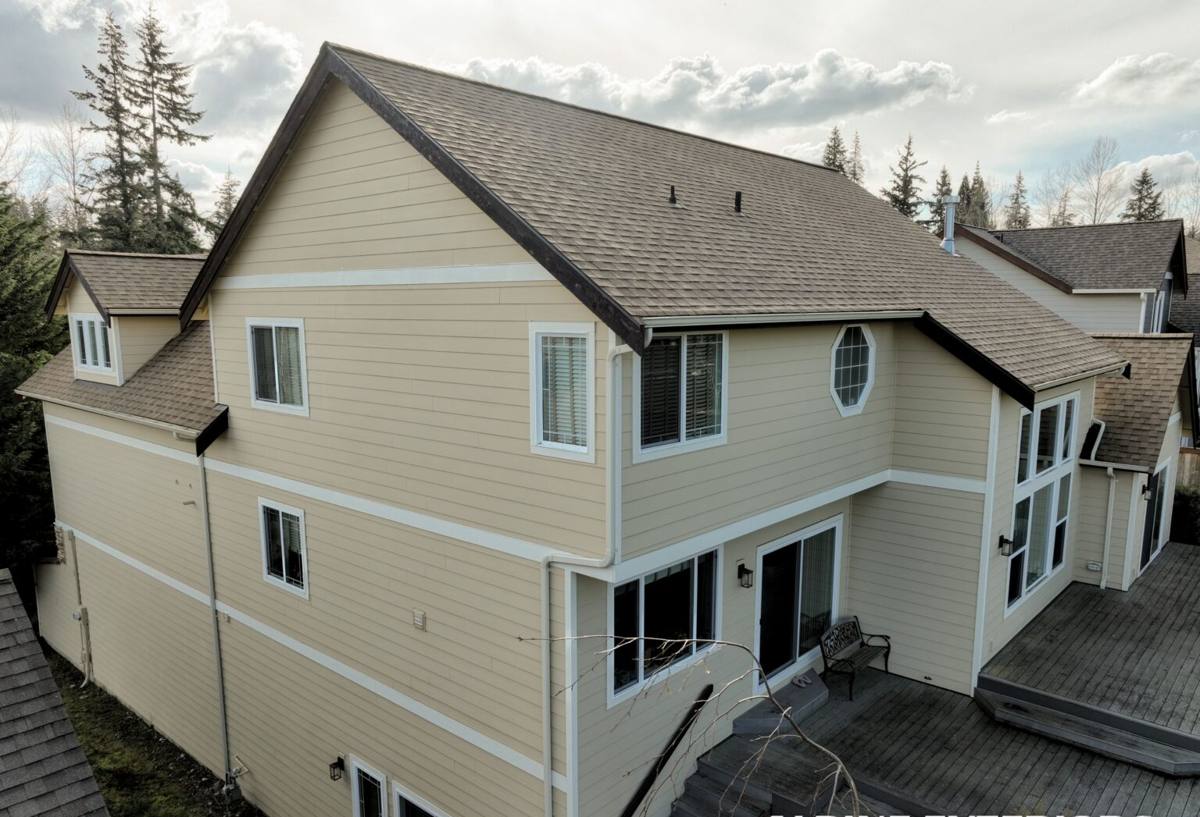
What Ferndale's Climate Actually Does to a Deck
Salt Air and Metal Fatigue
Even a few miles inland from Birch Bay, airborne salt still reaches exposed wood and metal. Over time it accelerates corrosion on fasteners, brackets, and hardware that aren't rated for coastal exposure. The failure point on a poorly built deck is almost never the decking boards themselves — it's the screws, joist hangers, and structural connectors underneath that were never designed for this kind of exposure.
Driving Rain and Standing Moisture
Whatcom County doesn't just get rain — it gets rain that comes in sideways for days at a stretch. Decking that isn't gapped and pitched correctly holds water between boards, and ledger boards that aren't flashed properly let water track behind the siding and into the house framing. This is one of the most common structural failure points we find on older decks in this area, and it's almost always a flashing or drainage detail that was skipped during the original build.
Moss and Organic Growth
Shaded yards, tree cover, and damp air combine to make moss and algae a near-constant maintenance issue on decks that don't get afternoon sun. Beyond looking bad, moss holds moisture directly against the wood or composite surface, which speeds up rot in wood decking and can stain composite boards in ways that are hard to reverse. Deck orientation, gap spacing, and board choice all affect how much of a moss problem a homeowner ends up fighting every year.
What a Correctly Built Deck Includes Here
- Footings poured below frost depth with proper drainage gravel underneath, not just set on grade
- Stainless steel or coated coastal-rated fasteners and structural connectors throughout, not standard galvanized
- Ledger board flashing that properly sheds water away from the house framing, with a drainage gap where the deck meets siding
- Board spacing and joist layout that accounts for expected shade patterns and drainage, not a one-size-fits-all gap width
- Under-deck airflow considered in the framing plan, especially for decks close to grade or under tree cover
- Material choice matched to how much sun, shade, and moss exposure the specific yard actually gets
Decking Material Trade-Offs for This Climate
| Material | How It Handles Salt Air & Rain | Moss & Algae Behavior | Maintenance |
|---|---|---|---|
| Pressure-treated wood | Holds up well if fasteners and flashing are coastal-rated; wood itself is durable when sealed | Needs regular cleaning and resealing to resist moss staining | Annual cleaning, resealing every 2-3 years |
| Cedar | Naturally rot-resistant, but still needs proper drainage detailing underneath | Can gray and stain if not maintained; moss shows more on lighter wood | Regular cleaning, periodic oil or sealant |
| Composite decking | Doesn't absorb moisture into the board itself; hardware underneath still needs coastal-rated fasteners | Won't rot from moss, but algae can stain the surface if boards stay damp and shaded | Occasional washing, no sealing needed |
| PVC decking | Fully moisture-resistant board material; structural connections still matter most | Least prone to staining but can still grow surface algae in deep shade | Lowest ongoing maintenance |
None of these materials are automatically "safe" from this climate on their own. The decking surface matters, but in our experience the structural details underneath — fastener grade, flashing, drainage, and airflow — are what actually determine whether a deck holds up in Ferndale or starts failing early.
Designing for the Way Ferndale Yards Actually Sit
A lot of Ferndale properties have some tree cover, varying degrees of slope toward the house, and yards that don't get full sun most of the day. Before we design a deck, we look at how the sun actually moves across that specific yard, where water naturally wants to drain, and how close the deck will sit to grade. A deck tucked under mature trees needs a different gap spacing and possibly a different material than one that gets full afternoon sun — and a deck built low to the ground needs more attention to under-deck ventilation than one built higher off a walkout basement.
We also plan for how the deck ties into the house itself. Ledger attachment and flashing are where we see the most costly mistakes on older or poorly built decks — water finding its way behind siding because the original builder didn't detail that connection for real rain, not just an afternoon shower.
Our Process for a Ferndale Deck Project
- On-site assessment — we walk the yard, check sun/shade exposure, grade and drainage direction, and the condition of the house wall where the deck will attach.
- Design and material discussion — we go over decking material trade-offs honestly, based on how much maintenance a homeowner actually wants to do versus upfront cost.
- Permitting — decks over a certain size or height typically require a permit through the county or city; we handle that process rather than leaving it to the homeowner.
- Footings and framing — proper footing depth, coastal-rated hardware, and ledger flashing done correctly the first time.
- Decking installation — board spacing and layout set for the specific sun and drainage conditions of that yard.
- Final walkthrough — we go over maintenance expectations for the material chosen, including what moss and algae control actually looks like in year one and beyond.
Cost Factors Homeowners Should Understand
| Factor | Why It Affects Price |
|---|---|
| Deck size and height off grade | Taller decks need more substantial footings, framing, and often railings and stairs |
| Material choice | Pressure-treated wood costs less upfront; composite and PVC cost more but need less ongoing maintenance |
| Ledger and flashing complexity | Older homes or unusual wall conditions can require more work to flash the connection correctly |
| Site access and grading | Sloped yards or limited equipment access can add labor time |
| Permitting requirements | Larger or taller decks typically require permit review, which adds time but is not optional |
We give straightforward ranges during the estimate rather than a number that sounds good on the phone and changes once work starts. Every yard is different enough in Ferndale that a real quote requires actually seeing the site.
Why a Crew That Already Works Ferndale Matters
We're based out of the Birch Bay area and work throughout this part of Whatcom County regularly, which means we're not learning this climate on a homeowner's project. We already know which fastener grades hold up, which flashing details actually keep water out of a ledger connection, and how much moss and algae pressure to expect based on a yard's sun exposure. A crew coming from outside the region, or one that mostly builds decks in drier climates, doesn't always build in these details by default — and it's the kind of thing that doesn't show up as a problem until a few winters have passed.
We also know the local permitting process and inspection expectations, which keeps a project moving instead of stalling out on paperwork a homeowner didn't know to expect.
Maintenance That Actually Matters Here
Whatever material is chosen, a few habits make the biggest difference in how long a Ferndale deck stays in good shape:
- Clear leaves and debris from between boards before they trap moisture through the wet season
- Wash off moss and algae buildup at least once a year, more often in heavily shaded yards
- Check that gutters and downspouts near the deck aren't dumping extra water onto or under it
- Reseal wood decking on the schedule the material actually needs, not just when it looks faded
- Have fasteners and structural connections inspected every few years, especially on older decks
If you're planning a new deck or replacing one that's showing its age, we're happy to come take a look and give you a straightforward, no-pressure estimate — just fill out the form below.