 Birch Bay Siding
 Why Sandy Point Decks Wear Differently
Sandy Point sits close enough to the water that every deck out here lives in a slightly different environment than one built a few miles inland in Blaine or Ferndale. The combination that matters is salt-laden air off the Strait, driving wind-blown rain that comes in sideways more often than straight down, and a moss and algae season that in Whatcom County can run eight or nine months out of the year. None of these things individually is dramatic. Together, over a decade, they decide whether a deck is still tight and solid or has turned into a maintenance headache with soft boards, rusted fasteners, and a slick green film that shows up every fall.
A deck built with generic, catalog-spec materials and standard fastening will often perform fine for the first few years anywhere. The difference in a place like Sandy Point shows up later — in year six, eight, or ten — when hardware that wasn't rated for a marine-influenced environment starts to weep rust stains, or when a ledger board that wasn't flashed correctly finally lets water into the house framing. Building correctly the first time costs more up front and saves a full rebuild later.
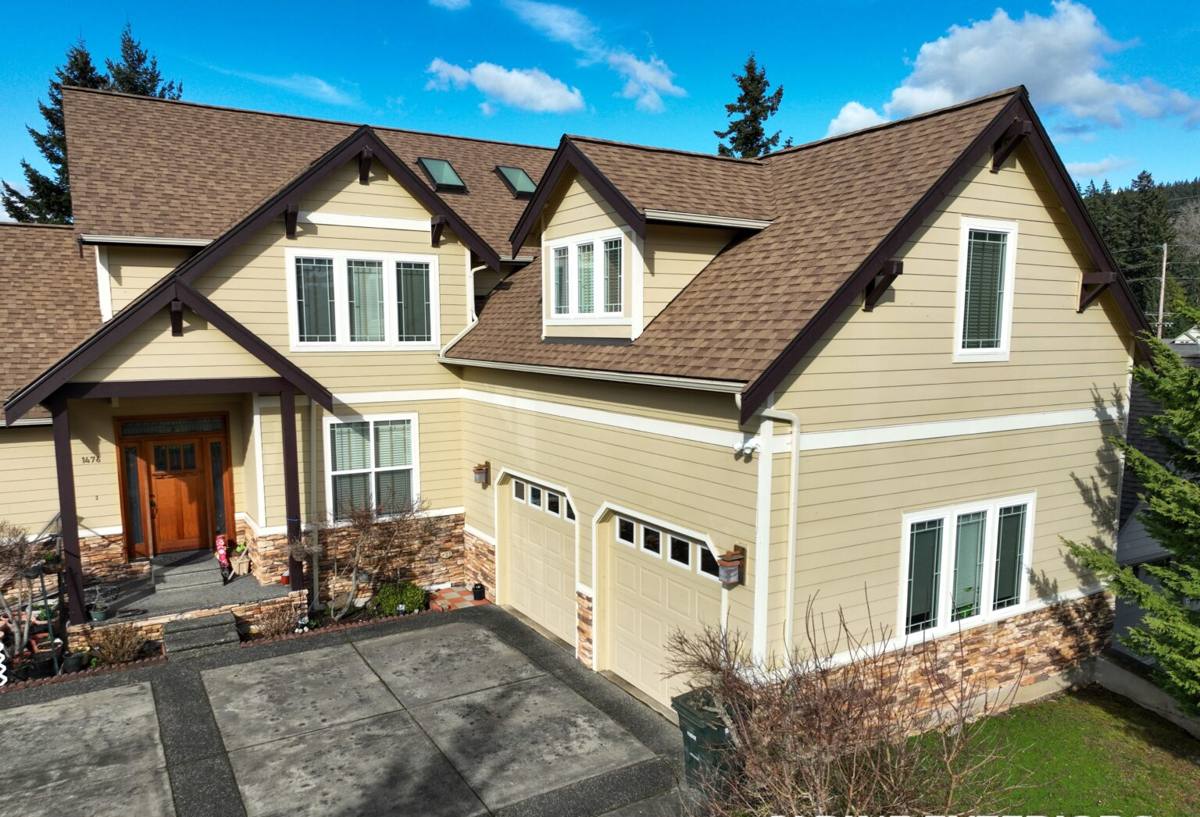
What Salt Air and Driving Rain Actually Do to a Deck
Fasteners and Hardware
Standard electro-galvanized screws and nails are not enough this close to salt water. Airborne salt accelerates corrosion on anything less than a hot-dip galvanized or stainless-rated fastener, and once a fastener starts to rust it swells, cracks the wood around it, and stains the surface. Structural hardware — joist hangers, post bases, ledger bolts — needs the same consideration, since these are the pieces you can't easily inspect or replace once the decking is down.
Water That Doesn't Just Fall Straight Down
Wind-driven rain gets pushed sideways and upward into gaps that a calmer climate would never test. That means flashing details at the house ledger, end-grain sealing on cut boards, and gapping between boards all matter more here than in a drier region. A deck that would be forgiving of a shortcut in eastern Washington is not forgiving of that same shortcut in Birch Bay.
Moss, Algae, and Surface Buildup
Cool, damp, and shaded conditions for most of the year are exactly what moss and algae need. On a deck this shows up first in the shadier corners and under railings, then spreads across the whole surface if airflow underneath is poor. Beyond looking bad, a mossy deck surface is genuinely slick and can become a fall hazard, especially on stairs.
Framing and Under-Deck Moisture
Whatever sits on top, the frame underneath does the real work of keeping a deck safe. In a wet marine climate, framing lumber needs proper ground clearance, ventilation, and either pressure-treated stock or a moisture-resistant alternative at every structural member — not just the visible decking. Poor airflow under a low deck traps moisture year-round and is one of the more common reasons we find soft or rotted joists on decks that still look fine from the top.
What a Correctly Built Deck Involves
A deck that's going to hold up through repeated Birch Bay winters comes down to a handful of details done right, not a single expensive upgrade. In order, the things that matter most are:
- A ledger board flashed and sealed against the house so water is directed away from the wall framing, not into it
- Footings sized and set to local frost depth and soil conditions, not just poured to a minimum
- Corrosion-resistant structural hardware rated for coastal or marine exposure at every connection
- Joist spacing and blocking appropriate to the actual decking material chosen, since composite and wood have different span requirements
- Adequate ventilation and clearance underneath the deck to let the structure dry out between rain events
- Proper board gapping and end-sealing so water sheds instead of wicking into cut edges
- Railings and stair connections built to code, since these carry real load and see the most weather exposure
Skipping any one of these doesn't usually cause an obvious problem in year one. It shows up later, and it's almost always more expensive to fix after the fact than to build correctly from the start.
Choosing a Decking Material for This Climate
There's no single right answer for every homeowner — budget, maintenance tolerance, and how the deck will be used all factor in. What matters is picking with eyes open about how each option behaves in salt air, constant moisture, and heavy moss pressure.
| Material | How It Handles This Climate | Maintenance Reality |
|---|---|---|
| Pressure-treated wood | Affordable and structurally proven, but end grain and fastener holes need diligent sealing to resist moisture intrusion | Needs periodic cleaning, sealing, and moss treatment; the most maintenance-heavy option long term |
| Cedar | Naturally more rot-resistant than most softwoods and ages well visually, but still absorbs moisture without regular sealing | Moderate — needs cleaning and refinishing on a regular cycle to keep its color and resist moss |
| Composite decking | Doesn't absorb water the way wood does, which matters directly in a high-rain, high-humidity environment | Low — periodic washing to keep moss and algae from taking hold on the surface texture |
| PVC/capped decking | Fully sealed surface resists moisture and salt exposure well; performs consistently near the water | Lowest — occasional washing; no sealing or staining required |
Whichever material you choose, we treat the substructure the same way — with corrosion-resistant fasteners and proper flashing — because the frame is what fails first regardless of what's on top.
Our Deck Building Process
We walk every Sandy Point project through the same sequence, because skipping steps is where problems start:
- Site assessment — we look at sun exposure, prevailing wind and rain direction, drainage patterns, and how close the deck will sit to the ground or to salt air exposure
- Design and layout — sizing, railing style, stair placement, and material selection based on your budget and how you'll actually use the space
- Permitting — pulling the required permit through Whatcom County or the applicable local jurisdiction before any digging starts
- Footings and framing — footings set to proper depth, ledger flashed correctly at the house, and framing built with corrosion-resistant hardware throughout
- Decking and railing installation — boards gapped and fastened to manufacturer spec, railings set to code height and load requirements
- Final walkthrough — we go over maintenance expectations specific to your material choice and this climate before we consider the job done
Permits and Local Requirements
Most deck projects in unincorporated Whatcom County, including Sandy Point, require a building permit once the deck exceeds a certain height or footprint, and setback rules apply depending on your lot's proximity to property lines or shoreline. Requirements can vary by parcel, especially this close to the water where shoreline management rules may come into play, so we confirm what applies to your specific property before design work locks in rather than assuming. Skipping permitting on a deck that requires one can create real problems later — at resale, with insurance, or if the county requires it be brought up to code retroactively.
What Drives Cost on a Sandy Point Deck
Every deck is priced around a handful of real cost drivers, not a flat per-square-foot number. Understanding these helps you plan a budget that matches what you actually want:
| Factor | Why It Moves the Price |
|---|---|
| Size and shape | Larger footprints and multi-level or non-rectangular designs require more material and labor |
| Decking material | Pressure-treated wood costs less upfront; composite and PVC cost more but reduce long-term maintenance spending |
| Height and footing depth | A deck attached higher off the ground or built on sloped Sandy Point terrain needs more substantial framing and support |
| Railing style | Cable, glass, and custom railing systems cost more than standard baluster railing |
| Structural condition of the house | If the ledger attachment point needs repair before a deck can be safely attached, that adds scope |
| Site access | Tight side yards or limited equipment access on some Sandy Point lots can add labor time |
We give straight numbers based on what we actually see on your property — not a rough estimate over the phone that changes once we're on site.
Signs an Existing Deck Needs Attention
If you already have a deck in Sandy Point, a few warning signs are worth checking before they turn into a safety issue:
- Soft or spongy spots underfoot, especially near the ledger or stair landing
- Rust streaking around screw heads or joist hardware
- Persistent moss or slick green film that comes back within weeks of cleaning
- Gaps opening up between the ledger board and the house siding
- Railings that flex or feel loose when leaned on
- Visible daylight or gaps where the ledger meets the house framing
Any of these can usually be addressed, but the sooner they're caught, the less likely the fix involves rebuilding the whole structure.
Why Local Experience on This Specific Coastline Matters
A lot of deck-building fundamentals are the same everywhere — square framing, correct fastener spacing, level footings. What's different in Sandy Point is knowing, from having built and repaired decks here before, exactly how much sideways rain a given orientation will take, which fastener grade actually holds up a decade out this close to salt water, and how aggressive the moss growth gets on north-facing or heavily shaded sections. That kind of judgment doesn't come from a spec sheet — it comes from having stood on Whatcom County coastline decks in January and seen which details held up and which ones didn't.
A crew that's worked this specific stretch of coastline also tends to move faster and more accurately through permitting and site conditions, because they've already dealt with the local building department and the kind of soil and drainage found on Sandy Point lots.
Get a Straight Answer for Your Property
If you're planning a new deck or trying to decide whether an existing one is worth repairing or replacing, we're glad to take a look and give you an honest read — no pressure, no upsell. Use the form below to request a free estimate, and we'll walk your property with the same climate and construction standards described here in mind.