 Birch Bay Siding
 Decks in Semiahmoo Face a Different Set of Problems
Semiahmoo sits right up against the water, and that changes what a deck has to survive. A deck built the same way you'd build one twenty miles inland won't hold up the same way out here. Salt-laden air corrodes hardware faster, wind-driven rain finds its way into joints and connections that would stay dry elsewhere, and the long stretch of gray, damp weather that Whatcom County gets every fall through spring keeps wood and composite surfaces wet for weeks at a time. Add the shade from mature trees on a lot of these properties, and you get moss and algae growth that starts early and doesn't let up until summer.
None of that means a deck can't last in Semiahmoo. It means the materials, fasteners, and framing details have to be chosen with that environment in mind from the start, not patched later after rot or corrosion shows up.
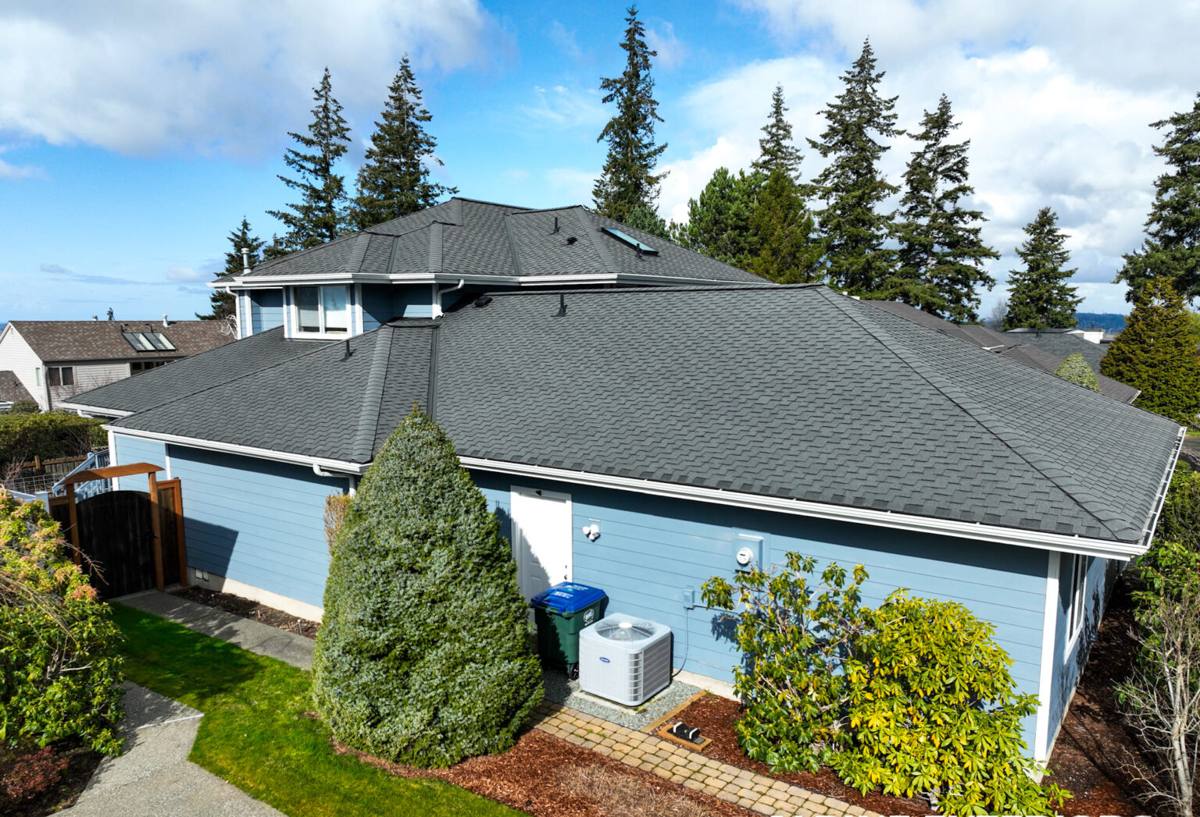
What Salt Air and Driving Rain Actually Do
Two separate problems show up on waterfront and near-waterfront decks, and it helps to understand them separately because they call for different fixes.
Salt Air and Corrosion
Airborne salt accelerates corrosion on any exposed metal — screws, joist hangers, post bases, railing brackets. Standard galvanized hardware that would last decades in a drier, inland yard can start showing rust streaks and pitting within a few years this close to the water. Once a fastener starts corroding, it loses holding strength long before it looks obviously bad, which is part of why deck hardware needs to be matched to the site, not just to the decking brand's minimum spec.
Driving Rain and Wind-Blown Moisture
Rain in Birch Bay doesn't always fall straight down. Wind off the water pushes it sideways, which means water gets driven up under rail caps, into ledger connections, and behind fascia boards that would stay dry in calmer weather. A deck built without that in mind will develop hidden rot at exactly those spots — often the last places anyone thinks to check during a casual inspection.
Choosing Decking Material for This Environment
There's no single "right" decking material for every Semiahmoo project — it depends on budget, how much sun the deck gets, and how much maintenance the homeowner actually wants to do. Here's how the common options hold up in this specific climate:
| Material | How It Handles Salt Air & Moisture | Maintenance | General Cost Position |
|---|---|---|---|
| Pressure-treated lumber | Holds up well if properly sealed and re-coated; end cuts and fastener holes need extra sealant | Annual cleaning, re-staining every 2-3 years | Lowest upfront cost |
| Cedar | Naturally rot- and insect-resistant, but softens over time in constant damp shade | Regular cleaning, periodic oil/stain to prevent graying and moss | Mid-range |
| Composite decking | Doesn't absorb moisture like wood; performs well in salt air, but surface can still grow moss/algae in shaded, damp spots | Periodic washing, no staining or sealing | Higher upfront, lower long-term labor |
| PVC decking | Fully moisture-resistant, best option for constant shade or heavy spray exposure | Occasional washing | Highest upfront cost |
Composite and PVC decking have gotten a lot of attention for being "maintenance-free," and they do eliminate staining and sealing. But they're not maintenance-free in a place with this much moss and algae pressure — shaded composite boards still need periodic washing, and the wrong installation (boards too tight, no airflow underneath) can trap moisture and encourage growth regardless of the material. We'll walk through the real trade-offs for your specific lot and sun exposure rather than push one product across the board.
Framing and Substructure: Where Failures Actually Start
Most deck problems people notice — soft boards, sagging rail sections, a spongy feel underfoot — trace back to the framing underneath, not the decking surface itself. This is the part of the job that's invisible once it's finished, which is also why it's the part most likely to get shortcut on a budget build.
- Joists and beams sized correctly for the actual span and load, not just the minimum code allows
- Proper spacing between deck boards and joists for drainage and airflow underneath
- Posts set on footings below frost depth and rated for the local soil
- Structural connections — beam-to-post, joist-to-beam — rated for the loads involved, not just toe-nailed
- Any wood framing in ground contact or close to grade rated for that exposure
In a climate that stays damp for months at a stretch, framing that traps water instead of shedding it is the single biggest predictor of early rot, well before the visible decking ever shows a problem.
Ledger Attachment and Flashing: The Detail That Matters Most
If a deck attaches to the house, the ledger board connection is the single highest-risk point on the whole structure. Done wrong, it's where water gets behind the siding and into the house framing — a problem that stays hidden until there's real damage. Done right, it's flashed so that water is directed away from the connection entirely, not just sealed with caulk that will eventually crack and fail.
Correct ledger attachment means:
- Proper flashing integrated with the house's existing water-resistive barrier, not just applied over the siding
- A gap or flashing detail that lets water drain rather than pool against the house
- Lag bolts or through-bolts rated for the load — not just deck screws
- Corrosion-resistant hardware suited to the salt air, not generic zinc-coated fasteners
This is the part of a deck build we won't shortcut, even though it's the least visible once the project is done. It's also the part that's most expensive to fix later if it's done wrong the first time, since fixing it usually means pulling siding.
How We Approach a Deck Build in Semiahmoo
The process is straightforward, but each step accounts for the site conditions specific to this area:
- On-site assessment — we look at sun exposure, tree cover, wind exposure, existing drainage, and the condition of any structure the new deck will attach to.
- Material and layout discussion — honest trade-offs between decking materials based on your budget, maintenance preference, and how shaded or exposed the site is.
- Permitting — pulling the necessary permit and scheduling required inspections before framing begins.
- Framing — footings, posts, beams, and joists built to span and load requirements, with fasteners and hardware selected for salt-air exposure.
- Ledger flashing and attachment (if applicable) — integrated properly with the house's water barrier.
- Decking, railing, and finish work — installed with correct spacing for drainage and airflow.
- Final walkthrough — going over maintenance expectations specific to your material choice and site conditions.
Permits and Local Requirements
Deck construction in Whatcom County generally requires a building permit once the structure exceeds certain size or height thresholds, and any deck attached to the house triggers additional structural review. Requirements can vary depending on whether a property falls under county jurisdiction or a specific local zoning overlay, and waterfront-adjacent properties in and around Birch Bay sometimes have additional setback or shoreline considerations worth checking before design work starts. We handle the permit application and inspection scheduling as part of the build so it's one less thing you have to track down.
Living With a Deck Through Moss Season
Even a well-built deck needs some seasonal attention in this climate. The goal of good construction is to reduce how much maintenance is required and how serious the consequences are if it gets skipped for a season — not to eliminate maintenance altogether.
- Sweep leaves and debris off the deck surface regularly, especially in fall — trapped organic matter is what feeds moss and algae growth
- Rinse or gently wash the surface periodically through the wet months, particularly in shaded areas
- Check railing posts and hardware annually for corrosion or loosening
- Keep gutters and downspouts near the deck clear so runoff isn't dumping extra water onto the structure
- Re-stain or re-seal wood decking on the schedule appropriate to the product — don't wait until it's visibly gray or worn
- Watch for soft spots, especially near the ledger connection and post bases, and have them checked before they spread
Why Hire a Crew That Already Works This Area
A lot of deck problems in Semiahmoo aren't the result of bad workmanship in the general sense — they're the result of a design or material choice that would've been fine somewhere drier or further from the water, applied here without adjustment. A crew that builds decks across a wider range of climates might not think twice about standard hardware or a decking spacing detail that works fine most places but falls short against sustained salt air and driving rain.
We build decks throughout Birch Bay and Whatcom County, and Semiahmoo's mix of salt exposure, tree cover, and wet-season moss pressure is a known quantity for us, not a guess. That shows up in the hardware we spec, how we detail the ledger connection, and how we talk you through material trade-offs instead of just recommending whatever's easiest to install.
If you're planning a new deck or replacing one that's showing its age, we're happy to come take a look and give you a straightforward, no-pressure estimate — just fill out the form below.