 Birch Bay Siding
 Cottonwood Beach Decks Take a Different Kind of Beating
Cottonwood Beach sits close enough to the water that every deck in the neighborhood is doing double duty: holding up your barbecue and porch furniture while absorbing salt-laden air, wind-driven rain, and months of shade-grown moss every year. A deck built the same way you'd build one inland doesn't hold up the same way out here. We see it constantly — fasteners that rust from the inside out, ledger boards that trap moisture against the house, and decking that looks fine on top but has gone soft underneath.
Whatcom County's marine climate means Cottonwood Beach decks rarely fail because of one dramatic event. They fail slowly, from repeated wetting and drying, salt exposure on hardware, and moss and algae holding moisture against wood and composite surfaces long after a storm has passed. A deck repair here isn't just about swapping a bad board — it's about understanding which components are actually at risk in this environment and fixing those first.
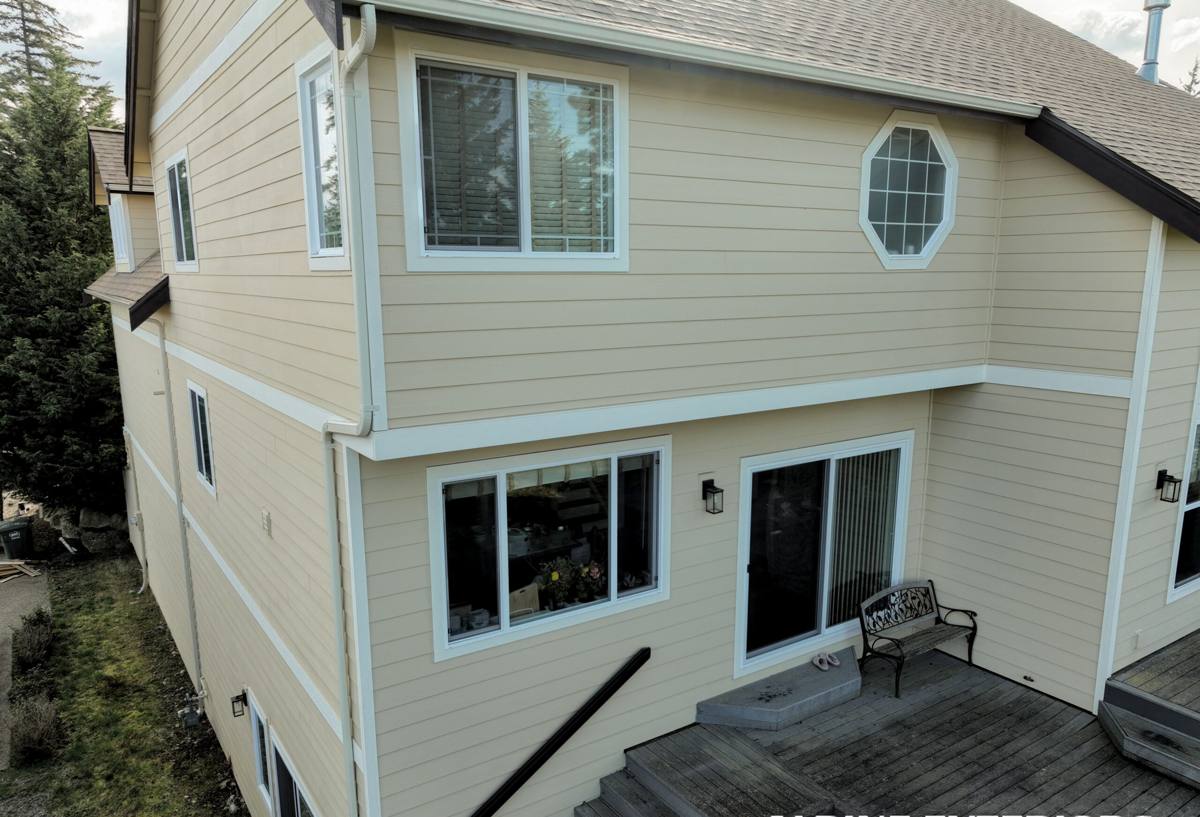
What Salt Air, Rain, and Moss Actually Do to a Deck
Salt Air and Metal Fasteners
Proximity to Birch Bay's shoreline means airborne salt settles on everything, including your deck's screws, joist hangers, and structural bolts. Standard fasteners corrode faster here than they would twenty miles inland. Once a fastener starts rusting, it loses holding strength long before the rust is visible from the surface — which is why a deck can look solid but have weak connections underneath.
Driving Rain and Water Intrusion
Wind-driven rain doesn't just fall straight down — it gets pushed sideways into ledger connections, under flashing, and into any gap where decking meets the house. That's the single most common failure point we find: a ledger board that's been quietly absorbing water for years because flashing was missing, undersized, or installed before code required it.
Moss, Algae, and Trapped Moisture
Birch Bay's long, damp shoulder seasons give moss and algae months to establish themselves on shaded decking and framing. Beyond being slippery underfoot, moss holds moisture directly against the wood surface, slowing evaporation and accelerating rot in exactly the spots that get the least sun and airflow — usually along the house-side edge of the deck.
Signs Your Deck Needs Repair — Not Just Cleaning
- Soft, spongy, or bouncy spots when you walk across the deck
- Rust streaks running down from screw heads or bolts
- Gaps opening up where the deck meets the house siding or foundation
- Railings or posts that wiggle more than they used to
- Persistent moss or dark staining that comes back within weeks of cleaning
- Visible daylight or water stains on the underside of the deck after rain
- Nails or screws backing out of the decking boards
- A musty smell coming from underneath the structure
Any one of these can be a minor fix. Two or three together usually point to a moisture problem working its way through the structure, which is worth having looked at before it spreads to framing that's more expensive to replace.
What a Correct Deck Repair Actually Involves
A repair that just replaces the board you can see is often only half the job. We start from the structure down, not the surface up:
1. Structural Inspection First
Before touching decking boards, we check the ledger connection, joist hangers, posts, and footings. This is where Cottonwood Beach's climate does the most damage, and it's invisible from the top of the deck.
2. Fastener and Hardware Assessment
Any corroded fastener gets replaced — not just the ones that are obviously failing. If we're opening up a section for repair, it's far cheaper to upgrade hardware to a more corrosion-resistant grade while it's exposed than to come back for it later.
3. Flashing and Water Management
Where the deck meets the house is the single most important detail on the whole structure. If flashing is missing, damaged, or undersized, we address it as part of the repair — otherwise the same rot returns in the same spot within a few seasons.
4. Decking and Railing Repair
Only after the structure is confirmed sound do we move to the visible surface — replacing individual boards, sections, or railing components as needed, matched as closely as possible to the existing material.
Repair or Rebuild? How We Help You Decide
Not every deck problem calls for a full rebuild, and not every "small fix" is actually small once you look underneath. The honest answer depends on how far the damage has spread and how old the structural components are.
| Factor | Leans Toward Repair | Leans Toward Rebuild |
|---|---|---|
| Framing condition | Solid, dry joists and posts | Soft or rotted joists, posts, or beams |
| Ledger connection | Sound, properly flashed | Water-damaged or missing flashing |
| Age of structure | Under roughly 15 years | Original hardware and framing decades old |
| Extent of damage | Isolated boards or fasteners | Widespread rot, rust, or movement |
| Code compliance | Meets current railing/footing standards | Predates current guardrail and footing codes |
Cost-wise, repairs generally run a fraction of a full rebuild since they target specific components rather than the entire structure. But if the framing or ledger connection is compromised, patching the surface just delays a bigger repair — and often costs more in total once you've paid for both.
Our Deck Repair Process in Cottonwood Beach
- On-site assessment: We walk the entire deck, check underneath, and test fasteners and framing by hand — not just a visual look from the top.
- Honest scope of work: You get a clear explanation of what's failing, why, and what it will take to fix it correctly — including what can wait and what shouldn't.
- Repair plan and estimate: A written estimate that separates structural work from cosmetic work, so you know exactly what you're paying for.
- The repair itself: Structural issues addressed first, then hardware, then decking and railings — in that order, every time.
- Final walkthrough: We check the repair together before we consider the job done.
Material Choices for a Salt-Air Environment
We tailor material and fastener choices to how exposed a given deck is to salt air and moisture, rather than defaulting to whatever's cheapest or most common inland.
| Component | Standard Choice | Why It Matters Near Birch Bay |
|---|---|---|
| Fasteners | Corrosion-resistant coated or stainless | Standard galvanized hardware corrodes faster in salt air |
| Joist hangers | Rated for exterior/coastal exposure | Hidden hardware failure is the most common hidden risk |
| Decking | Wood or composite, matched to existing deck | Each has different moisture and maintenance trade-offs |
| Flashing | Properly lapped, durable metal or membrane | Prevents the ledger rot that's most common locally |
Whether we recommend wood or composite decking for a repair depends on the rest of your deck, your maintenance preferences, and budget — we'll walk through the honest trade-offs of each rather than push one option.
Maintenance That Actually Extends a Cottonwood Beach Deck's Life
- Sweep debris and standing moisture off the deck surface regularly, especially in shaded areas
- Clean moss and algae buildup before it re-establishes each fall and spring
- Keep gutters and downspouts clear so runoff isn't draining onto or under the deck
- Check visible fasteners once a year for rust streaking or backing out
- Trim back vegetation that keeps sections of the deck shaded and damp longer than the rest
- Reseal or refinish wood decking on the manufacturer's recommended schedule, not just when it looks worn
None of this prevents every issue, but it slows the moisture cycle that causes most of the damage we see, and it makes small problems easier to catch before they become structural ones.
Why Local Experience With This Climate Matters
A contractor who mostly works drier, inland areas of Whatcom County will still build a technically correct deck — but they may not default to the fastener grades, flashing details, or moisture management that Cottonwood Beach's exposure actually calls for. We work this stretch of Birch Bay regularly, so we already know which components fail first out here and build repairs around that reality rather than a generic standard.
That local familiarity also means a faster, more accurate assessment. We're not guessing at how salt air or moss season might affect your deck — we've already seen how it plays out on similar structures nearby, which shapes both the repair we recommend and the materials we use to make it last.
Get an Honest Look at Your Deck
If your deck has soft spots, rust stains, moss that keeps coming back, or just doesn't feel as solid as it used to, it's worth having someone check underneath before the problem grows. We offer free, no-pressure estimates for Cottonwood Beach homeowners — use the form below to get a straightforward assessment of what's going on and what it will take to fix it right.