 Birch Bay Siding
 Why Sandy Point Decks Wear Differently Than Inland Decks
Sandy Point sits right up against the water, and that proximity changes how a deck ages. A deck built the same way ten miles inland in Whatcom County might go a decade before it needs real attention. A deck in Sandy Point, exposed to salt-laden air blowing off the water, driving winter rain, and a moss season that can stretch from October well into spring, often needs a closer look much sooner. None of this means Sandy Point is a bad place to have a deck — it just means the deck has to be built and maintained with that exposure in mind.
Salt air is corrosive to metal in a way that plain rain isn't. Fasteners, joist hangers, and railing hardware that would last for years in a drier, inland yard can start showing rust and pitting much faster here. Combine that with near-constant winter moisture and the shade many Sandy Point lots get from surrounding trees, and you get ideal conditions for moss and algae to take hold on decking boards, stair treads, and anywhere water sits instead of draining. Moss holds moisture against wood, and moisture held against wood for months at a time is how rot gets started.
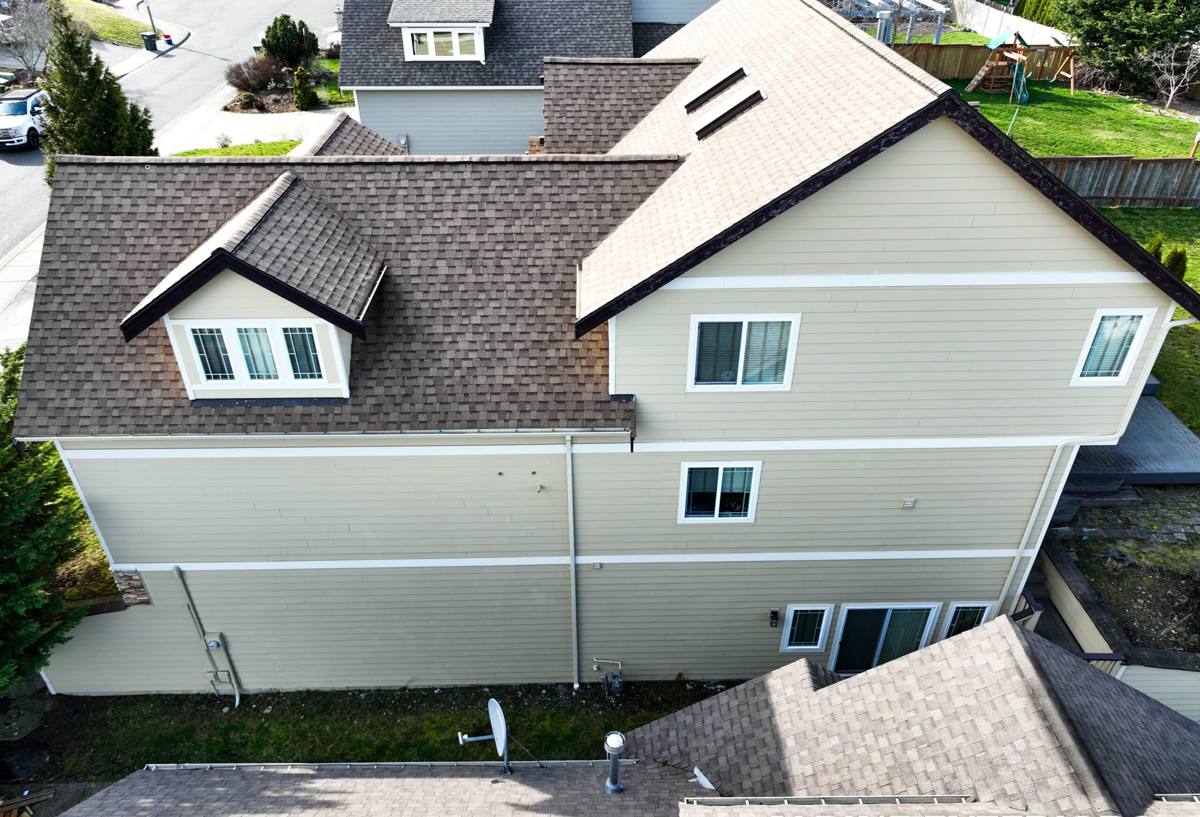
Signs Your Sandy Point Deck Needs Repair
Most deck problems don't show up all at once. They start small, usually in the areas most exposed to weather — the ledger board where the deck meets the house, the stair stringers, the rail posts, and any spot where boards butt up against each other and trap debris. Catching these early is almost always cheaper than waiting.
- Boards that feel spongy, soft, or flex more than they used to when you walk across them
- Green or black staining on decking, especially on the north side or under overhangs where sun rarely reaches
- Rust streaks running down from screws, bolts, or joist hangers
- Railings or posts that wiggle or feel less solid than they should
- Gaps opening up between boards, or boards cupping and no longer sitting flat
- Visible daylight or soft wood where the ledger board attaches to the house
- Stair stringers that feel bouncy or show splitting at the cuts
- A persistent musty smell near or under the deck
If you're seeing more than one or two of these, it's worth having someone look underneath the deck, not just at the walking surface. A lot of the damage that matters most happens where you can't see it from the top.
What a Correct Deck Repair Actually Involves
A deck repair isn't just swapping out a bad board. Done right, it starts with understanding why that board failed in the first place, because the same conditions are usually affecting the framing underneath and the hardware holding it together.
Framing and Structural Repairs
Joists, beams, and the ledger board are the parts of the deck that carry the load, and they're also the parts hardest to inspect without pulling boards or getting underneath. When we find soft or rotted framing, we replace it with lumber rated for ground contact or structural use, not whatever happens to match on the surface. A deck that looks fine on top but has compromised framing underneath is a safety issue, not just a cosmetic one.
Fasteners and Hardware
This is where salt air exposure matters most. Standard galvanized screws and hangers can start corroding within a few years this close to the water. When we replace fasteners or hardware on a Sandy Point deck, we use stainless steel or marine-grade coated fasteners rated for coastal exposure, even if that means a slightly higher material cost than what was originally used. Mixing metal types — say, an aluminum flashing against a steel fastener — can also cause galvanic corrosion, so we pay attention to what touches what.
Decking Surface Repairs
Individual boards get replaced when they're cracked, cupped, soft, or holding moisture that won't dry out. We also look at board spacing and drainage while we're at it — boards installed too tight, or without a slight gap for water to pass through, are part of why moss and rot show up in the first place.
Railings and Guardrails
Loose or rotted rail posts are a safety code issue, not just a repair item. Post connections at the rim joist take a lot of stress, and they're often where we find the earliest rot because water collects at that joint. We rebuild these to current guardrail standards, not just to match what was there before.
Repair or Replace? How We Help You Decide
Not every deck problem calls for a full rebuild, and not every deck is worth patching indefinitely. The honest answer depends on how much of the structure is still sound.
| Situation | Usually Means | Why |
|---|---|---|
| Framing and ledger are solid, a few boards are bad | Targeted repair | The structure is doing its job; only the surface needs attention |
| Rot at multiple ledger or joist locations | Larger structural repair | One failure point is rarely isolated once moisture has been getting in for years |
| Deck is original to a home 20+ years old with no upgrades | Full evaluation before repair | Older fasteners and framing may not meet current code even if they look intact |
| Repeated repairs to the same section, year after year | Replacement of that section or the deck | Recurring failure usually means a design or drainage issue, not a material issue |
| Sound framing but outdated railing height or spacing | Railing rebuild, deck repair otherwise | Keeps the structure you have while bringing safety features up to standard |
We'll always tell you plainly which category your deck falls into. There's no benefit to us or to you in patching something that needs to come apart.
Materials That Actually Hold Up on Sandy Point
There's no single "right" decking material for every home, but some choices handle salt air and moss better than others, and the trade-offs are worth understanding before you decide.
| Material | Strength Here | What to Watch For |
|---|---|---|
| Pressure-treated lumber | Lower upfront cost, easy to source and repair in sections | Needs regular sealing or staining; more prone to cupping and moss if neglected |
| Cedar | Natural rot resistance, ages well visually | Softer wood, still needs maintenance and can weather unevenly near salt spray |
| Composite decking | Low maintenance, resists rot and moss buildup on the surface | Higher upfront cost; underlying framing still needs the same structural attention |
Whatever surface material you choose, the framing underneath and the fasteners holding it all together matter just as much — sometimes more — than what you're walking on.
How Our Deck Repair Process Works
We keep this straightforward because a deck repair shouldn't feel like a mystery.
- Full inspection, top and bottom. We look at the walking surface, but also get underneath to check joists, the ledger connection, posts, and footings.
- Honest scope of work. You get a clear explanation of what's failing, why, and what it will take to fix — in plain language, not a vague estimate.
- Material selection. We talk through options for lumber, hardware, and fasteners based on your budget and how exposed your specific deck is to wind and salt spray.
- The repair itself. Structural work first, then surface repairs, then railings and finishing details.
- Final check. We walk the deck with you, point out what was done, and flag anything else worth keeping an eye on going forward.
Maintaining Your Deck Between Repairs
A good repair lasts a lot longer with a bit of upkeep in between. This is especially true in Birch Bay and Sandy Point, where the moss season is long and the salt air never really takes a break.
- Sweep leaves, needles, and debris off the deck regularly, especially in fall
- Rinse salt residue off the surface and railings after storms with heavy wind off the water
- Keep gutters and downspouts clear so runoff isn't dumping directly onto or under the deck
- Trim back vegetation that's shading the deck and keeping it damp longer than it needs to be
- Reseal or restain wood decking on the schedule recommended for the product you have
- Check railings and stair connections by hand once or twice a year for looseness
Why It Matters to Hire a Crew That Already Works in Sandy Point
Deck repair isn't the same job everywhere in Whatcom County. A crew that mostly works drier, inland properties may not think twice about standard galvanized hardware or skip a close look at drainage, because in their usual conditions it doesn't matter as much. Out here, those shortcuts show up as rust streaks and soft boards within a few short years.
We work on homes throughout Birch Bay and the surrounding waterfront communities, including Sandy Point, and we build and repair decks knowing what this specific stretch of coastline does to wood and metal over time. That means the right fastener choice from the start, attention to drainage and airflow under the deck, and materials specified for the exposure your home actually gets — not a generic spec sheet.
Get a Straightforward Look at Your Deck
If your deck is showing soft spots, rust stains, moss buildup, or just doesn't feel as solid as it used to, it's worth having it looked at before winter rain makes the problem worse. We offer free, no-pressure estimates for Sandy Point homeowners — we'll tell you honestly what's going on and what your options are, whether that's a targeted repair or something more. Fill out the form below to get started.