 Birch Bay Siding
 Why Bellingham Homes Need a Different Approach to Windows
Bellingham sits close enough to the water and open enough to the Strait that its houses take a beating most window manufacturers never designed for. Salt-laden air drifts in off Bellingham Bay and settles into hardware, weep holes, and finish coatings. Driving rain — the kind that comes in sideways during a winter system — finds every gap in flashing and trim that a calmer climate would never expose. And then there's moss season, which in Whatcom County isn't really a season at all; it's most of the year. Moisture sits, shade lingers, and anything with a horizontal surface or a poorly sealed joint becomes a place for growth to take hold.
None of that is a reason to panic about your windows. It's a reason to be specific about what "energy-efficient" needs to mean for a house in this part of Washington. A window that performs well in a dry inland climate can still underperform here if the installation doesn't account for wind-driven moisture and long stretches of damp, low-light weather. This page is about what actually matters for windows in Bellingham — not generic efficiency talk that could apply anywhere.
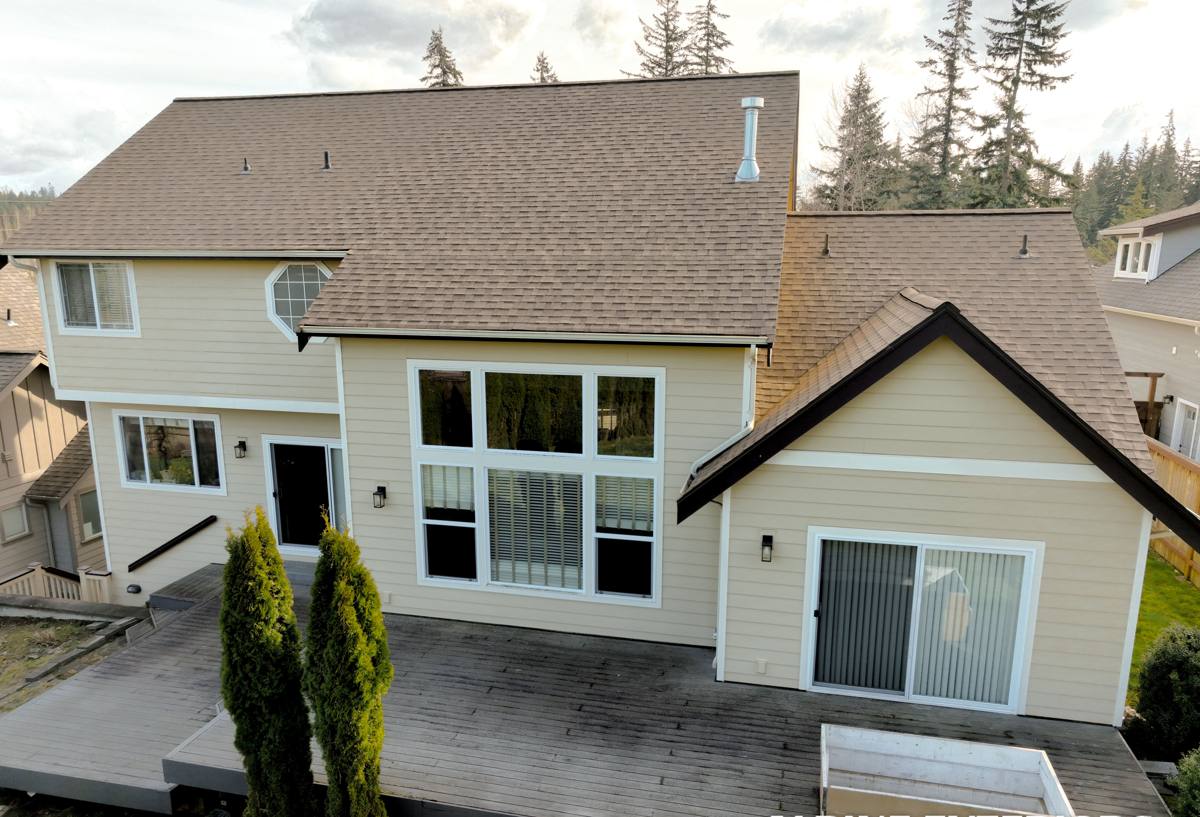
What's Actually Costing You Energy and Comfort
Most homeowners come to us because of a symptom, not a diagnosis. Here's what those symptoms usually mean:
- Cold drafts near the frame — usually failed weatherstripping or a frame that's racked slightly out of square, common in older single-pane or early dual-pane installs.
- Fogging between the panes — a sure sign the seal on a dual-pane unit has failed and the insulating gas or dead-air space is gone. This isn't fixable with caulk; the sash or the whole unit needs replacing.
- Visible condensation on the inside of the glass — often a sign the window's interior surface is too cold relative to indoor humidity, which points to a weak glass package or poor frame insulation, not just "a humid house."
- Black staining or soft spots at the sill — moisture that's been getting past the exterior seal for a while, which in our climate can mean rot has already started in the framing behind the window.
- Rooms that never quite feel warm — sometimes not the furnace at all, but heat loss through old glass and leaky frames.
If any of that sounds familiar, it's worth having someone look at the actual condition of the frame and sill, not just quote a window replacement off a phone call.
What "Energy-Efficient" Means for This Climate
Efficiency ratings on a spec sheet don't tell the whole story. For Bellingham and the surrounding Whatcom County area, we weigh a few things beyond the basic U-factor number:
Glass Package
Double-pane, low-E, argon-filled glass is the practical standard for our climate zone — it balances upfront cost against real heating-season performance. Triple-pane can make sense on north-facing walls or homes right along the water where wind exposure is higher, but it's not automatically worth the added cost on every elevation of every house.
Frame Material
This matters more here than in drier climates, because the frame is what has to hold up to years of salt air and repeated wetting and drying.
| Frame Material | Moisture/Salt Resistance | Maintenance | Typical Trade-Off |
|---|---|---|---|
| Vinyl | Good — won't rot or corrode | Low | Limited color/repaint options over time |
| Fiberglass | Very good — dimensionally stable in wet/dry cycling | Low | Higher upfront cost |
| Wood (clad or unclad) | Poor to fair unless well-maintained | High | Needs consistent upkeep near salt air or it will fail early |
| Aluminum | Fair — can corrode with salt exposure over time | Low to moderate | Conducts heat/cold more than other frame types |
We steer most Bellingham homeowners toward vinyl or fiberglass for this reason — not because wood windows are bad products, but because our salt air and moss-season dampness put real maintenance demands on a wood frame that a lot of people don't want to keep up with year after year.
Installation Quality
Here's the part that actually determines whether a window performs the way its rating suggests: the install. A high-efficiency window installed with poor flashing, gaps in the insulation around the rough opening, or inadequate sealant will leak air and, worse, let water into the wall assembly. In a climate with this much driving rain, installation quality matters as much as the product itself — sometimes more.
How Driving Rain Changes the Install Details
Wind-driven rain doesn't fall straight down — it gets pushed sideways and upward under trim, into reveals, and around fasteners. That changes how we approach a few specific details:
- Sill pan flashing — every window opening gets a sloped, sealed pan so any water that does get past the exterior finish drains back out instead of sitting on the framing.
- Head flashing with a drip edge — directs water away from the top of the window instead of letting it run down the face of the frame and back toward the seams.
- Proper flashing tape sequencing (shingle-lap order) — each layer overlaps the one below it, so water always sheds downward and outward, never into a seam.
- Sealed but not over-sealed — the exterior gets sealed against bulk water, while the interior side is air-sealed but not vapor-sealed in a way that traps moisture inside the wall.
Skipping or rushing any of these is exactly how a brand-new, high-efficiency window ends up with rot in the framing three or four winters later. It's not the window's fault — it's the install.
Our Process, Start to Finish
- On-site assessment. We look at each window's current condition, the sill and framing behind it, and how that elevation of the house is exposed to prevailing wind and rain.
- Product recommendation. Based on that assessment — not a one-size-fits-all pitch — we recommend glass package and frame material by elevation and budget.
- Removal and opening inspection. Old windows come out carefully so we can check the rough opening and sill for hidden moisture damage before anything new goes in.
- Repair as needed. Any soft wood, compromised sheathing, or missing flashing gets addressed before the new window is installed — never covered up.
- Flashing and installation. Sill pan, window, head flashing, and air-sealing installed in the correct sequence for our climate.
- Exterior trim and finish. Trim is resealed and finished to shed water, not just to look right.
- Final check. We test operation, look for square and level, and walk the job with you before we call it done.
Choosing the Right Windows for Your Bellingham Home
A quick checklist for homeowners evaluating options or getting quotes:
- Ask what glass package (Low-E coating, gas fill) is specified — not just "double-pane."
- Ask what flashing method will be used at the sill and head, specifically.
- Confirm whether the rough opening will be inspected for existing moisture damage before install.
- Ask about warranty coverage on both the product and the labor/installation — they're often separate.
- For water-facing or wind-exposed walls, ask whether a higher-performance glass package makes sense on that elevation specifically.
- Ask how operable hardware (locks, hinges, cranks) is protected against salt-air corrosion over time.
What Windows Cost, and What Drives the Price
Every home is different, but these are the main factors that move the price up or down:
| Factor | Effect on Cost |
|---|---|
| Frame material (vinyl vs. fiberglass vs. wood) | Fiberglass and wood run higher than vinyl |
| Glass package (standard dual-pane vs. upgraded Low-E/triple-pane) | Upgraded glass adds cost but improves comfort and efficiency |
| Window size and configuration (fixed vs. operable, custom shapes) | Larger and custom units cost more than standard operable sizes |
| Condition of the existing opening | Rot repair or reframing adds labor and material cost |
| Number of windows and access | Whole-house replacement typically has a lower per-window cost than one-off replacements |
We give straightforward, itemized estimates so you can see exactly what you're paying for — product, labor, and any repair work — rather than one lump number.
Living with Moss Season and Salt Air After Installation
Efficient windows still need some basic upkeep in this climate to keep performing the way they should:
- Rinse frames and hardware periodically to clear salt residue, especially on wind-exposed sides of the house.
- Keep weep holes clear of debris and moss so water can drain out of the frame system as designed.
- Check exterior caulking annually — UV and repeated wet/dry cycling break down sealant faster here than in drier climates.
- Trim back vegetation that shades window sills, since prolonged shade keeps surfaces damp longer and encourages moss and mildew growth.
None of this is heavy maintenance — it's a few minutes a couple of times a year — but skipping it is how a well-installed window starts to underperform ahead of schedule.
Why Local Installation Experience Matters
Window installation isn't just a product decision — it's a building science decision specific to where the house sits. A crew that already works throughout Whatcom County knows which elevations of a Bellingham home typically take the worst weather, how local framing and siding conventions affect flashing details, and what moisture problems actually show up in this area versus what a generic install guide assumes. That local pattern recognition is what keeps a window performing for decades instead of needing attention again in a few years.
If you're weighing window replacement or just want an honest read on whether your current windows are worth repairing or replacing, we're happy to take a look. Reach out for a free, no-pressure estimate using the form below.