 Birch Bay Siding
 Why Ferndale Roofs Wear Out Faster Than the Manufacturer's Timeline Suggests
Every asphalt shingle comes stamped with a warranty life of 25, 30, or sometimes 50 years. That number is calculated in a lab, not on a roof a few miles off the Salish Sea in Whatcom County. Ferndale sits close enough to the water that homes take on a steady dose of salt-laden air, and that air is almost always moving through the Puget Sound lowlands in the form of wind-driven rain. Add the region's long, wet, low-sun winters — the kind of stretch where a roof can stay damp for weeks at a time — and you have three separate stressors working on the same shingles and flashing year-round: salt corrosion on metal components, water intrusion at every seam and penetration, and organic growth wherever moisture lingers.
None of that means a roof in Ferndale is doomed to fail early. It means the installation has to account for those conditions from the start, rather than following a generic spec sheet written for a drier climate. That's the difference between a roof that needs attention again in twelve years and one that quietly does its job for three decades.
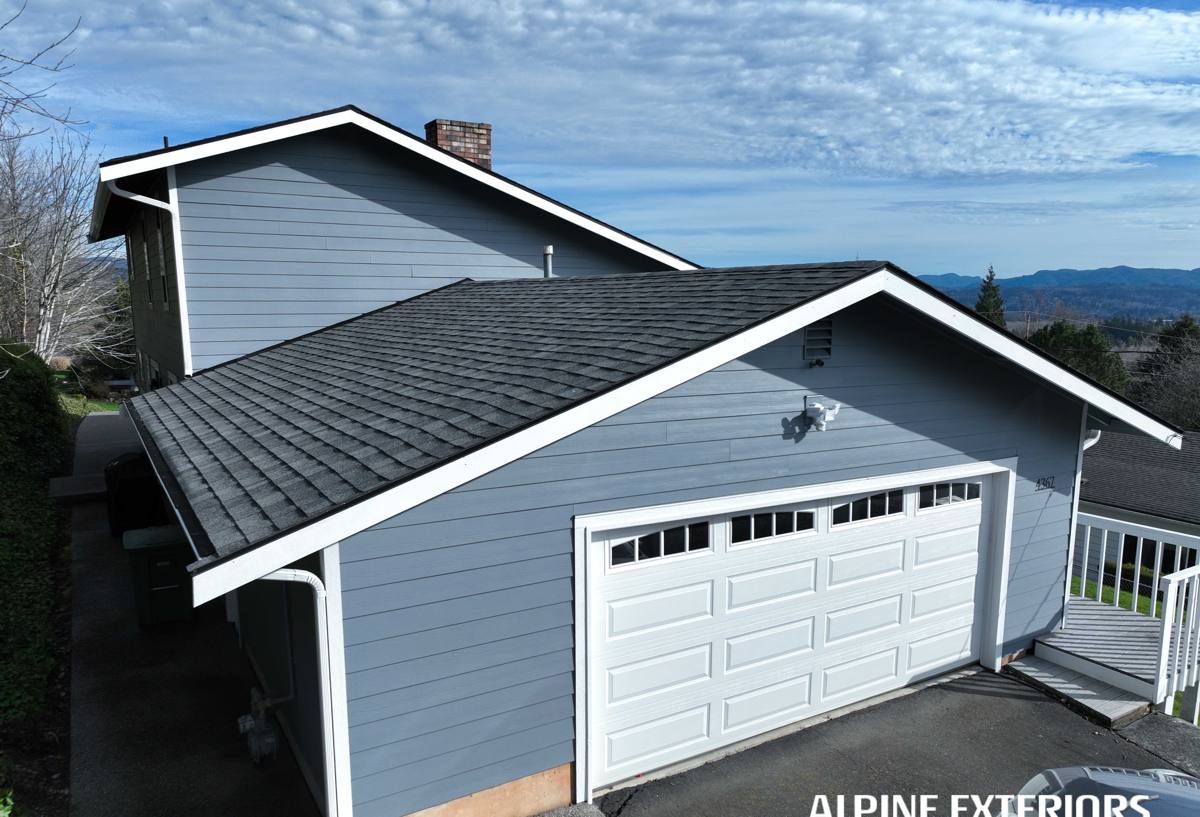
The Moss Problem, Specifically
Moss deserves its own section because it's the complaint we hear most from Ferndale homeowners, and it's often misunderstood. Moss doesn't grow because a roof is old — it grows because a roof stays shaded and damp long enough for spores to take hold, which describes most north-facing slopes and tree-shaded sections of a roof in this part of Whatcom County for a good chunk of the year. Once moss establishes itself, it does real damage: it holds moisture against the shingle surface, lifts shingle edges as it grows under the tabs, and works its way into nail penetrations and flashing joints.
A new roof installation is the best opportunity to get ahead of this. Zinc or copper strips at the ridge, proper attic ventilation to reduce the temperature differential that keeps moss-prone areas damp, and shingle selection that resists algae and moss growth all make a measurable difference. We'll walk through the specific options for your roof rather than applying a one-size answer, because moss exposure varies a lot between a roof with open sun exposure and one shaded by mature trees.
Signs a Ferndale Roof Is Due for Full Replacement, Not Another Repair
Repairs make sense when the damage is isolated. Full replacement makes sense when the roof's underlying systems — decking, underlayment, flashing — have been compromised broadly enough that patching one spot just shifts the problem to the next. Here's how to tell which situation you're in:
- Granule loss heavy enough that you're finding sand-like grit in gutters or at downspout outlets
- Shingles that are cracking, curling at the edges, or missing tabs across multiple sections, not just one storm-damaged area
- Soft or spongy decking felt underfoot during inspection — a sign water has reached the wood
- Daylight visible through the roof deck from inside the attic
- Moss or algae staining that returns within a year or two of cleaning, indicating the shingles themselves have lost their resistance
- Flashing around chimneys, vents, or skylights that's rusted, separated, or was never properly stepped into the roofline
- A roof already past 20-25 years old, regardless of visible condition, especially if it's taken the brunt of west or northwest exposure
If you're seeing two or more of these, a proper inspection is worth doing before deciding between repair and replacement — we'll tell you honestly if a repair will hold rather than push a full job you don't need yet.
What a Correct Roof Installation Actually Involves
The materials matter, but most premature roof failures we're called out to inspect in this area trace back to installation shortcuts, not bad shingles. A correct job includes several layers of protection working together, not just shingles nailed to plywood.
Deck Inspection and Repair
Once the old roofing is stripped, the decking underneath gets inspected board by board. Any wood that's soft, delaminated, or water-stained gets replaced before anything new goes down. Skipping this step is one of the most common corners cut in cheap roof jobs, and it's invisible until the new roof starts failing from underneath.
Ice and Water Barrier at Vulnerable Points
Eaves, valleys, and areas around penetrations get a self-adhering water barrier membrane, not just felt paper. Given how much wind-driven rain this area sees, this layer is what keeps water from being pushed backward under shingles during a real storm rather than a light drizzle.
Underlayment Across the Full Deck
A synthetic underlayment goes down over the full roof as a secondary water barrier. This matters more here than in drier climates — it's the backup system for the days when wind gets under a shingle edge.
Flashing Done Correctly, Not Caulked Over
Step flashing at walls and chimneys, proper counterflashing, and correctly integrated vent boots are what actually stop leaks long-term. Caulk is a temporary fix, not a flashing method, and it's a shortcut that shows up as a callback within a few years.
Ventilation Sized to the Attic
Balanced intake and exhaust ventilation keeps the attic temperature closer to outdoor conditions, which reduces condensation, extends shingle life, and reduces the damp, shaded conditions moss favors.
Ridge Cap and Final Details
Proper ridge cap installation, correctly nailed fasteners (not overdriven or underdriven), and clean, straight lines at valleys and edges — the details that separate a roof that looks and performs well for decades from one that just looks fine from the ground for the first year.
Material Options for Ferndale Homes
There's no single right answer for every house — it depends on your roof's exposure, your home's style, and your budget. Here's an honest comparison of the main options we install:
| Material | Typical Lifespan Here | Moss/Moisture Resistance | Best Fit |
|---|---|---|---|
| Architectural asphalt shingles (algae-resistant) | 25-30 years | Good, especially with copper/zinc strips | Most homes; best value-to-performance ratio |
| Standard 3-tab asphalt shingles | 15-20 years | Fair; more prone to moss without added protection | Budget-conscious projects, secondary structures |
| Standing seam metal roofing | 40-50+ years | Excellent; sheds moisture, resists moss | Homeowners planning long-term, modern or farmhouse styles |
| Composite/synthetic shake | 30-40 years | Good, engineered for moisture | Homes wanting a shake look without cedar's upkeep |
We'll go over which option fits your roof's pitch, exposure, and your plans for the house — whether that's a forever home or a property you'll sell in five years changes the math.
Our Installation Process
We keep this straightforward because a roof replacement is disruptive enough without surprises added on top.
- On-site assessment. We inspect the current roof, decking condition (where visible), attic ventilation, and any problem areas you've already noticed, then measure for an accurate material estimate.
- Written estimate. You get a clear breakdown of materials, labor, and any deck repair contingencies, so there are no vague allowances hiding in the number.
- Scheduling around the weather. Roofing in a region with this much rain means we watch forecasts closely and plan tear-off in sections when needed, so your home is never left exposed longer than necessary.
- Tear-off and deck inspection. Old roofing comes off, decking gets inspected and repaired as needed, with photos so you can see exactly what was found.
- Installation. Water barrier, underlayment, flashing, shingles or panels, and ridge details go in following manufacturer specs and the moisture-management approach outlined above.
- Cleanup and final walkthrough. Site cleared of debris and nails (we run a magnetic sweep), and we walk the finished roof with you before calling the job done.
Why It Matters to Hire a Crew That Already Works Ferndale
A roofing crew that works across Whatcom County regularly already knows which details matter here: how much extra attention north-facing valleys need, which flashing details fail first under this area's wind-driven rain, and how much ventilation an attic actually needs given our humidity, not a generic textbook number. That local pattern recognition shows up in fewer callbacks and a roof that's built for the conditions it will actually face, not the conditions in a manufacturer's install guide written for a national audience.
It also means faster response if something does come up after installation — no waiting on a crew that has to travel in from out of the area, and a company that's still around to stand behind the workmanship years later.
Protecting Your New Roof Over Time
A correct installation is most of the battle, but a few habits extend it further, especially given how long moss season runs here:
- Have gutters cleared at least twice a year so water isn't backing up under eave edges
- Trim back tree limbs that shade roof sections or drop debris onto the surface
- Get a visual moss check each spring, and address early growth before it establishes under shingle tabs
- Avoid pressure washing shingles — it strips granules and shortens lifespan; soft washing or manual removal is safer
- Have flashing and seals around chimneys, vents, and skylights checked every few years, since these are the first points to fail even on a well-installed roof
Get a Straight Answer About Your Roof
If you're not sure whether your Ferndale home needs a full replacement or just a targeted repair, we'd rather tell you that honestly than sell you more than you need. Reach out for a free, no-pressure estimate using the form below, and we'll walk your roof, explain what we find, and give you options that fit both your home's exposure and your budget.